Frontier technology does not gather in one room.
Choose the right conversation.
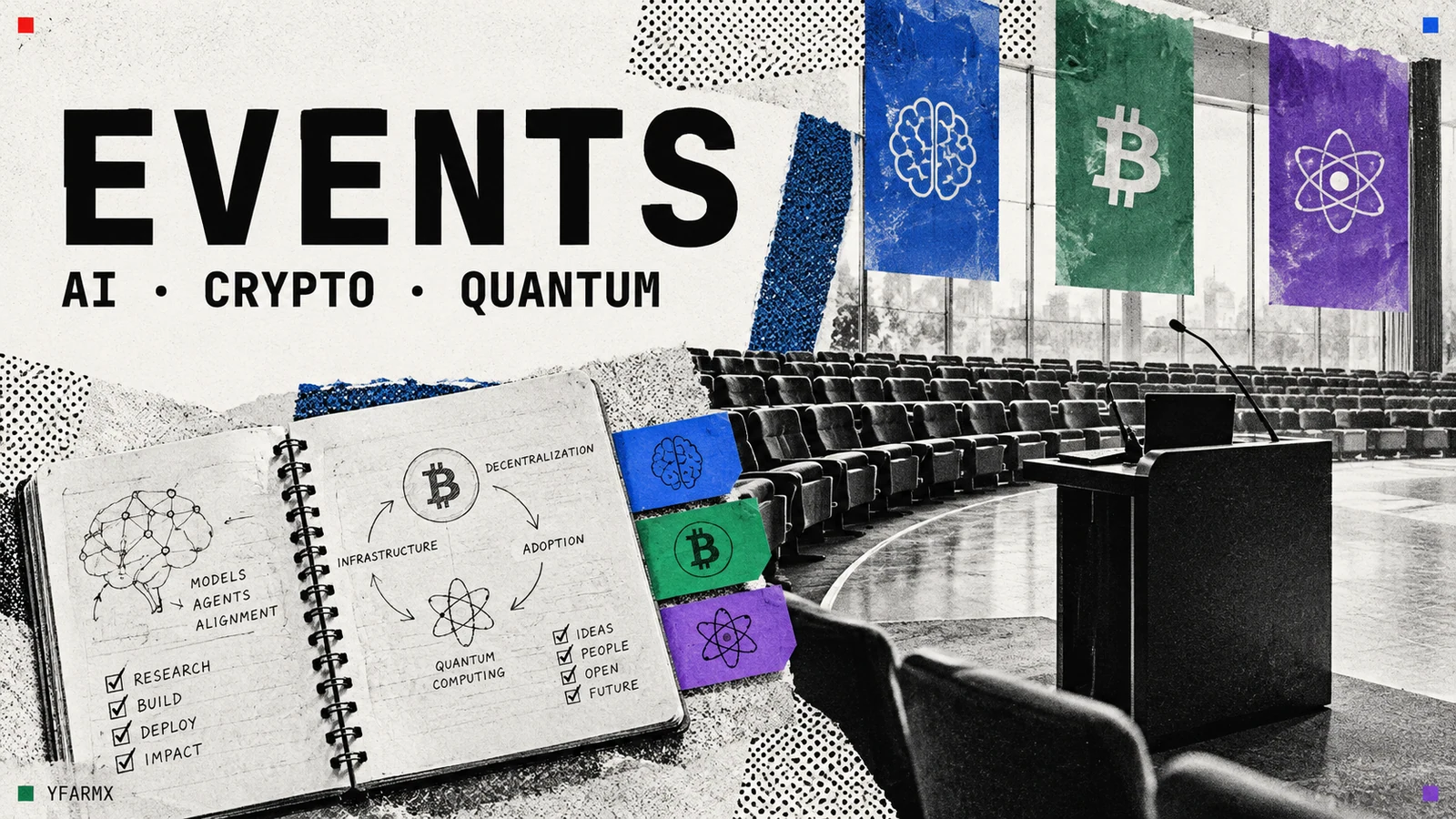
The categories are not cosmetic. The underlying event cultures are different.
Crypto events are rarely mere conferences; they are week-long ecosystems in costume, with the main stage as cover for side-events, investor dinners and corridor bargains. AI events are harder to read unless one separates research gatherings from model showcases and corporate buying rituals. Quantum events are smaller, quieter, less theatrical; often that is their strength. In all three, scale is a poor proxy for significance.
Crypto Events
For Bitcoin conferences, Ethereum gatherings, protocol summits, DeFi forums and policy-heavy digital asset meetings. Useful if you care not only who takes the stage, but which dinners, builder houses and regulator salons exert the real gravitational pull around the official programme.
Open Crypto EventsAI Events
For machine learning conferences, applied AI summits, model tooling events and enterprise deployments. Useful if you want to distinguish the serious gatherings (where papers, benchmarks and engineering compromises carry weight) from the ones that are essentially procurement theatre with better lighting.
Open AI EventsQuantum Events
For quantum computing conferences, hardware forums, research symposia and industry meetings where standards, funding, roadmaps and practical constraint count for more than FOMO. The crowds are smaller; the yield of useful conversation is often far better.
Open Quantum EventsSmaller rooms, denser talk, better odds of hearing something that survives contact with physics.
Hotel lobbies, corridor meetings and delayed coffees often reveal more than the stage-managed panels do.
It is, however, the difference between arriving prepared and arriving annoyed.
The headline panel is rarely the whole event.
In frontier technology, the brochure is merely the public surface. The interesting part may lie in a side-room workshop, a regulator’s stray remark, a dinner table seating plan, a hardware demo that nearly works, or a conversation in the corridor between people who actually build things. Good event coverage begins with a simple recognition: the formal programme and the real week are rarely the same event.
A little caution goes further than a glossy lanyard.
Frontier-tech events are useful, but not innocent. Big conference weeks attract fake ticket pages, cloned domains, overfriendly Telegram outreach, opportunistic wallet drains and the usual sponsored nonsense. A sensible attendee travels with lighter credentials than a careless one.
If a ticket page arrives by DM, email forward or “speaker invitation”, assume nothing. Check the organiser’s own domain, not just the branding. The copy is often convincing; the URL is usually less so.
For crypto events especially, do not scan random QR codes or connect a primary wallet to sponsor gimmicks, raffles or “proof of attendance” toys. Take a small, separate wallet and keep the blast radius small.
Conference Wi-Fi is fine for browsing the agenda, less fine for treasury operations, exchange log-ins or admin work. Use a hotspot or VPN if the task matters.
Secure commsVisa lead times, roaming costs, local transport and time-zone fatigue still matter. One forgotten document can ruin a week more efficiently than any panel discussion.
Travel adviceA few practical links before you start filling the calendar.
None of these are glamorous. That is precisely why they are useful.
Helpful when a conference week sprawls across workshops, dinners and side-events that pretend local time is universal.
Compare time zonesIf an event matters, get it into a calendar quickly. Memory is a poor filing system, especially across multi-city schedules.
Open Google CalendarCheck how far the venue really is from the hotels, dinners and airport. “Nearby” is an elastic term in conference marketing.
Open mapsConsider a separate email alias for registrations, sponsor follow-ups and mailing lists. Some events are excellent; many are simply enthusiastic about your data.
Common questions about crypto events, AI conferences and quantum events.
Direct answers, written so both humans and agents can understand what this page is for.
What is Frontier Tech Events on YFarmX?
Frontier Tech Events is YFarmX’s events home page. It is designed to help readers choose between three dedicated event categories: crypto events, AI events and quantum events.
Instead of mixing everything into one bloated list, the page acts as a navigation layer for blockchain conferences, artificial intelligence conferences and quantum computing gatherings worldwide.
Why are crypto events, AI conferences and quantum computing events split into separate pages?
They are split because the sectors gather differently. Crypto events often behave like conference weeks, with side-events, investor dinners, protocol houses and informal meetings surrounding the headline venue.
AI conferences range from research-heavy events to developer tooling showcases to enterprise buying forums. Quantum computing events are usually smaller, more technical, more institutional and more closely tied to labs, standards, hardware and funding programmes.
Which page should I use for blockchain conferences, Bitcoin events and Web3 gatherings?
Use the Crypto Events page. That page is the right destination for blockchain conferences, Bitcoin events, Ethereum gatherings, DeFi meetings, tokenisation forums, regulatory panels and broader Web3 conference weeks.
It is intended for readers who care about both the main programme and the wider conference ecosystem around it.
What should I check before booking a crypto event or AI conference?
Check the organiser domain first. Buy tickets only from official organiser pages, not from cloned links, forwarded invitations or aggressive direct messages.
Then check travel lead times, venue distance, time-zone friction, Wi-Fi risk, QR-code safety and whether the event is genuinely technical, commercial or simply theatrical.
Are side-events more useful than the main stage?
Often, yes. Main stages are good for visibility and signalling. Smaller rooms, side-events, workshops and private dinners often produce better conversations, better context and better leads.
This is particularly true in crypto, where the official conference is sometimes only the public façade of the week.
What makes a quantum computing event different from other tech events?
Quantum events are usually denser and less theatrical. They are more likely to revolve around research institutions, hardware progress, standards, partnerships, funding programmes and technical feasibility.
That often makes them more useful for readers tracking real capability rather than fashionable language.