CoinMarketCap turns leaderboard into CMC20 DeFi index token
CoinMarketCap has just announced the $CMC20. In partnership with Reserve Protocol and Lista DAO, the CMC20 is a fully tradable index token on BNB Chain that tracks the top 20 cryptocurrencies by market cap (minus stablecoins, wrappers and other outliers).
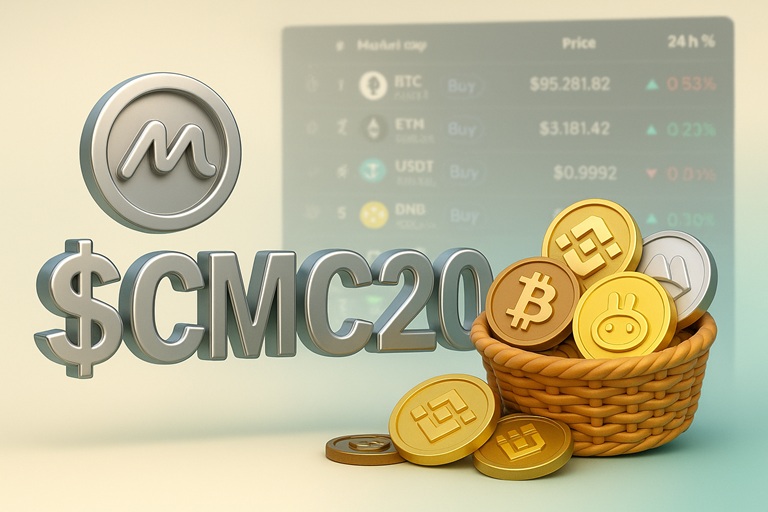
CoinMarketCap has just announced the $CMC20. In partnership with Reserve Protocol and Lista DAO, the CMC20 is a fully tradable index token on BNB Chain that tracks the top 20 cryptocurrencies by market cap (minus stablecoins, wrappers and other outliers).
In a market now boasting 27 million tokens and tens of thousands of new launches a day, the idea is: instead of playing dartboard with tickers, buy one token that behaves like crypto’s answer to the S&P 500.
🚀 Introducing CMC20: Crypto’s First DeFi-Enabled Tradable Index Token.
CoinMarketCap is proud to announce $CMC20, the first DeFi-native tradable crypto index token on @BNBCHAIN. Your single-trade gateway to diversified exposure across the top 20 crypto assets.
Built in… pic.twitter.com/5oIfjJeBKw
— CoinMarketCap (@CoinMarketCap) November 17, 2025
Data Feed to DeFi
CMC20 is built on Reserve’s Decentralised Token Folio (DTF) infrastructure, deployed by Lista DAO, and issued as a BEP-20 token on BNB Chain.
Under the hood:
- Index: the CoinMarketCap 20 Index (CMC20)
- Constituents: top 20 eligible cryptocurrencies by market cap
- Exclusions:
- Stablecoins (USDT, USDC, etc.)
- Pegged / wrapped assets (e.g. WBTC, stETH)
- Assets with “limited investability” – low liquidity or ongoing litigation / enforcement risk
- Weighting: market-cap weighted
- Rebalancing: monthly, on the first day of each month at 00:00 UTC
- Price updates: index values refreshed every few seconds using live CMC data
Unlike a traditional reference index, CMC20 is the index and the product simultaneously: the token is minted and redeemed against the underlying basket via the Reserve dApp, and can be traded on-chain like any other asset.
Inside the Basket
At launch, the index is exactly what you’d expect from a market-cap snapshot of late 2025:
- Bitcoin (BTC) at the top (around $95k)
- Ethereum (ETH) in second place
- XRP (XRP) holding a prominent slot after its own ETF-driven renaissance
The remainder is drawn from the next eligible majors (Solana, BNB, and other large-cap L1s, DeFi protocols, infra plays and exchange tokens), subject to liquidity and legal screens. Together, the top 20 are estimated to capture roughly 80–90% of non-stablecoin crypto market cap, so you’re buying the market beta rather than a thematic punt.
On day one, CMC20 itself is trading around $200, with a market cap in the low single-digit millions and a five-figure 24h volume, tiny in ETF terms, but not bad for a new DeFi instrument waiting for attention.
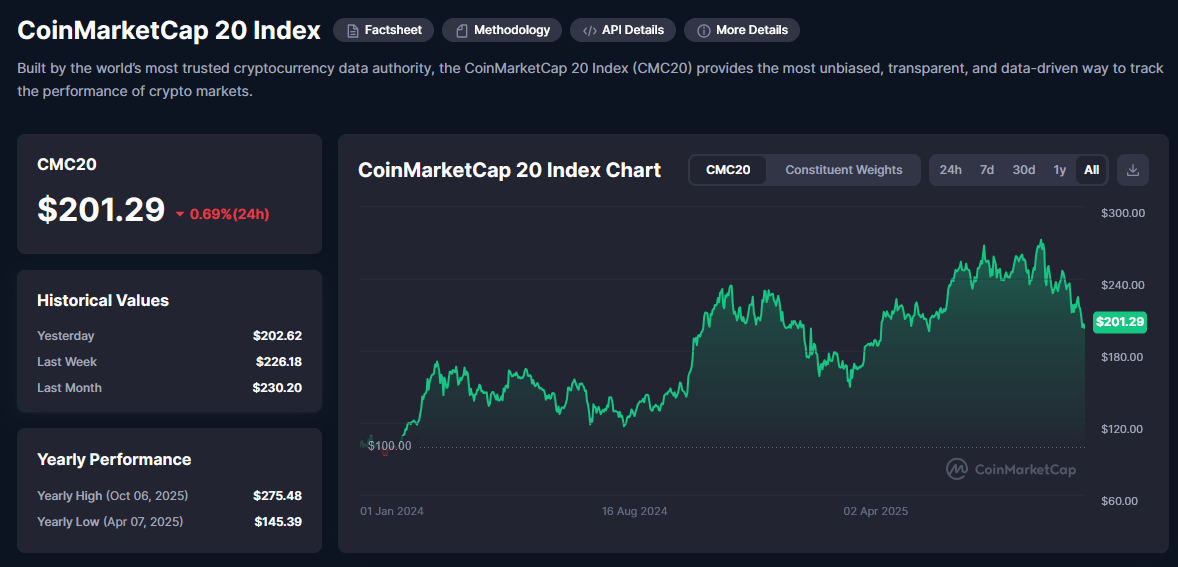 CMC20 price as of writing.
Why BNB Chain
CoinMarketCap and Reserve have chosen BNB Chain as home turf: low fees, deep liquidity in the BNB/USDT universe, and a large DeFi user base that’s comfortable swapping via PancakeSwap and parking assets in yield strategies.
For users, the flows look roughly like this:
- To trade:
- Connect a wallet (Trust Wallet, MetaMask configured for BNB Chain).
- Head to PancakeSwap and swap BNB or another pair into CMC20 using the official contract address.
- To mint / redeem directly:
- Use the Reserve dApp (app.reserve.org).
- Deposit the exact underlying basket (proportional to current weights) to mint CMC20, or burn CMC20 to withdraw the constituents 1:1.
A bridge via Celer Network is planned to make the token easier to route across chains, with future listings on centralised exchanges and additional DEXs flagged in the launch materials.
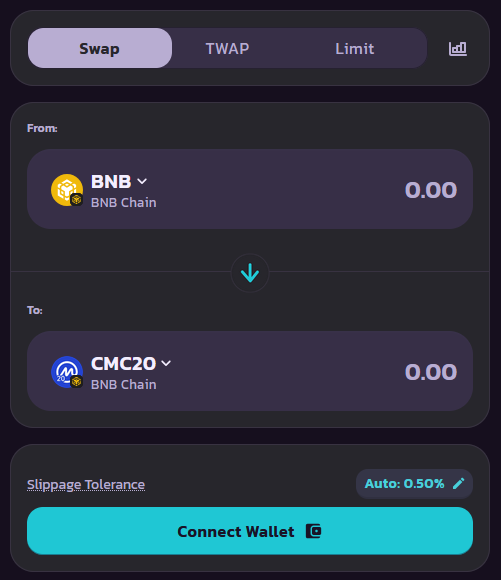 $CMC20 available on https://pancakeswap.finance/swap
Audience
CMC20 serves two obvious constituencies:
- Retail investors who don’t want to stock-pick:
- One token instead of manually rebalancing a 20-coin portfolio
- Fewer transactions and gas costs
- Cleaner mental model: “own the market” rather than “did I catch the right L1 rotation?”
- Institutions and sophisticated desks:
- A market-cap weighted beta leg they can plug into delta-neutral or relative-value strategies
- Collateral for on-chain lending and structured products
- A benchmark that is both investable and on-chain auditable, which matters for risk and reporting
The design also lends itself to products that traditional ETFs can’t easily pull off: programmatic rebalancing in DeFi vaults, automated covered-call vaults on the index, or using CMC20 as collateral in lending markets without worrying about rebalancing 20 separate positions.
Risks Behind the Index Wrapper
The marketing compares CMC20 to the S&P 500, but the risk stack is very much crypto-native:
- Smart contract risk. Users rely on Reserve’s DTF contracts, Lista DAO’s deployment and BNB Chain itself. A bug or governance failure in any layer can break the 1:1 backing or freeze redemptions.
- Market risk. The token is as volatile as the top 20 cryptos that sit underneath it. A broad-market drawdown will drag CMC20 with it; it’s a volatility wrapper, not a hedge.
- Liquidity and tracking. Early liquidity is thin. Significant trades on PancakeSwap could move the price away from the index value until deeper pools and arbitrage patterns form.
- Methodology and governance. Exclusion rules around “limited investability” and litigation are crucial, but they’re also subjective. Changes in methodology, or pressure around including/excluding particular names, will be worth watching.
As ever with DeFi, “simple exposure” often sits on top of quite a lot of technical and governance complexity.
Coming Up
CMC20’s launch is more about a direction of travel: data providers turning their benchmarks into on-chain, composable assets, rather than leaving that monetisation to third parties.
Who will build the S&P 500 of crypto? 🤔
👉 Meet $CMC20. Built on @BNBCHAIN and powered by Reserve, the new CoinMarketCap 20 Index DTF tracks @CoinMarketCap’s flagship Top 20 Index in a single token
Ride the market at https://t.co/eJDntJDOyM
$CMC20 is a collaboration between… pic.twitter.com/rSALbG2nak
— Reserve 🌠(@reserveprotocol) November 17, 2025
Over the next few months, the meaningful signals won’t be the day-to-day price moves so much as:
- How fast liquidity builds on PancakeSwap and any CEX listings
- Whether major DeFi protocols accept CMC20 as collateral
- If competitors (or CoinGecko-style rivals) roll out their own index tokens (The CG50?)
- How regulators treat index tokens that start to look suspiciously ETF-like in everything but name
For now, CMC20 gives both retail and professional traders a cleaner way to hold “the market” on-chain. Whether it becomes crypto’s default beta leg or just another niche ticker, remains to be seen.
Disclaimer
This article is for information only and does not constitute investment, legal or tax advice. Always do your own research.
From the YFarmX archive · originally published on the previous site