
Bitcoin Laundering: $20 Million Scheme Dismantled in China
Uncovering a $20 million Bitcoin laundering scheme in China.

Chinese authorities have dismantled a sophisticated Bitcoin laundering operation linked to the popular video-sharing platform, Kuaishou. In an audacious embezzlement scheme, former employee Feng orchestrated the theft of nearly 140 million yuan, equivalent to $19 million, converting it into Bitcoin through intricate crypto-mixing techniques.
Feng leveraged his role within the company to exploit growth incentive mechanisms, collaborating with external partners to establish fake entities. These entities served as conduits for siphoning funds out of Kuaishou, paving the way for a multi-layered money laundering ring.
 Kuaishou
Mixers
Despite China’s stringent anti-crypto regulations, the fraudsters managed to move funds through eight overseas cryptocurrency exchanges, utilising coin mixers to obfuscate transaction trails. However, even these anonymising tools weren’t sufficient to escape Chinese investigators, who successfully tracked down and recovered Bitcoins.
The legal proceedings culminated with the arrest and conviction of Feng and seven accomplices. The Haidian District People’s Court handed down sentences ranging from three to 14 years in prison, underscored by financial penalties. An official from Beijing’s Haidian District Procuratorate emphasised the case’s significance in highlighting the rising corruption in the digital era, citing inadequate corporate risk management.
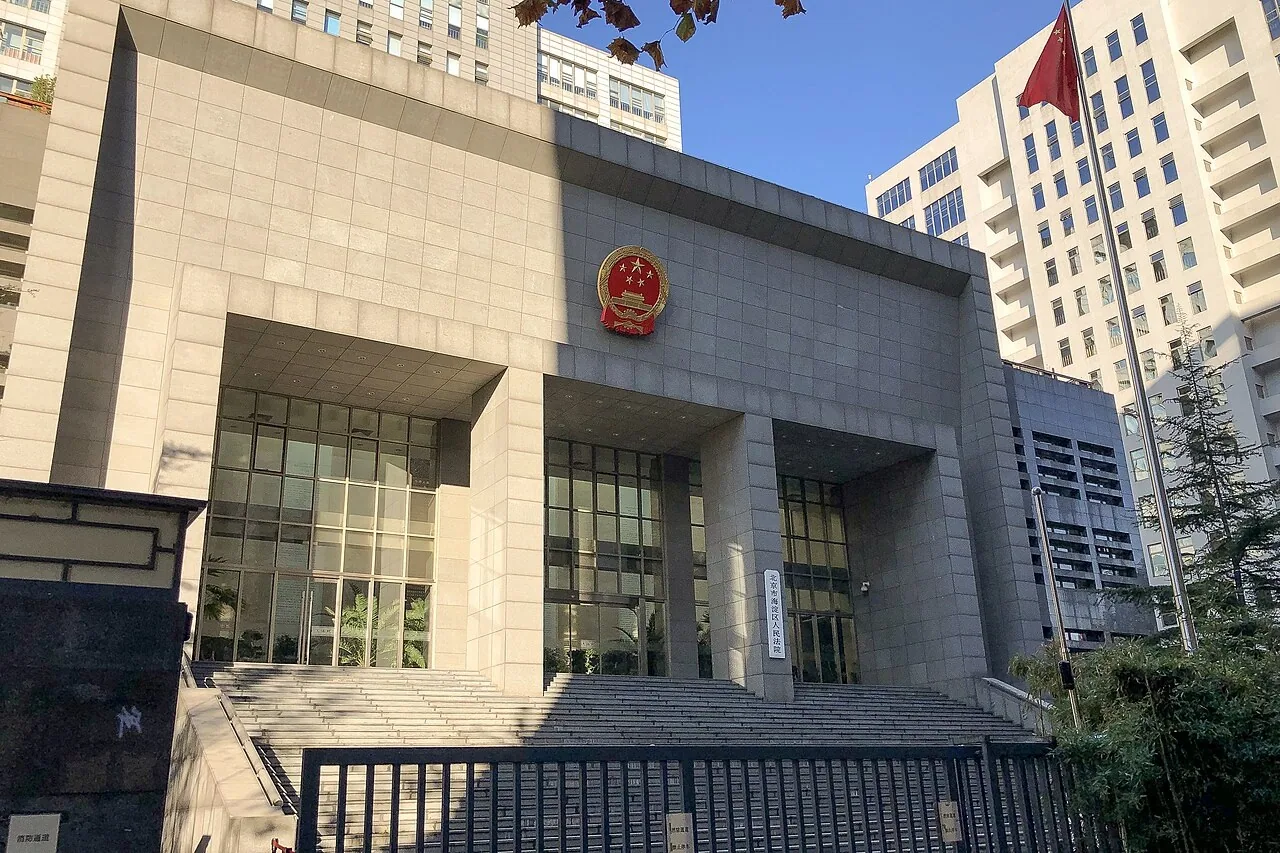 The Haidian District People’s Court
Coin Mixing and Crypto’s Dark Side
Coin mixing services, often used to conceal crypto transactions, came under the spotlight once more. This case illustrates the constant evolution of digital financial crime, challenging even the most robust regulatory frameworks. Despite the Chinese government’s outright ban on cryptocurrency trading and related transactions, the allure of crypto’s anonymous nature continues to tempt.
China, currently maintaining its position as a leading force against cryptocurrency within its borders, underscores its concerns around financial stability and crime. The government has categorised digital assets as an undesirable industry, resulting in the shutdown of multiple mining operations and stringent curtailment of crypto-activity nationwide.
The Haidian District Procuratorate’s recently reported white paper documented 1,253 commercial corruption cases between 2020 and 2024, emphasising the shift towards tech-aided fraud.
Investigation to Sentencing
Feng funneled stolen funds through eight overseas crypto exchanges, converted them to BTC and other coins, and used mixers to hide the trail. Investigators built a “triple-flow integration” evidence chain, recovered 90+ BTC, and Feng plus seven accomplices received 3 to 14½-year embezzlement sentences.
*Disclaimer: Information contained in this article should not be construed as financial advice. Readers should seek professional consultation before making investment decisions.
From the YFarmX archive · originally published on the previous site