ERC-8213 could make wallet signing clearer for Web3 users
ERC-8213 is a proposal to improve how wallets display signature and calldata information. Here is what ERC-8213 does, why it matters for Web3 security, and what needs to happen next.
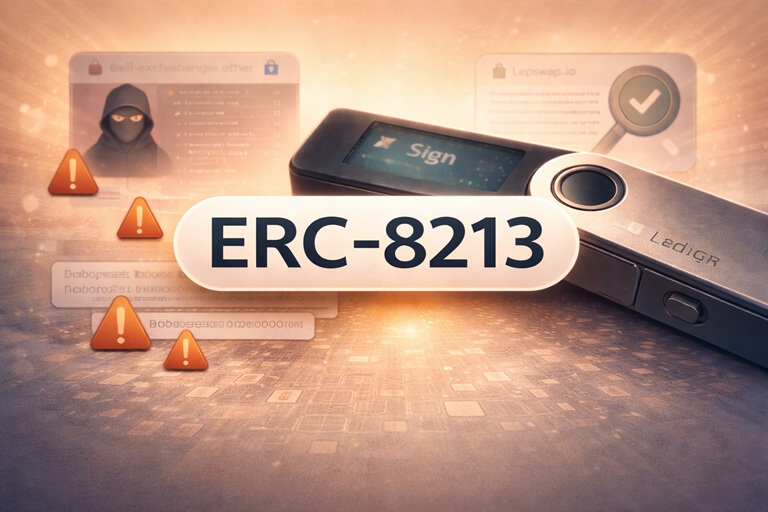
ERC-8213 is a proposal aimed at one of Web3’s most persistent weaknesses: users are still asked to sign transactions they often cannot properly read. The proposal, discussed on the Ethereum Magicians forum and highlighted again by Patrick Collins on X, focuses on how wallets display signature and calldata information.
That may sound narrow. It is not. A large share of Web3 losses still comes from users trusting a front end, signing what is in front of them, and discovering too late that the interface was misleading, compromised or simply opaque. ERC-8213 sits squarely in that problem.
Fact box
Proposal: ERC-8213
Topic: Wallet signature and calldata display
Forum: Ethereum Magicians
Use case: clearer signing flows for Web3 users
Related issue: front-end compromise, spoofed domains, misleading wallet prompts
What is ERC-8213?
ERC-8213 is a proposal to standardise how signature and calldata digest information is displayed to users. It is trying to make wallet signing less blind. Instead of relying on whatever summary a wallet or interface decides to show, the proposal aims to improve consistency around what critical transaction data is surfaced and how it is represented.
It’s much needed because the gap between what a user thinks they are signing and what a transaction actually does is still far too wide. Crypto has spent years talking about trust minimisation while leaving ordinary users to approve opaque prompts with a shrug and a prayer. Not ideal.
ERC-8213 for Web3 security
The appeal of ERC-8213 is that it treats wallet safety as an interface problem as much as a code problem. A compromised website, a spoofed DNS record or a misleading wallet prompt can be enough to cause serious damage without any particularly clever exploit in the underlying contract. In those cases, the failure happens in the translation layer between code and human intention.
That translation layer remains poor. Raw calldata is unreadable for most users. Many wallet prompts compress too much information into vague labels. Some hide the consequential bits altogether. Even experienced users do not inspect every field carefully when markets are moving and screens are crowded. That is not a personal failing. It is a design failure, repeated often enough to look normal.
DNS hijacks have already become too common in 2026.
And most users still blindly trust 100% of the data from any UI they work with, without checking calldata.
Even experienced traders have a hard time checking.
ERC-8213 will fix it for experienced developers and security… https://t.co/Mi1zlO6CM0
— Patrick Collins (@PatrickAlphaC) April 3, 2026
If ERC-8213 is implemented well, wallets and tooling providers should have a more consistent basis for displaying what is actually being signed. That would not end fraud, and it would not stop every malicious interface, but it could narrow one of the easiest attack surfaces in the industry.
How ERC-8213 could change signing flows
The practical value of ERC-8213 lies in standardisation. If wallets derive and display digest information in a consistent way, developers can design clearer prompts, auditors can reason about them more easily, and security tooling can do a better job of flagging suspicious behaviour before a signature turns into a loss.
This is also the sort of proposal that makes more sense the more time you have spent in the sector. Web3 does not only lose money through spectacular contract failures. It also loses money through users being asked to act quickly on information that is incomplete, badly presented or flatly misleading. A modest improvement at that layer would still count as real progress.
What needs to happen next
The obvious test is implementation. A sensible proposal on a forum does not change much on its own. For ERC-8213 to matter, wallets, developer frameworks and security tooling providers would need to treat it as useful infrastructure rather than another admirable standard left to gather dust.
If that happens, Web3 users could end up with signing flows that are clearer, less guess-heavy and a little harder to exploit. That would not solve everything. It would, however, solve part of a problem the sector should have addressed years ago.
This article is for information only and is not financial advice.
From the YFarmX archive · originally published on the previous site