NVIDIA State of AI Report Shows Telecoms Leading Agentic AI Adoption at 48 Per Cent
Telecommunications companies are leading the charge in agentic AI adoption, with 48% of telco respondents reporting active deployment of autonomous AI agents, according to NVIDIA’s 2026 State of AI in Telecommunications report.
Telecommunications companies are leading the charge in agentic AI adoption, with 48% of telco respondents reporting active deployment of autonomous AI agents, according to NVIDIA’s 2026 State of AI in Telecommunications report. Retail and consumer packaged goods companies trail narrowly at 47%, suggesting that agentic AI is moving beyond experimental pilots across multiple industries.
The report, released on 12 March 2026, captures a shift in how enterprises are thinking about AI. Generative AI delivered fast productivity gains, but agentic AI is where telecoms begin to see structural return on investment, according to NVIDIA’s analysis. Autonomous agents that coordinate decisions across networks, IT systems, and customer journeys are turning insights into actions without human intervention at each step.
What is driving telecoms to agentic AI?
Network automation emerged as the top AI use case for both investment and return on investment in the report. Telecoms face a unique operational challenge: vast, complex networks that require constant monitoring, optimisation, and incident response. Agentic AI fits naturally here because the work is repetitive, data-heavy, and time-sensitive.
The distinction between automation and autonomy matters. Network automation follows predefined rules. Agentic AI can make contextual decisions, adapt to novel situations, and coordinate across domains that traditional automation struggles to connect. For telecoms managing millions of network elements, that difference translates directly into cost savings and service quality.
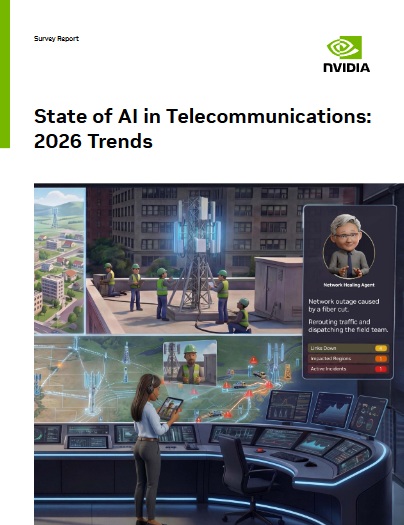 https://www.nvidia.com/en-us/lp/industries/telecommunications/state-of-ai-in-telecom-survey-report/
How do other industries compare?
Retail and CPG at 47% adoption suggests that customer-facing agentic AI, such as autonomous shopping assistants, inventory management agents, and personalised recommendation systems, is progressing rapidly. Financial services and healthcare are also investing, though the report indicates lower current deployment rates, likely due to heavier regulatory constraints.
What follows from the shift to agentic AI?
The report signals that enterprise AI is maturing past the chatbot and copilot phase. Organisations are deploying agents that operate with increasing autonomy, making decisions that previously required human approval at each step. This raises governance questions that many enterprises have not yet answered: who is accountable when an autonomous agent makes a consequential decision, and what safeguards are in place when agents interact with each other at scale?
This article is for informational purposes only and does not constitute financial, investment, or professional advice.
From the YFarmX archive · originally published on the previous site