Human Rights Foundation raises alarm over The Quantum Threat to Bitcoin
The Human Rights Foundation (HRF) has sounded a clear warning: The Quantum Threat to Bitcoin is no longer a sci-fi edge case but a planning mandate.

The Human Rights Foundation (HRF) has sounded a clear warning: The Quantum Threat to Bitcoin is no longer a sci-fi edge case but a planning mandate. If cryptographically-relevant quantum computers (CRQCs) emerge within the next 5–20 years, early-format coins and any transaction in flight could be at risk, imperilling the dissidents, NGOs and journalists who depend on Bitcoin as lifeline money.
The HRF report frames the issue as more than an engineering puzzle. It’s a human-rights problem. CRQCs capable of attacking elliptic-curve cryptography could sweep coins whose public keys are already exposed and hijack unconfirmed spends by deriving private keys during the mempool window. Google’s recent announcement (an algorithm enabling a quantum device to run certain operations 13,000× faster than a classical supercomputer) doesn’t “break” Bitcoin, but it resets timelines and attention. Preparation needs to begin before headlines, not after.
Here is the truth bomb everyone is ignoring.
20-30% of Bitcoin will be taken by a Quantum Machine within 2-8 years and there is absolutely nothing we can do to stop this. These are P2PK addresses, like Satoshis $125B, and many other old/lost coins.
Bitcoiners have a painful…
— Charles Edwards (@caprioleio) October 15, 2025
Mapping The Quantum Threat to Bitcoin
The technical risk splits into two primary vectors. Long-range attacks target coins whose public keys have already been revealed (legacy pay-to-public-key [P2PK]), reused addresses, and many taproot spends where a key path was exposed. HRF cites roughly 6.51 million BTC (well over $700 billion at recent prices) as vulnerable to this class of attack if holders do nothing. Of that, around 1.72 million BTC are believed to be dormant or lost and therefore unlikely to migrate; the rest (about 4.49 million BTC) can be protected by moving to safer outputs before CRQCs arrive.
Short-range attacks strike during live transactions. When you broadcast a spend, the public key becomes visible; a sufficiently powerful quantum adversary could derive the private key in real time and front-run with a conflicting transaction. Until Bitcoin adopts quantum-resistant signature schemes, every transaction remains theoretically exposed in that window.
 Different approaches being explored to build physical qubits for a quantum computer.
A quieter but crucial angle sits in the tooling: wallet companions, custody dashboards and accounting platforms often retain users’ public keys or extended public keys (xpubs) to calculate balances. In a CRQC world, any breach that yields bulk key material becomes a high-value target. Minimising that data exhaust (and building for hardened defaults) matters.
Engineering the defence
There are two main families of post-quantum signatures under serious consideration. Lattice-based schemes (notably CRYSTALS-Dilithium and FALCON) are comparatively compact and friendlier to multisig, key aggregation and deterministic derivation, features that human-rights users value for safety and operational simplicity. The trade-off is newer cryptographic assumptions that demand long review cycles and robust, constant-time implementations. Hash-based schemes (SPHINCS+, XMSS, Lamport) lean on conservative assumptions with decades of scrutiny but carry much larger signatures and more cumbersome state or tree-management constraints.
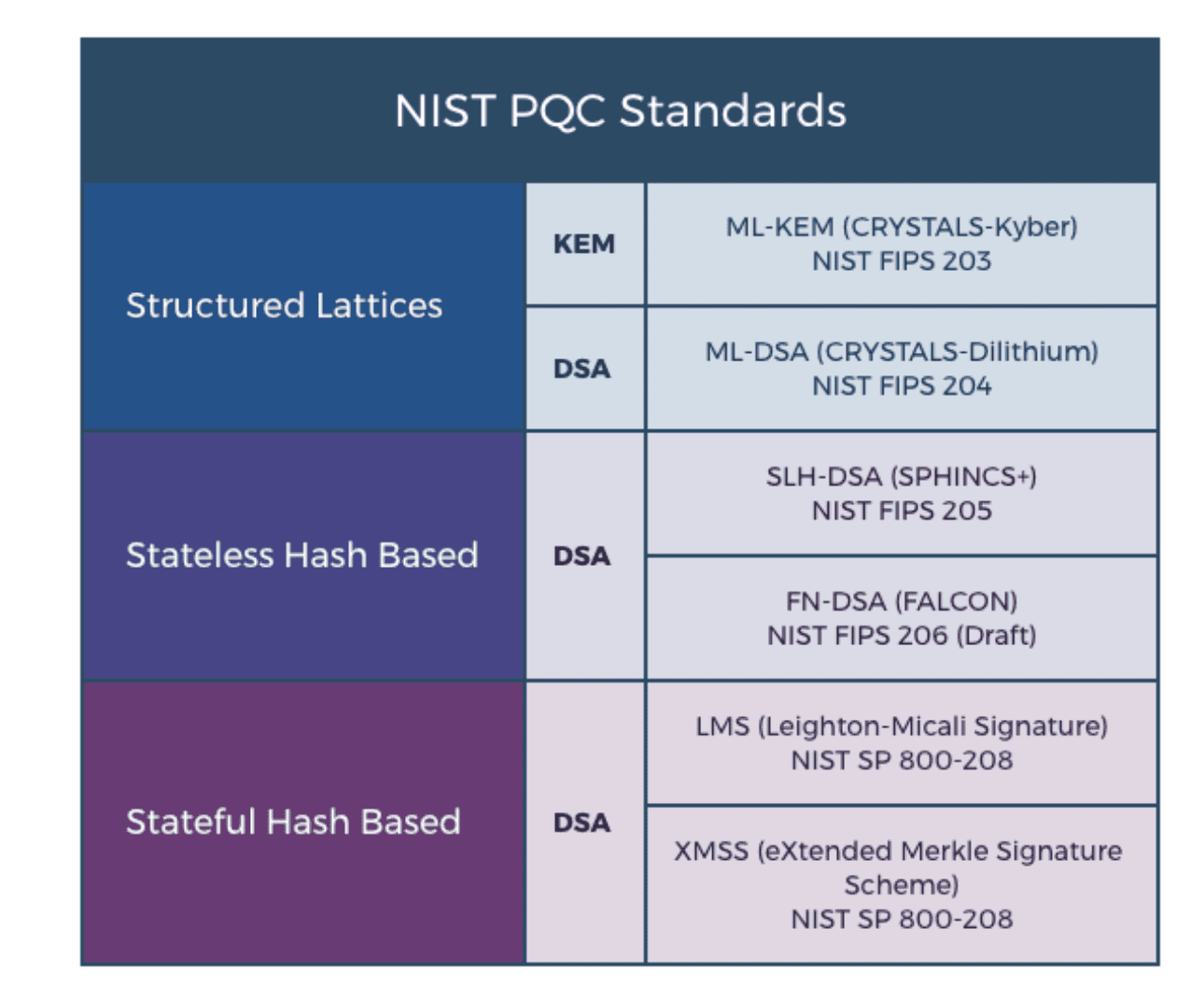
The brutal fact is size: the smallest lattice signatures are roughly ~10× today’s signatures; compact hash-based options are ~38×. That magnifies blockspace pressure, reduces transactions per block, and raises bandwidth and storage demands for full nodes. Any attempt to tweak witness discounts or block parameters to accommodate the bloat risks reigniting governance debates that scarred the community during the block-size years.
On the protocol side, BIP-360 sketches a signature-scheme-agnostic approach that hardens taproot and keeps room to slot in one or more quantum-safe algorithms later. That’s helpful, but shipping safely still means the long march: reference implementations, test vectors, formal analysis, hardware support, wallet UX, and an activation path that respects decentralisation. Past upgrades like SegWit and Taproot took years from proposal to broad adoption (even though they reduced typical fees). Expect the road to quantum safety to be longer and bumpier.
Policy, ethics, and the coins that won’t move
The most charged question is what to do about the 1.72 million BTC that likely won’t migrate. The community’s options are stark:
- Burn after grace period. Make vulnerable outputs unspendable once a migration window closes, denying thieves and preserving monetary integrity (but at the cost of censorship-resistance and a precedent that some view as heretical).
- Do nothing. Remain ideologically pure and accept that CRQCs may sweep the coins. This preserves neutrality but risks market instability and a perception of failure if a large heist plays out on-chain.
- Hourglass compromises. Protocol-level throttles that limit how fast such coins can be spent, slowing the bleeding and buying time for the network if an attack begins. Critics argue it normalises theft, introduces governance knobs, and distorts incentives (miners harvesting giant fees from competing CRQCs).
No option is painless. Any path that violates Bitcoin’s core guarantees is unlikely to achieve consensus; any path that preserves them entirely must accept real risk. That is precisely why the quantum threat to Bitcoin demands candid debate now, while choices are still choices.
What HRF says and will fund
HRF intends to back research and public-interest engineering through its Bitcoin Development Fund: comparative studies of lattice vs hash-based schemes; constant-time reference code; migration tooling and testnets; wallet UX that nudges users toward safer defaults; and broad education for users, node operators, hardware manufacturers and civil society. The foundation’s stance is pragmatic: the network’s defence should be a managed evolution—review → test → activate → migrate—rather than crisis-driven improvisation.

Practical steps today
For users and treasurers, the guidance is simple if unglamorous: stop address reuse, plan migrations off legacy or reused outputs, keep xpub exposure to an absolute minimum, and evaluate wallet stacks that compartmentalise key material.
For builders, budget for bigger keys and slower operations in hardware, rethink backup and recovery with new derivation semantics, and prioritise clear migration paths. Above all, prepare your users with sane defaults: many won’t read whitepapers, but they will follow good prompts.
Bottom line
The Quantum Threat to Bitcoin is best treated as a slow-burn priority with high downside if ignored. The timeline is uncertain; the to-do list is not. Move vulnerable coins, reduce key exposure, and support PQ-ready standards so freedom money stays free.
YFarmX disclaimer: Information only; not financial, legal or security advice. Do your own research and consult qualified professionals for your situation.
From the YFarmX archive · originally published on the previous site