CFTC’s Caroline Pham brings tokenisation inside the rulebook
At FIA EXPO, Acting CFTC Chairman Caroline Pham used her keynote to talk about digital assets in the dry language of market structure, not moral hazard.
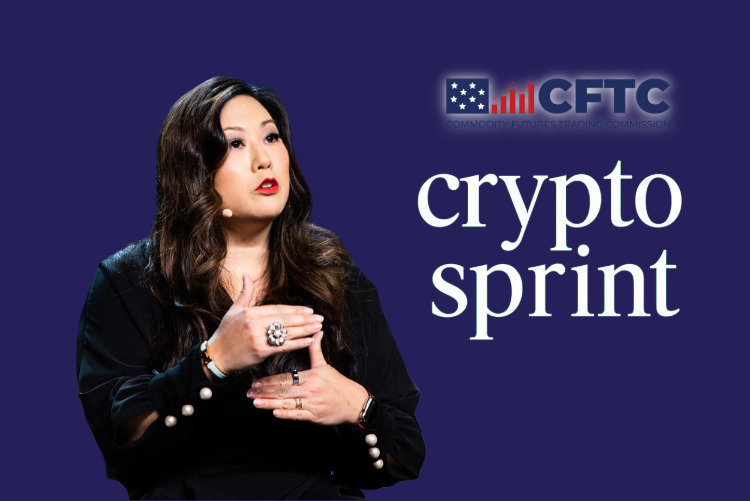
At FIA EXPO, Acting CFTC Chairman Caroline Pham used her keynote to talk about digital assets in the dry language of market structure, not moral hazard.
She drew a direct line: electronification rewired markets in the 1970s; tokenisation is the equivalent upgrade for collateral, settlement and cross-border access, operating in the market’s underlying architecture rather than at the fringe. The task, in her view, is not to invent a new regime, but to let existing rules accommodate new rails.
At FIA Expo, I previewed the @CFTC’s guidance on tokenized collateral and stablecoins, GENIUS Act implementation, and outlined trade workflow for listed spot crypto that will be live soon on futures exchanges 👇 pic.twitter.com/I4EtfrezHd
— Caroline D. Pham (@CarolineDPham) November 19, 2025
Wrapper to infrastructure
Pham anchored her remarks in the work of the CFTC’s Global Markets Advisory Committee (GMAC) and its Digital Asset Markets Subcommittee (DAMS). A year ago, that group described tokenisation as “another technological wrapper for existing assets” and argued that modern infrastructure should reduce frictions in collateral mobility.
Twelve months on, she suggested, that view has held up. Blockchains have demonstrated they can function as constant-uptime market rails, in sharp contrast to banking hours and sequential intermediaries. The opportunity, as she framed it, is not to reimagine the assets themselves, but to modernise how they are recorded, moved and pledged.
Alongside the day-to-day supervisory grind, the CFTC has over the past several months:
- Issued cross-border interpretive letters and procedures to clarify how substituted compliance and non-U.S. entities are treated.
- Proposed amendments to swap dealer conduct and documentation rules.
- Granted targeted no-action relief on swap data error reporting and SEF order book requirements.
- Withdrawn several legacy proposals and staff guidances on SEFs, DCMs, operational resilience, carbon derivatives and DCO recovery that had outlived their usefulness.
- Published new advisories on market volatility controls and risk management for DCMs, DCOs, FCMs and introducing brokers, including for sports-related contracts.
- Adopted Nasdaq’s market surveillance system to strengthen its own toolkit.
It is a relatively prosaic list, which is rather the point.
The Golden Age
Much of the speech was framed through the President’s Working Group on Digital Asset Markets and its report Strengthening American Leadership in Digital Financial Technology. Pham cast this as Washington finally accepting that digital assets are not going away and should be handled inside, not outside, the regulatory perimeter.
The report’s themes are familiar but now have statutory weight:
- The U.S. should aim to lead digital asset markets rather than export them.
- Bank regulation must be updated to cope with tokenised balance sheets.
- The dollar’s role should be reinforced by using it as the default on-chain settlement asset.
- Illicit finance, tax and consumer-protection rules should be applied with predictability, not improvisation.
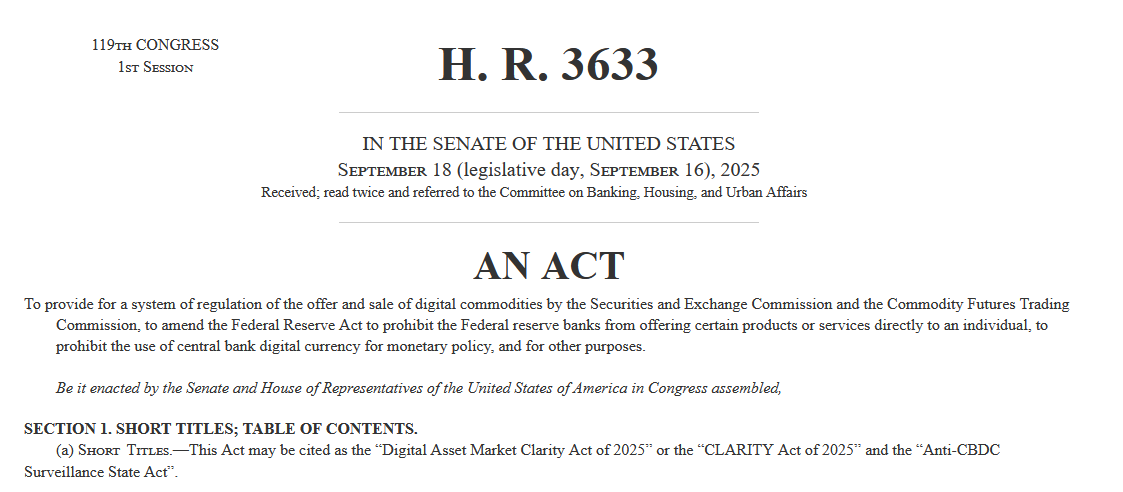
Congress has already moved on some of this. The GENIUS Act creates a federal framework for payment stablecoins. The CLARITY Act and related market-structure bills continue through committee. The report explicitly instructs the SEC and CFTC to use existing authority to enable trading, custody and recordkeeping for digital assets, and to lean on safe harbours and sandboxes rather than permanent pre-clearance.
For once, the agencies are being nudged to act, not simply to warn.
“The turf war is over”
Pham was unusually blunt on inter-agency politics: “the turf war is over”. Whether reality fully matches the line is an open question, but the intent is clear enough.
The SEC and CFTC, she said, will seek to:
- Harmonise product and venue definitions where statutes permit.
- Align reporting and data standards.
- Bring capital and margin frameworks closer together.
- Stand up co-ordinated innovation exemptions using their existing powers.
At the operational level, this has already produced a joint SEC–CFTC roundtable on innovation and market structure (the first in 15 years) covering, among other topics, DeFi and “innovation exemptions”. The symbolism is not accidental: Europe, the Gulf and parts of Asia already have comprehensive digital asset regimes in force.
The 12-month Crypto Sprint
The centrepiece of Pham’s agenda is the CFTC Crypto Sprint, a 12-month programme intended to implement the President’s Working Group recommendations without waiting for fresh legislation.
It has three main pillars.
1. Listed spot crypto trading on DCMs
First, the CFTC is moving to allow listed spot crypto trading on Designated Contract Markets by year-end.
This does not create a bespoke crypto structure. Instead, it relies on Commodity Exchange Act provisions (strengthened by Dodd-Frank) that already govern retail commodity transactions involving leverage, margin or financing. The workflow is intentionally familiar: an FCM can provide leverage, the DCM is the execution venue, and the DCO performs post-trade processing.
The pitch is simple: institutional liquidity providers and other market participants get access to spot crypto within the same framework they already use for futures and options, with established customer protections and market-integrity tools.
2. Tokenised collateral, including stablecoins
Second, the CFTC is consulting on the use of tokenised collateral, including stablecoins, in derivatives markets. Guidance is expected by year-end, with implementation by DCOs targeted for early 2026.
Here Pham was quite clear. Derivatives markets already rely heavily on collateral and margin mechanics; those mechanics, she argued, are ill-served by bank rails that shut overnight and on weekends. Tokenised collateral offers real-time mobility without changing the underlying asset’s economic character.
This extends to tokenised money market funds (TMMFs):
- The funds would remain subject to Rule 2a-7, with existing liquidity, maturity and credit-quality standards intact.
- DCOs and FCMs would hold perfected control over the tokenised share, not the underlying portfolio.
- Haircuts would follow the same risk-based approach as current MMF treatment under Part 39.
- Because they settle in dollars and are redeemable on demand, TMMFs could qualify as liquidity resources.
- With payment stablecoins and TMMFs issued to common standards, collateral could move seamlessly between cash-like and yield-bearing instruments.
The theme is incrementalism: no new asset class, just a more functional wrapper.
3. Technical rule amendments for blockchain infrastructure
Third, the CFTC is preparing a rulemaking, expected to complete by August 2026, to make technical amendments to its rules on collateral, margin, clearing, settlement, reporting and recordkeeping so that blockchain-based infrastructure and tokenisation are explicitly in-scope.
The stated aim is technology-neutrality: rules that do not need to be rewritten every time the implementation detail shifts from paper to database to distributed ledger.
Stablecoins as “money-like” assets
The GENIUS Act forces a more precise treatment of qualified payment stablecoins, dollar-denominated, non-yielding, 1:1 redeemable, backed by high-quality liquid assets, and issued by supervised U.S. entities.
For the CFTC, that raises several immediate questions:
- Should such stablecoins be treated as cash or as cash-equivalent collateral for margin and settlement?
- Are haircuts appropriate for variation margin posted in those instruments?
- Is an interim “look-through” approach to disclosed reserves sensible while markets scale?
- How should liquidity resources be counted to avoid double-counting, in line with CPMI-IOSCO’s PFMI standards?
The agency has invited public comment on these points as part of the Crypto Sprint. Pham also flagged the possibility, in times of stress, of a Federal Reserve liquidity facility for stablecoins, without endorsing any particular design.
 Caroline Pham, commissioner of the Commodity Futures Trading Commission (CFTC), right, speaks during the DC Blockchain Summit in Washington, DC, US, on Wednesday, May 15, 2024. Photographer: Al Drago/Bloomberg
Cross-border: using the machinery that already exists
On cross-border access, Pham’s line was that the U.S. does not need to “reinvent the wheel”. The CFTC’s framework for foreign boards of trade (FBOTs) and substituted compliance dates back decades and can, in her view, be applied to digital asset venues without constructing a parallel regime.
In practice, that would mean:
- EU derivatives venues authorised under MiFID (RMs and MTFs) could seek U.S. access under FBOT or exempt SEF frameworks.
- Trading platforms authorised under MiCA or similar virtual-asset regimes might also qualify, provided their home rules cover capital, risk management, market conduct, custody, conflicts, transparency and illicit-finance controls to a comparable standard.
The motivation is obvious enough: many U.S. firms have already set up affiliates in better-defined foreign regimes. If the U.S. wants the business back onshore without recreating the last decade’s fragmentation, it needs a clear, workable path.
Closing remarks
Pham closed by looping back to her original analogy: electronification did not make markets morally better, but it did make them faster, deeper and more robust, and regulators had to adapt. Blockchain and tokenisation, she suggested, sit in the same category.
The keynote will not satisfy those who want a bespoke “crypto law” for every eventuality, nor those who still hope the whole thing goes away. It does, however, sketch a coherent position: use the existing rulebook, pare back its excesses, and allow the market infrastructure to modernise.
Disclaimer
This article is for information purposes only and does not constitute financial, investment, legal, or tax advice.
From the YFarmX archive · originally published on the previous site