Cryptojacking Scheme: Influencer Jailed for Fraud
Cryptojacking scheme by Charles O. Parks III led to a 12-month jail term for exploiting cloud resources to mine cryptocurrency.
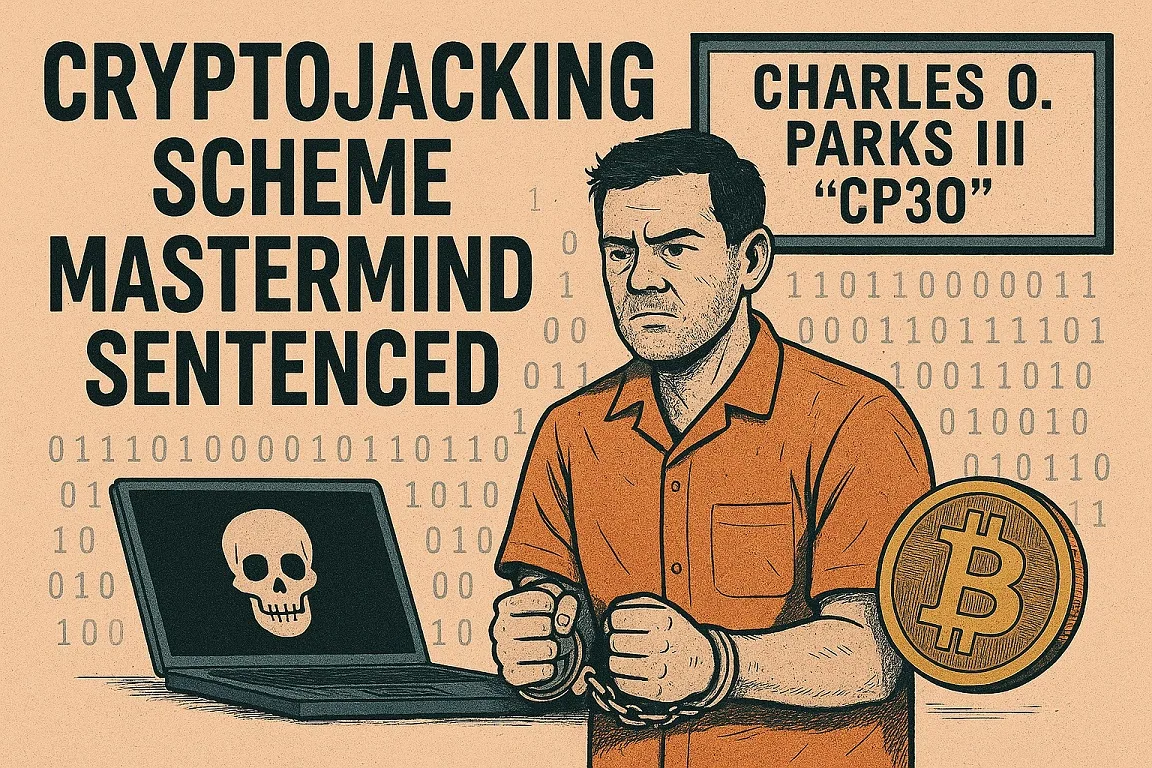
Cryptojacking scheme mastermind Charles O. Parks III, known online as “CP3O,” has been sentenced to a year and a day in prison. Prosecutors accused Parks of orchestrating a complex operation that exploited cloud computing resources to mine cryptocurrencies, netting nearly $1 million in digital assets.
The Mechanics of the Fraud
Parks used fictitious business names such as “MultiMillionaire LLC” and “CP3O LLC” to deceive cloud service providers into granting him elevated access to their computing power. Between January and August 2021, he siphoned off resources valued at over $3.5 million to mine Ether, Litecoin, and Monero.
The Department of Justice revealed that Parks laundered the illicit gains through a variety of channels, including crypto exchanges, an NFT marketplace, and traditional banks. Some of the proceeds funded a lavish lifestyle, featuring a Mercedes-Benz, jewellery, and first-class travel.
Today the US Attorney’s Office, Eastern Dist. of NY unsealed an indictment charging Charles O. Parks III a.k.a. “CP3O”, with operating a large-scale illegal cryptojacking op
He defrauded cloud comp. services out of $3.5mil+ worth of computing resources to mine crypto worth $1mil pic.twitter.com/geXt5BKax6
— jerbz (@JerbztheGreat) April 16, 2024
Legal Repercussions
Parks pleaded guilty to wire fraud in December, a strategic move that helped him avoid heftier charges. The court has ordered him to forfeit $500,000 and the luxury car, with restitution amounts to be determined later. An indictment in April 2024 identified several defrauded accounts linked to prominent cloud and electronics firms in Seattle and Redmond.
The Wider Context of Crypto Crime
The Parks case is not an isolated incident. Recent reports highlight significant losses from scams, including a $3 million USDT phishing attack. Data from security firms indicate that hacks, scams, and breaches have cost the crypto industry approximately $2.50 billion in the first half of 2025 alone.
Wallet breaches accounted for nearly $2 billion across 34 incidents, while phishing attacks resulted in over $400 million in losses from 132 events. These figures underscore the vulnerabilities within the crypto ecosystem.
Why Cloud Providers Are Targets
Cloud services offer vast amounts of CPU and GPU time, making them attractive targets for cryptojackers. Once attackers gain elevated access, they can operate mining rigs at scale, converting compute into cryptocurrency while leaving providers with the bill.
In Parks’ case, the Department of Justice highlighted the scheme as a cautionary tale of how technology access and inadequate vetting can be exploited for profit. New York City Police Department commissioner Jessica S. Tisch emphasised the real-world impact of such tech fraud.
 New York City Police Department commissioner Jessica S. Tisch
Disclaimer: This article is for informational purposes only and should not be considered financial advice.
From the YFarmX archive · originally published on the previous site