IBM’s “Digital Asset Haven” Targets the Institutional On-Chain Stack
IBM has unveiled Digital Asset Haven, a blockchain orchestration platform built with wallet-infrastructure specialist Dfns.
IBM has unveiled Digital Asset Haven, a blockchain orchestration platform built with wallet-infrastructure specialist Dfns. For banks, governments and blue-chip enterprises, the pitch is to ship compliant, production-grade digital-asset services (custody, transaction processing, settlement, and controls) across 40+ chains without reinventing your risk stack.
Tokenisation and custody
The market has moved from pilots to production. Tokenised deposits, stablecoin rails and RWA programmes need boring (but battle-tested) plumbing. The initiative leans on IBM Z and LinuxONE resilience while Dfns brings MPC + HSM custody and policy engines. Combined, Digital Asset Haven offers programmable approvals, granular governance, and policy-driven compliance that regulated teams can actually take through audit. For institutions weighing tokenisation, IBM Dfns looks like a safe harbour.
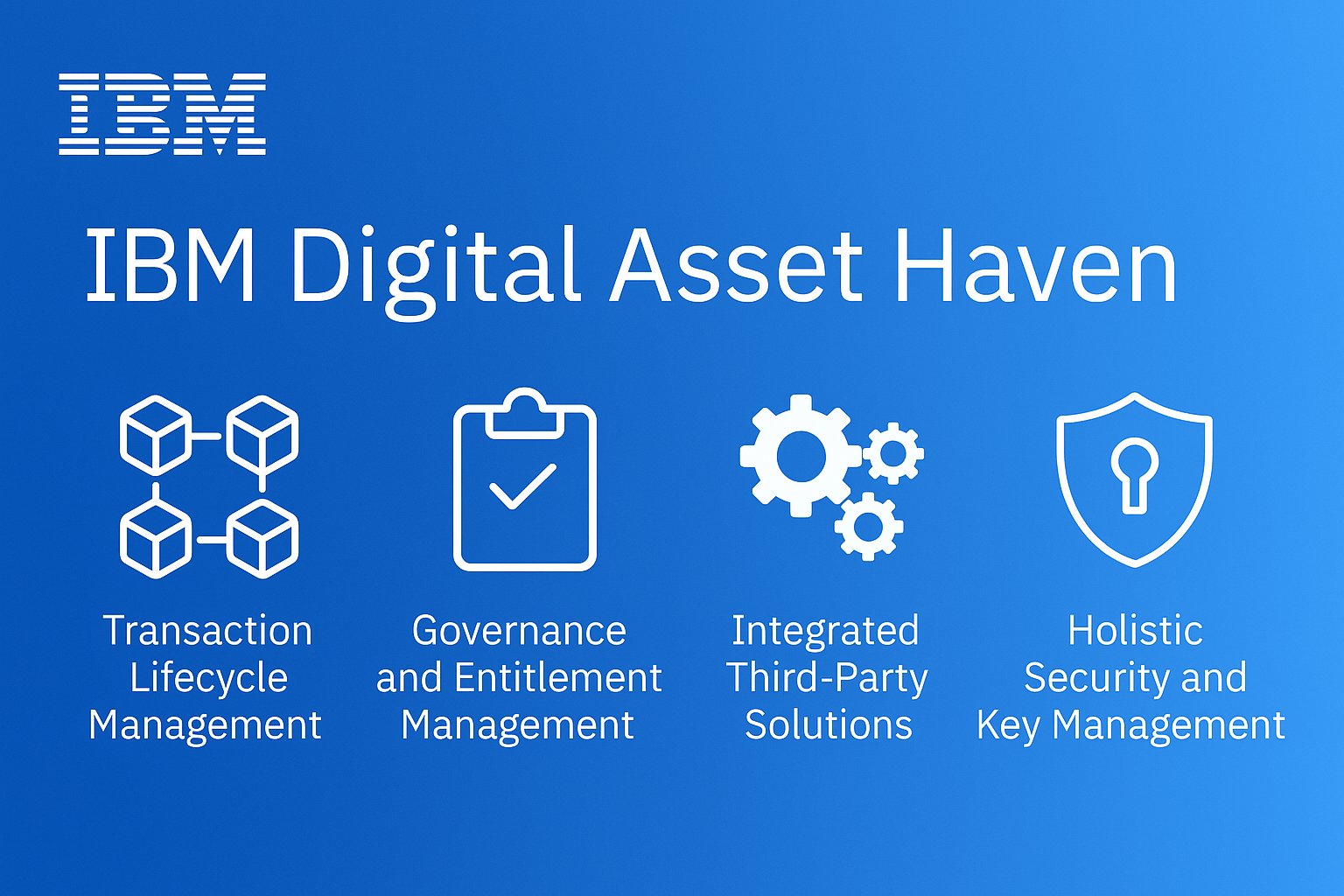
The stack:
- Core infra – IBM Z / LinuxONE for high-assurance workloads.
- Key management & custody – Dfns’ MPC plus HSM, wrapped in enterprise controls.
- Orchestration layer – A unified control plane across public and private chains (40+), so ops teams don’t juggle bespoke connectors.
- Governance & approvals – Programmable multi-party rules to align with three-lines-of-defence.
- Compliance by design – Policy enforcement, segregation of duties, and audit-ready logs baked in.
For banks and the public sector
For banks, IBM’s Digital Asset Haven reduces the lift to stand up tokenised money market products, intraday collateral, or cross-border settlement experiments, without punching holes in the control environment. For governments, it’s a path to modernise registries and payments with on-chain finality while keeping procurement and assurance boxes ticked. The subtext: IBM Dfns is selling operational certainty as much as blockchain access.
Competitive angle
The enterprise blockchain shelf is fuller than it was in 2019, but very little is genuinely production-grade for regulated environments. The initiative differentiates on two axes institutions care about:
- Uptime and recoverability (heritage mainframe reliability), and
- Key management you can defend to auditors (MPC/HSM with policy controls).
That combination makes procurement easier, and time-to-green-light faster.
What to watch next
- Real deployments – Expect early use cases around settlement, treasury tokenisation and controlled stablecoin flows. If it lands one marquee bank plus a government pilot, the flywheel turns.
- Ecosystem adapters – More pre-built connectors into core banking, ERP and AML tools will decide whether it becomes the default orchestration layer.
- Policy momentum – As regulatory clarity deepens, IBM Dfns is positioned to be the “approved path” for on-chain experiments that need to scale.
YFarmX take
Institutions don’t buy buzz; they buy controls. IBM x Dfns reads like a bid to standardise the operational layer of tokenisation (where keys, policies and approvals live) so product teams can focus on revenue rather than wrangling crypto minutiae. If IBM keeps the developer experience clean while Dfns keeps custody invisible (in the best way), Digital Asset Haven could become the place where regulated finance quietly goes on-chain.
Disclaimer: This article is for information only and is not financial advice.
From the YFarmX archive · originally published on the previous site