Kalshi raise signals growth in information markets
The Kalshi raise (one billion dollars at an eleven-billion valuation) turns a once-niche prediction venue into a flagship “information markets” play.

The Kalshi raise (one billion dollars at an eleven-billion valuation) turns a once-niche prediction venue into a flagship “information markets” play. In seven weeks, the platform has more than doubled its paper worth, moving from mid-stage growth bet to one of 2025’s clearest signals that regulated event markets are now a core part of the crypto–finance stack.
Kalshi raise and the information-markets boom
Structurally, the deal is pure late-stage confidence. Returning backers Sequoia and CapitalG led the round, with a16z, Paradigm and others filling out a cap table that now looks like a major exchange. Kalshi has pulled in roughly one and a half billion dollars since its 2018 launch, stacking a three-hundred-million Series C in October at five billion and a mid-year round at two billion before this latest spike.
The pitch has barely changed, but the scale has. Kalshi offers CFTC-regulated “event contracts” on elections, CPI prints, sports, entertainment and cultural outcomes, all in fiat. Trading volume has exploded from hundreds of millions in 2024 to over fifty billion dollars annualised, with monthly active users into the low millions and thousands of listed markets. Election cycles and macro volatility have done the marketing; liquidity has followed the signal.
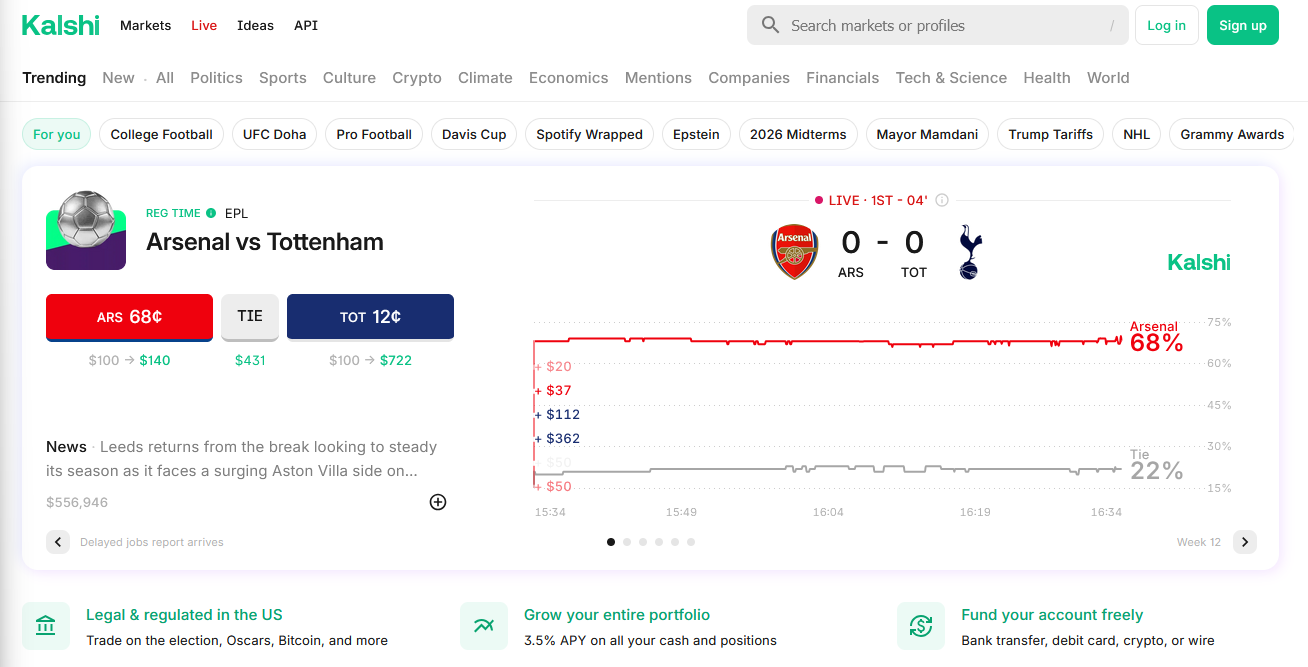
Winning its 2024 lawsuit against the CFTC was the hinge moment. Federal approval for election contracts gave Kalshi a legal moat in the U.S., just as prediction markets were rediscovering their relevance after calling key races and macro data more cleanly than many polling outfits. The platform has since leaned into that status, integrating feeds into Google Finance, Robinhood and other retail and data channels to turn odds into a native part of the market dashboard.
On those numbers, the Kalshi raise is about crystallising its place in the new market stack: part betting venue, part sentiment oracle, part macro dashboard. VC money is following the liquidity. Prediction platforms are now attracting larger cheques than many L1s and L2s, because they sit at the junction of derivatives, data and narrative – three things investors understand.
Kalshi x @StockX
Labubu. Supreme. Pokemon. Jordans.
Trade collectible prediction markets.
Only on Kalshi. pic.twitter.com/EbN3HiP1G9
— Kalshi (@Kalshi) November 19, 2025
Disclaimer:
This article is for information purposes only and does not constitute investment, legal, tax, or other professional advice.
From the YFarmX archive · originally published on the previous site