Monad airdrop impact: Initial reactions
Monad’s long-trailed mainnet went live on Monday, but the monad airdrop that came with it landed hard.
Monad’s long-trailed mainnet went live on Monday, but the monad airdrop that came with it landed hard. Instead of a clean “community-first” victory lap, $MON opened on major exchanges, slipped below its ICO price within hours, and left a sizeable chunk of early supporters feeling rug-adjacent rather than rewarded.
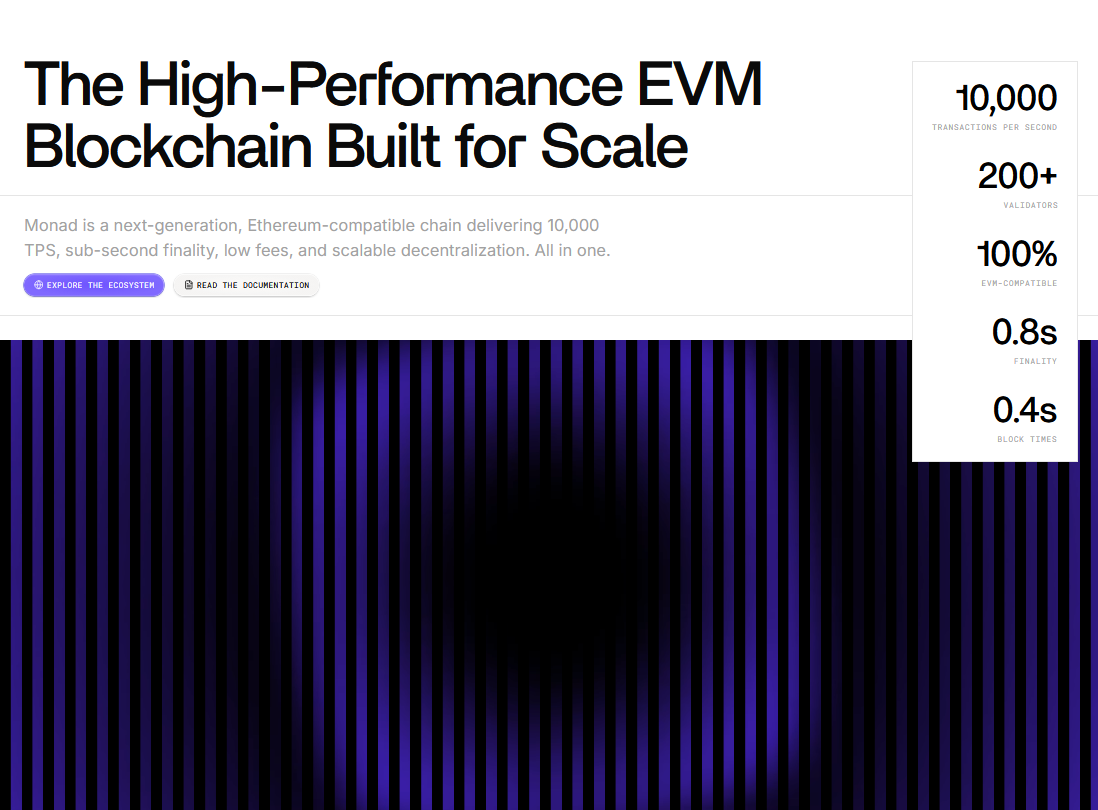
Monad did not appear from nowhere. Earlier in 2025, Monad Labs pulled in roughly two hundred and twenty-five million dollars in seed capital at a three-billion-dollar valuation, selling itself as an EVM-compatible, Solana-speed alternative: parallel execution, ten-thousand-plus transactions per second, one-second blocks. By the time Coinbase ran a seven-and-a-half-percent public sale at two-and-a-half-cent per token (raising around 187 million dollars) the fully diluted valuation was already in flagship-L1 territory.
Pre-market trading on venues like Whales Market only cranked expectations higher. $MON changed hands in the 5-6 cent range, implying a paper valuation north of thirteen billion dollars and turning the launch into a social-media referendum on whether the “next Solana” had finally arrived.
How the monad airdrop was structured
The airdrop itself amounted to 3.3 percent of supply (3.3 billion $MON) spread across more than two hundred and thirty thousand wallets. On paper it was neatly segmented: a track for high-activity testnet contributors, another for “Crypto Twitter” engagement, a bucket for ecosystem partners and NFT-linked drops, plus a general “crypto native” slice. Anti-Sybil filters were aggressive, with farms of thousands of wallets reportedly stripped out.
In practice, the distribution looked far less elegant. A relatively small cohort of roughly five thousand heavy testnet users shared forty percent of the pool, but many still reported what they considered “crumbs” after months of testing. Meanwhile, a far broader social-engagement track sprayed smaller allocations at hundreds of thousands of wallets, including influencers who had spent the year mocking Monad and then promptly dumped into day-one liquidity.
For many testnet regulars, the monad airdrop felt like a bait-and-switch: they did the slow, boring work of breaking a testnet, only to watch a mass of social-media accounts and ecosystem adjacencies get similar or better treatment. That sentiment was sharpened by the presence of well-funded backers (roughly 20 percent of supply earmarked for VCs and team, on multi-year vesting) after more than 400 million dollars had already been raised across private and public rounds.
Price action: hype, dump, hangover
The trading pattern was textbook. $MON opened around 2.8 cents on Kraken, briefly tracked the ICO level, then slid into the low 2 cent band as farmers and social recipients hit the sell button. Early public-sale buyers, who had watched pre-market quotes at double their entry, suddenly found themselves 10-20% underwater.
High fully diluted valuations cut both ways. At 2.5 billion to 3 billion-dollar FDV, Monad is priced like a chain with established DeFi, real fees and proven resilience. On day one, it had a fast chain, a lot of speculation and a distribution fight.
Trust, incentives and what happens next
None of this means the chain is dead on arrival. Mainnet activity is already visible: NFT mints, early memecoin experiments, yields bootstrapped on first-wave protocols, bridges wired into familiar wallets. Grants, ecosystem funds and exchange campaigns will almost certainly drag more liquidity and builders across.
A thread of things to try on mainnet 👇
(Bookmark this)pic.twitter.com/fFiNAiSxs9
— Monad (mainnet arc) (@monad) November 23, 2025
But the launch has turned into a live case study in how not to message a “community” campaign. Calling something a monad airdrop sets expectations that go beyond the percentage of supply. People benchmark against past cycles: Arbitrum and Optimism retrodrops, Solana ecosystem showers, the occasional life-changing allocation for genuine early users. Anything that feels closer to a marketing budget than a thank-you note is going to be punished in the order book.
Over the next few quarters, Monad’s problem is less technical than social. Parallel EVM, fast blocks and clever engineering are table stakes in 2025. What will matter is whether the team can turn the monad airdrop backlash into a longer-term participation model (retroactive rewards, on-chain missions, builder-centric incentives) or whether this week’s anger calcifies into a narrative about insiders cashing out while everyone else holds the bag.
Until that is clear, $MON trades as much on trust as on throughput.
Disclaimer: This article is for informational purposes only and does not constitute investment, financial, or trading advice. Always do your own research and never invest more than you can afford to lose.
From the YFarmX archive · originally published on the previous site