OCC gas fee letter quietly normalises banks on public chains
In Interpretive Letter 1186, the U.S. Office of the Comptroller of the Currency (OCC) confirms that national banks can hold crypto on their own balance sheets purely to pay blockchain transaction costs. If a bank wants to move customer assets on Ethereum, it can hold a working float of ETH for gas.
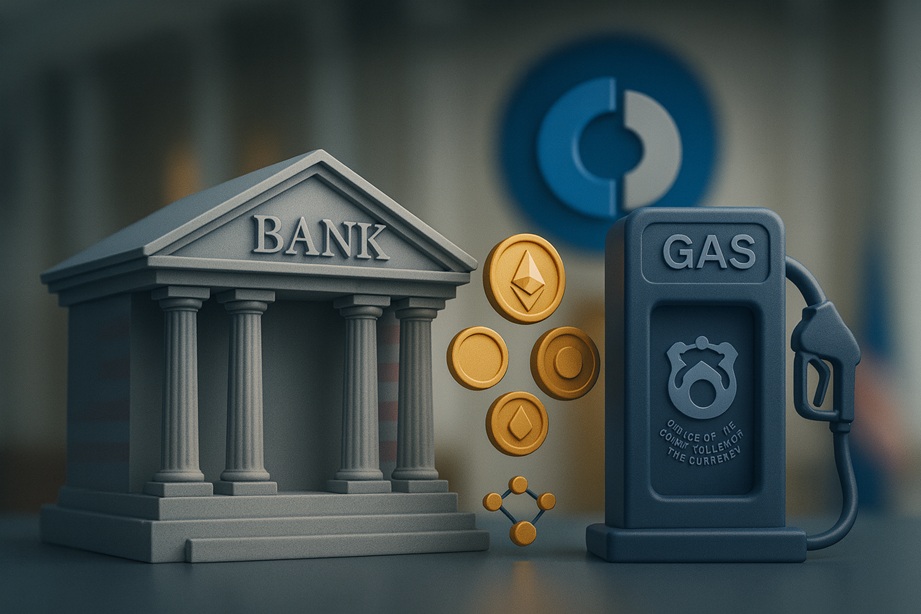
In Interpretive Letter 1186, the U.S. Office of the Comptroller of the Currency (OCC) confirms that national banks can hold crypto on their own balance sheets purely to pay blockchain transaction costs.
If a bank wants to move customer assets on Ethereum, it can hold a working float of ETH for gas. If it wants to run settlement flows over Solana or test an internal custody platform, it can keep enough SOL or BTC to cover network fees. Those holdings are treated as an incidental cost of doing business.
The letter carves out several specific permissions:
- Paying network fees. Banks may pay gas fees as agent (on behalf of customers) or as principal (for their own operations), so long as the underlying activity (custody, settlement, payments) is already permissible.
- Holding small crypto balances. Banks can maintain modest token balances for “reasonably foreseeable needs,” calibrated to expected transaction volumes rather than punts.
- Testing and tooling. Crypto can also be held to test platforms, smart contracts or new rails before they go live, provided the usual safety-and-soundness rules are followed.
What the OCC very clearly does not bless is banks running proprietary trading books or parking excess capital in native tokens under the guise of “gas”. Positions must be operational, sized to need, and fully wrapped in risk controls for volatility, liquidity and compliance.
Disclaimer
This article is for information only and does not constitute investment, legal or tax advice. Cryptoassets are high-risk and you could lose all capital.
From the YFarmX archive · originally published on the previous site