Pengu Dusting Scam: Protect Your Assets
Uncover the Pengu dusting scam plaguing Solana. Learn how to protect your crypto from sophisticated threats.
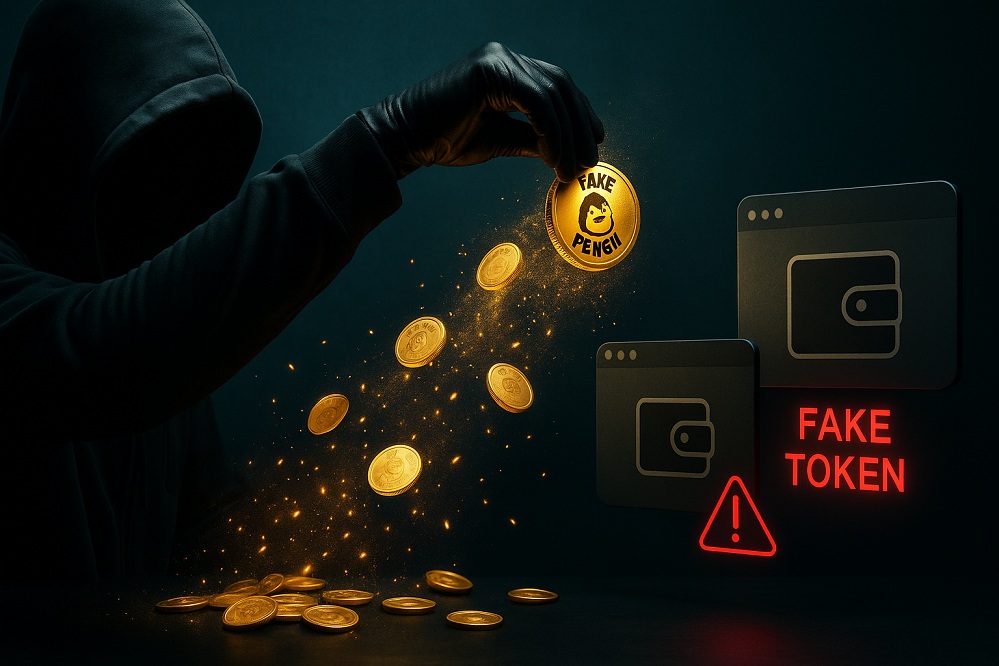
The crypto community is once again on alert, grappling with a $pengu dusting scam on the Solana blockchain. Scams targeting the $PENGU token have become increasingly sophisticated, leaving holders exposed to significant financial losses.
Security expert Beau, under the handle @beausecurity, recently revealed the intricate workings of this emerging scam. With over $100,000 lost to date, the scam employs a mix of social engineering and blockchain trickery to deceive unsuspecting victims. Below, we explore the mechanics, technical aspects, and broader context of such attacks, offering actionable insights for protection.
Scam Mechanics: The Dusting Trap
The scam unfolds with minute amounts of $PENGU (often as little as 0.00003) distributed to numerous wallets. These transactions come from dubious addresses. This dusting serves only as bait, exploiting user curiosity to investigate these tokens on blockchain explorers like Solscan.
Are you getting airdropped tiny amounts of $PENGU? Watch out – it’s a scam!
Scammers are “dusting” wallets with $PENGU with one goal: directing you to a scam site.
So how does it work? 🧵 pic.twitter.com/f7EUpJJukj
— Beau (@beausecurity) July 27, 2025
The next stage involves vanity address names, which are deceitfully crafted to mimic legitimate entities such as the Pudgy Penguins NFT project. Users tricked by these names search them online, inadvertently landing on phishing sites that impersonate genuine platforms. Connecting wallets to these sites results in malicious transactions that siphon off funds, particularly targeting high-value tokens like $SOL.
Solana: Low Costs, High Exploitability
Solana’s infrastructure underpins the scam’s efficacy. According to its official documentation, each transaction bears a base fee of merely 5,000 lamports (about 0.000005 $SOL or $0.001 USD, assuming $SOL trades at $200). This minimal cost enables scammers to dust thousands of wallets inexpensively, contrasting sharply with Ethereum’s costlier transactions.
The use of vanity addresses adds further sophistication. As detailed by CertiK, scammers utilise these to mimic legitimate wallets, manipulating the recognition and trust of users. This tactic has proven devastatingly effective in increasing the credibility and click-through rates of phishing attempts by 30%, as corroborated by the 2024 Scam Sniffer report.
Context and Consequences
Dusting attacks are not novelties but have evolved with blockchain dynamics. Dusting includes techniques to track wallet activity, de-anonymising holders for targeted phishing or extortion. The Journal of Cybersecurity estimates these attacks have touched over 10% of active blockchain wallets, leading to annual losses exceeding $50 million. On Solana, the platform’s rapid processing speeds and low fees make it particularly susceptible.
Real-World Impact and Community Actions
Victims have already shared their experiences, with users like @JediEth0 reporting substantial $SOL losses, while Phantom, a leading Solana wallet, has begun flagging suspicious tokens. Yet, without a comprehensive nickname feature, users remain dependent on manual verification of smart contracts. Recommended tools, such as Kerberus, provide essential transaction analysis to detect potential threats, crucial in a decentralised environment.
The financial fallout from these scams is significant. The Pudgy Penguins community is particularly vulnerable due to a $2.7 billion market cap.
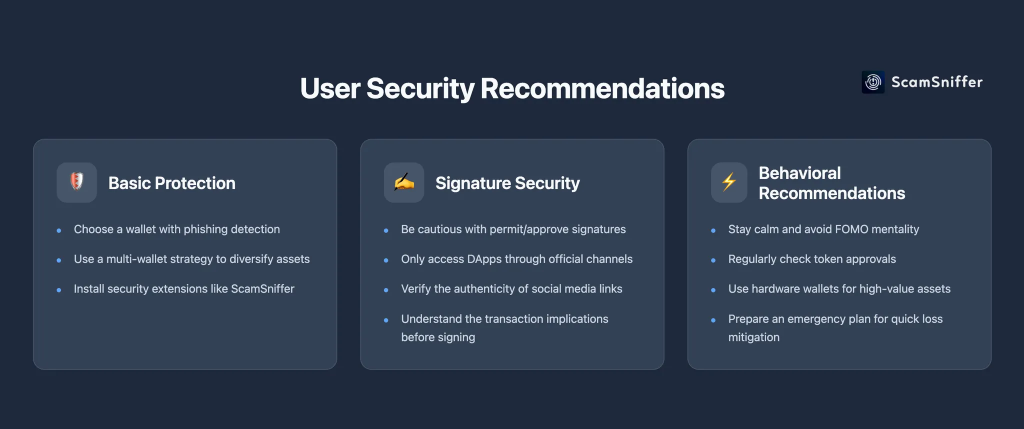
Protecting Yourself: A Checklist
1. Verify Contracts: Cross-check token addresses on trusted Solana explorers. The genuine $PENGU contract is distinct from scam entities.
2. Dismiss Unsolicited Airdrops: Treat unexpected token distributions with suspicion.
3. Utilise Security Tools: Deploy scanners like Kerberus to review transactions before approval.
4. Educate and Alert: Share alert messages and report phishing sites to Solana’s security teams. Community awareness is paramount.
5. Audit Regularly: Frequently examine wallet activities and consider cold storage for high-value assets.
A Collective Defence Strategy
As crypto continues to attract bad actors, this dusting scam highlights the vulnerabilities inherent in decentralised systems.
*Financial Disclaimer: This article does not constitute financial advice. Always conduct your own research or consult a professional advisor before engaging in cryptocurrency transactions.
From the YFarmX archive · originally published on the previous site