Tether downgrade: Ardoino hits back at S&P’s ‘weak’ label
On 30 November 2025, Tether chief Paolo Ardoino issued a fresh X thread attacking S&P’s “weak” USDT rating.
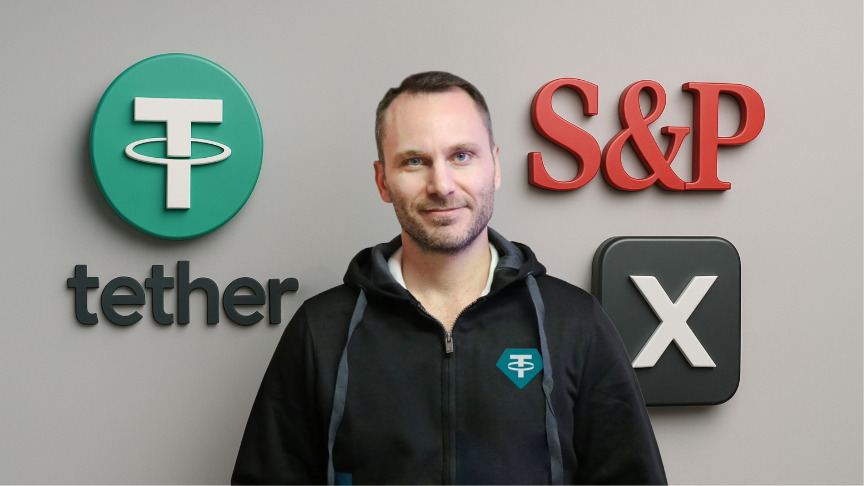
On 30 November 2025, Tether chief Paolo Ardoino issued a fresh X thread attacking S&P’s “weak” USDT rating. Citing the latest attestation (about $215 billion of assets against $184.5 billion of liabilities and sizeable equity and earnings buffers) he dismissed S&P’s legacy framework as blind to Tether’s balance sheet and on-chain disclosure, restating in sharper terms the objections he first raised on 26 November.
re: Tether FUD
From latest attestation announcement (Q3 2025):
“Tether will continue to maintain a multi-billion-dollar excess reserve buffer and an overall proprietary Group equity approaching $30 billion.”
Tether had (at end of Q3 2025) ~7B in excess equity (on top of the…
— Paolo Ardoino 🤖 (@paoloardoino) November 30, 2025
Ardoino’s case against the Tether downgrade
Ardoino’s response centres on Tether’s own Q3 2025 attestation. He points to roughly 215 billion dollars in total assets against about 184.5 billion in stablecoin liabilities, plus around 7 billion in excess equity and a further 23 billion in retained earnings at group level. In his view, that stack of capital, together with an estimated 500 million dollars a month in income from US Treasury holdings, leaves USDT far from fragile.
He argues that the Tether downgrade treats these cushions as incidental while fixating on the rise in bitcoin, gold and other higher-risk holdings inside the reserve. In posts and statements he describes S&P’s framework as a “classical” ratings model built for legacy banks, not for a token redeemed on demand and backed mainly by short-term government paper.
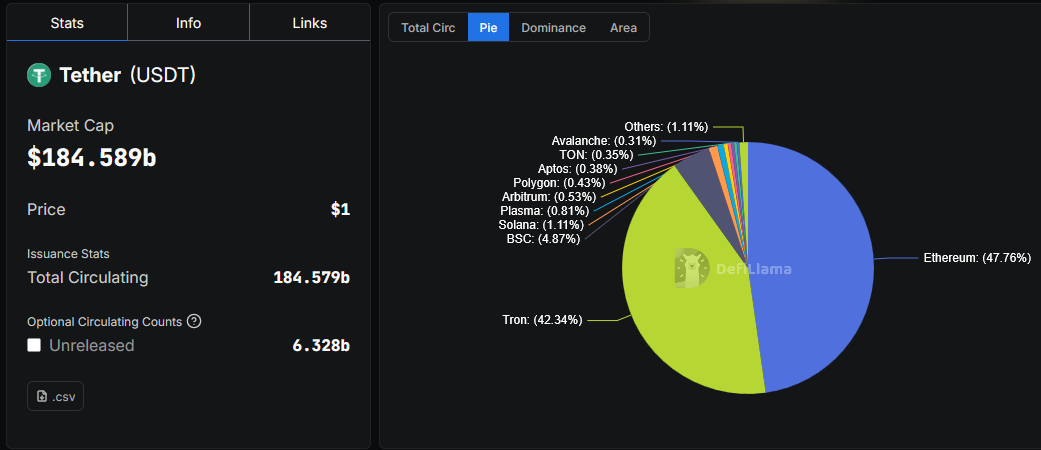 https://defillama.com/stablecoin/tether
A public fight over who judges Tether
The tone has been deliberately combative. Addressing S&P directly, Ardoino wrote that Tether would “wear your loathing with pride”, and accused “the traditional finance propaganda machine” of growing nervous when a crypto firm sits on more profit and equity than many regulated institutions.
S&P be like https://t.co/gGBOPhrVFX
— Paolo Ardoino 🤖 (@paoloardoino) November 27, 2025
Critics reply that this does not change the underlying arithmetic S&P flagged: a quarter of reserves now in higher-risk assets and bitcoin exposure larger than the reported over-collateralisation margin. Supporters counter that the Tether downgrade is another example of legacy tools trying to force a new instrument into an old template. Either way, Ardoino has chosen to meet the rating in public, on his own terms, rather than quietly reshape the reserve mix to court a higher score.
Disclaimer
This article is for information and education only. It is not investment, legal, tax or financial advice. Always do your own research and consider speaking to a qualified professional before making financial decisions.
From the YFarmX archive · originally published on the previous site