Tether USDT downgrade: what S&P’s ‘weak’ rating actually says
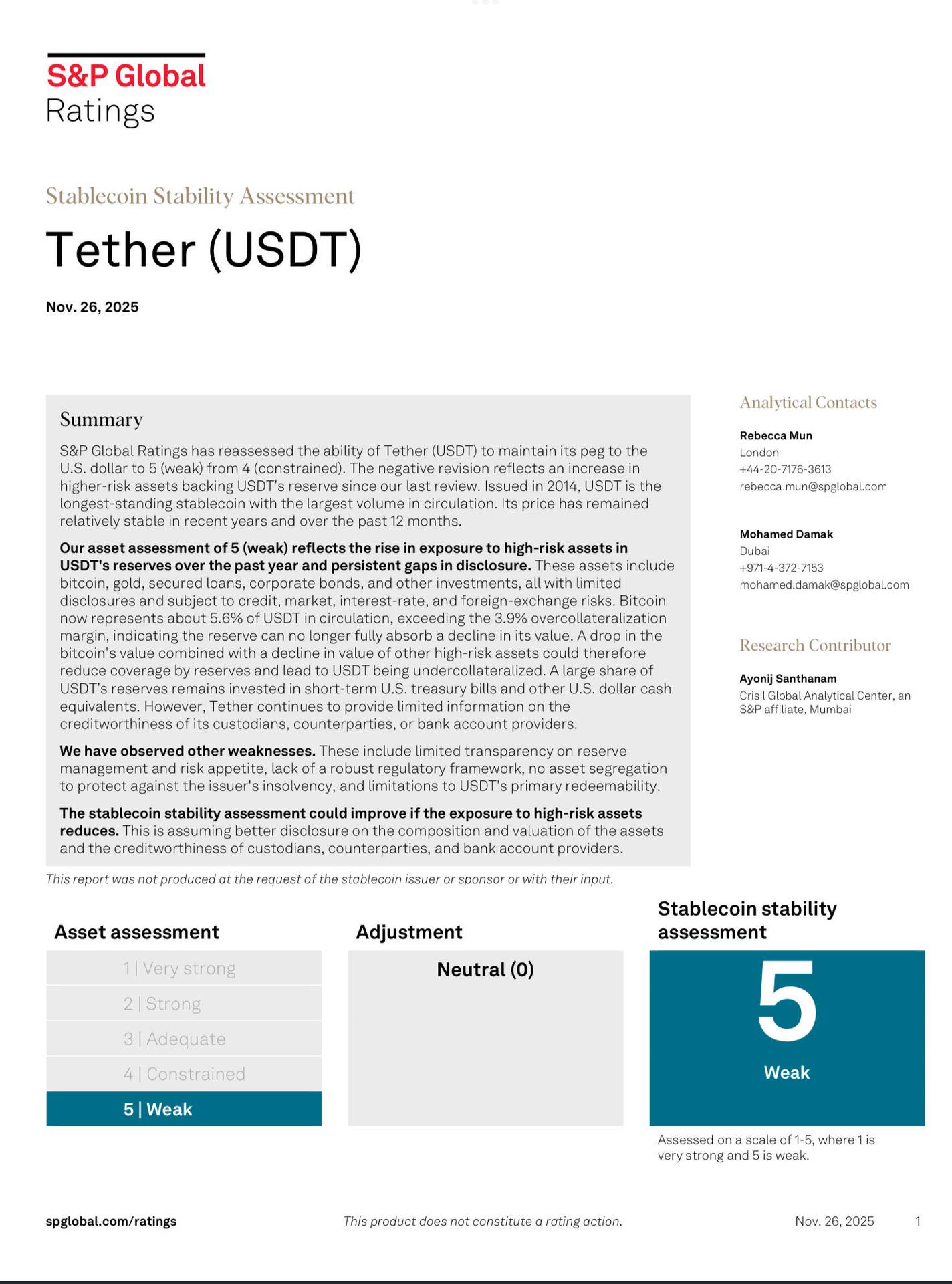
On 26 November 2025, S&P cut USDT from “4 (constrained)” to “5 (weak)” on its stablecoin stability scale, citing a growing tilt towards risk assets in the backing and persistent disclosure gaps around who actually holds and manages that collateral.
On 26 November 2025, S&P cut USDT from “4 (constrained)” to “5 (weak)” on its stablecoin stability scale, citing a growing tilt towards risk assets in the backing and persistent disclosure gaps around who actually holds and manages that collateral.
What S&P means by a ‘weak’ Tether USDT downgrade
S&P’s scale runs from 1 (strong) to 5 (weak) and is meant to answer a narrow question: how likely is this coin to hold its peg through stress, given its reserves, legal structure and transparency. A “5” does not say USDT will break tomorrow; it says its risk profile looks worse than peers on those criteria.
Moving Tether into the bottom tier is a signal that, in S&P’s view, the margin for error has shrunk. USDT has kept its one-dollar mark through several market shocks, which S&P explicitly acknowledges, but the agency is now more focused on what happens if those reserve assets move the wrong way at scale.
How Tether’s reserves shifted in 2025
The core of the downgrade is the changing mix behind USDT. S&P points to a rise in higher-risk holdings in Tether’s reserves over the past year: bitcoin, gold, corporate bonds, secured loans and other investments. Those now account for roughly a quarter of the backing, up from the high-teens percentage range a year earlier.
Short-term US Treasuries still make up the bulk of reserves, but their share has fallen, and the overcollateralisation buffer has narrowed. One detail S&P highlights is that bitcoin alone is estimated at about 5.6% of reserves, a larger slice than the roughly 4% capital buffer that sits above the value of tokens in circulation. If bitcoin were to fall sharply, that gap could disappear, it says.
On top of that, S&P flags what it calls “persistent gaps in disclosure”: limited detail on where assets are held, how they are segregated, the terms of secured loans, and the credit quality of counterparties. Tether still publishes attestations rather than full audits, and has shifted parts of its structure to lighter-touch jurisdictions, which the agency treats as additional legal and governance risk.
Does the downgrade threaten the peg?
In practical terms, nothing in the Tether USDT downgrade forces redemptions to stop or the peg to move. USDT remains the largest stablecoin, with around 180 billion dollars’ worth of tokens outstanding and very deep secondary markets.
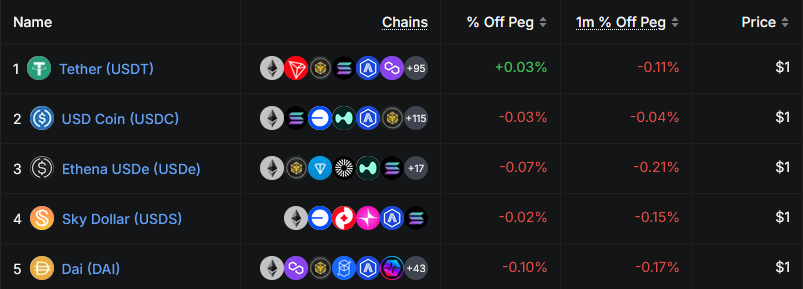 Tether still sits at the top of the stablecoin roster. Source: https://defillama.com/stablecoins
Tether’s response has been to dismiss the rating as using the wrong tools for the job. The company points to billions in profits, a long record of keeping redemptions open, and a view that traditional credit-style frameworks are not built for a token that is effectively callable at par on demand. Executives have characterised some of the commentary as propaganda rather than neutral analysis.
Still, S&P’s concern is straightforward: if a material slice of the reserve behaves like a leveraged macro book rather than a cash pile, then USDT’s stability is tied not only to short-term Treasuries but also to bitcoin, gold and credit markets. In a calm market that distinction barely matters. In a genuine liquidity crunch, it could.
What the Tether USDT downgrade means for markets
S&P’s move matters less for retail traders than for big venues and custodians, where “lowest tier on S&P’s scale” is now a line risk committees have to read. It also hands higher-rated rivals a simple pitch: if you want a cleaner dollar in crypto, use ours, not Tether’s.
Disclaimer
This article is for information and education only. It is not investment, legal, tax or financial advice. Always do your own research and consider speaking to a qualified professional before making financial decisions.
From the YFarmX archive · originally published on the previous site