Zcash’s privacy promise – and the edge where surveillance lives
Privacy rarely breaks at the math, it frays at the edges. As Zcash draws fresh attention, it’s worth separating robust on-chain cryptography from the real-world seams (servers, traffic patterns and defaults) where observers have always found leverage.
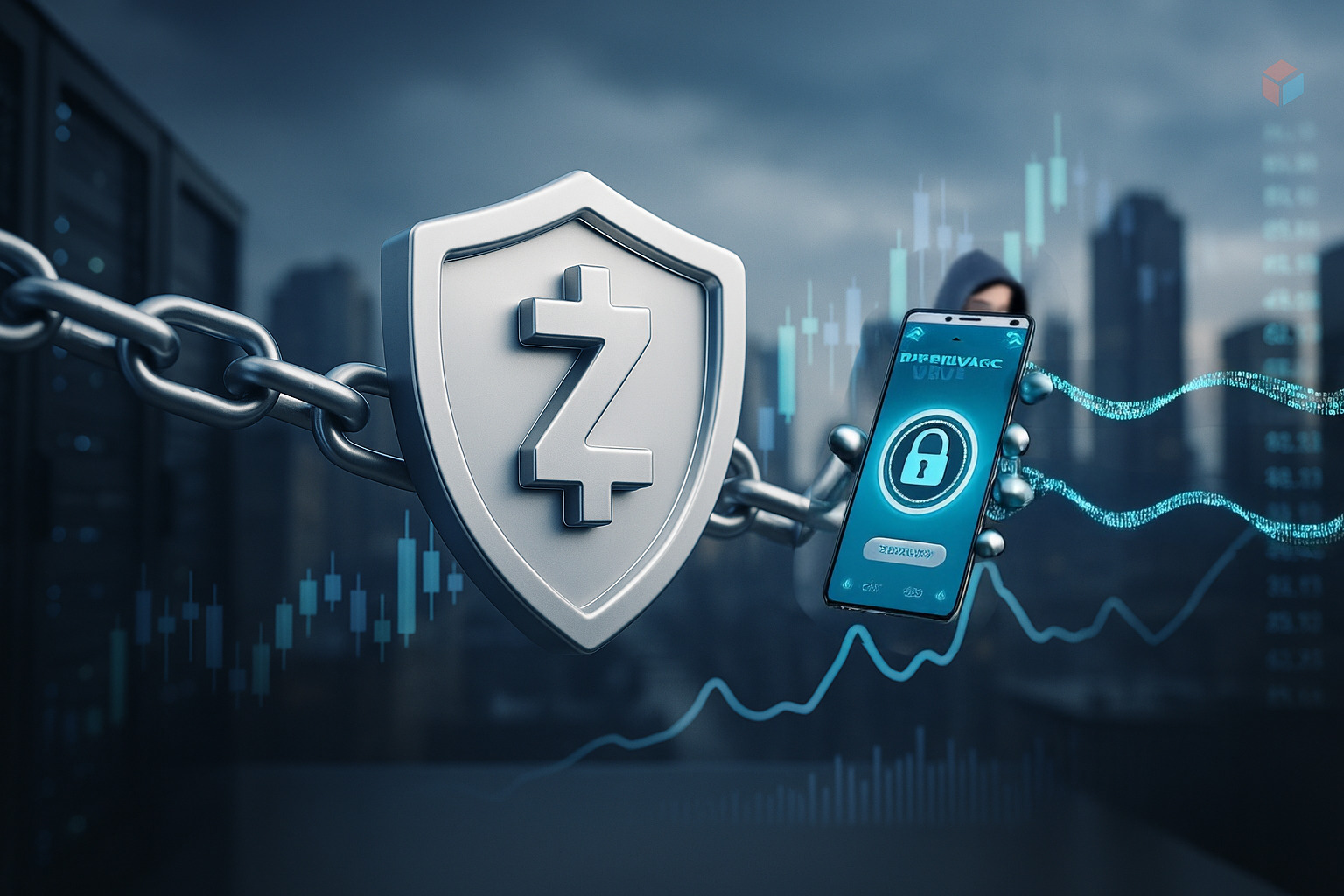
Privacy rarely breaks at the math, it frays at the edges. As Zcash draws fresh attention, it’s worth separating robust on-chain cryptography from the real-world seams (servers, traffic patterns and defaults) where observers have always found leverage.
What history already taught us
A decade of disclosures established a pattern. Signals agencies didn’t need to “break” modern cryptography to learn a lot; they watched the edges and correlated metadata. Reporting based on the Snowden archive described NSA programmes such as OAKSTAR / MONKEYROCKET aimed specifically at tracking cryptocurrency users, not by decrypting ledgers, but via upstream network collection and service-level vantage points.
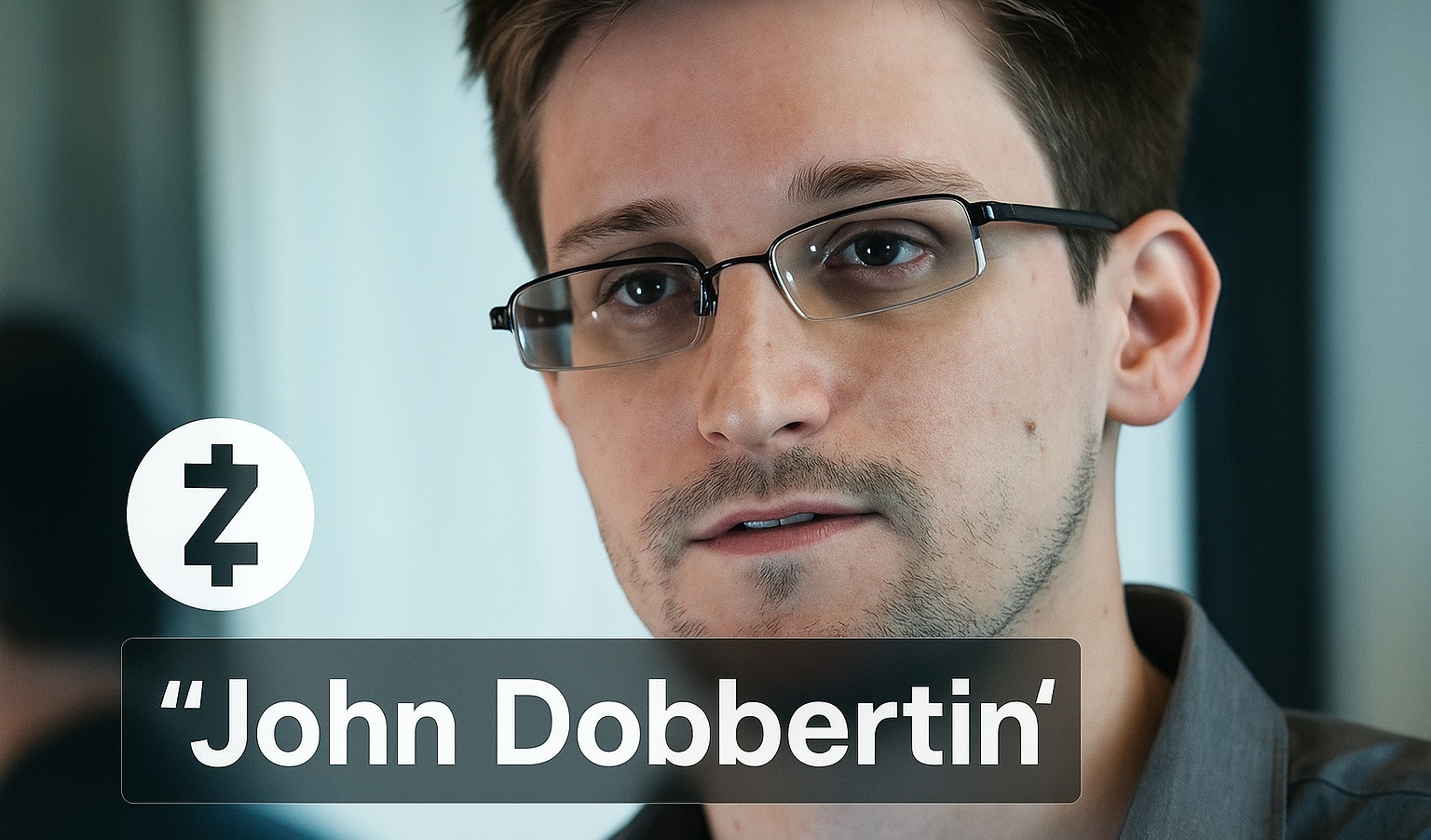 Edward Snowden later revealed he was “John Dobbertin,” a pseudonymous participant in Zcash’s 2016 setup ceremony.
Domestic law-enforcement went the procurement route. In 2020 the IRS awarded two Monero-tracing contracts (up to $625k each) to Chainalysis and Integra FEC to develop tools and techniques. Around the same time CipherTrace announced DHS-funded patents for Monero tracing built around statistical/probabilistic methods (classic metadata work, not decryption).
Where Zcash is strong – and where it’s exposed
On-chain, Zcash’s privacy story is at its strongest since launch. Orchard/Halo2 removes the historic “toxic-waste” trapdoor risk for new shielded activity and has benefited from years of academic and industrial scrutiny. The light-client pathway, however (how most people actually use Zcash on phones) is where the practical risks sit.
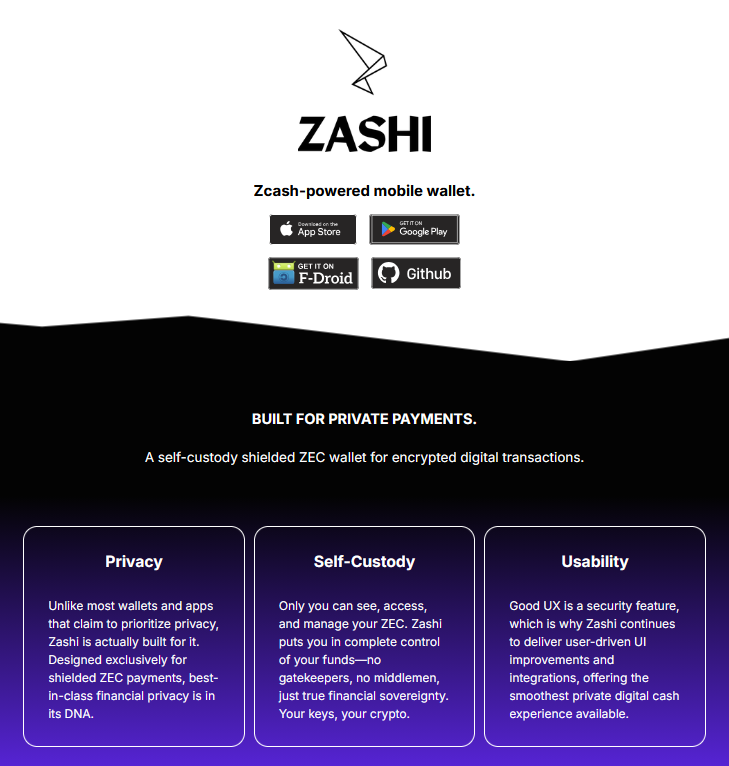 The ZASHI mobile wallet.
- What lightwalletd is. Zcash mobile wallets (Zashi, YWallet) don’t download the full chain. They query lightwalletd, a stateless gRPC server that fronts a full node (Zebra or
zcashd) and serves compact blocks, transactions and memos. It’s open source and actively maintained. - What Zashi adds. Recent versions introduced Tor (Arti) integration and can route wallet traffic over Tor (Tor hides IP, not app-layer timing). Current builds route some lightwalletd calls over Tor, with controls in settings; not every API path (e.g., some streaming/CompactBlocks) is Tor-wrapped yet.
The concrete leakage today
- IP & timing at the server edge.
Without Tor, a lightwalletd operator (or its ISP/cloud under order) learns your IP and precise sync/broadcast timing; TLS hides contents, not sizes and bursts. Tor strips the IP but not the higher-layer timing. - “Memo-fetch” linkage (recipient inference).
After a wallet detects an incoming note, it typically fetches the full transaction (including the memo). A server (or a nearby passive observer) can correlate a sender’s broadcast with another client’s subsequent memo fetch and infer links, especially when blocks are quiet. This behaviour motivated ZIP-314 (proposed in 2021), but it remains ‘ Reserved ‘ (no finalised spec); the discussed mitigations (padding, cover traffic, indistinguishable memo retrieval) have not been standardised nor deployed.

- Default-server concentration.
If many wallets funnel through one or two “default” endpoints, a single operator (or whoever can legally compel them), gets outsized visibility. This is a governance and UX problem, not a cryptographic one.
What would count as credible proof the edge is no longer leaky?
No operator can prove a negative (“we will never leak metadata”). But the ecosystem can raise the standard of evidence:
- Protocol changes on by default (ZIP-314-class).
Ship indistinguishable memo retrieval (e.g., fetch-all/padded requests), plus cover-traffic / rate-shaping so “send/receive” events are not fingerprintable. Despite early conversations, ZIP-314 did not progress beyond a proposal. Reasons likely include bandwidth, UX, and coordination costs. - Independent traffic-analysis audits.
Commission third-party studies that collect server-side traces across scenarios (idle, receive, send, rescan) and show that a lightwalletd operator cannot statistically distinguish who received a note or link broadcasts ↔ memo fetches under default settings. Publish methods and anonymised traces. - Build & distribution assurances.
Use reproducible builds(Android via F-Droid) with third-party attestations, and for iOS provide tagged source, a Software Bill of Materials (SBOM), and visible code-review artefacts. Keep telemetry minimal and off by default, with a published data schema. Distribute signed server lists (or allow manual entry) with clear provenance to reduce any risk of CDN-level steering. - Server diversity & governance.
Plural, well-documented public endpoints with uptime/version status; clear deprecation paths; and a no single default ethos in wallet UX.
These are achievable, testable steps. None “proves” a server can never leak, but together they minimise what a server could learn and make claims falsifiable.
The teams continue progress on zcashd deprecation,
lightwalletd now getting its final major feature: transparent data addition to the compact block processor.
This boosts privacy & reduces what servers can infer from user queries. 🛡️— ZcashNigeria (@ZcashNigeria) November 1, 2025
Talk about reducing what servers can infer from user queries.
Prudent approach
- Using Tor in your wallet and verifying it’s enabled. That removes the easiest IP-linkage.
- Changing the server or (best) running your own lightwalletd behind your own full node (Zebra/
zcashd), ideally as an .onion , and pointing your wallet to it. The official lightwalletd repo and docs cover setup; releases are active. - Preferring Orchard for new funds (cryptographic soundness and future-proofing).
- Treating “most private by default” claims with care until wallets can point to ZIP-314-level defaults and independent audits.
Our final thoughts
For everyday privacy, Zcash remains a solid choice. If you want to keep your transactions hidden from most people (friends, exchanges, advertisers) it does that job exceptionally well. The caveat is scale: state-level actors with broad network visibility can likely still trace patterns if they truly want to, but most ordinary observers will see nothing at all.
And so Zcash’s math is strong, but the light-client hop is an observability chokepoint. It’s reasonable to assume motivated observers will watch that layer. For people with high threat models (citizen journalists, activists or anyone specifically trying to evade state-level scrutiny) there are technical options (Tor, running your own lightwalletd behind a full node, favouring Orchard for new funds). ZIP-314-style mitigations were discussed but never advanced; until something like that is widely adopted and independently audited, treat the lightwalletd hop as the part of the system that deserves the most care.
Disclaimer: This article is for information and research purposes only. This is descriptive, not an endorsement — anyone considering these measures should weigh legal and operational risks carefully. It does not allege wrongdoing, or constitute legal, financial, or security advice. Readers should verify technical claims independently and use their own judgement when configuring wallets, servers, and network settings.
From the YFarmX archive · originally published on the previous site