
Buenos Aires Crypto Taxes: A New Era
Buenos Aires crypto taxes now allow residents to pay city levies using cryptocurrencies, marking a significant shift in tax payments.
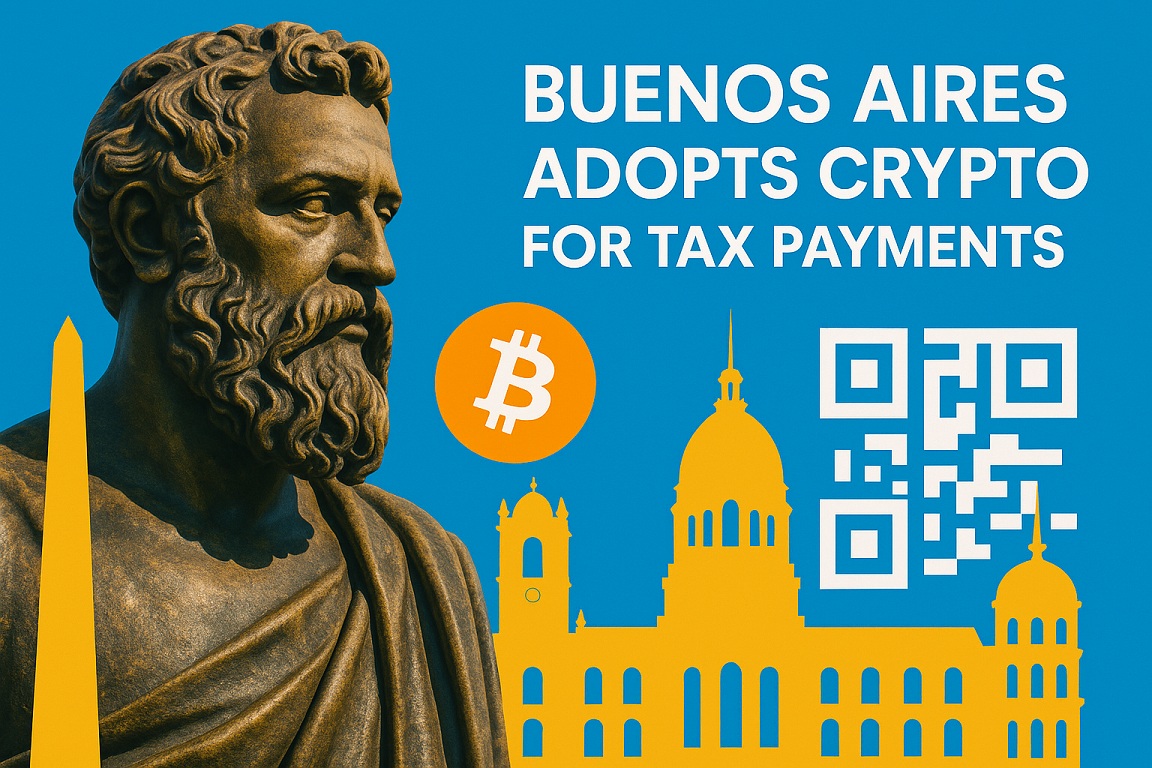
Buenos Aires crypto taxes have taken a bold step forward with the launch of “BA Cripto,” a policy that enables residents and businesses to pay city taxes and fees using cryptocurrencies. This initiative, rolled out on 19 August 2025, covers a range of municipal levies such as property tax (ABL), vehicle tax (Patentes), and turnover tax (Ingresos Brutos), along with non-tax procedures like driver’s licences and traffic fines.
A Comprehensive Crypto Strategy
City Hall’s move isn’t merely a payment option. The government introduced four key measures: incorporating crypto-related activities into the city’s economic nomenclature to simplify filings, excluding virtual-asset service providers (PSAVs) from certain bank-collection regimes, shifting the taxable base for crypto trading from gross transaction value to net spread, and facilitating QR crypto payments for taxes and services. This regulatory update aims to reduce friction and align taxation with digital asset market operations.
Nuevas medidas para modernizar el sistema tributario de la Ciudad: el objetivo es facilitar las inversiones extranjeras, innovar acompañando el crecimiento de nuevas industrias y posicionar a Buenos Aires como referente cripto en el mundo. pic.twitter.com/I1xAIXYcXx
— Buenos Aires Ciudad (@gcba) August 19, 2025
Mayor Macri’s Vision
Mayor Jorge Macri presented the initiative as a step toward institutional modernisation, aiming to attract investment and simplify compliance. “The goal is for the City to be a world leader in crypto,” he stated, highlighting the reduction of bureaucracy and the support for new companies. Macri’s remarks were delivered at The Slow Kale in Colegiales, a venue accepting crypto payments.
 Mayor Jorge Macri
Growing Crypto Usage
The backdrop to this initiative is increasing crypto usage. City data shows approximately 10,000 Buenos Aires residents receive income from abroad via crypto or PayPal. Nationwide, Argentina has over 10 million crypto accounts, representing about 22% of Latin America’s total. These figures justify tailored rules and public-service rails that accommodate digital assets.
Impact on Firms and Consumers
For businesses, the classification update provides clarity without fiscal cost and eases cross-jurisdiction information matching. Excluding PSAVs from bank-collection regimes is designed to prevent automatic withholdings that can restrict working capital. The new spread-based tax base acknowledges the mismatch between high-volume, low-margin trading and a gross-receipts framework, creating a more agile environment for digital-asset businesses.
On the consumer side, the payment process is straightforward: scan a city QR code and pay with a compatible wallet. While only some wallets support crypto payments currently, a Buenos Aires-provided “aggregator” is in development to enable payments from any wallet.
A Legal and Tax Recalibration
Hernán Lombardi, the city’s Economic Development Minister, described the reforms as a recalibration of legal and tax treatment for digital assets. “These reforms mark a change in the legal and tax treatment of digital assets,” he noted, emphasising reduced bureaucracy and greater legal certainty.
 Hernán Lombardi, the city’s Economic Development Minister
Disclaimer: This article is for informational purposes only and should not be considered financial advice.
From the YFarmX archive · originally published on the previous site