Toyota Avalanche Partnership: Vehicles as Digital Assets
Toyota Avalanche partnership transforms vehicles into digital assets, revolutionising vehicle finance through blockchain.
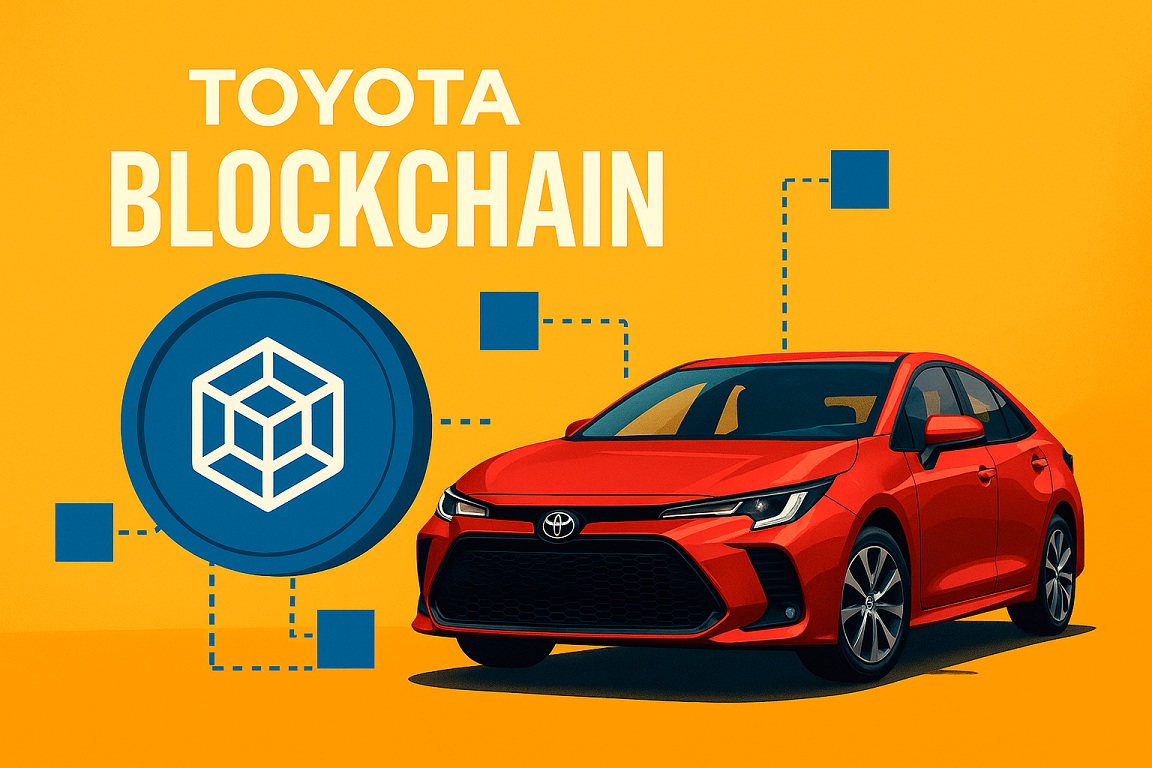
Toyota Blockchain Lab has unveiled the Mobility Orchestration Network (MON), a blockchain framework designed to revolutionise how vehicles are perceived in financial markets. Built on Avalanche’s multi-chain architecture, MON aims to transform cars into tokenised assets, allowing them to be traded much like stocks or bonds.
A New Era for Vehicle Finance
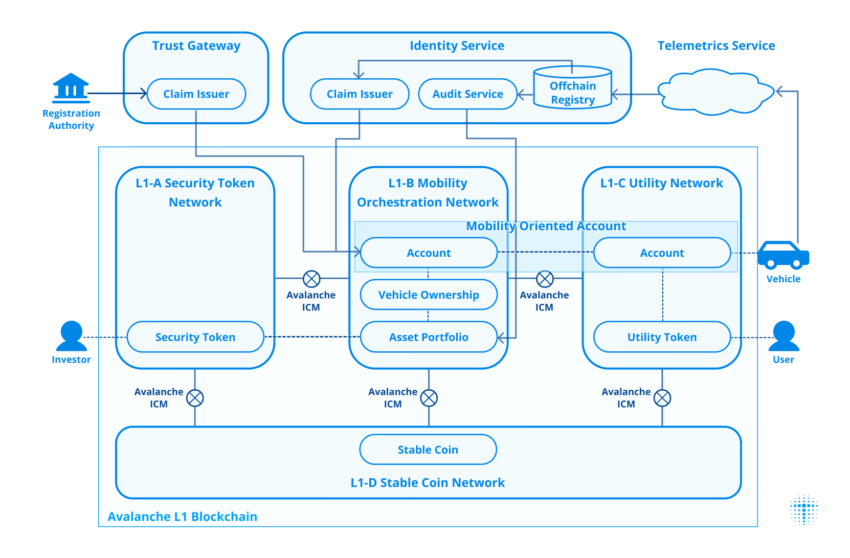
The MON system creates digital identities for vehicles using non-fungible tokens (NFTs). This enables investors to treat vehicle fleets as structured portfolios that can be securitised into tokens, opening new avenues for investment in electric vehicles (EVs), autonomous taxis, and logistics operations. Toyota’s initiative aims to integrate legal, technical, and economic proofs into a verifiable digital identity for each vehicle.
How MON Utilises Avalanche
Avalanche‘s architecture is pivotal to MON’s design, offering the ability to deploy multiple interoperable L1 chains. This flexibility allows enterprises to tailor networks for specific needs such as trust, utilities, securities, and payments. Naohiko Ueno, a contributor to Toyota Blockchain Lab, expressed enthusiasm about the collaboration, highlighting the potential for MON to advance enterprise adoption of blockchain technology.
Why did Toyota Blockchain Lab build its prototype for vehicle finance and mobility on Avalanche 🔺?
Every other EVM chain = one L1.
Avalanche = infinite L1s. pic.twitter.com/uxPNbjP9dx
— Avalanche🔺 (@avax) August 19, 2025
Bridging the Gaps in Mobility
The white paper outlines three key “bridges” to address fragmentation in the mobility ecosystem:
– Trust Bridge: Consolidates institutional proofs like registration and insurance with technical attestations and operational metrics, forming the foundation of each Mobility Oriented Account (MOA).
– Capital Bridge: Links verified vehicle portfolios to finance networks, enabling tokenisation into securities and attracting capital inflows.
– Utility Bridge: Integrates real-world usage data, ensuring operational results reinforce financial trust.
The Broader Implications
Toyota envisions MON as a protocol enabling regional ecosystems to interoperate, respecting national regulations while facilitating cross-border asset flows. Beyond financing, MON could impact secondary markets such as used cars, leasing, and insurance by streamlining data verification. Toyota’s previous blockchain experiments, including NFT-based safe driving certificates, underscore the company’s commitment to integrating blockchain into its broader strategy.
Conclusion
While MON is still in the proof-of-concept stage, analysts believe it represents a significant step towards merging automotive assets with blockchain finance. This initiative could accelerate investment in electrification and autonomous mobility by anchoring trust across various domains. As Toyota Blockchain Lab aptly stated, “Mobility is not a static asset but a network of shared responsibilities. MON provides the foundation to extend this trust globally.”
This article is for informational purposes only and should not be considered financial advice.
From the YFarmX archive · originally published on the previous site