Scientists Develop New Method to Read Majorana Qubit States, Confirming Millisecond-Scale Coherence
A team has used quantum capacitance to read Majorana qubit states for the first time, confirming millisecond-scale parity coherence times that demonstrate the protected nature of topological qubits.
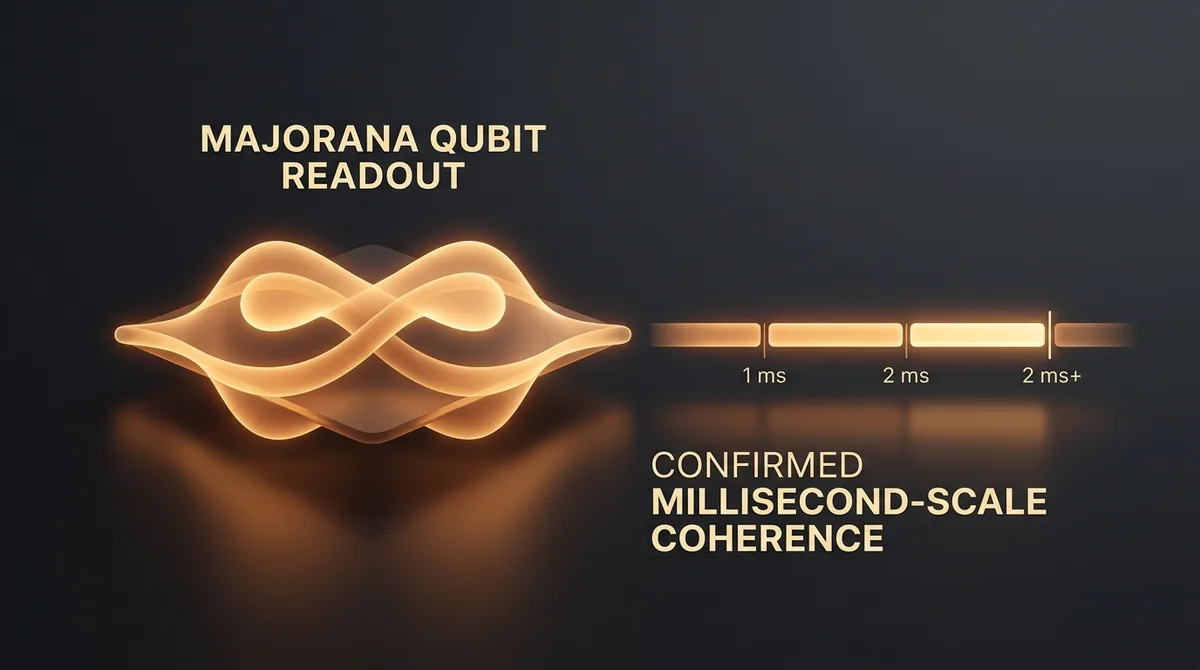
A team of scientists has developed a new method to read the hidden states of Majorana qubits, confirming millisecond-scale coherence times that demonstrate the protected nature of these topological quantum bits.
The research, published in February 2026, represents a crucial step towards practical topological quantum computing. Majorana qubits store information in paired quantum modes called Majorana zero modes that are inherently resistant to noise, but this same protection has made them notoriously difficult to read.
Quantum Capacitance as a Readout Probe
Ramón Aguado, a CSIC researcher at the Madrid Institute of Materials Science (ICMM), explained that the team used a technique called quantum capacitance to retrieve information stored in Majorana qubits. He described the method as “a global probe sensitive to the overall state of the system,” enabling scientists to access information that was previously difficult to observe.
The team engineered a modular nanostructure called a Kitaev minimal chain, consisting of two semiconductor quantum dots connected through a superconductor. This bottom-up approach allowed researchers to generate Majorana modes in a controlled manner, unlike previous experiments that relied on combinations of materials.
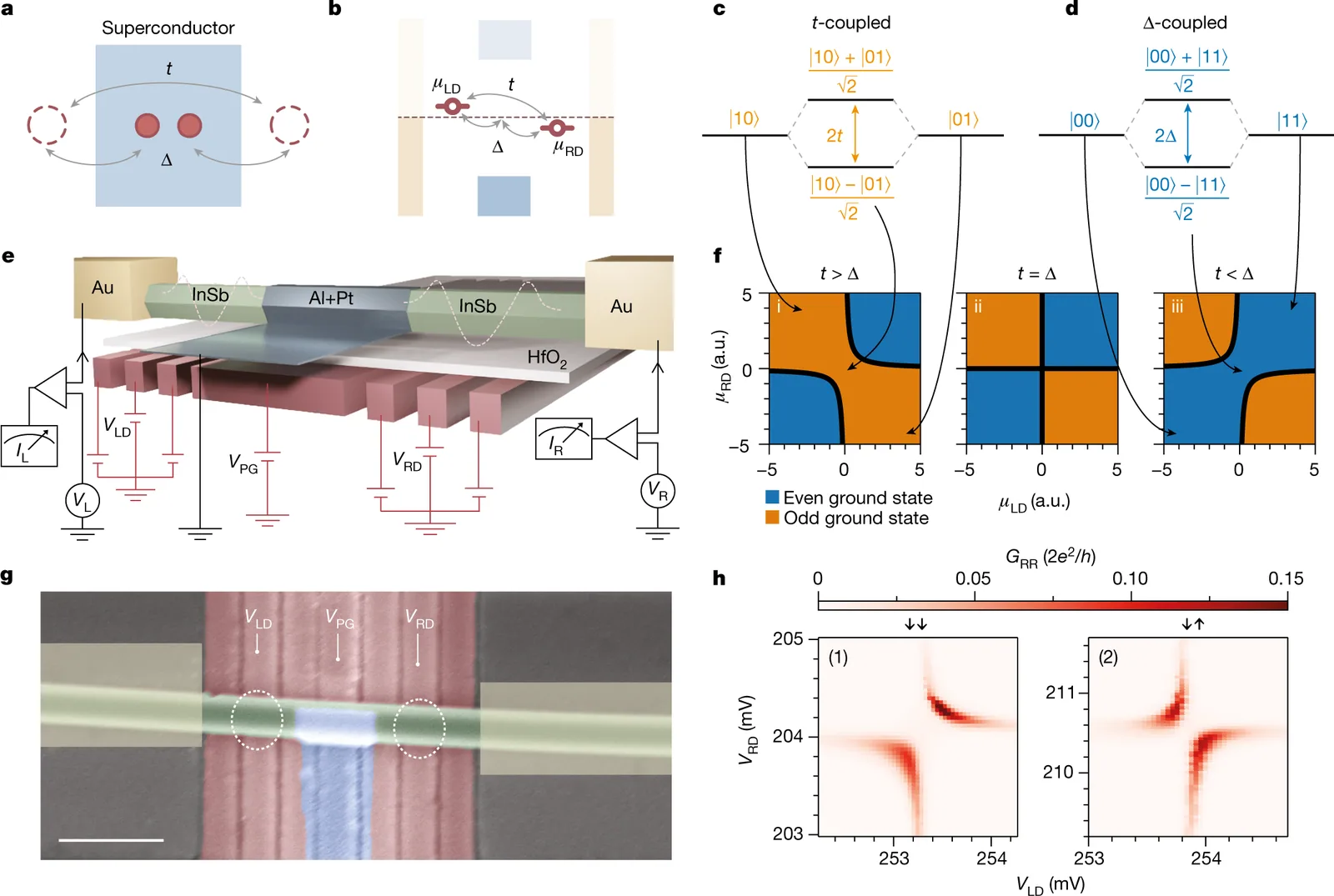 Realization of a minimal Kitaev chain in coupled quantum dots
Millisecond Parity Lifetimes
By monitoring random parity jumps in the system, the researchers extracted a parity coherence time exceeding one millisecond, a highly promising value for future topological qubit operations. Standard charge sensors proved ineffective because the parity states are charge-neutral, but the quantum capacitance method successfully discriminated parity in single shots.
Aguado described topological qubits as “like safe boxes for quantum information,” where data is distributed across two linked quantum states rather than kept in one fixed location. This structure provides natural protection against local noise, though it has historically posed challenges for readout. The new quantum capacitance approach offers a practical pathway that is compatible with the underlying robustness of Majorana-based qubits.
From the YFarmX archive · originally published on the previous site