Solo Bitcoin Miner: A Rare Victory Against All Odds
Solo bitcoin miner running just 48 TH/s hit block 907283 and kept the whole reward. One rig versus ~900 EH/s of competition. Odds said “no chance.” Luck said otherwise.
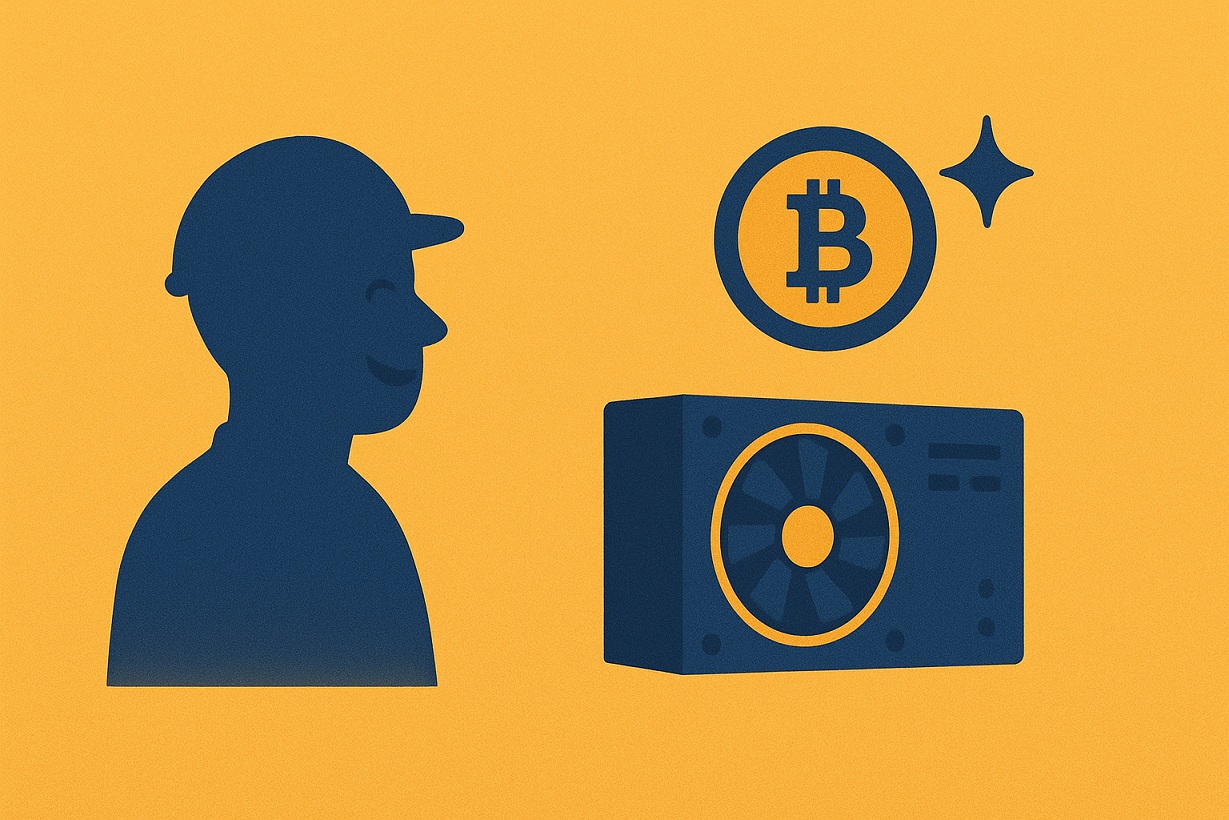
Solo bitcoin miner with just 48.3 terahash per second solved block 907283 on Saturday morning and walked off with the full reward. One machine, one lucky miner. CK Pool’s solo service confirmed the find, a reminder that statistical outliers still happen even when industrial pools dominate.
Tiny rig, giant prize
At roughly 48 TH/s, the miner’s slice of today’s ~900 EH/s network is microscopic. On that share, the expectation value is a block every few centuries. Variance does not care about your spreadsheets though. After 2,294 straight misses since the pool’s prior hit, probability finally broke in the soloist’s favour. The miner keeps the entire coinbase, fees included, because CK Pool’s model is “solo inside a pool” rather than the usual payout split.
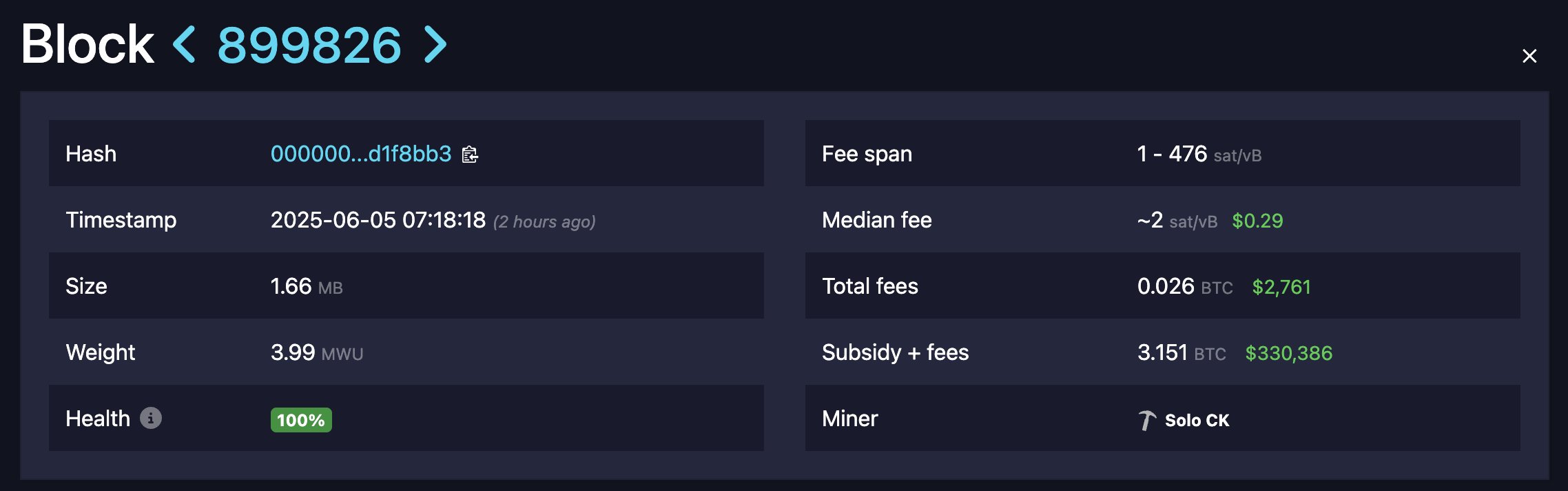
Market backdrop while the block fell
Bitcoin was trading around $118,000 as the block landed, with intraday swings between $114,700 and $119,500 earlier in the weekend. Liquidity stayed lively, volumes up and futures open interest ticking higher. Listed miners have leaned on equity raises and power hedges to survive volatility, yet retail and micro operators still chase asymmetric upside.
Solo bitcoin miner odds and maths
A back-of-the-envelope model: probability of success per block equals your hashrate divided by the network total. For 48 TH/s versus roughly 933 EH/s, that is about 5e-8. Multiply by ~144 blocks per day and you get a daily win chance near 7e-6. Expected waiting time: more than 100,000 days. Reality delivered in far less. That is variance, not proof of easy money.
Why people still try
-
Full control of the coinbase transaction and no pool fee drag
-
Ideological satisfaction in proving an individual can still mine a block
-
A lottery ticket mentality where the downside is capped at your power bill
-
Occasional marketing or content value for small firms
Pools remain rational for steady cash flow, but some miners prefer long odds to small, predictable payouts.
Difficulty, hashrate and the next retune
Difficulty rose 1.07% on 25 July to 127.62 trillion, the highest setting yet. Blocks are arriving faster than 10 minutes, so another increase of roughly 6 to 7% is pencilled in for around 7 August if pace holds. Every 2,016 blocks, the protocol adjusts, indifferent to human drama. Miners respond with firmware tweaks, capex cycles and power arbitrage. The code simply keeps time.
CK Pool’s niche
CK Pool offers infrastructure without the collectivised reward. Users connect, submit shares, but only get paid if they personally find the block. It is a middle path between running a full node and joining a PPS or PPLNS pool. That design has produced eight blocks so far in 2025. Sixteen were found in all of 2024. The strike rate will always look lumpy because luck clusters and dry spells are normal in a Poisson process.
Industrial titans still rule
Foundry, Antpool, ViaBTC and F2Pool continue to clear the majority of blocks. Their economies of scale in hardware procurement, energy contracts and treasury management remain decisive. Public miners answer to shareholders and debt covenants, so they rarely gamble on solo variance. They optimise uptime, firmware, cooling and financing instead.
Signals to watch next
-
Shipping schedules for next-gen ASICs and whether they hit racks before the next difficulty epoch
-
Power price spikes in Texas or Kazakhstan that could momentarily dent hashrate
-
Pool concentration changes that might raise decentralisation concerns
-
Transaction fee spikes from mempool congestion that improve miner economics
-
Treasury moves by corporates adopting a bitcoin reserve strategy
The romance versus the spreadsheet
A single lucky block will not change the macro arc. Difficulty trends higher over time, hardware obsoletes quickly and cheap energy is scarce. Yet the romance of a lone rig winning persists, and stories like this keep it alive. Bitcoin’s protocol allows it, the market mostly ignores it, and every so often someone beats the odds anyway.
Not financial advice.
From the YFarmX archive · originally published on the previous site