Zcash hashrate surges to multi-year high ahead of halving
After years in the shadows, Zcash (ZEC) is back in the spotlight. As of early November 2025, the Zcash hashrate has rocketed to 12.53 Giga Solutions per second (GS/s), marking a multi-year high and a surge of over 50 percent since early October.
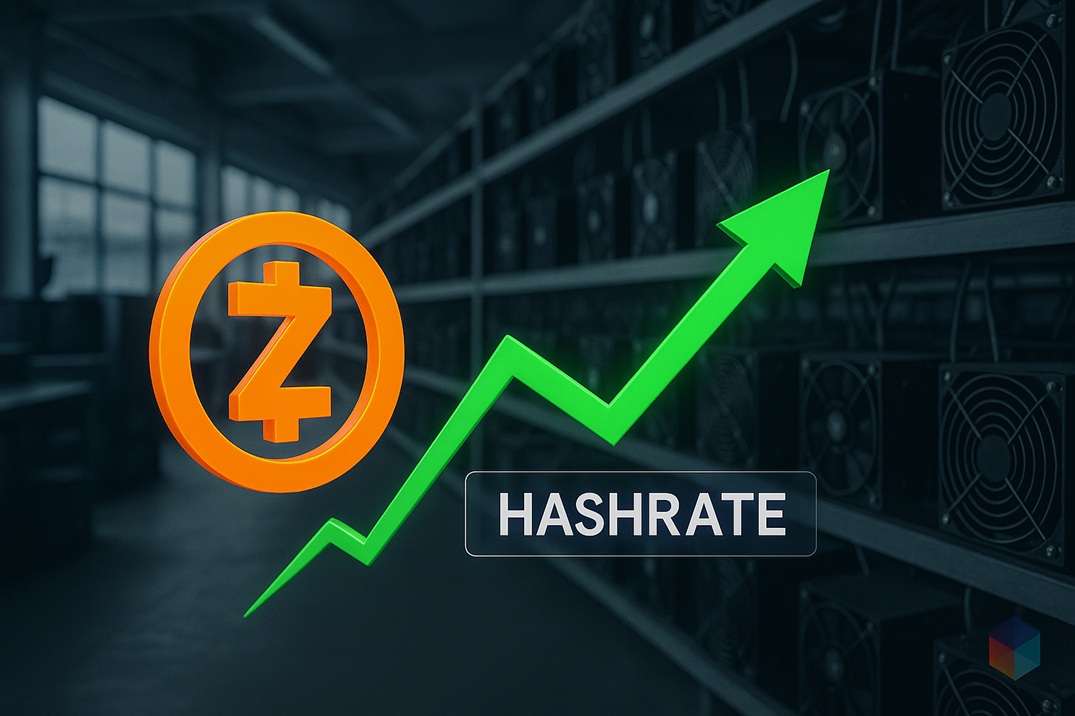
After years in the shadows, Zcash (ZEC) is back in the spotlight. As of early November 2025, the Zcash hashrate has rocketed to 12.53 Giga Solutions per second (GS/s), marking a multi-year high and a surge of over 50 percent since early October.
The rally follows an extraordinary 200 percent price explosion in October, when ZEC soared from roughly $50 to above $412, its strongest performance since 2021. The result: a revived market cap north of $5 billion and a renewed arms race among miners.
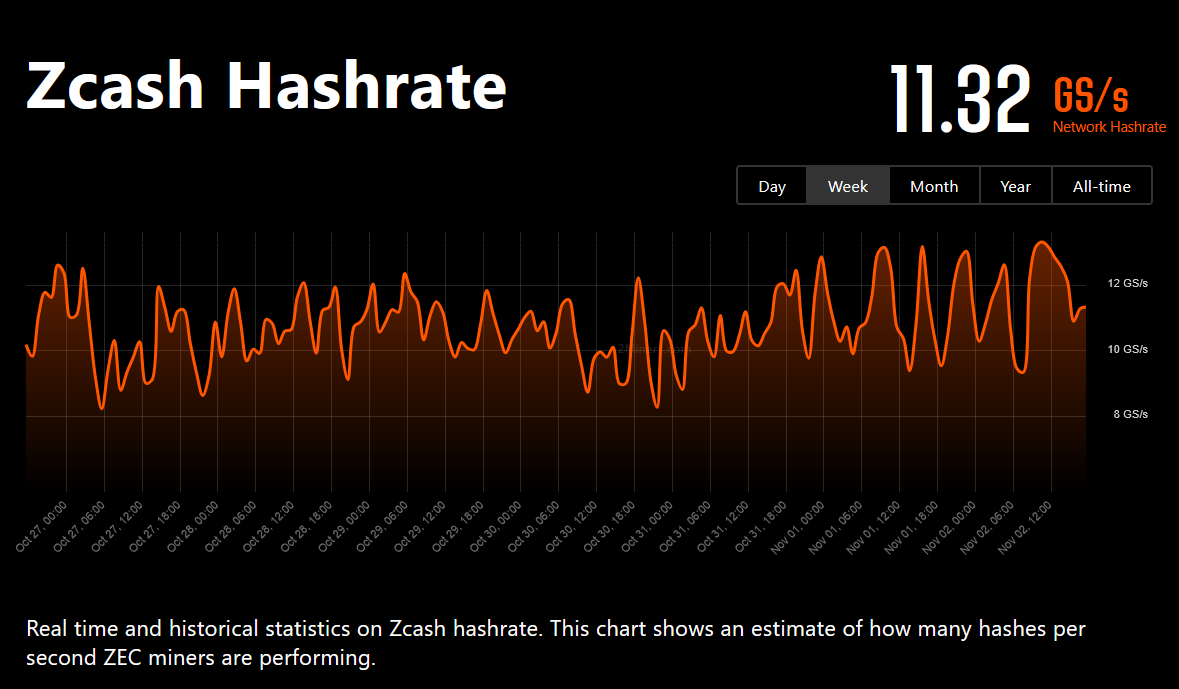 https://2miners.com/zec-network-hashrate
With a halving event due between 17–22 November, cutting block rewards from 3.125 ZEC to 1.5625 ZEC, miners are racing to secure their share of what could soon become twice as scarce.
Hashrate at Record Highs
Zcash’s network hashrate now sits around 11.3 GS/s, up from summer lows near 7 GS/s, reflecting both profitability and confidence. Network difficulty, at 117.9 million, is recalibrating almost every block (a far cry from the stagnation of 2023) when mining activity languished.
For context, Zcash hasn’t seen comparable activity since its October 2022 peak of 17 GS/s. This revival is capital-driven. ASIC farms across North America and Asia have pivoted to Equihash rigs like Bitmain’s Z15 Pro, which currently out-earns top Bitcoin miners.
At a power cost of $0.04/kWh, the Z15 Pro yields roughly $39.50 a day, about 43 percent higher than Bitmain’s S21 XP Hydro on SHA-256.
That margin has triggered a hash migration from underperforming altcoins, pulling Zcash mining back into the industrial scale that once defined the 2017 boom.
The Mining Landscape
The current distribution of Zcash hashrate tells a familiar story of concentration:
- ViaBTC – 3.99 GS/s (≈ 31.8 percent)
- F2Pool – 1.56 GS/s (≈ 12.4 percent)
- 2Miners , Antpool , Luxor , and Binance Pool share the remainder
ViaBTC’s dominance equates to roughly 4,700 Z15 Pro units. A clear signal that industrial-grade operators are leading the charge.
Regions reaping the most benefit include North America, Asia, and Eastern Europe, where surplus energy and ASIC access enable scaling.
This competitive environment raises security as well as centralisation concerns. The higher the hashrate, the harder it becomes to attack the network (yet the concentration of that power remains an under-discussed risk).
Drivers Behind the ZEC Revival
1. Halving Hype
Every four years, Zcash’s emission rate halves, echoing Bitcoin’s scarcity model. With rewards set to fall by 50 percent this month, traders are pre-pricing scarcity. Historically, post-halving rallies have extended for months, even when short-term profit-taking follows.
2. Privacy Renaissance
Amid creeping financial surveillance, CBDC pilots, and exchange KYC crackdowns, privacy has regained cultural and economic relevance. Monero remains embattled; Zcash, built on zk-SNARKs, now looks like the compliant alternative. Exchanges prefer it because its optional privacy fits better within emerging regulatory frameworks.
The shielded pool, Zcash’s metric for private transactions, is at an all-time high, a sign of genuine usage, not speculative volume.
3. Technological Maturity
The Electric Coin Company’s Tachyon upgrade (scheduled for Q4 2025) promises scalability for billions of users, streamlined shielded assets, and a smoother Zashi wallet experience. With the “trusted setup” phase now obsolete, Zcash has fully decentralised its privacy base layer, silencing one of the project’s oldest criticisms.
4. Endorsements and Market Psychology
Influential voices have added kindling to the fire. Arthur Hayes likened ZEC’s asymmetry to early Bitcoin and floated a $10,000 target. Naval Ravikant called Zcash “insurance against Bitcoin’s transparency.” Those soundbites alone moved markets by 30–60 percent daily.
But beyond the noise, structural demand for privacy tech (the same zero-knowledge cryptography underpinning Ethereum’s rollups) is giving Zcash a second life.
Expert Takes
Analysts increasingly view Zcash as more than a relic of 2016.
Vlad Costea argues that this cycle is “fundamentally different.” Simplified shielded transactions, DeFi integrations, and exchange listings have matured the ecosystem. He labels Zcash the “encrypted Bitcoin” and projects $6,000+ long term if liquidity deepens.
Without Matthew D. Green, there would be no Zerocoin, Zerocash, or Zcash.
So no ZK rollups, no ZK STARKs, no Tornado Cash and Railgun, no nothing that emerged as a response to his research. @zooko was just the first believer in Matthew’s work
Gotta give respect where it’s… https://t.co/2orAISPjd7
— VLAD HOSTS THE BEST PODCAST IN BITCOIN (@TheVladCostea) November 1, 2025
Mert from Helius frames privacy as crypto’s “third pillar”, after markets and store-of-value. He warns that ignoring privacy in favour of convenience risks building a financial panopticon. Encryption, he says, is the “Second Amendment of the internet”.
The beauty of $ZEC is that the higher the price goes, the better the product becomes.
Is it worth 7B or 70B? Why not 700B FDV?$ZEC has no revenue metrics like DeFi tokens or perp DEXs like $HYPE, or L1s like $SOL, or $ETH.
It trades like a memecoin but it isn’t one because of…
— Ignas | DeFi (@DefiIgnas) November 1, 2025
Beyond the Hashrate
While Zcash hashrate and price metrics point to optimism, risks remain. Post-halving dumps, overbought RSI signals, and ongoing regulatory hostility toward privacy coins could trigger volatility. “Smart money” that accumulated near $50 may start taking profits above $400.
Read:Zcash’s privacy promise – and the edge where surveillance lives
Yet, even with that caveat, the project’s fundamentals look cleaner than in past cycles. The hashrate surge suggests miners see longevity, not just hype.
If privacy truly becomes the next mainstream crypto narrative (and if zk-based scaling fulfils its promise) Zcash could evolve from historical footnote to essential infrastructure.
Disclaimer: This analysis is for informational purposes only and does not constitute investment advice. Always perform independent research before making financial decisions.
From the YFarmX archive · originally published on the previous site