
Luma AI
Luma Dream Machine 2.0 and Ray3
depth and volume
Key facts
- Ray3Luma model
- Engine
- 2.0Dream Machine
- App
- v3.14cost reduction
- Update
- Depthroom volume
- Strength
- Mid-marketprosumer to studio
- Segment
Depth and volume. Ray3.2, the engine Luma has billed as its most versatile since 9 June 2026, extends the line's spatial strengths; Dream Machine 2.0 ships a storyboard mode for stitched sequences.
What it is
Luma AI occupies an unusual spot in the video-generation field, and Luma Ray3 is the clearest expression of why. The company ships two related products: Dream Machine 2.0, a consumer-facing tool with a storyboard mode that stitches separate generations into a single sequence, and Ray3, the underlying model line whose newest version, Ray3.2, arrived on 9 June 2026 as the engine Luma now calls its most versatile. Together they place Luma Ray3 in the mid-market, between the prosumer apps that sell polish by subscription and the enterprise APIs that sell scale by the token.
Storyboard mode
The storyboard mode in Dream Machine 2.0 is the more visible of the two. Rather than asking for one prompt and returning one clip, it lets a user lay out a sequence of shots and have the system stitch them together, which is closer to how anyone actually plans a piece of moving footage. That framing, a board of shots rather than a single roll of the dice, is what separates a toy from a working tool, and it is the reason Luma has leaned on the storyboard idea in its own materials.
The engine and the price cut
Ray3 is the engine, and it has kept moving: version 3.14 arrived in January 2026 with a cost reduction, and Ray3.2 followed on 9 June 2026 as the current flagship. The cost story carries through the line: cheaper generations lower the price and, by extension, the cost of the iteration that video work always demands. Cheaper generations mean more attempts, and more attempts mean a better final cut, so a price cut on a capable model is worth as much to a working creator as a raw jump in quality.
Depth and room volume
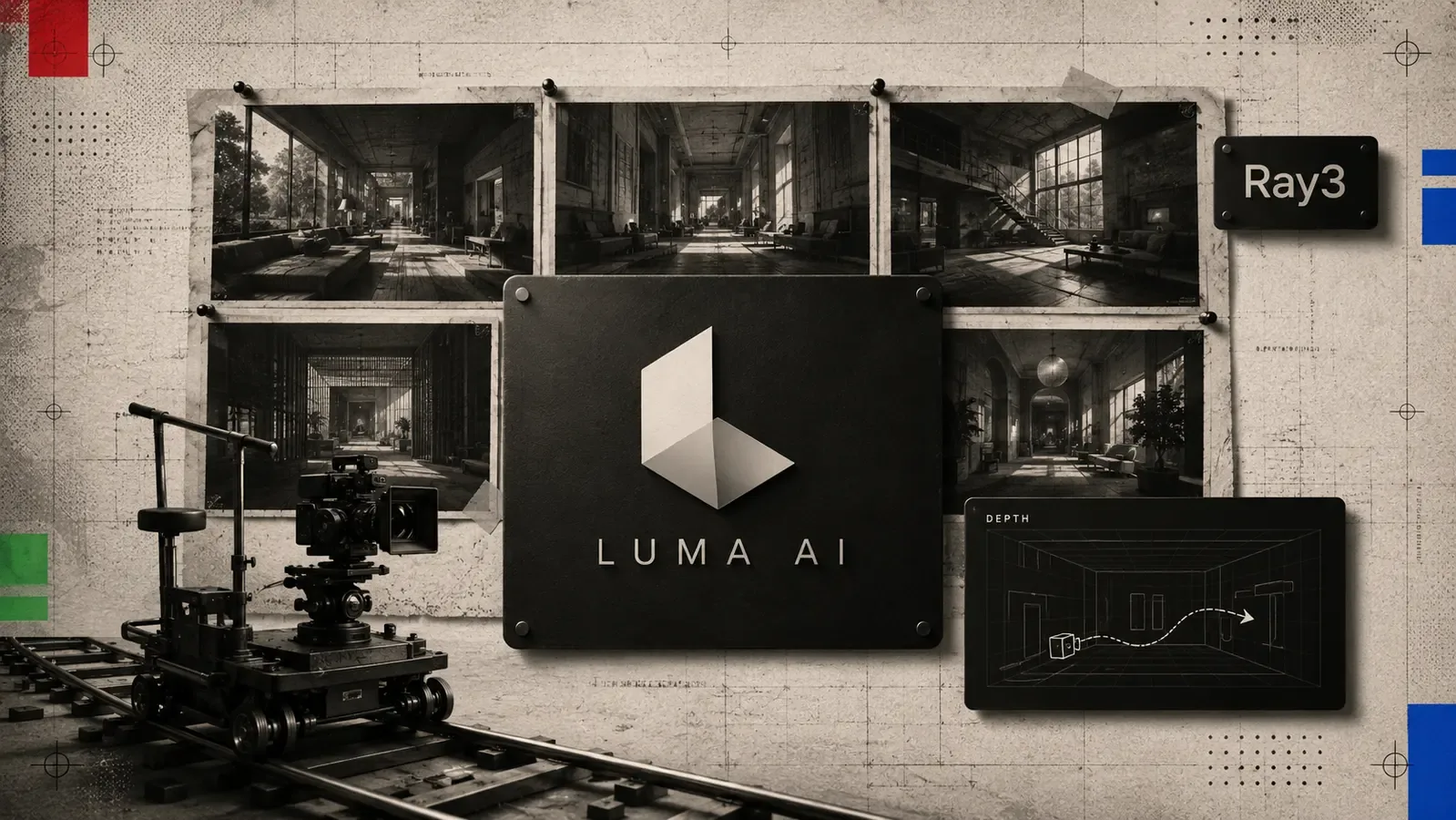
What testers single out about Luma Ray3 is its handling of depth and what they describe as room volume. The model appears to understand space: where surfaces sit relative to one another, how a room encloses the objects inside it, and how the camera should move through that space without the scene collapsing into flat cardboard. Spatial coherence is one of the harder problems in generated video, because a model that treats each frame as a fresh picture will happily let walls drift and objects swim. A system that keeps the geometry stable across a shot is doing something closer to reasoning about a scene, and that is the quality reviewers keep pointing to. For anything involving a camera move through an interior, that ability to hold a room together is the difference between footage that reads as real and footage that wobbles the moment the viewpoint shifts, so it is a capability with obvious commercial value rather than a technical curiosity.
Where it sits
The mid-market position is a deliberate one. At the top sit the enterprise-grade APIs, sold on throughput and integration; at the consumer end sit the stylised social apps, sold on speed and ease. Luma Ray3 aims at the gap in between: good enough on quality to satisfy a professional eye, priced and packaged so an individual or a small studio can actually use it without an enterprise contract. Pairing Dream Machine 2.0 as the front door with Ray3 as the engine is how the company serves both a casual user and a more demanding one from the same stack.
For anyone tracking the wider AI video field, Luma is worth watching for how it balances those two audiences. The cost reduction on Ray3 suggests a company willing to compete on price as well as quality, which is the more sustainable footing once the novelty of generated video wears off. The storyboard approach, meanwhile, points at where consumer video tools are heading: away from the single magic prompt and towards something that resembles an editing timeline, where a person composes a sequence and the model fills in the frames. If Luma keeps its edge on depth and room volume while holding that mid-market price, it has a defensible place in a crowded AI section that is otherwise splitting into cheap open models at one end and expensive enterprise APIs at the other.
More in Video Generation
All Video →- GuideClaude + MCP for videofrom a written brief to a finished shot
- GuideSeedance 2.5 promptingthe official method, decoded
- Google DeepMindGemini Omni 1.1 Flashthe production release of Google's video line
- AlibabaWan 3.0hosted only, with nothing to download
- MiniMaxMiniMax H3the open flagship
- Google DeepMindVeo 3.1the safest Western default