Bitcoin Fed rate decision watch: Warsh's second meeting and the three-hike threat
Crypto trading desks have a new obsession, and the Bitcoin Fed rate decision nexus is it.
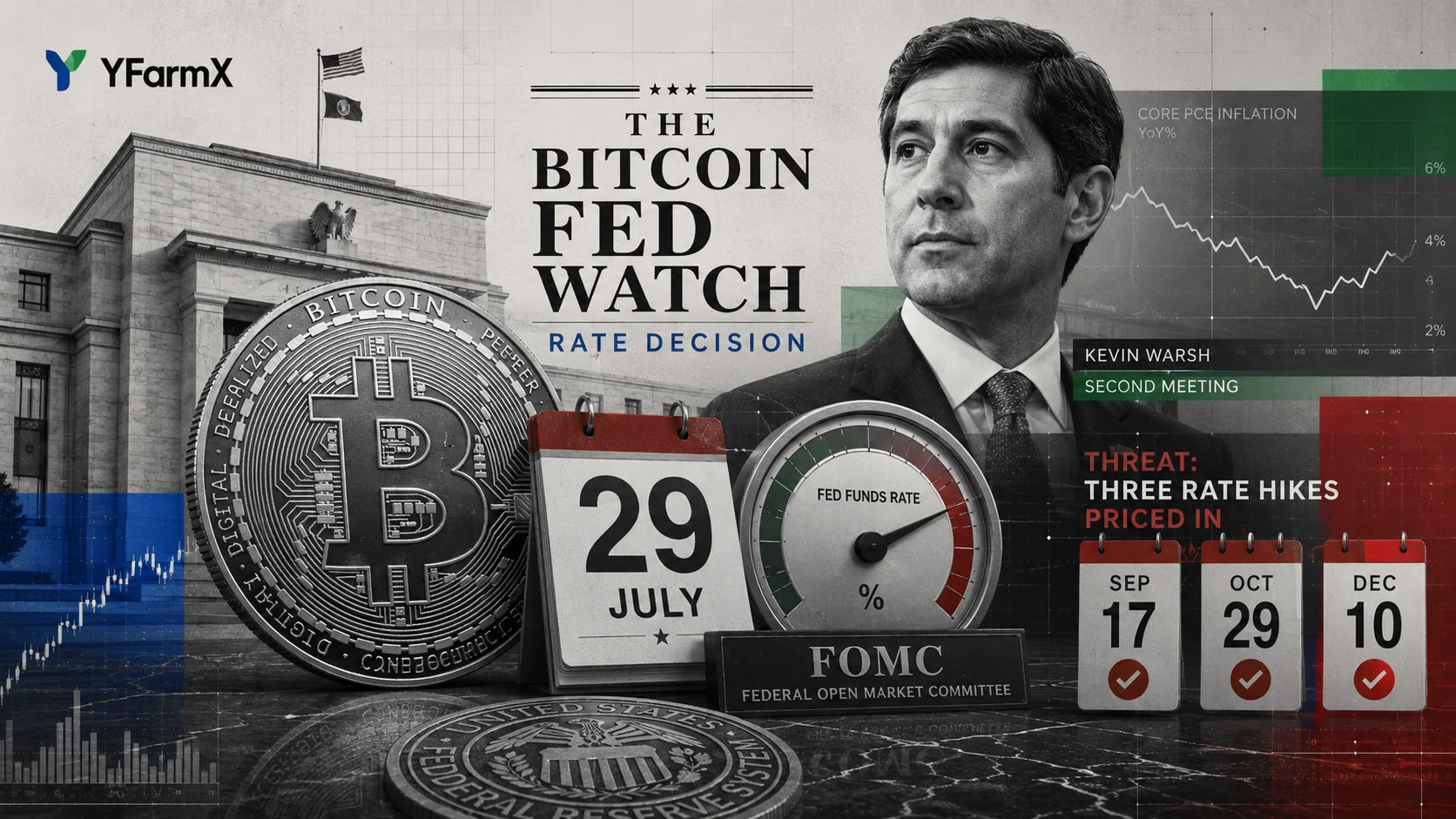
Crypto trading desks have a new obsession, and the Bitcoin Fed rate decision nexus is it. The Federal Open Market Committee meets on 29 July, the second gathering under new chair Kevin Warsh, and it arrives with the least friendly backdrop bitcoin has faced from monetary policy in years. Bank of America’s economists have sketched a scenario of three consecutive rate rises in the second half of 2026, September, October and December, and June’s heated PCE inflation print handed that call its clearest justification yet. Bitcoin, an asset once marketed as indifferent to central banks, spent the past month trading like a long-duration tech stock with opinions.
The price action tells the story of the regime. When the PCE reading landed hot in late June, alongside a pullback in AI equities, bitcoin slid from around 61,800 dollars to a 21-month low of 58,188. When a softer inflation print arrived in mid-July, it promptly reclaimed 65,000 before chip-sector weakness dragged it back near 63,000. Two macro data points, two round trips of several thousand dollars. Whatever one believed about digital gold in 2021, the 2026 version moves on the same releases as the Nasdaq, only with more enthusiasm.
The mechanism is straightforward enough. Higher policy rates raise the return on cash, drain speculative liquidity and hit assets whose value rests furthest in the future. They also strengthen the dollar, historically an unkind environment for bitcoin. Add geopolitical stress, with US-Iran tensions pushing crude oil above 80 dollars a barrel and feeding the very inflation the Federal Reserve is fretting over, and the loop closes: oil up, inflation sticky, hikes likelier, risk assets down, and some 253 million dollars of leveraged crypto positions liquidated in a single recent session along the way.
Warsh himself is the variable markets are still pricing. A known sceptic of the quantitative-easing era long before taking the chair, he inherits an inflation problem and a market conditioned to expect rescue. His first meeting passed without drama; the Bitcoin Fed rate decision test on 29 July is whether the committee validates the hawkish path the bond market has begun to price or leaves the three-hike scenario as a bank forecast rather than policy. Officials publish their communications through the Federal Reserve, and rarely has crypto read them this closely.
The bearish case writes itself: if the high-50,000s floor gives way under genuine tightening, analysts have flagged the next support zones quickly, and a market already three red quarters deep does not need much encouragement. The bullish case is subtler and not dead. Positioning is washed out, the Fear and Greed Index has spent weeks in the low twenties, ETF outflows have slowed, and markets have a long record of pricing the full horror of a hiking cycle before it finishes. If inflation data keeps softening as it did in mid-July, the three-hike scenario could deflate as quickly as it inflated.
The deeper point is uncomfortable for the faithful. Bitcoin’s 2026 fate currently rests less on halvings, adoption curves or even Washington’s legislation than on the interest rate path of the very institution it was invented to route around. Satoshi’s creation has been financialised into the global liquidity complex, and the price of admission is dancing to the Federal Reserve’s calendar. On 29 July, everyone finds out which tune Warsh intends to play.
There is one constituency enjoying the squeeze. Stablecoin issuers, whose reserves sit in exactly the short-dated Treasury bills a hiking cycle rewards, earn more with every rise, and the GENIUS framework finalising this week entrenches that reserve model in law. The industry thus finds itself in the odd position of holding assets punished by higher rates while operating a business enriched by them. Traders, less philosophically, will simply watch the statement language on 29 July, the vote split, and whether Warsh’s press conference validates the September pricing. Four thousand dollars of bitcoin round trip already hangs on adjectives.
Sources
- Federal Reservefederalreserve.gov