Bitget Wallet 100 million users: the milestone where crypto became a payments app
Amid a summer of red candles, the Bitget Wallet 100 million users announcement is the sort of milestone that says more about crypto's direction than any price chart.
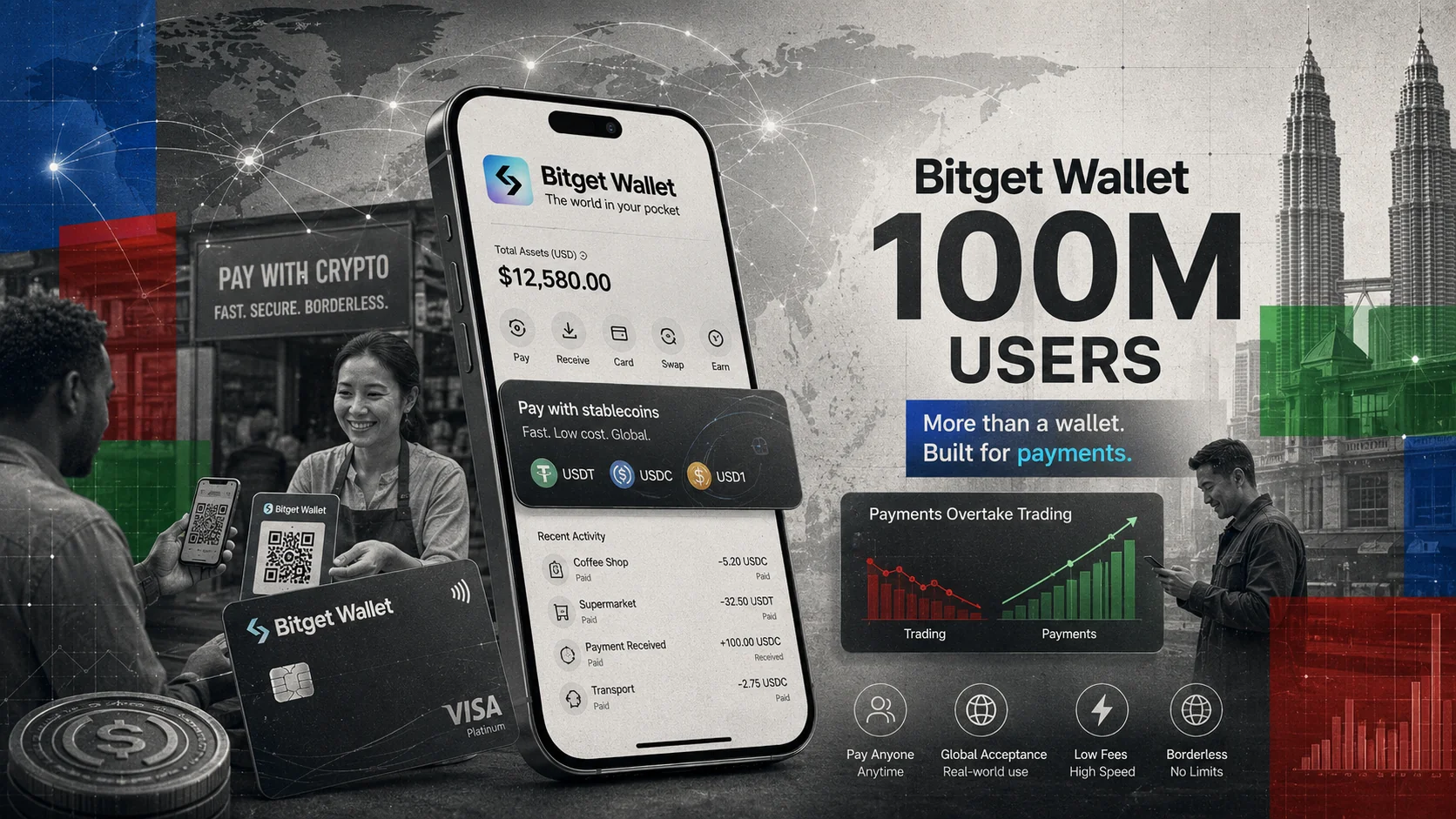
Amid a summer of red candles, the Bitget Wallet 100 million users announcement is the sort of milestone that says more about crypto’s direction than any price chart. The self-custody wallet reported crossing 100 million users globally this month, and buried the genuinely interesting figure beneath the round number: daily payment users now outnumber traders on the platform for the first time in its history. Somewhere between the ETF outflows and the Senate procedural drama, a large chunk of the crypto-using public stopped speculating and started spending.
The supporting numbers sketch the shift. Card spending through the wallet reached 31 million dollars in the first half of 2026, modest against Visa’s trillions but pointed in its trajectory, with adoption concentrated in emerging markets where the use case is least theoretical. In economies with soft currencies, patchy banking access or expensive remittance corridors, a stablecoin balance behind a QR code or a card is not an ideology; it is simply a better current account. The product materials live at Bitget Wallet, and the pattern they describe matches what payment researchers have reported all year: stablecoins migrating from trading collateral to everyday money.
The timing gives the milestone its weight. The Bitget Wallet 100 million users figure lands in the very week US regulators finalise the GENIUS Act’s stablecoin framework, while Stripe bids 53 billion dollars for PayPal and Swift expands its blockchain settlement network to more than 40 institutions. The corporate giants are fighting over who owns the rails; the wallet data suggests the passengers boarded some time ago. Payment activity overtaking trading is precisely the inversion the industry has promised since 2015 and largely failed to produce until stablecoins made the unit of account boring enough to use.
Some scepticism is obligatory. User counts are self-reported, definitions of an active payment user vary by vendor, and 100 million registered wallets is not 100 million people, let alone 100 million daily spenders. Self-custody wallets also carry their own risks, as this year’s exploit statistics keep demonstrating, and the same emerging markets driving adoption are often those with the least recourse when keys are phished. The milestone deserves attention, not uncritical applause.
Still, the strategic reading holds. For years the honest criticism of crypto was that the technology was a solution in search of a problem, and the honest answer has turned out to be the least glamorous one: moving dollars cheaply, quickly and without an intermediary that closes at weekends. The companies best positioned for the GENIUS era are those already processing real payment volume rather than those optimising for basis trades. A wallet where payers outnumber traders is a preview of what the industry looks like when the speculation tide goes out and something has to be left standing.
Whether Bitget Wallet holds that lead is almost beside the point; competitors will publish their own figures soon enough, and the race will be measured in merchants and corridors rather than listings. The signal to keep is simpler. One hundred million users, more of them paying than punting, in the worst quarter for prices since the last bear market: crypto’s most bullish chart this month has nothing to do with price at all.
The competitive field is filling in fast around the same thesis. New entrants launched fee-free international USDT payment apps this fortnight, established exchanges are wiring debit cards to balances, and every serious wallet roadmap now leads with spending rather than charting. Regulation will sort this crowd as brutally as it sorts issuers: the GENIUS framework’s identity and monitoring expectations mean payment wallets serving American users will need bank-grade onboarding, a cost the scaled players can absorb and the small ones cannot. The likely endgame is a handful of global wallet brands doing enormous unglamorous volume, which is roughly how every payments era has ended since the cheque.
Sources
- Bitgetweb3.bitget.com