CLARITY Act Senate vote: Federal Hall theatre and a deadline that is suddenly real
The push for a CLARITY Act Senate vote reached its most theatrical moment yet on 17 July, when the House Financial Services Committee decamped to Federal Hall in New York, the building where the first Congress once sat, for a field hearing titled Building the Future of Finance: How the CLARITY Act U
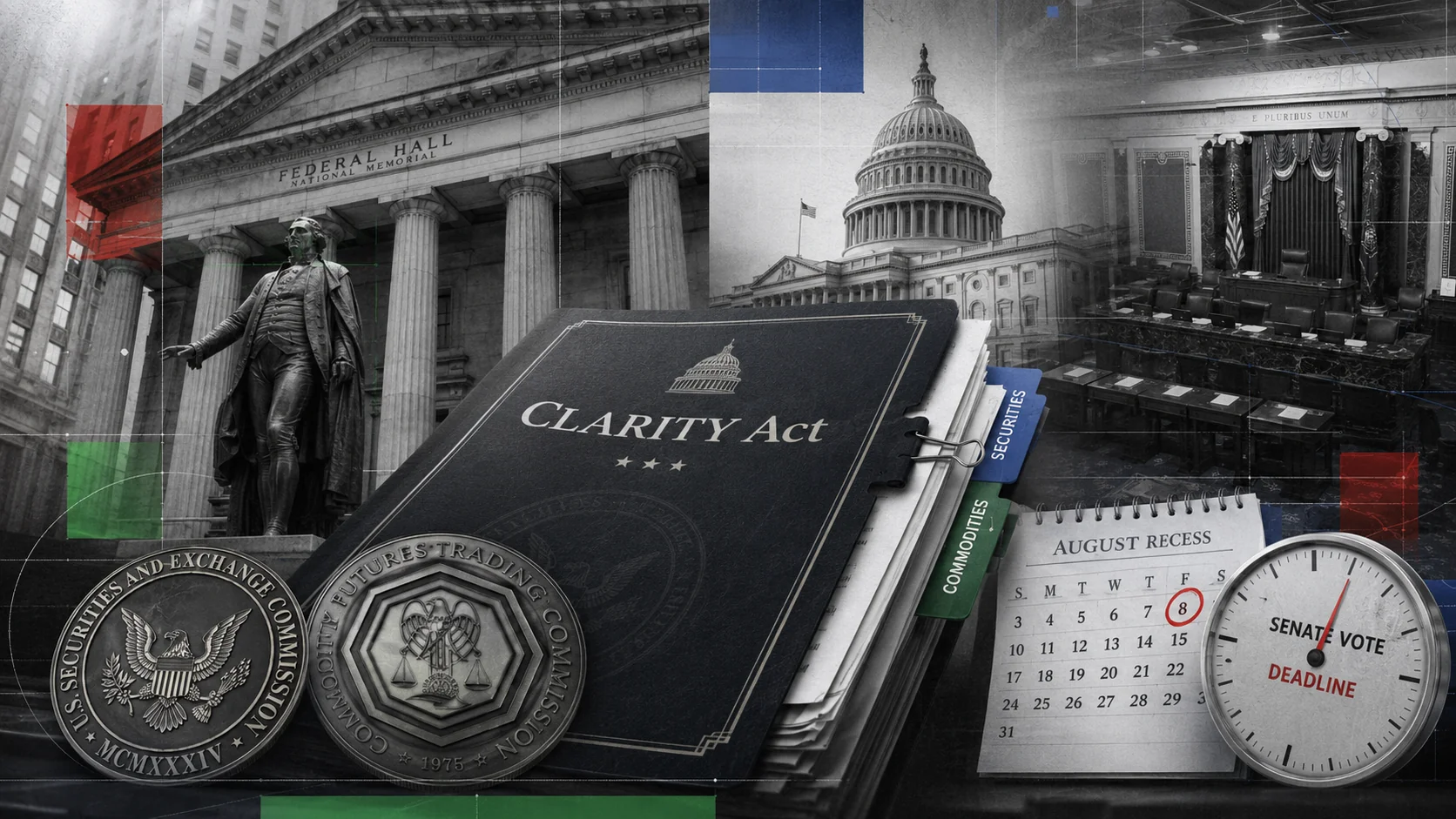
The push for a CLARITY Act Senate vote reached its most theatrical moment yet on 17 July, when the House Financial Services Committee decamped to Federal Hall in New York, the building where the first Congress once sat, for a field hearing titled Building the Future of Finance: How the CLARITY Act Unlocks Innovation. A hearing at 15 Pine Street cannot pass anything. What it can do is apply public pressure on the Senate in the final weeks before the summer recess begins on 7 August.
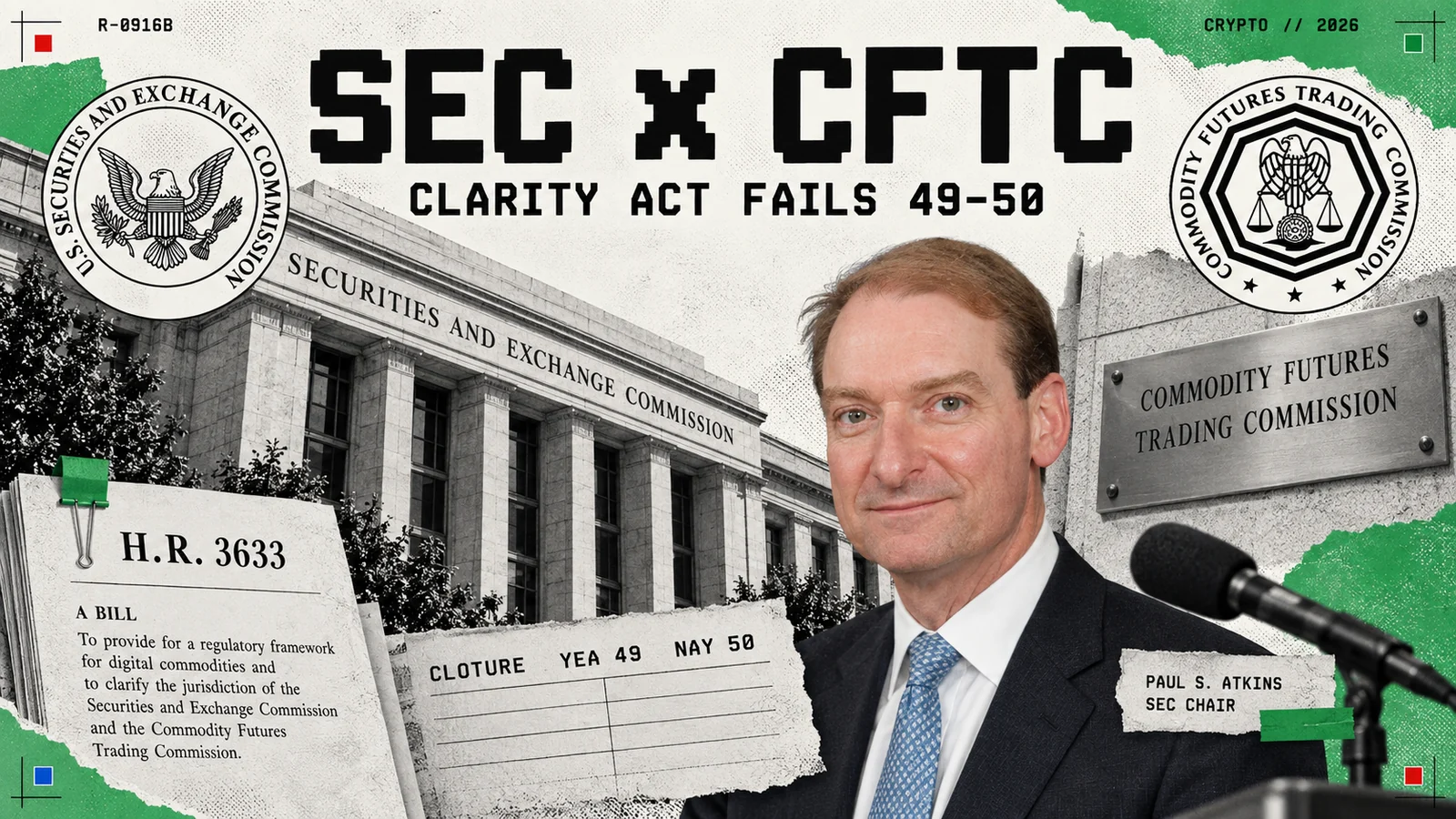
The bill’s history explains the urgency. The House passed H.R. 3633 on 17 July 2025 by 294 votes to 134, a comfortably bipartisan result. The Senate Banking Committee advanced it on 14 May 2026 by 15 to 9, with only two Democrats, Ruben Gallego and Angela Alsobrooks, voting in favour. Since 1 June it has sat on the Senate calendar, formally ready for the floor, waiting for a date that never came. The White House had wanted a signature on 4 July, America’s 250th birthday. The birthday arrived; the bill did not.
The arithmetic behind a CLARITY Act Senate vote is unforgiving. Cloture requires 60 votes, Republicans hold roughly 53 seats, and so backers need around seven Democrats. Senate Majority Leader John Thune has pledged a floor vote before the recess, with the week of 20 July under active discussion. Yet the same week the hearing convened, Senators Chris Murphy, Chris Van Hollen and Jeff Merkley held a press conference formally opposing the bill, after a merged draft appeared without the ethics provision Democrats had demanded on officials holding crypto.
Three disputes have stalled negotiations for months: whether stablecoins may pass yield to holders, how wide a safe harbour DeFi developers receive, and those ethics rules. Prediction markets have noticed. Polymarket pricing on 2026 passage has slid from the seventies earlier this year to the low forties, while Galaxy Research still puts the odds between 50 and 75 per cent depending on how quickly the Senate moves.
What the bill actually does has become almost secondary to the fight over it, which is a shame, because the substance is significant. The CLARITY Act draws a statutory line between digital commodities and securities, handing the CFTC oversight of spot trading on sufficiently decentralised networks while the SEC keeps early-stage token sales. A joint SEC and CFTC interpretation in March already classed bitcoin and ether as commodities; the bill would harden that reversible decision into law, alongside exchange registration, custody and surveillance standards.
Senator Cynthia Lummis has framed the stakes bluntly, warning colleagues that this is the last chance to pass the bill until at least 2030. More than 1,200 technology companies and over 200 crypto firms signed an open letter urging a swift vote. Miss the recess, and the options narrow to a lame-duck session or a restart under a new Congress in 2027.
Field hearings are theatre, but theatre has its uses. Every participant, from Senate holdouts to ETF issuers to the White House, has now been made to show its cards in public during the precise week the bill’s 2026 fate gets decided. The text and its status are available at Congress.gov; the committee’s materials sit with the House Financial Services Committee. Whether the CLARITY Act Senate vote happens before 7 August will define crypto’s regulatory decade. No pressure, then.
Markets have learned the choreography by heart. XRP in particular rallies on each legislative headline, stalls at resistance, and hands the move back whenever Washington disappoints, a pattern traders have watched repeat all summer. There were, however, genuine signs of motion this week beyond the theatre: a major county sheriffs’ association dropped its opposition to the bill after talks with the administration, removing one law-enforcement objection from the ledger. Working against the clock, one investment bank has warned clients that the 2026 midterm season could stall major crypto legislation altogether once campaigning consumes the calendar, which is precisely why supporters regard the pre-recess window as binary.
Sources
- House Financial Servicesfinancialservices.house.gov
- CFTCcftc.gov
- Congress.govcongress.gov
- SECsec.gov