YFARMX SPACE

The hardware bay · Project file

Falcon 9 reuse.

One first stage, B1067, has flown 36 missions and landed after each of them. This project traces the hardware that comes back, the sequence it flies, and the milestones that turned recovery into routine launch operations.

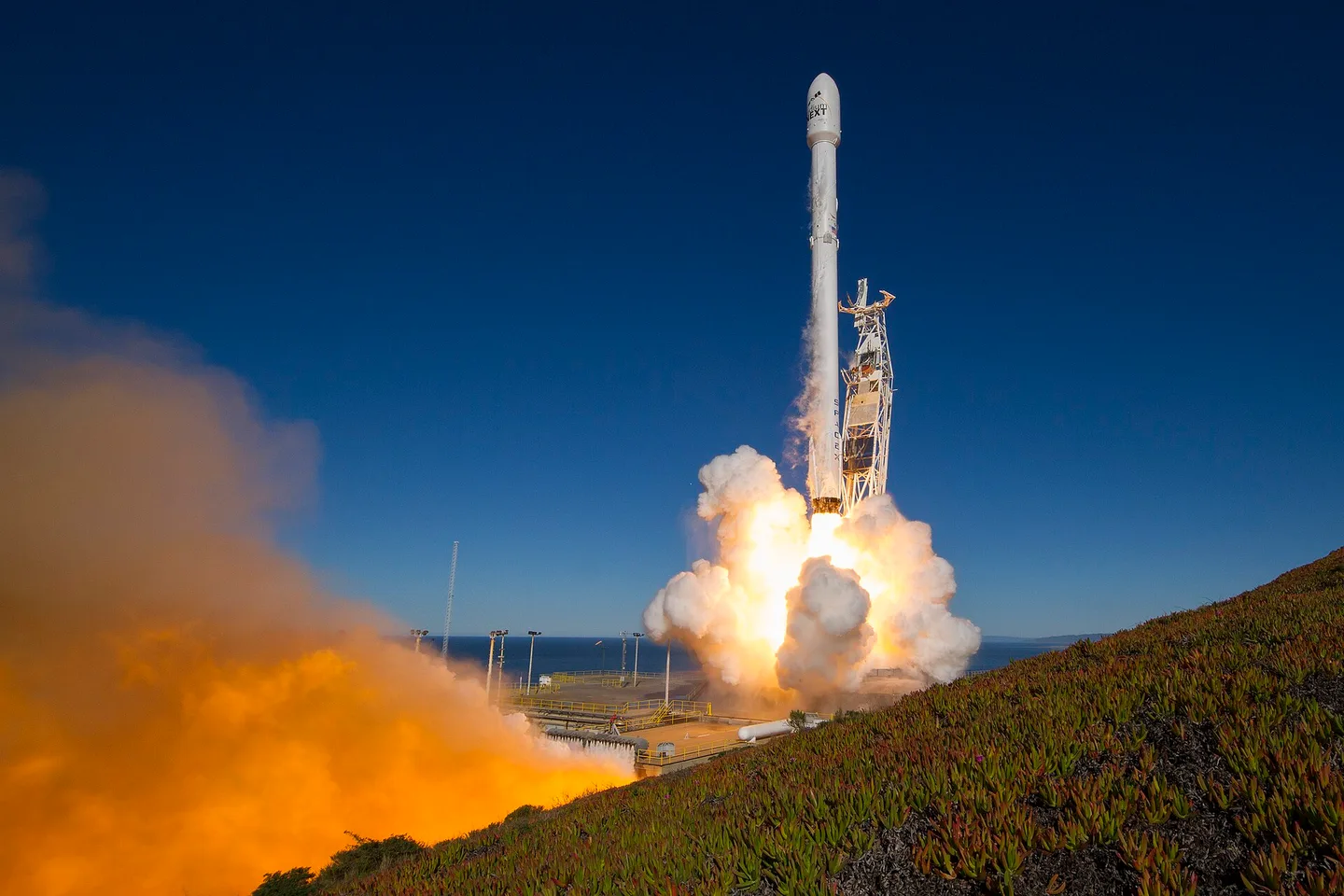
Falcon 9 lifting off, exhaust lighting the pad
Photograph: SpaceX · CC0, Wikimedia Commons
Completed reuse record36 flights
First landing on land21 Dec 2015
First droneship landing8 Apr 2016
First reflight30 Mar 2017

The operating idea

Recovery became part of the launch business.

Falcon 9’s first stage carries the nine Merlin engines and most of the vehicle’s propulsion hardware. Bringing it back lets the same major component fly again, and the flight record now runs to 36 missions on a single stage.

Recovering an orbital-class stage spans guidance, propulsion, aerodynamics, structures and ground operations. The booster separates at high speed, shapes its return through the atmosphere, survives re-entry heating, steers to a narrow target and removes almost all of its vertical speed in the final seconds.

The first landing on land came in December 2015, the first droneship landing in April 2016, and the first reflight of a flown stage in March 2017. Each first became a procedure, and the procedures became a fleet.
Interactive hardware

Four systems bring it back.

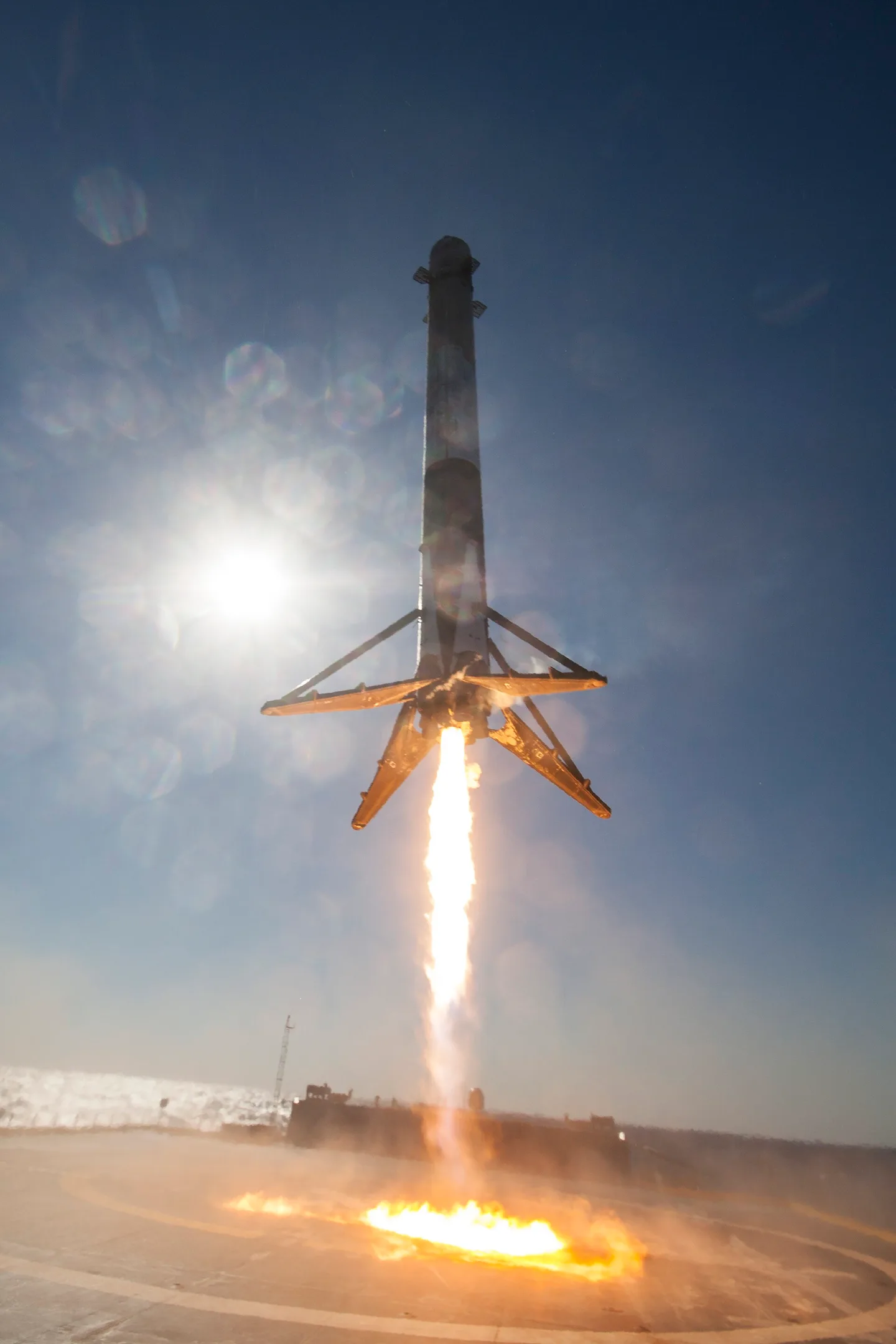
Select a marker on the photograph, or use the buttons below.

Falcon 9 first stage in its landing burn during the CRS-8 recovery, legs deployed, descending to the droneship

01 · Control

Grid fins

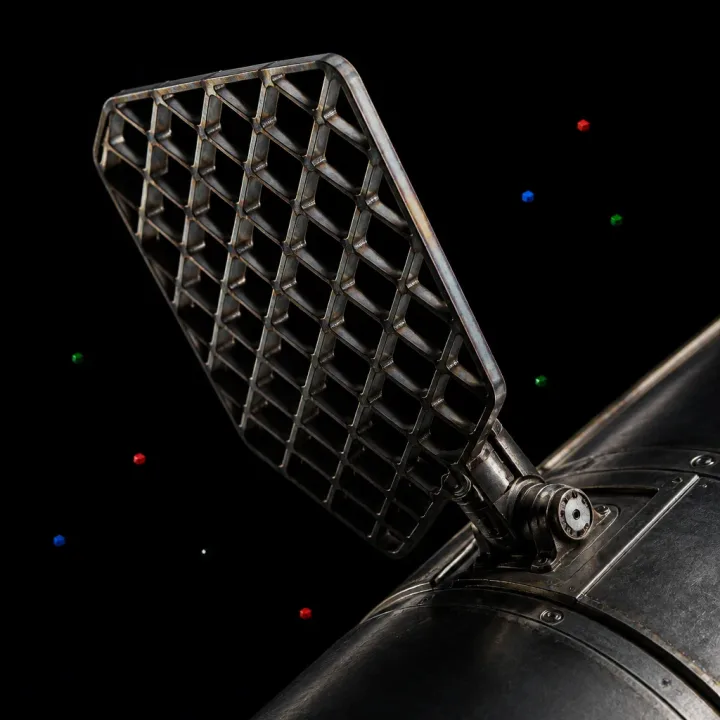
Four titanium lattice fins unfold near the top of the stage and steer it through the atmosphere. Guidance software trims them continuously to hold the descent on target.

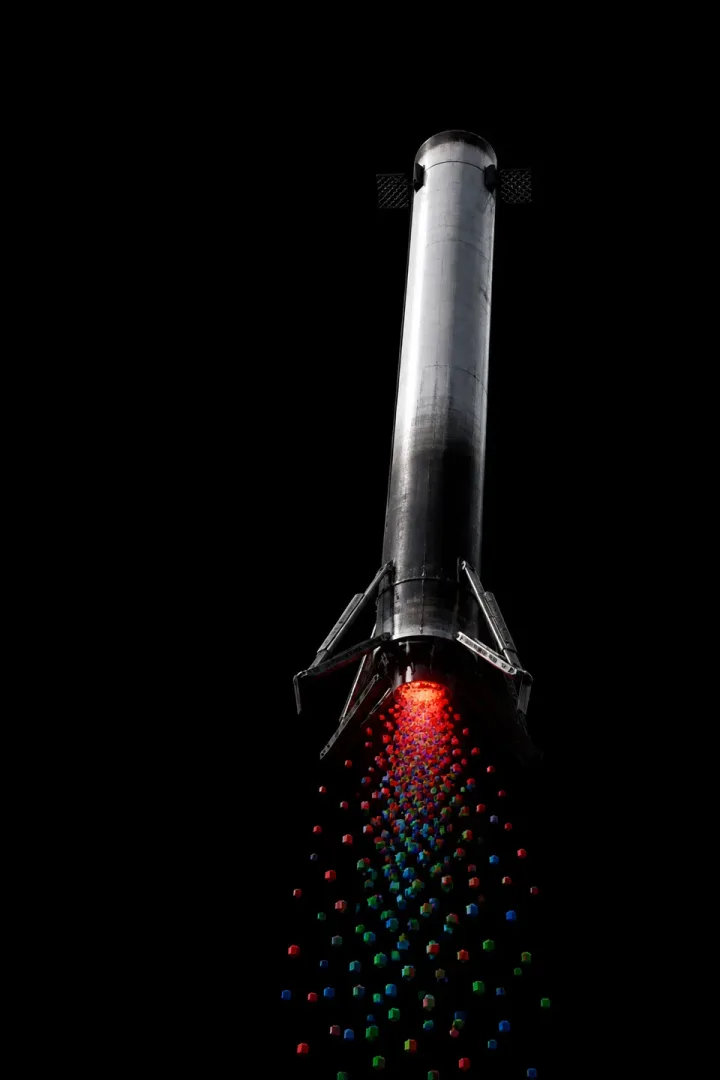
Concept artwork of a titanium grid fin on a booster interstage, drawn as a diagonal waffle lattice with red, blue and green cubes drifting past.
Concept artwork
Turn the reusable booster in 3D

Flight sequence

Launch to landing in five phases.

Step through the flight with the buttons, or select a point on the path.

Falcon 9 first-stage return sequenceA five-step path from launch to stage separation, atmospheric return, landing burn and recovery.LaunchSeparateReturnLandRecover

01 · Launch

Nine engines push the full stack uphill

The first stage supplies the thrust for the opening minutes of flight, holding back the propellant and hardware its own return will need.

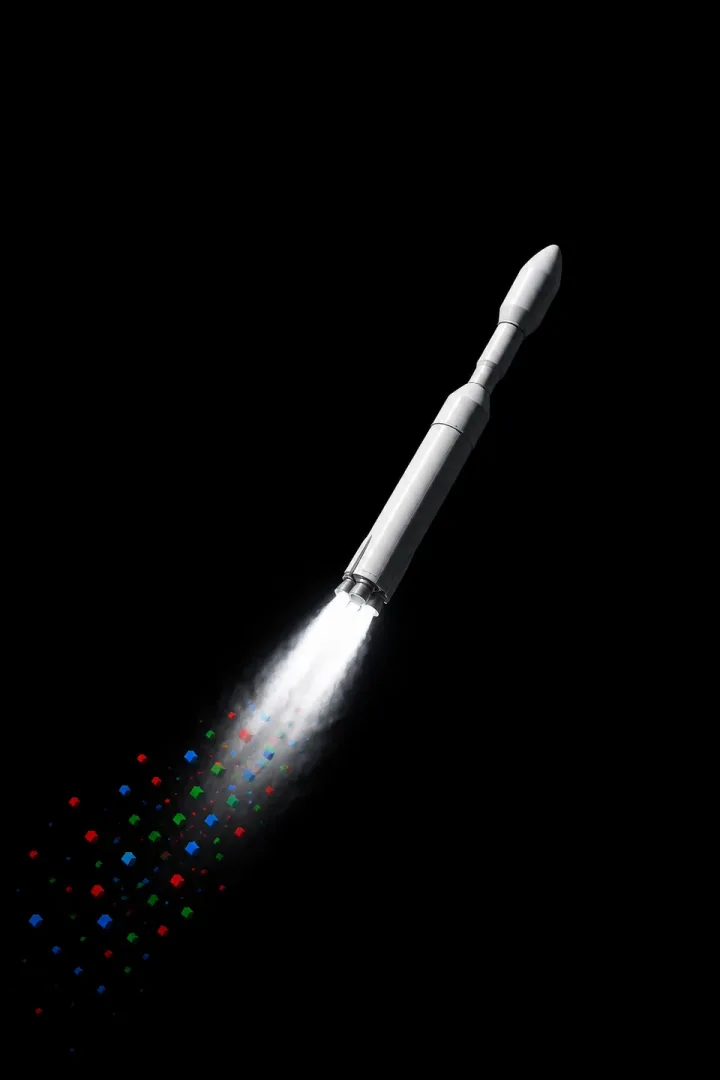
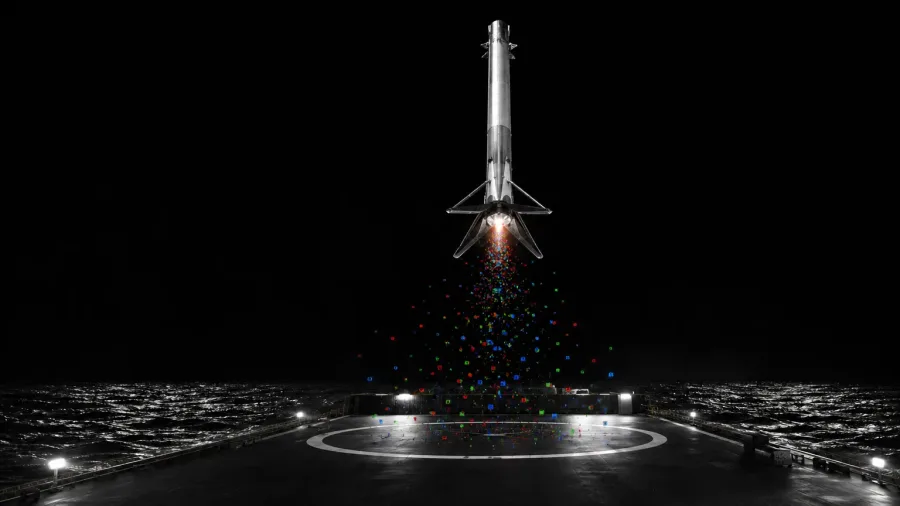
Concept artwork of a two-stage rocket climbing on a bright plume that dissolves into red, blue and green cubes.
Concept artwork
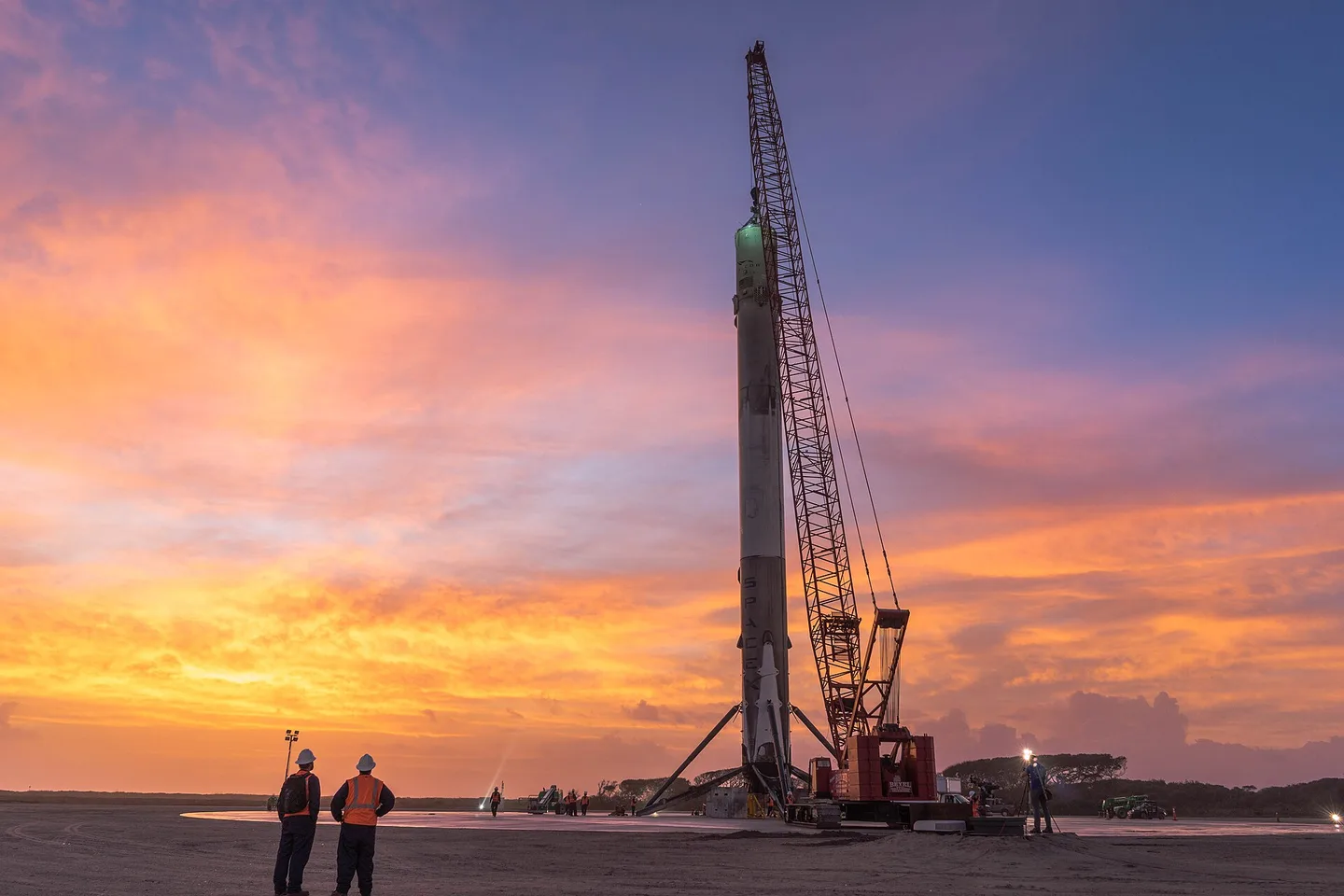
Recovered Falcon 9 first stage standing at Landing Zone 1

A flown stage is a working asset.

Inspected, processed and assigned its next mission: the vehicle standing at Landing Zone 1 is the product of the whole sequence above.

Photograph: SpaceX · CC0, Wikimedia Commons

Visual timeline

From landing tests to a 36-flight booster.

Photographs trace the development of recovery hardware, droneship operations and routine booster handling. Open any image for a larger view; every credit names the licence.

Grid fins fly for the first time

CRS-5 carried the first hypersonic grid fins on a Falcon 9 first stage, steering a descent test that ended hard on the droneship deck.

CRS-6 reaches the droneship

The stage found Just Read the Instructions in the Atlantic and tipped over after a hard touchdown: a near miss that proved the guidance could find the deck.

First landing on land

After lofting 11 Orbcomm satellites, the first stage flew back to Landing Zone 1 and stood itself upright: the first orbital-class booster to do so.

First droneship landing

CRS-8’s stage touched down on Of Course I Still Love You, opening sea recovery for the high-energy missions that cannot fly back to the coast.

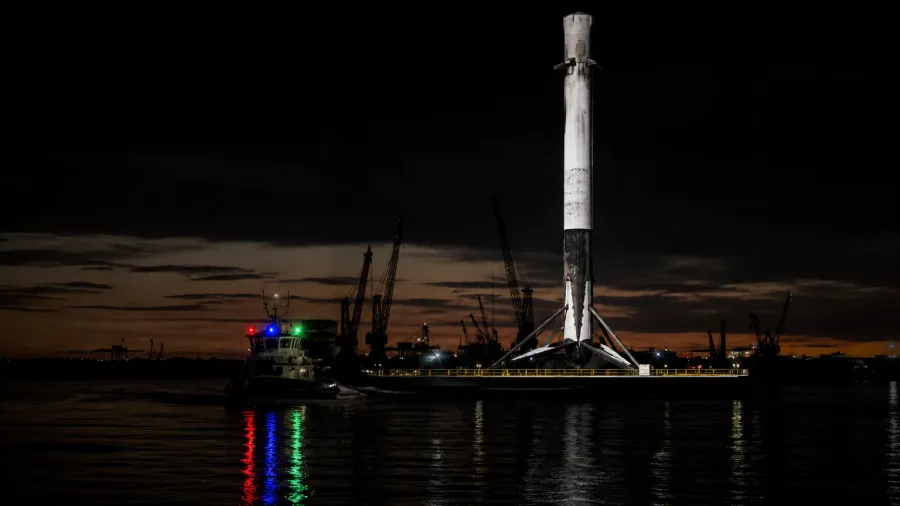
The recovered stage comes home

Standing on the deck, the CRS-8 booster returned to port as visible, reusable hardware.

First reflight of a flown stage

SES-10 launched on the booster recovered from CRS-8, the first time an orbital-class first stage flew a second mission.

Recovery becomes familiar hardware

CRS-11 returned another stage to Landing Zone 1, with fins, legs and the centre engine working as one practised system.

Crew flies on a Falcon 9

Demo-2 carried astronauts to the space station and placed the vehicle at the centre of NASA’s commercial crew programme.

A flown booster carries a national-security payload

GPS III SV05 launched on a stage flying its second mission, the first US national-security launch to use one.

Recovery includes the trip home

Crew-5’s booster rode its droneship back towards Port Canaveral: marine operations sit inside the reuse loop with everything else.

Current record

B1067 completes flight 36

On 9 July 2026 B1067 flew and landed for the 36th time, on Starlink 10-42. SpaceX lists Starlink 10-49 as its next mission.

Project data

The current record.

Each figure below carries its date and a link to the page it was read from. When the record moves, this page is rebuilt from the same data file, stamped 21 August 2026.

Open Space Data

Completed reuse record36 flights
Record boosterB1067
Record set9 Jul 2026 · Starlink 10-42
Next listed flight37th · Starlink 10-49
Listed date25 Aug 2026