
BepiColombo
ESA / JAXA · Mercury
The joint ESA and JAXA mission entered orbit around Mercury on 21 November 2026. Its two orbiters separate on 9 to 10 December.
At a glance
- Phase
- orbital operations
- Operator
- ESA / JAXA
- Destination
- Mercury
- Next milestone
- Mio separates from the Mercury Planetary Orbiter on 9 to 10 December 2026, and the science phase begins in April 2027
- Last verified
- 26 November 2026
Where it stands
In orbit around Mercury since 21 November 2026. ESA says orbit insertion began at 18:24 UTC; a software fault ended the thruster burn early and left the spacecraft in safe mode in a 75-hour orbit, longer than the planned 58 hours. ESA says the mission needs no extra burns and the 9 to 10 December orbiter separation stays on schedule.
The mission
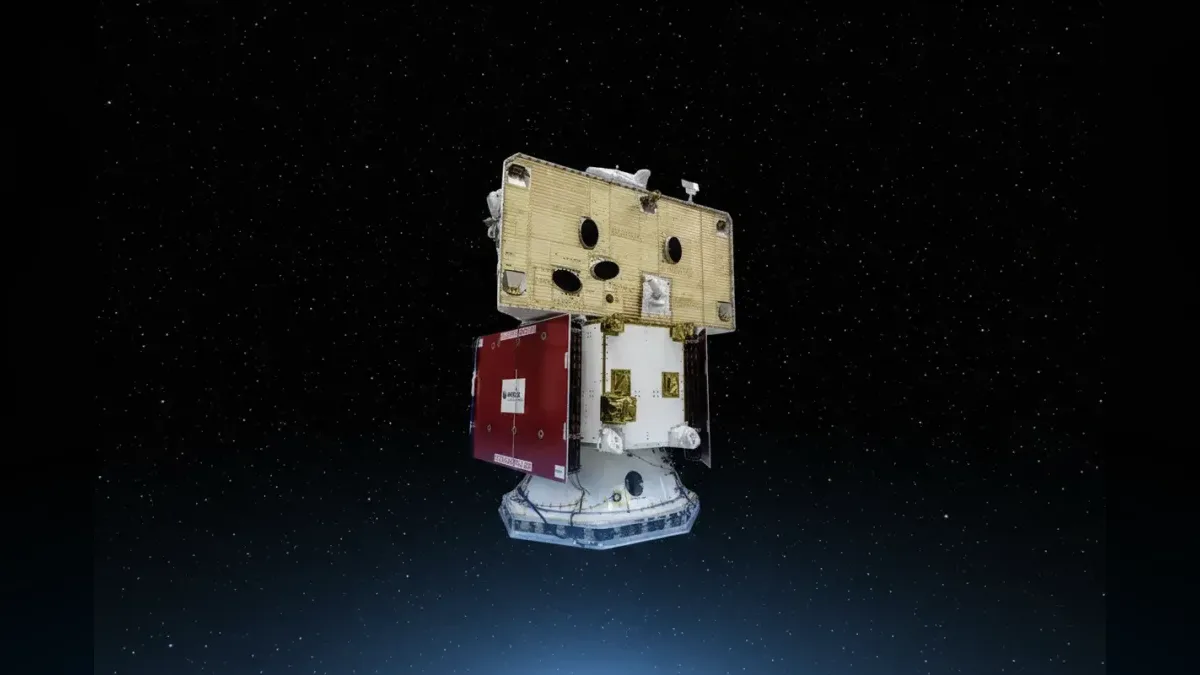
BepiColombo, ESA's joint mission with JAXA, completed its sixth and final Mercury flyby on 8 January 2025 and shut down its solar electric propulsion on 24 June 2026, closing out the powered cruise. On 3 September 2026 the Mercury Transfer Module separated from the stack more than 200 million kilometres from Earth, after an eight-year journey of 9.9 billion kilometres. On 24 September the Mercury Planetary Orbiter tested its axial thrusters in this configuration for the first time, firing for 8 minutes 42 seconds for an 11.4 m/s correction. ESA describes arrival as a six-month sequence: orbit insertion on 21 November, Mio's separation on 9 to 10 December, the Mercury Planetary Orbiter reaching its final science orbit in March 2027, and science from both orbiters from April 2027. ESA’s 6 October update reports that all Mercury Planetary Orbiter science instruments were switched on on 15 September and were healthy. ESA’s 23 November update confirms the spacecraft entered orbit around Mercury on 21 November, starting at 18:24 UTC, by a route ESA calls weak stability capture. A software fault ended the thruster burn early, the spacecraft entered safe mode, and it settled into a 75-hour orbit against the planned 58 hours. ESA says no additional burns are required, the separation of the two orbiters on 9 to 10 December is unaffected, and science begins in April 2027.
Related
Sources
- esa.int · https://www.esa.int/Enabling_Support/Operations/BepiColombo_begins_Mercury_arrival_with_MTM_separation_success
- esa.int · https://www.esa.int/Science_Exploration/Space_Science/BepiColombo/Latest_updates_BepiColombo_s_arrival_at_Mercury
- esa.int · https://www.esa.int/Science_Exploration/Space_Science/BepiColombo
- esa.int · https://www.esa.int/Science_Exploration/Space_Science/BepiColombo/BepiColombo_factsheet
- esa.int · https://www.esa.int/Science_Exploration/Space_Science/BepiColombo/Latest_updates_BepiColombo_s_arrival_at_Mercury