
James Webb Space Telescope
NASA / ESA / CSA · Sun-Earth L2
Four years into routine science at the second Lagrange point, most recently with a study of 21 young star systems where planets are colliding.
At a glance
- Phase
- orbital operations
- Operator
- NASA / ESA / CSA
- Destination
- Sun-Earth L2
- Last verified
- 2 October 2026
Where it stands
Fully operational at L2; on 1 October 2026 NASA reported Webb's study of 21 extreme debris disks, 16 of them observed with Webb, the warm dust left by planet-scale collisions in young star systems, published in The Astrophysical Journal.
The mission
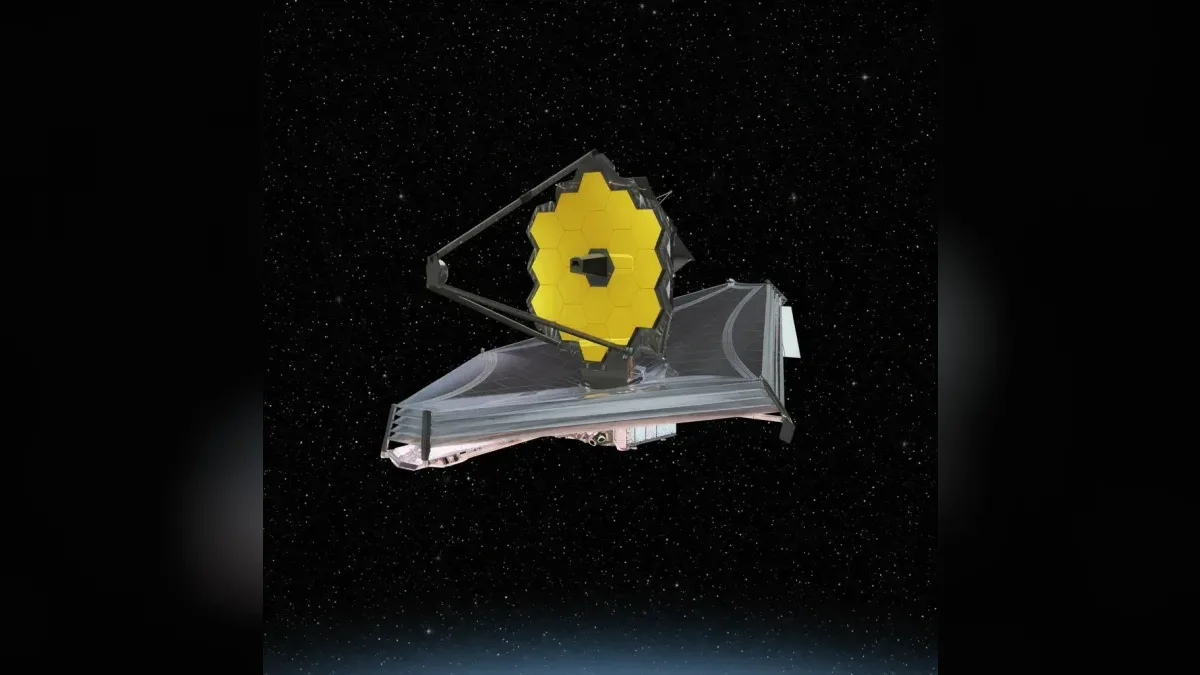
Webb continues routine science operations from its orbit around the second Lagrange point, 1.5 million kilometres from Earth. NASA released anniversary images on 6 July 2026 to mark four years of science, and on 15 July 2026 announced the discovery of a giant exoplanet hidden in the Beta Pictoris system. On 15 September 2026 NASA published one of Webb's largest images to date, a NIRCam panorama of the IC 348 star-forming region in Perseus, where it found brown dwarfs with as little as twice Jupiter's mass, smaller than theory predicts. On 1 October 2026 NASA reported a Webb study, led by Kate Su of the Space Science Institute, of 21 extreme debris disks, the dust signatures of planet-scale collisions that roughly 1% of young stars show; 16 of the disks come from Webb and five from Spitzer's archive.
Related
Sources
- science.nasa.gov · https://science.nasa.gov/mission/webb/
- science.nasa.gov · https://science.nasa.gov/missions/webb/nasas-webb-reveals-dynamic-panorama-of-star-formation/
- science.nasa.gov · https://science.nasa.gov/missions/webb/nasas-webb-provides-crash-course-on-planet-shattering-collisions/