Pegasus arrives for New Glenn's Stennis test shipment
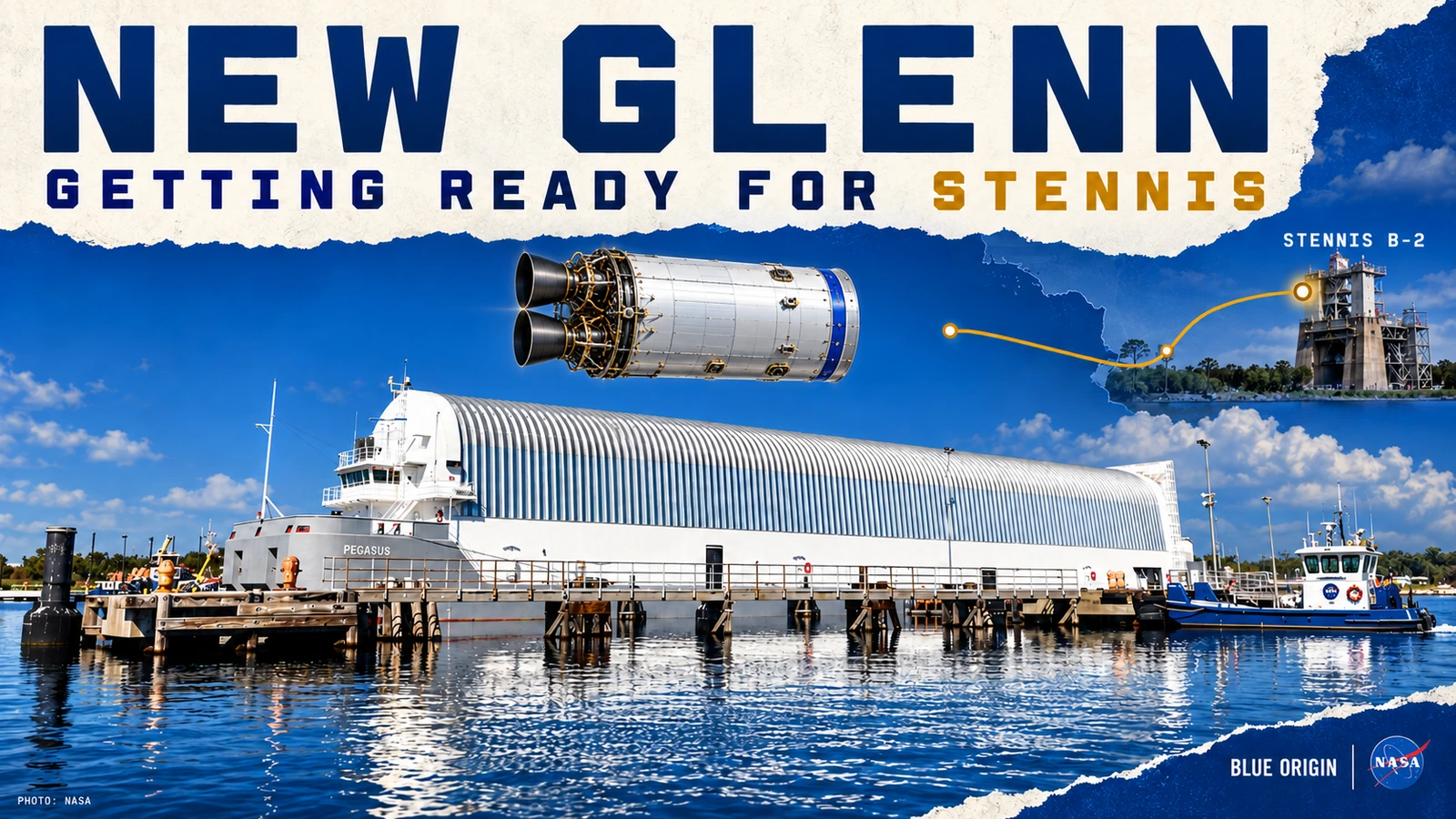
Port observer JohnCn (@JConcilus) reported NASA's Pegasus barge arriving at Port Canaveral on 24 October to collect a New Glenn upper stage. The transport update sits within Blue Origin's confirmed Stennis test programme and its expansion of Florida production facilities.
Listen to this articleListen
NASA’s Pegasus barge arrived at Port Canaveral on 24 October to collect a New Glenn upper stage, according to a public observation by JohnCn (@JConcilus). He identified the tug as Mediterranean Dawn and described the intended connection with hot-fire testing at Stennis Space Center.
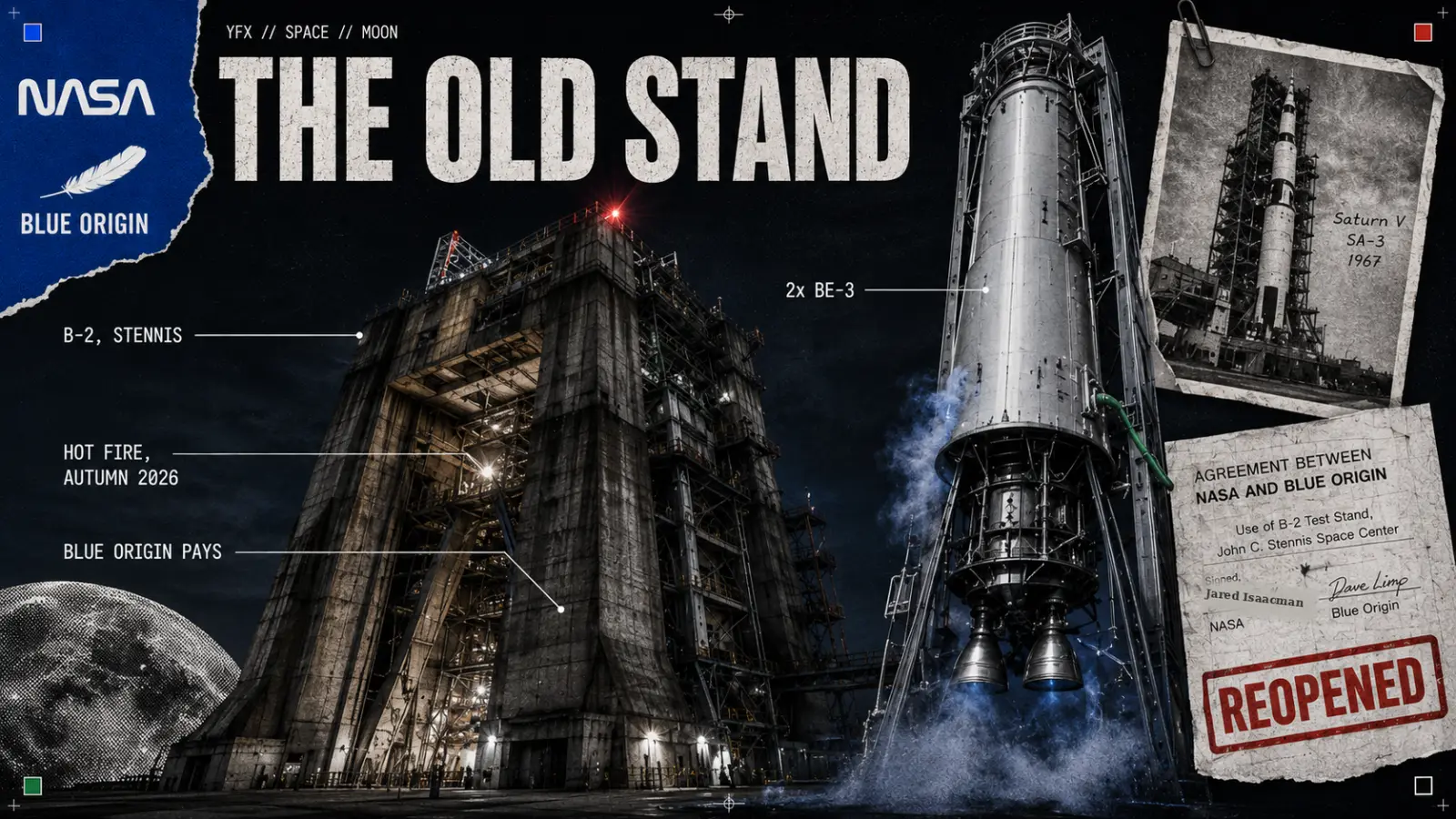
The observation concerns the transport preparations. The testing programme itself is covered by NASA’s agreement with Blue Origin, announced in July, to use the B-2 test stand in Mississippi for New Glenn’s upper stage.
Stennis adds a separate place to test stages
A hot-fire test holds a stage in place while its engines run. The stand lets engineers test the assembled propulsion system, its controls and supporting equipment before committing the hardware to flight.
Blue Origin says the Stennis agreement provides an additional testbed for checking upper-stage performance. Separating stage tests from launch-pad operations also gives the company more flexibility when preparing missions.
Pegasus provides a waterborne transport link for large rocket hardware.
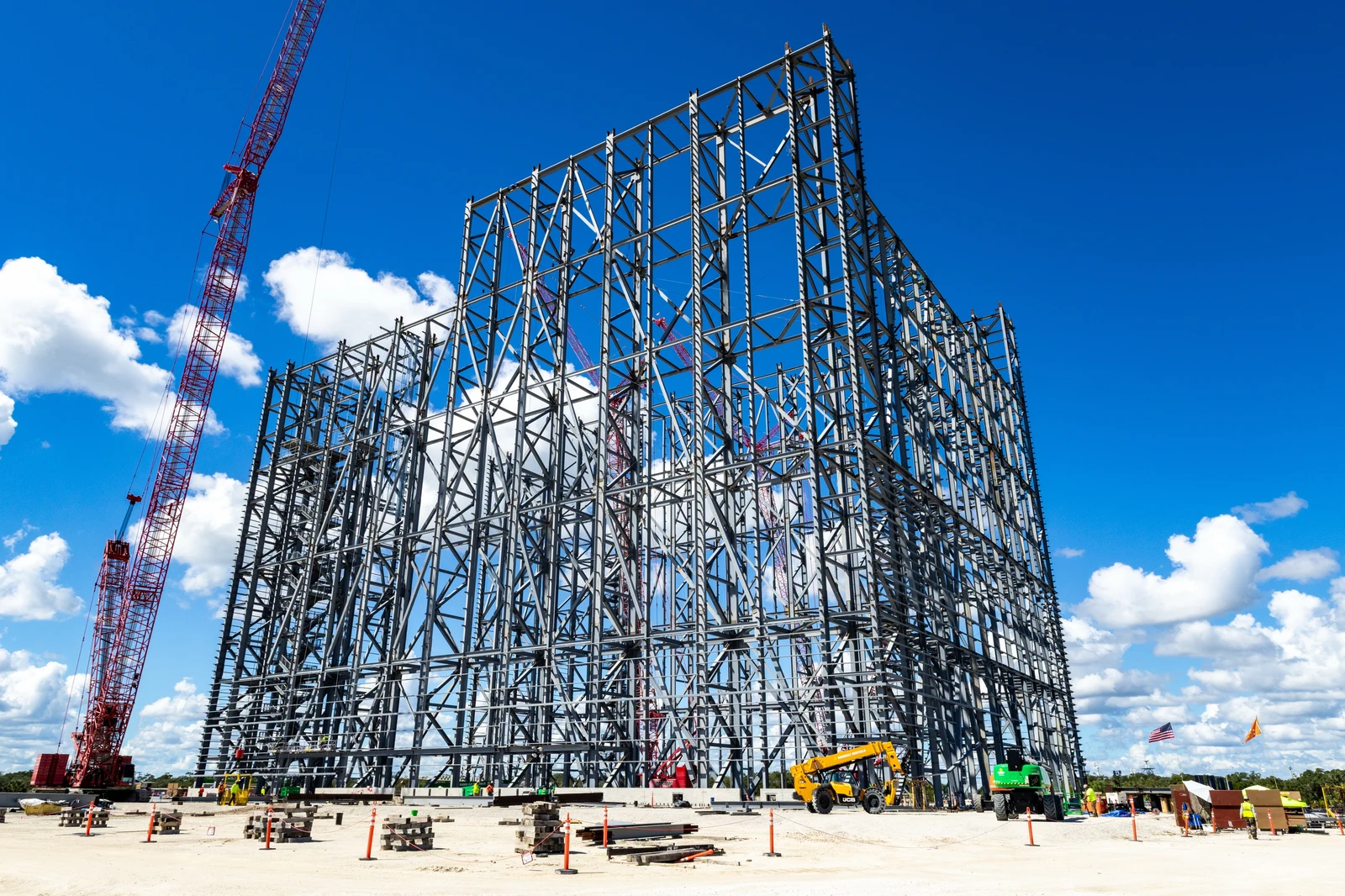
The Florida factory expansion targets the next configuration
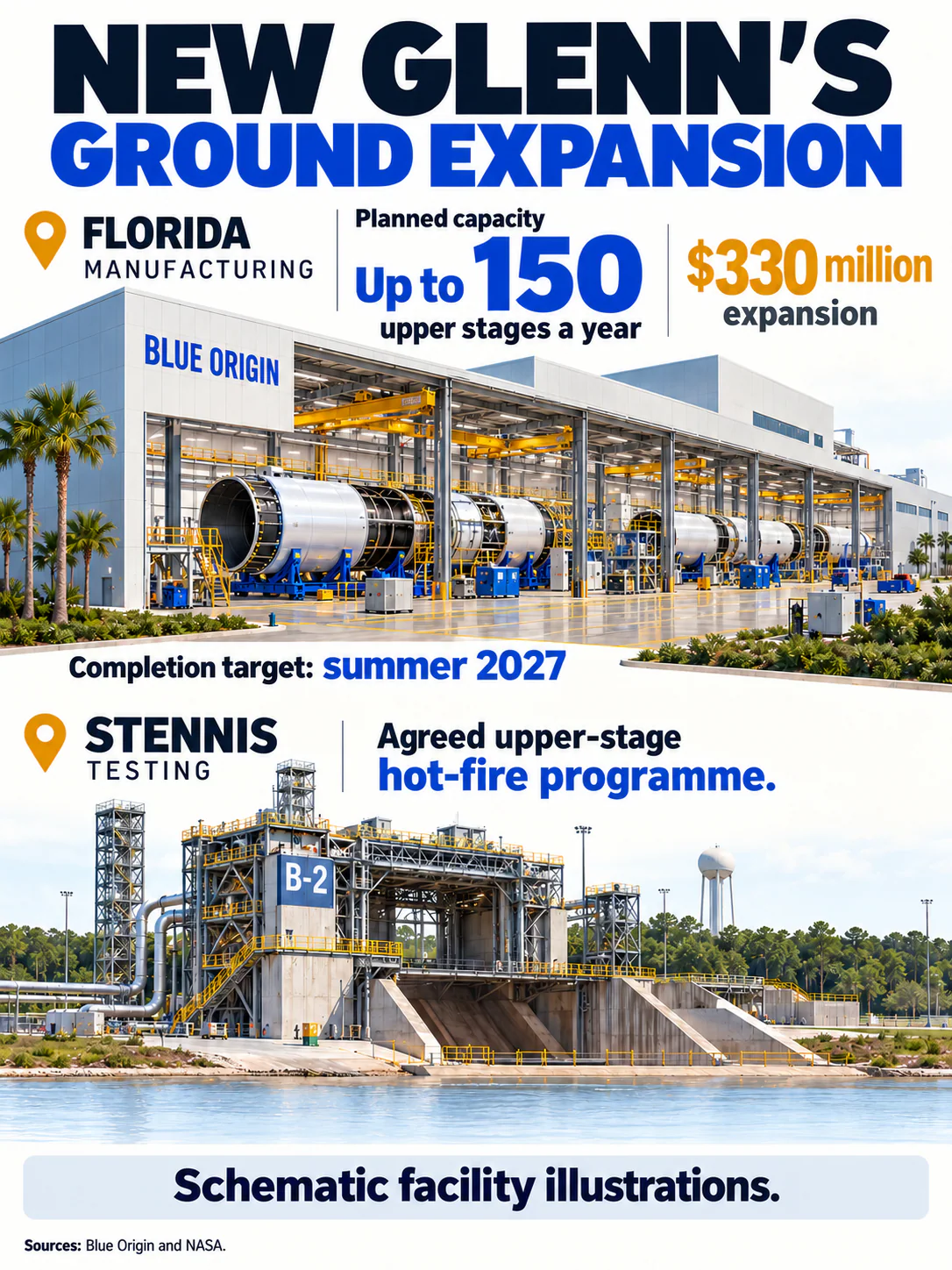
In its 16 October infrastructure update, Blue Origin describes a $330 million expansion for manufacturing the New Glenn 9x4 upper stage. The company targets completion in summer 2027 and capacity for up to 150 upper stages annually.
That is a manufacturing-capacity target. The same update describes investments in machining, welding, handling and inspection, alongside fairing preparation, tooling and storage. These are the factory processes needed to keep hardware moving towards integration.
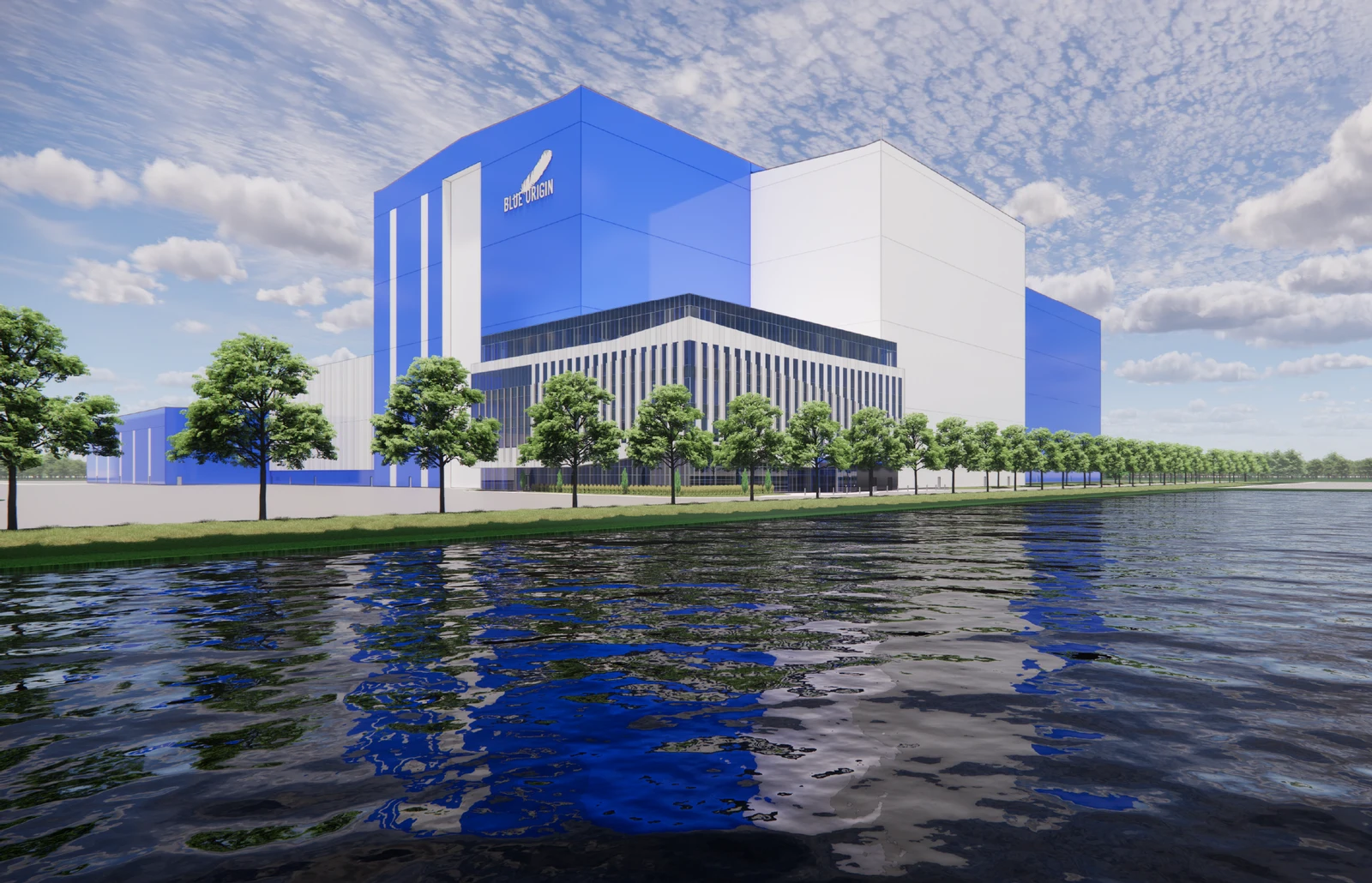
More flights need production, testing and recovery capacity
Blue Origin’s Florida programme also includes payload preparation, launch facilities and booster processing. Its published plan connects those activities with an ambition to support multiple flights per week by the end of the decade.
The Stennis test programme and Florida manufacturing expansion contribute to different parts of that system. One provides additional stage-testing capacity; the other aims to produce more hardware for the planned flight rate.