Blue Origin can land New Glenn and has nowhere to launch it
Blue Origin landed the same booster twice and reflew it, so the hard part works. Then a hotfire test in May took out the next rocket and the only orbital pad the company had, and return to flight now depends on rebuilding a launch mount.
Blue Origin spent a decade being told it could not land a rocket. On 13 November 2025 it landed one, carrying NASA’s ESCAPADE spacecraft towards Mars on the way. On 19 April 2026 it flew that same booster again and landed it a second time. After ten years of the same argument, the company had its answer.
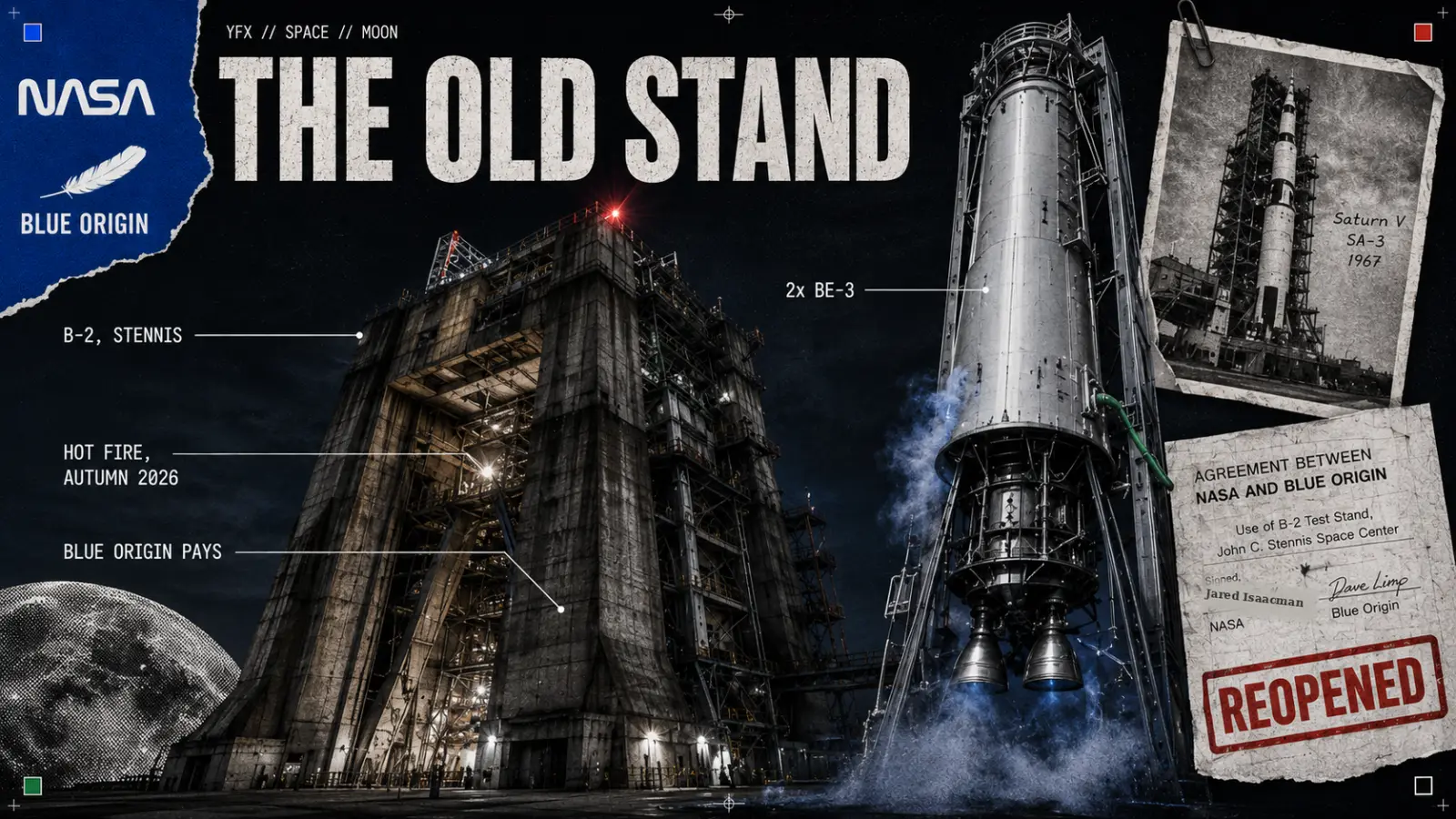
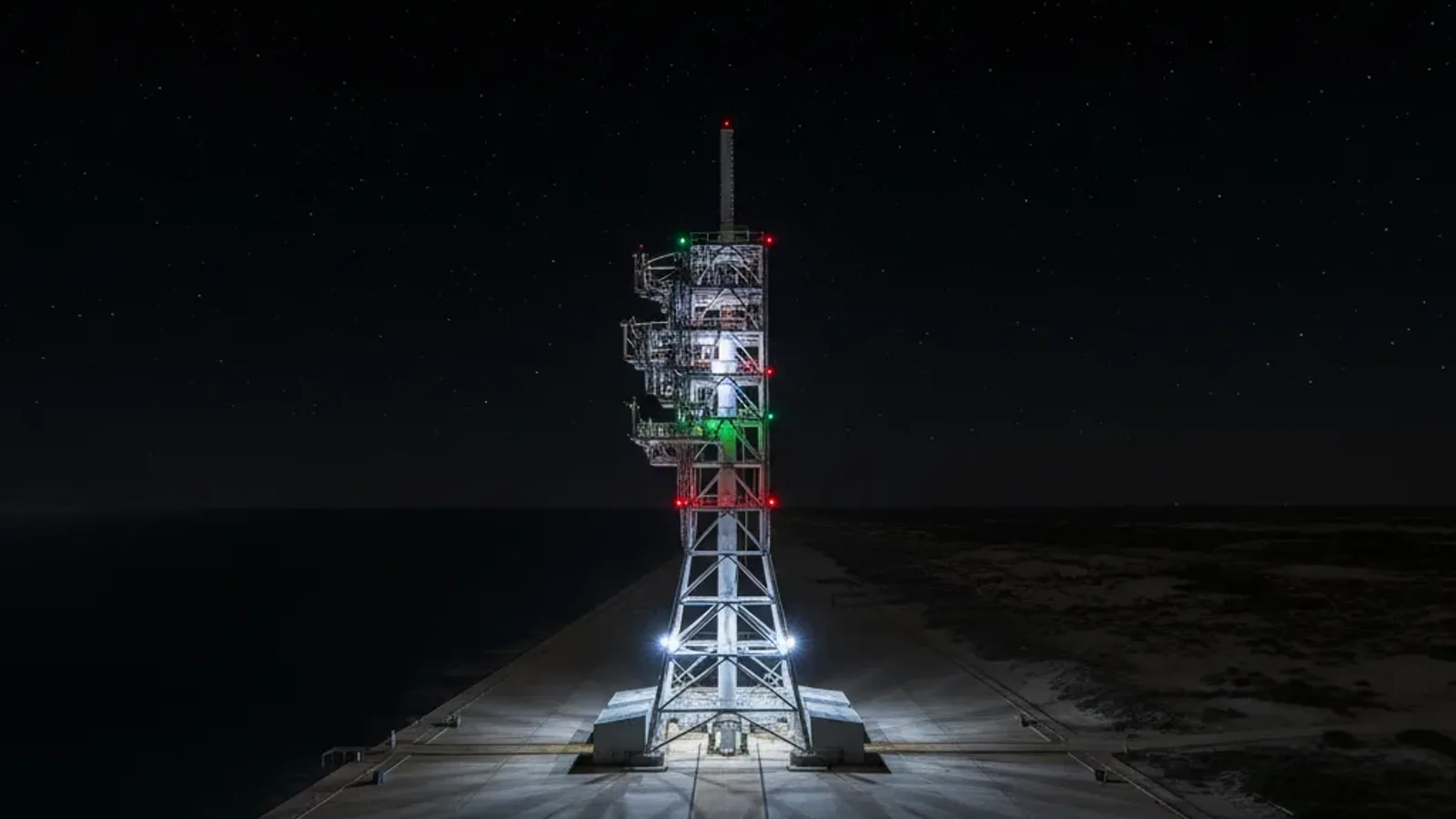
It has not flown since. On 28 May 2026 the next New Glenn was destroyed during a hotfire test at Launch Complex 36 at Cape Canaveral, taking the pad with it. Blue Origin has pointed to a fault in the main oxygen valve on one of the booster’s BE-4 engines. Return to flight is targeted before the end of the year, and what sets that date now is how fast a launch mount can be rebuilt.
A spare rocket, no spare pad
Reusability was sold as resilience. Land the booster, inspect it, fly it again, and a launch company stops being hostage to the cost and lead time of a new vehicle for every mission. Blue Origin has all of that, and one place to stand.
Compare the year. SpaceX has flown 92 Falcon missions in 2026 to the start of August, from pads at Cape Canaveral, Kennedy and Vandenberg. Lose one to an anomaly and the manifest reshuffles onto the others. Blue Origin’s entire orbital business ran through a single apron of reinforced concrete, and one bad valve on one test article took the whole company off the board for at least seven months.
Other companies are one bad day from the same position. Years of engineering attention have gone on making the flying part cheap and repeatable, and far less on the fixed part, which is single, expensive, slow to rebuild and sitting directly under a machine built to contain an explosion.
The customer is buying the pad too
Anyone promising a national programme a ride, and New Glenn is on NASA’s books, is promising the pad as much as the rocket. Build a manifest on one launch site and there is a dependency in it that nobody wrote down, which the customer tends to find out about at the worst possible moment.
Blue Origin will rebuild LC-36 and New Glenn will fly again; the hardware has proved itself twice over. The useful lesson from the year has nothing to do with who is winning. A launch company flies as often as its slowest, least duplicated asset allows, and for most of them that asset stopped being the rocket some time ago.