NASA reopens a Saturn V test stand for Blue Origin's upper stage
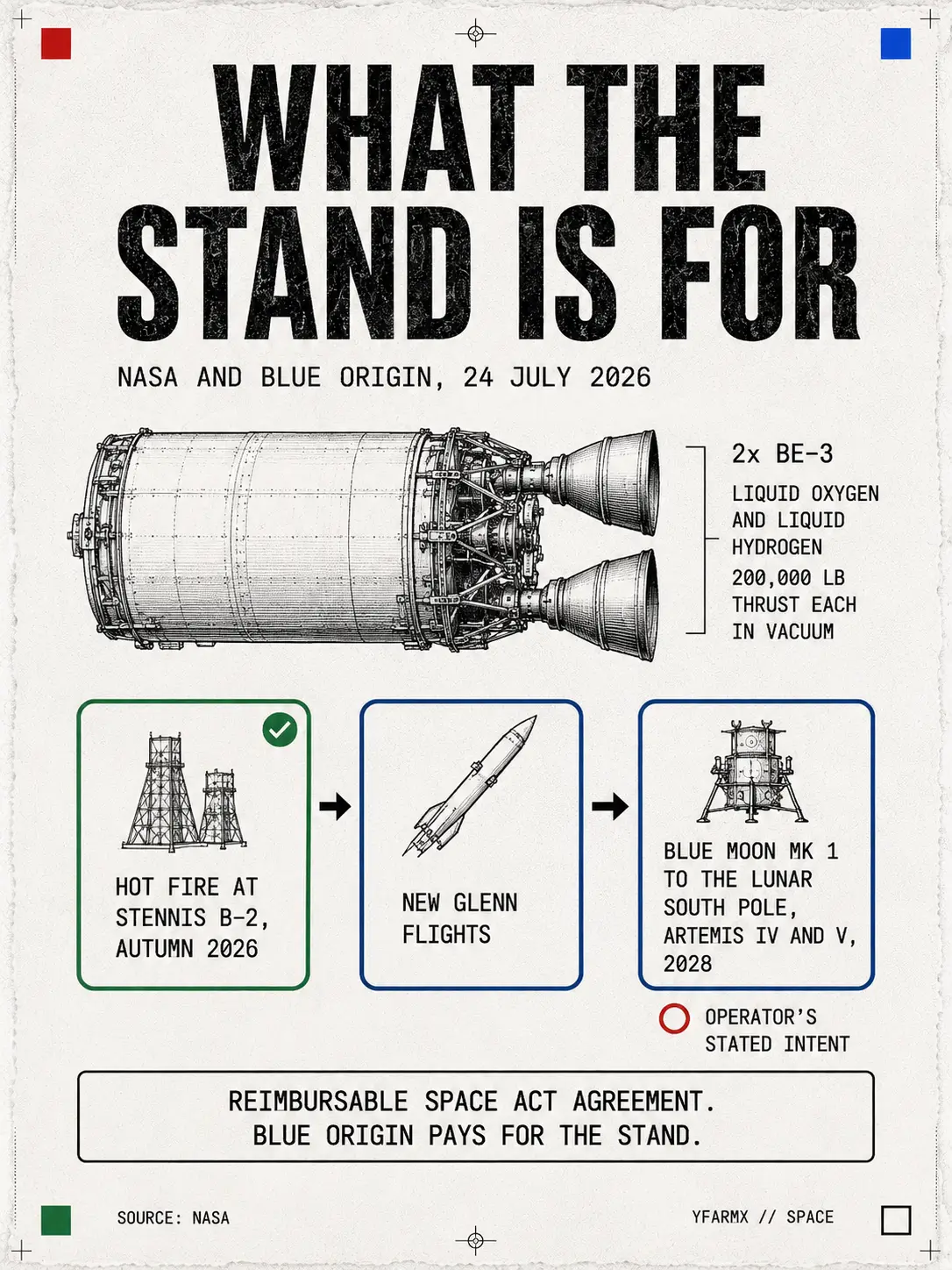
NASA has agreed to let Blue Origin hot fire the New Glenn second stage on the B-2 stand at Stennis Space Center from autumn 2026, under a reimbursable Space Act Agreement.
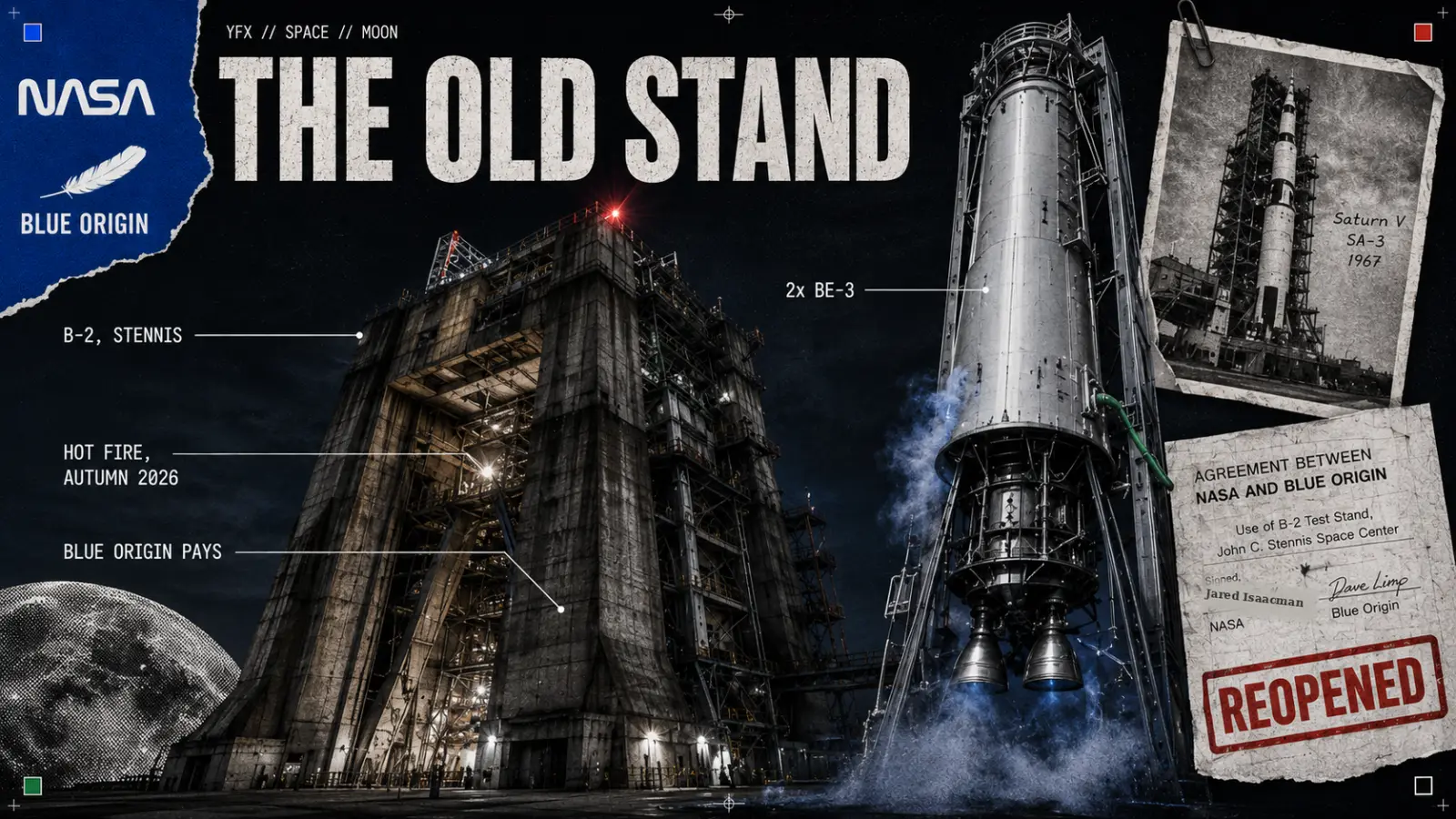
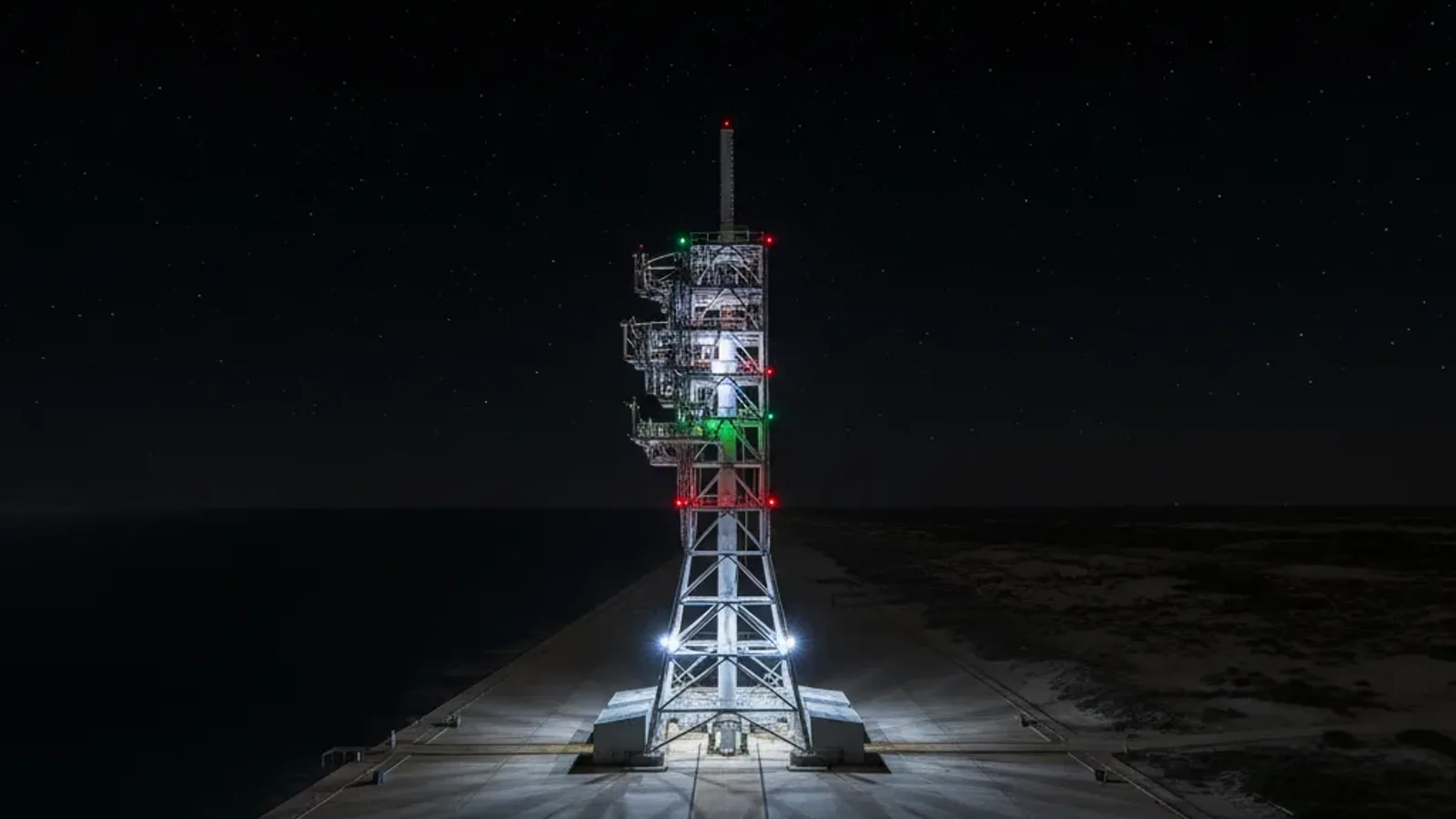
NASA and Blue Origin signed an annex to a reimbursable Space Act Agreement on 24 July 2026 that puts the New Glenn second stage on the B-2 test stand at Stennis Space Center in Mississippi. Hot fire testing is targeted to begin in autumn 2026. Reimbursable is the operative word: Blue Origin pays for the use of the stand.
The stage in question runs two BE-3 engines on liquid oxygen and liquid hydrogen, each producing 200,000 pounds of thrust in vacuum.
Why this stand
B-2 tested the first stage of the Saturn V. That is not decoration on the announcement, it is the reason the arrangement works: the United States built a small number of stands capable of holding down a large hydrogen stage and firing it, and building another one is a multi-year civil engineering project rather than a procurement.
Dave Limp, Blue Origin’s chief executive, made the link directly: “Stennis helped take Americans to the Moon, and through this partnership, it will help take us back.”
NASA Administrator Jared Isaacman framed it as a schedule argument: “Winning the new space race means moving faster and working alongside a strong commercial industry.”
What it is for
New Glenn is not a bystander in the lunar programme. The rocket is slated to launch Blue Origin’s Blue Moon Mark 1 lander to the lunar south pole for Artemis IV and V in 2028, and the agreement sits inside the Artemis III multi-launch campaign, in which four astronauts test rendezvous and docking with commercial human landing systems.
A second stage that has not been hot fired is the constraint on all of that. Qualifying it on an existing stand in autumn 2026 is the difference between a 2028 lander and a lander that slips.
Who owns the infrastructure
Two chief executives calling a 1960s test stand back into service is a story about hardware. The arrangement underneath it is a story about ownership. NASA holds the stands, the commercial operator pays to use them, and the agency keeps a capability it no longer has to justify on its own budget.
That is a different relationship from buying a launch. It makes the government a landlord to the companies it also buys missions from, and it is worth watching what that does to both sides of the negotiation.
What is not known
The agreement does not state how many hot fire tests are planned, how long the campaign runs, or what it costs Blue Origin. NASA has not published a New Glenn flight date tied to this testing, and the Artemis IV and V lander dates remain the operator’s stated intent rather than a confirmed schedule.