Artemis Accords reach 76 countries: what they agree to
NASA says 76 countries have joined the Artemis Accords. Here is what the 2020 agreement asks them to do as missions return to the Moon.
Listen to this articleListen
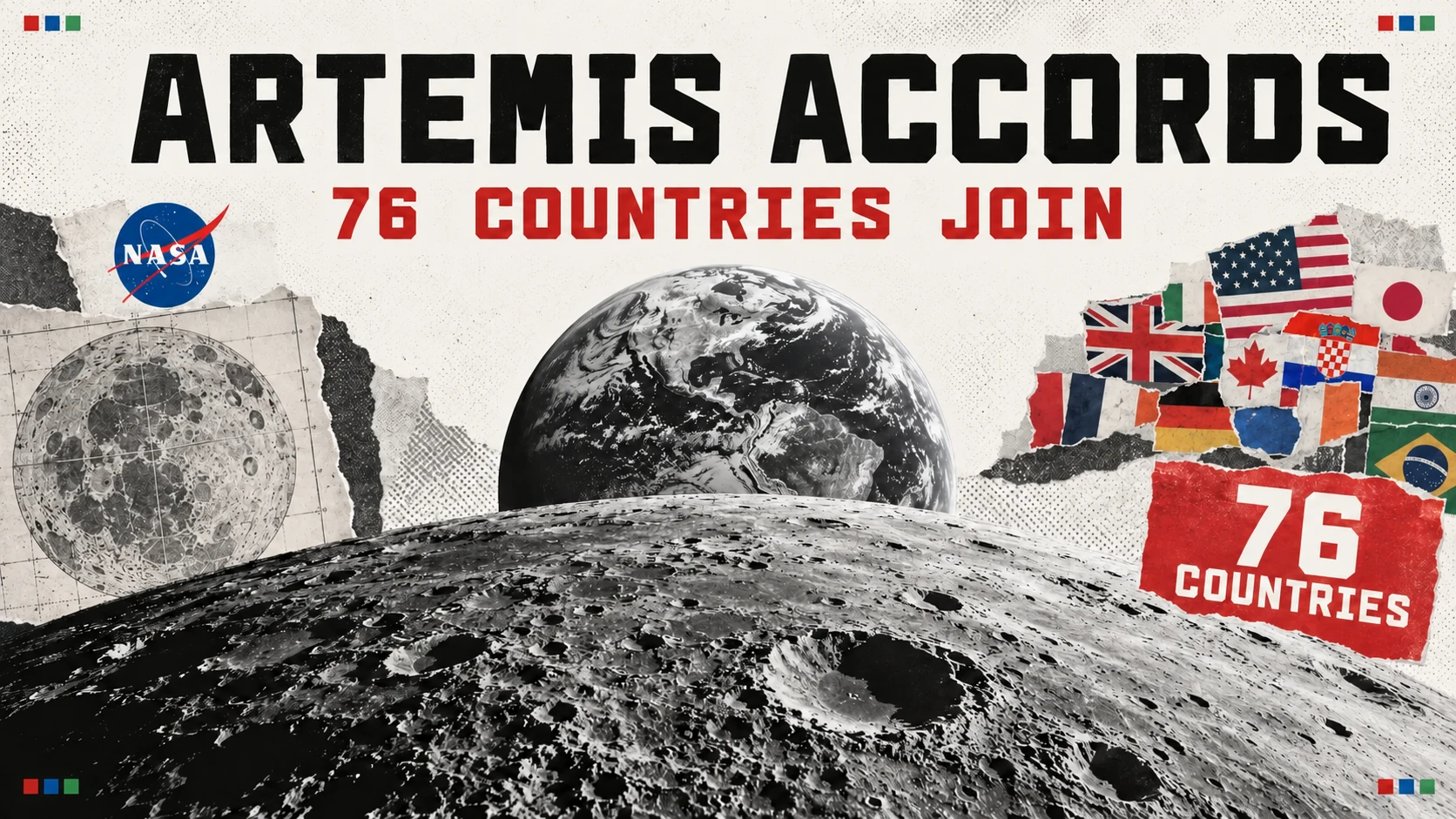
The Artemis Accords are a set of principles countries use to coordinate peaceful civil space activity. They address what happens when different missions operate around the Moon: how they share scientific results, help crews in distress and avoid interfering with one another. NASA said on 28 September 2026 that Albania, Croatia, Côte d’Ivoire and San Marino had brought the group to 76 countries.
NASA and the US Department of State launched the Accords with seven other countries in 2020. Their original text describes a political commitment to practical principles and connects them to existing space treaties. The UK Space Agency’s account of the signing also describes shared rules for safe operations, space resources, debris and scientific data. The name comes from NASA’s Artemis programme, but the principles address civil activity on the Moon, Mars, comets and asteroids, and in the space between them.
What do countries agree to do?
A signatory agrees to follow shared practices when planning and carrying out civil space missions. The original Accords group them into ten areas:
| Principle | What it means in practice |
|---|---|
| Peaceful purposes | Conduct cooperative activity for peaceful purposes under international law. |
| Transparency | Share information about national space policies and exploration plans. |
| Interoperability | Work towards common technical standards so equipment and infrastructure can function together. |
| Emergency assistance | Make reasonable efforts to help people in distress in space. |
| Registration | Decide which partner registers an object launched for a cooperative mission. |
| Scientific data | Release results from cooperative research publicly in a timely way, subject to appropriate protections. |
| Space heritage | Preserve historically significant landing sites and artefacts. |
| Space resources | Conduct extraction and use in a way consistent with the Outer Space Treaty. |
| Avoiding interference | Share the location and nature of operations and coordinate when activities could conflict. |
| Orbital debris | Plan to reduce debris and dispose of spacecraft safely at the end of missions. |
Those are the commitments in the signed text. Separate arrangements between agencies put the principles into specific joint projects.
How would a safety zone work on the Moon?
A safety zone is a temporary area around a particular space operation where other operators receive notice and coordinate to avoid interference. For example, a country landing equipment near another mission would share the location and discuss how both can work safely. The Accords say a zone’s size and duration should reflect the operation and end when that operation ends.
The signed agreement also preserves free access to the Moon under the 1967 Outer Space Treaty. The practical aim is to prevent one mission’s lander, rover or communications system from disrupting another’s work.
Why has the group grown to 76?
NASA’s 28 September update puts the signatory count at 76 after four recent additions. The agency says the countries now meet through a signatories group, with technical workshops and senior meetings twice a year. They have worked on recommendations for sharing lunar data, common equipment standards and avoiding interference between planned missions.
NASA has invited signatories to contribute scientific payloads, technology demonstrations and small satellites to its lunar plans. The growing count marks agreement on how to cooperate; each country’s role in a mission will depend on the projects it chooses and the arrangements it makes with partners.