Spy agency's first Falcon Heavy launch reused NASA telescope boosters
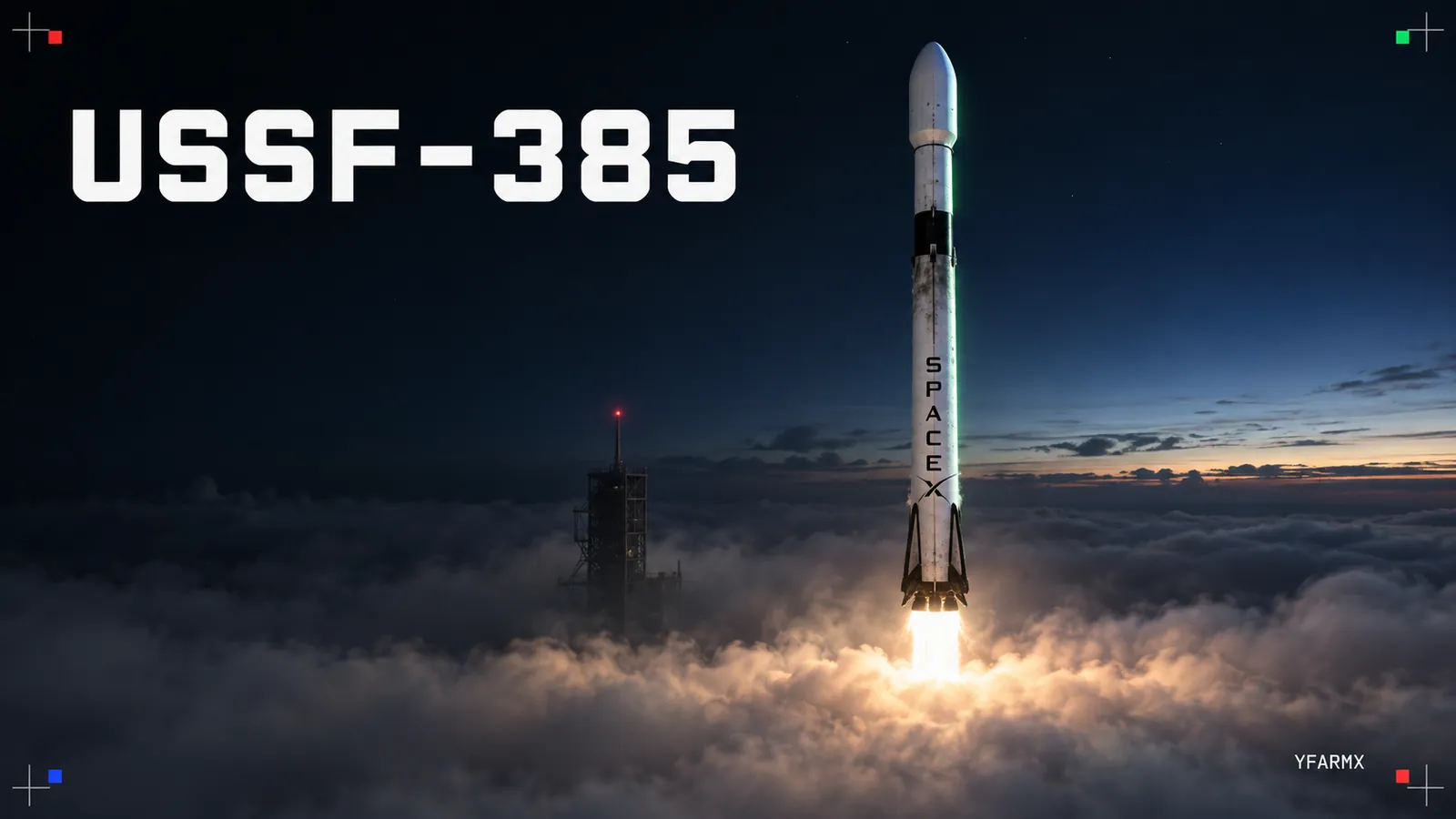
The National Reconnaissance Office launched NROL-97 on a SpaceX Falcon Heavy from Kennedy Space Center at 11:54 p.m. EDT on 1 October 2026 (03:54 UTC, 2 October), its first on the rocket. Both side boosters, which launched NASA's Roman telescope just over 32 days earlier, landed again.
Listen to this articleListen
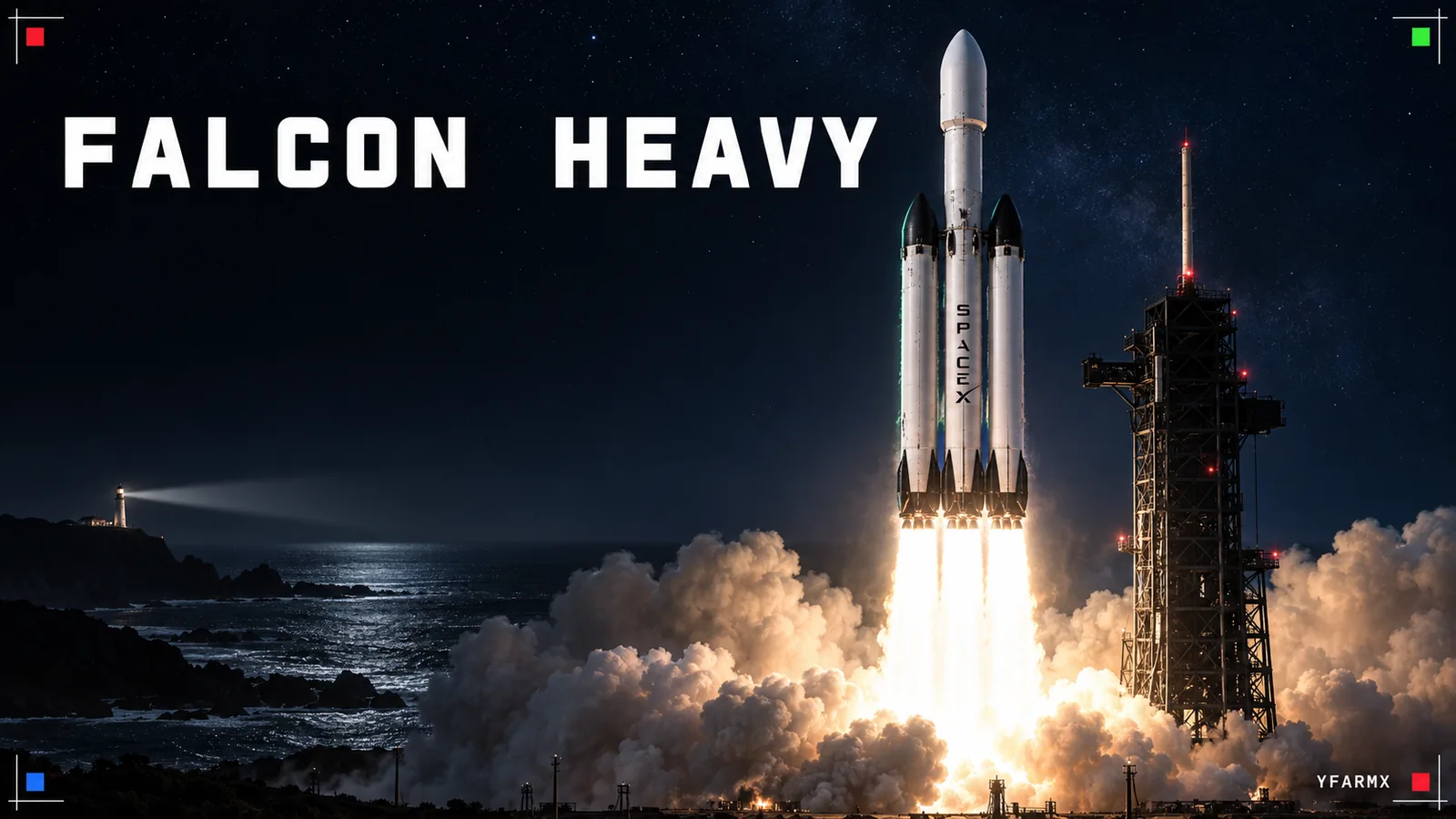
The National Reconnaissance Office (NRO), the US agency that builds and operates the government’s reconnaissance satellites, launched NROL-97 on a SpaceX Falcon Heavy from Launch Complex 39A at NASA’s Kennedy Space Center at 11:54 p.m. EDT on Thursday 1 October 2026, which is 03:54 UTC on 2 October. It was the NRO’s first launch on Falcon Heavy. Falcon 9 had flown 22 missions for the agency over the previous nine years, SpaceX said on X.
Both side boosters landed back at Cape Canaveral Space Force Station, on Landing Zones 1 and 2. The same two boosters launched NASA’s Nancy Grace Roman Space Telescope on 30 August, just over 32 days earlier. The NRO calls the cargo a national security payload, and its release of 2 October says the rocket delivered it to orbit.

Both boosters were back on the ground in under eight minutes
Falcon Heavy’s two side boosters landed on Landing Zones 1 and 2 at Cape Canaveral about 7 minutes 47 seconds after the 03:54 UTC liftoff on 2 October 2026, on the timeline SpaceX published for the flight. They separated from the centre core at T+02:27, flipped, and fired a boostback burn from T+02:42 to T+03:47 to head back towards the coast. SpaceX posted video of both landings on X at 04:02 UTC.
Falcon Heavy is three reusable Falcon 9 cores side by side, with 27 Merlin engines that SpaceX’s vehicle page says make more than 5 million pounds of thrust at liftoff. The centre core kept firing after the side boosters left, and the second stage took over at T+04:00.
| Event | Time after liftoff |
|---|---|
| Liftoff from pad 39A | T+00:00 |
| Max Q, peak mechanical stress | T+01:09 |
| Side boosters separate | T+02:27 |
| Side boosters’ boostback burn | T+02:42 to T+03:47 |
| Centre core engines cut off, stages separate | T+03:51, T+03:54 |
| Fairing separates | T+04:17 |
| Side boosters’ entry burn | T+06:29 to T+06:37 |
| Side boosters land at LZ-1 and LZ-2 | T+07:47 |

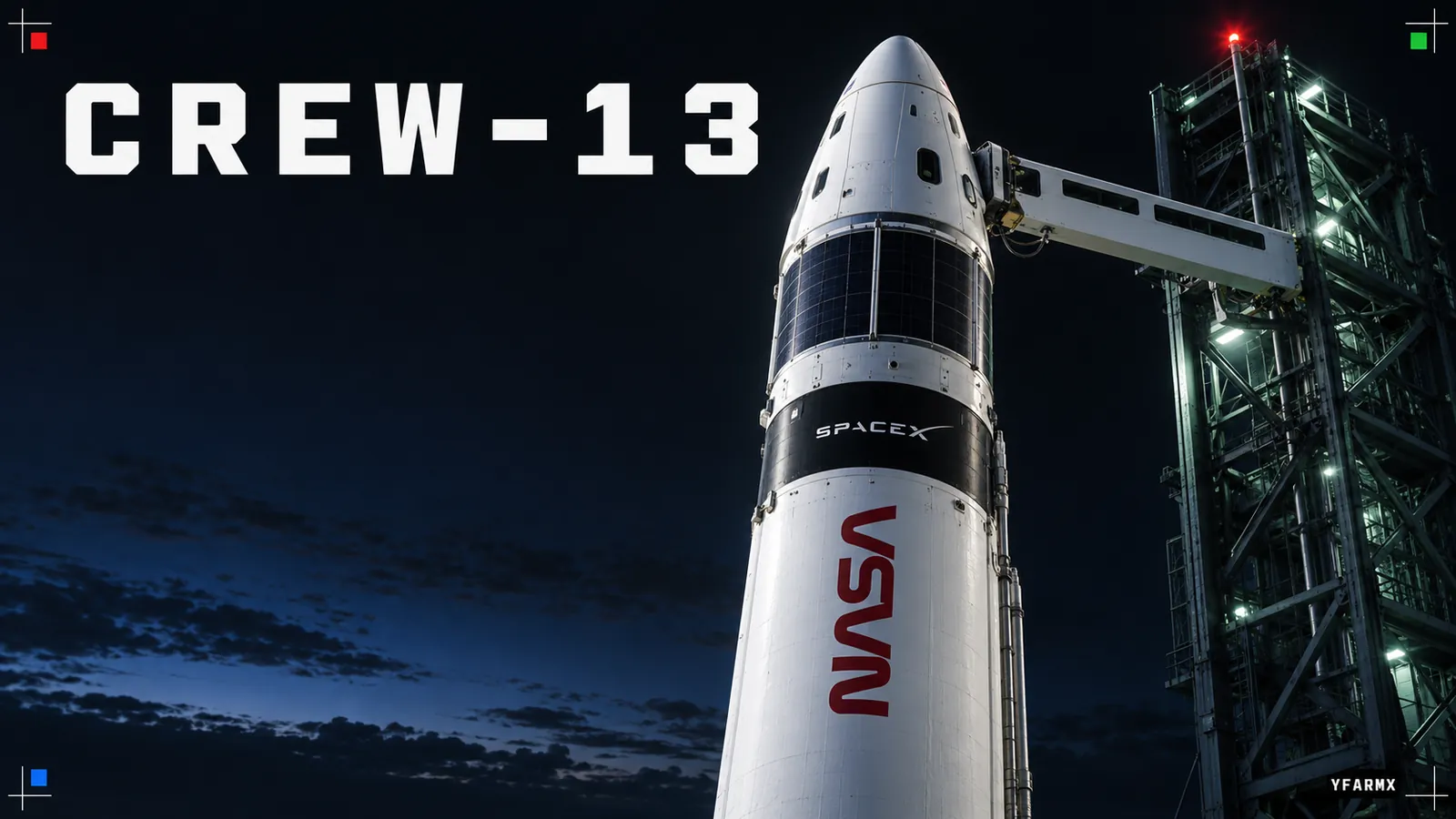
SpaceX had already flown a crew that day. Crew-13 lifted off on a Falcon 9 from Space Launch Complex 40 at 11:10 a.m. EDT, 12 hours 44 minutes before NROL-97, and its Dragon docked at the International Space Station at 7:05 p.m. EDT, according to SpaceX’s Crew-13 page.
The boosters launched NASA’s Roman telescope 32 days earlier
NROL-97’s two side boosters launched NASA’s Nancy Grace Roman Space Telescope at 7:26 a.m. EDT on 30 August 2026, 32 days and 16 hours before this flight. SpaceX’s mission page says this was the second flight for one booster and the fourth for the other. The older booster first flew on GOES-U, a NOAA weather satellite, in June 2024.
| Mission | Launch, Eastern time | Older booster | Newer booster |
|---|---|---|---|
| GOES-U | 25 June 2024, 5:26 p.m. | 1st flight | |
| ViaSat-3 F3 | 29 April 2026, 10:13 a.m. | 2nd flight | |
| Roman Space Telescope | 30 August 2026, 7:26 a.m. | 3rd flight | 1st flight |
| NROL-97 | 1 October 2026, 11:54 p.m. | 4th flight | 2nd flight |
The NRO credits the reuse with saving time. Reusing the side boosters from the Roman launch “enabled us to eliminate schedule delays and share mission assurance practices for a rapid turn-around of the Falcon Heavy”, Col. Kathryn Cantu, the NRO’s director of space launch, said in a post the agency published on 2 October. The NRO’s release adds that NROL-97 also reused payload fairings, from the agency’s NROL-95 launch on 30 July.
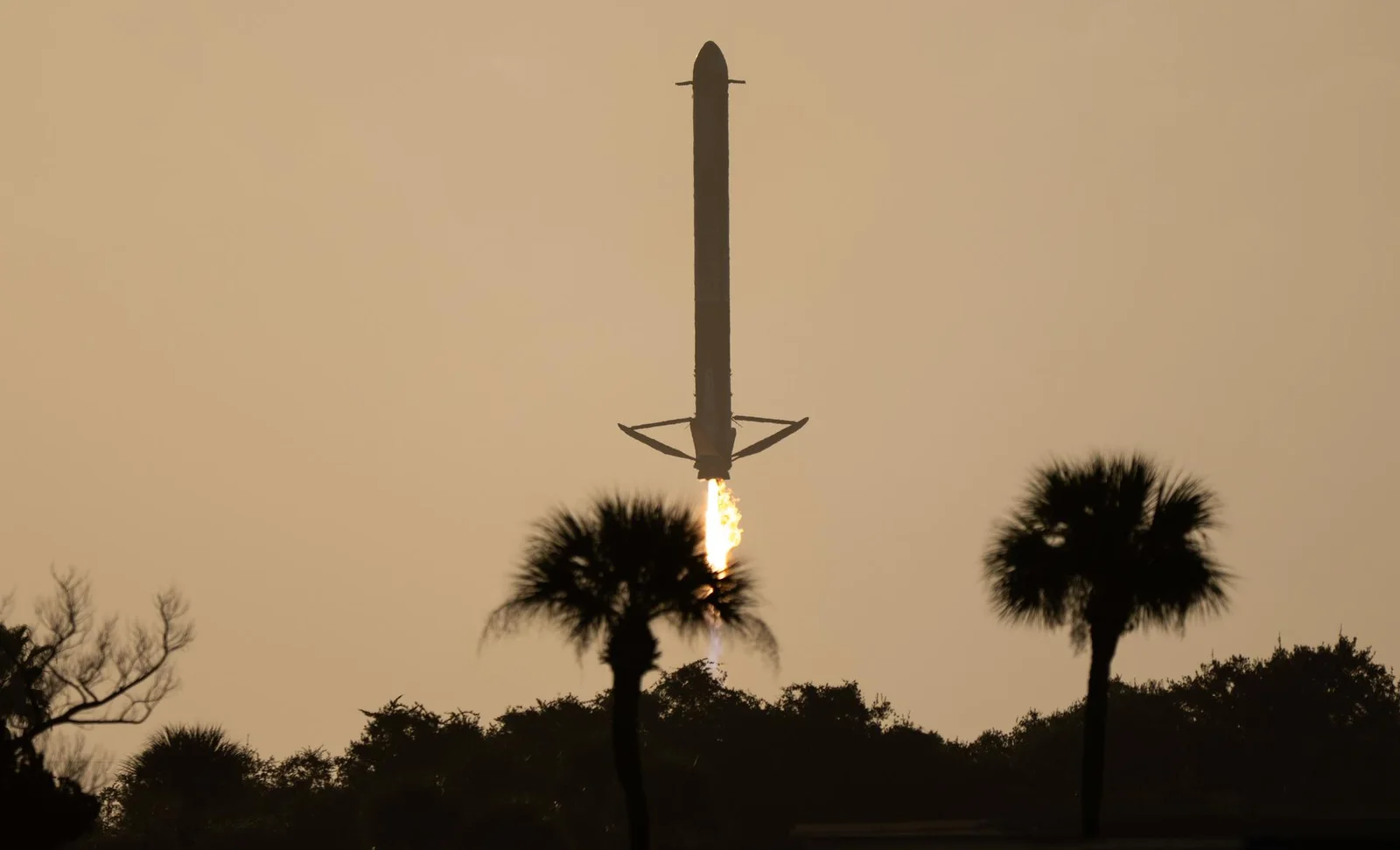
Roman also carries NRO hardware. “The integration of surplus NRO hardware into the Nancy Grace Roman Space Telescope continues decades of NRO-NASA collaboration,” the NRO posted on 1 September, congratulating NASA on the launch.
SpaceX builds Falcon Heavy from Falcon 9 cores, and one booster can fly on both rockets. On ViaSat-3 F3 in April, the GOES-U booster flew beside a Falcon 9 veteran that had already flown 21 missions, 18 of them Starlink launches, according to SpaceX’s ViaSat-3 F3 page. For Roman, SpaceX paired the GOES-U booster with a new one, and that pair flew NROL-97.
Falcon 9 flew the NRO’s previous 22 SpaceX missions
SpaceX had launched 22 missions for the NRO on Falcon 9 over nine years before NROL-97, SpaceX said on 2 October 2026, and the NRO counts NROL-97 as its fifth launch of 2026. The four earlier flights this year all used Falcon 9, three from Vandenberg in California and one from Cape Canaveral, according to SpaceX’s mission pages. All four are among the 11 national security launches SpaceX flew in 2026 up to 26 September.
The table gives liftoff in UTC, so the two evening launches from California carry the next day’s date. In local time, NROL-105 lifted off at 8:39 p.m. PST on 16 January and NROL-172 at 7:13 p.m. PDT on 11 May.
| Mission | Liftoff (UTC) | Rocket | Launch site |
|---|---|---|---|
| NROL-105 | 17 January 2026, 04:39 | Falcon 9 | Vandenberg, California |
| NROL-172 | 12 May 2026, 02:13 | Falcon 9 | Vandenberg, California |
| NROL-179 | 19 June 2026, 08:50 | Falcon 9 | Vandenberg, California |
| NROL-95 | 30 July 2026, 07:10 | Falcon 9 | Cape Canaveral, Florida |
| NROL-97 | 2 October 2026, 03:54 | Falcon Heavy | Kennedy Space Center, Florida |
The mission patch marks 25 years since 9/11
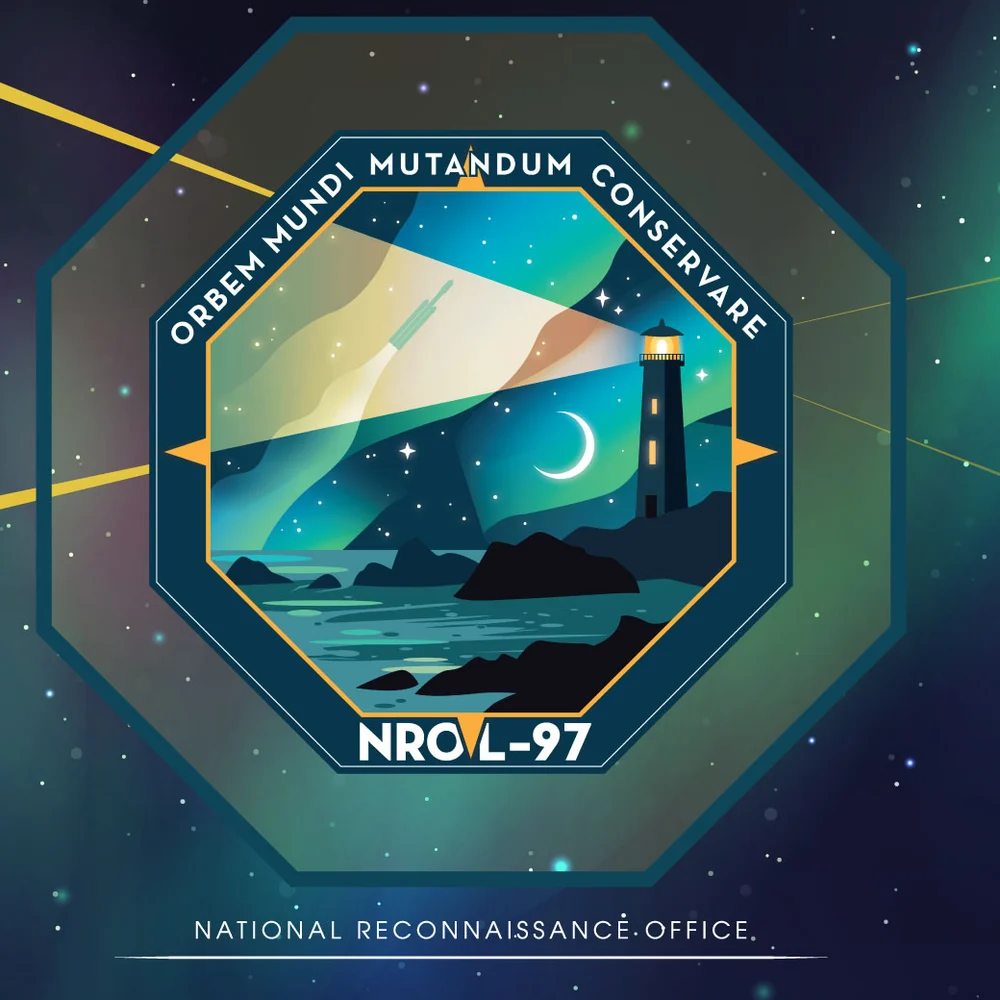
The NROL-97 mission patch honours the 25th anniversary of the 11 September 2001 attacks, according to the NRO’s launch page. The ends of the lighthouse beam point to 9 and 11 on a clock face, four stars stand for the four aircraft lost that day, and the moon is drawn in the phase it showed on 11 September 2026. The NRO says the lighthouse stands for enduring strength and for getting information to people who need it in difficult times.
Falcon Heavy has flown military missions since 2019
Falcon Heavy flew four US military missions before NROL-97, all from pad 39A: the Department of Defense’s STP-2 on 25 June 2019, then the Space Force’s USSF-44 on 1 November 2022, USSF-67 on 15 January 2023 and USSF-52 on 28 December 2023, by US Eastern dates on SpaceX’s mission pages. NROL-97 is the first for the NRO, the intelligence agency that shares the national security launch programme with the Space Force.
Those flights reused boosters too. STP-2 flew on boosters that had launched Arabsat-6A, SpaceX’s page says. The side boosters from USSF-44 flew again on USSF-67 75 days later, by SpaceX’s published launch times, and SpaceX’s USSF-52 page records the fifth launch and landing for that mission’s pair, after USSF-44, USSF-67, Hughes Jupiter 3 and NASA’s Psyche.
What is NSSL Phase 3 Lane 2?
NSSL Phase 3 Lane 2 is the set of National Security Space Launch contracts that Space Systems Command (SSC), the Space Force’s buying arm, awarded to SpaceX, United Launch Services and Blue Origin on 4 April 2025, and the NRO says NROL-97 is the first launch flown under it. SSC reserves Lane 2 for its most demanding, least risk-tolerant payloads, about 54 missions expected across fiscal years 2025 to 2029.
| Provider | Anticipated contract value | Expected Lane 2 missions, FY25 to FY29 |
|---|---|---|
| SpaceX | $5,923,580,297 | 28, about 60% |
| United Launch Services (ULA) | $5,366,439,406 | 19, about 40% |
| Blue Origin | $2,386,234,812 | 7, from the second order year |
SSC assigned the first nine Lane 2 missions the same day. SpaceX received seven for $845.8 million in total, NROL-97 among them, and SSC said NROL-97 would fly from the Eastern Range into a higher-energy orbit. The same order gave SpaceX two more NRO missions, NROL-96 and NROL-157, which SSC said would launch from the Western Range into lower-energy orbits.
Questions people ask
- What is NROL-97?
- NROL-97 is a National Reconnaissance Office mission that SpaceX launched on a Falcon Heavy from Launch Complex 39A at NASA's Kennedy Space Center at 11:54 p.m. EDT on 1 October 2026, which is 03:54 UTC on 2 October. The NRO calls the cargo a national security payload, which its release says reached orbit. It was the NRO's first Falcon Heavy launch and its fifth launch of 2026.
- Did the Falcon Heavy boosters land after the NROL-97 launch?
- Yes. Both Falcon Heavy side boosters landed on Landing Zones 1 and 2 at Cape Canaveral Space Force Station about 7 minutes 47 seconds after liftoff, on SpaceX's published timeline, and SpaceX posted video of the two landings at 04:02 UTC on 2 October 2026. It was the second flight for one booster and the fourth for the other. Between them they had launched GOES-U, ViaSat-3 F3 and NASA's Roman Space Telescope.
- Has Falcon Heavy flown national security missions before NROL-97?
- Yes. NROL-97 is the National Reconnaissance Office's first Falcon Heavy mission, and the rocket had already flown four US military missions from pad 39A: the Department of Defense's STP-2 on 25 June 2019, then the Space Force's USSF-44 on 1 November 2022, USSF-67 on 15 January 2023 and USSF-52 on 28 December 2023, by US Eastern dates on SpaceX's mission pages. The NRO says NROL-97 is the first launch under the Space Force's NSSL Phase 3 Lane 2 contracts, awarded in April 2025.
Sources
- National Reconnaissance Office: NRO successfully launches NROL-97 aboard its first SpaceX Falcon Heavy mission, release #11-26, 2 October 2026nro.gov
- National Reconnaissance Office: NROL-97 launch page and mission emblemnro.gov
- NRO on X: mission success, NROL-97 launched on a SpaceX Falcon Heavy, 2 October 2026x.com
- NRO on X: Col. Kathryn Cantu on reusing the Roman side boosters, 2 October 2026x.com
- NRO on X: NROL-97 is the NRO's fifth mission of 2026, 28 September 2026x.com
- NRO on X: surplus NRO hardware in the Roman Space Telescope, 1 September 2026x.com
- SpaceX: NROL-97 mission page, 1 October 2026spacex.com
- SpaceX on X: the NRO's first Falcon Heavy launch after 22 Falcon 9 missions, 2 October 2026x.com
- SpaceX on X: Falcon Heavy's side boosters land on LZ-1 and LZ-2, 2 October 2026x.com
- SpaceX: Falcon Heavy vehicle pagespacex.com
- SpaceX: Roman Space Telescope mission page, 30 August 2026spacex.com
- NASA: NASA's Roman Space Telescope launches, 30 August 2026science.nasa.gov
- NASA Image and Video Library: Falcon Heavy side booster lands at LZ-2 after the Roman launch, NASA/Joel Kowskyimages.nasa.gov
- SpaceX: ViaSat-3 F3 mission page, 29 April 2026spacex.com
- SpaceX: GOES-U mission page, 25 June 2024spacex.com
- SpaceX: NROL-105 mission page, 16 January 2026spacex.com
- SpaceX: NROL-172 mission page, 11 May 2026spacex.com
- SpaceX: NROL-179 mission page, 19 June 2026spacex.com
- SpaceX: NROL-95 mission page, 30 July 2026spacex.com
- SpaceX: USSF-44 mission page, 1 November 2022spacex.com
- SpaceX: USSF-67 mission page, 15 January 2023spacex.com
- SpaceX: USSF-52 mission page, 28 December 2023spacex.com
- SpaceX: STP-2 mission page, 25 June 2019spacex.com
- NASA: NASA technology missions launch on SpaceX Falcon Heavy, release 19-049, 25 June 2019nasa.gov
- US Space Force: Space Systems Command awards National Security Space Launch Phase 3 Lane 2 contracts, 4 April 2025spaceforce.mil
- Space Systems Command: NSSL Phase 3 Lane 2 FY25 mission assignments, 4 April 2025ssc.spaceforce.mil
- SpaceX: Crew-13 mission page, 1 October 2026spacex.com
- NASA: Liftoff! NASA's SpaceX Crew-13 begins journey to International Space Station, 1 October 2026nasa.gov