SpaceX's fourth Space Force launch from California in six weeks
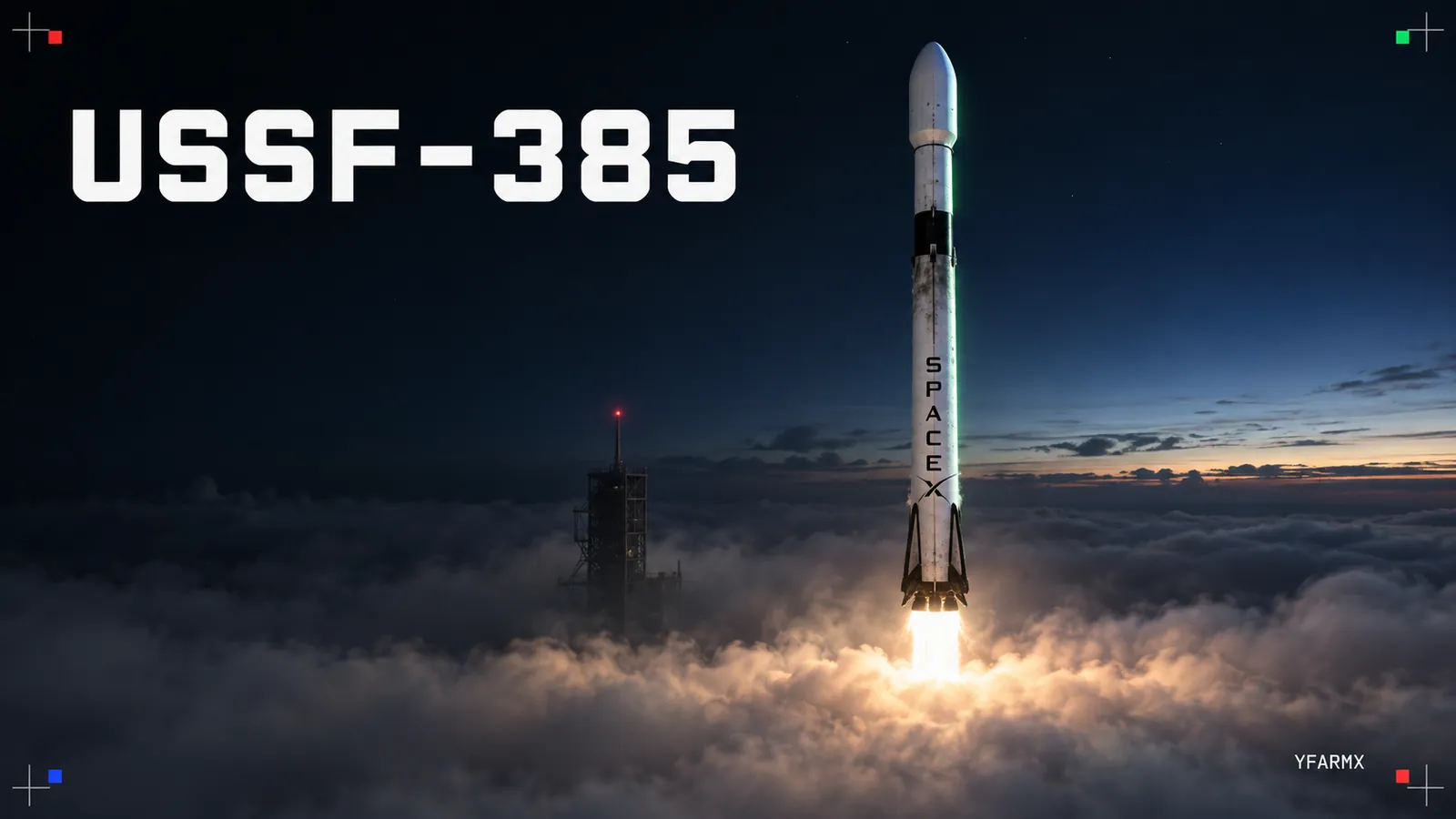
A SpaceX Falcon 9 lifted off from Vandenberg Space Force Base at 07:00:54 PDT (14:00:54 UTC) on 26 September 2026 carrying USSF-385, a US Space Force national security mission. The first stage, on its 10th flight, landed on a droneship in the Pacific.
Listen to this articleListen
SpaceX launched USSF-385, a national security mission for the US Space Force, on a Falcon 9 from Vandenberg Space Force Base in California at 07:00:54 PDT (14:00:54 UTC) on Saturday 26 September 2026. The first stage landed on the droneship Of Course I Still Love You in the Pacific about eight and a half minutes later, on its 10th flight.
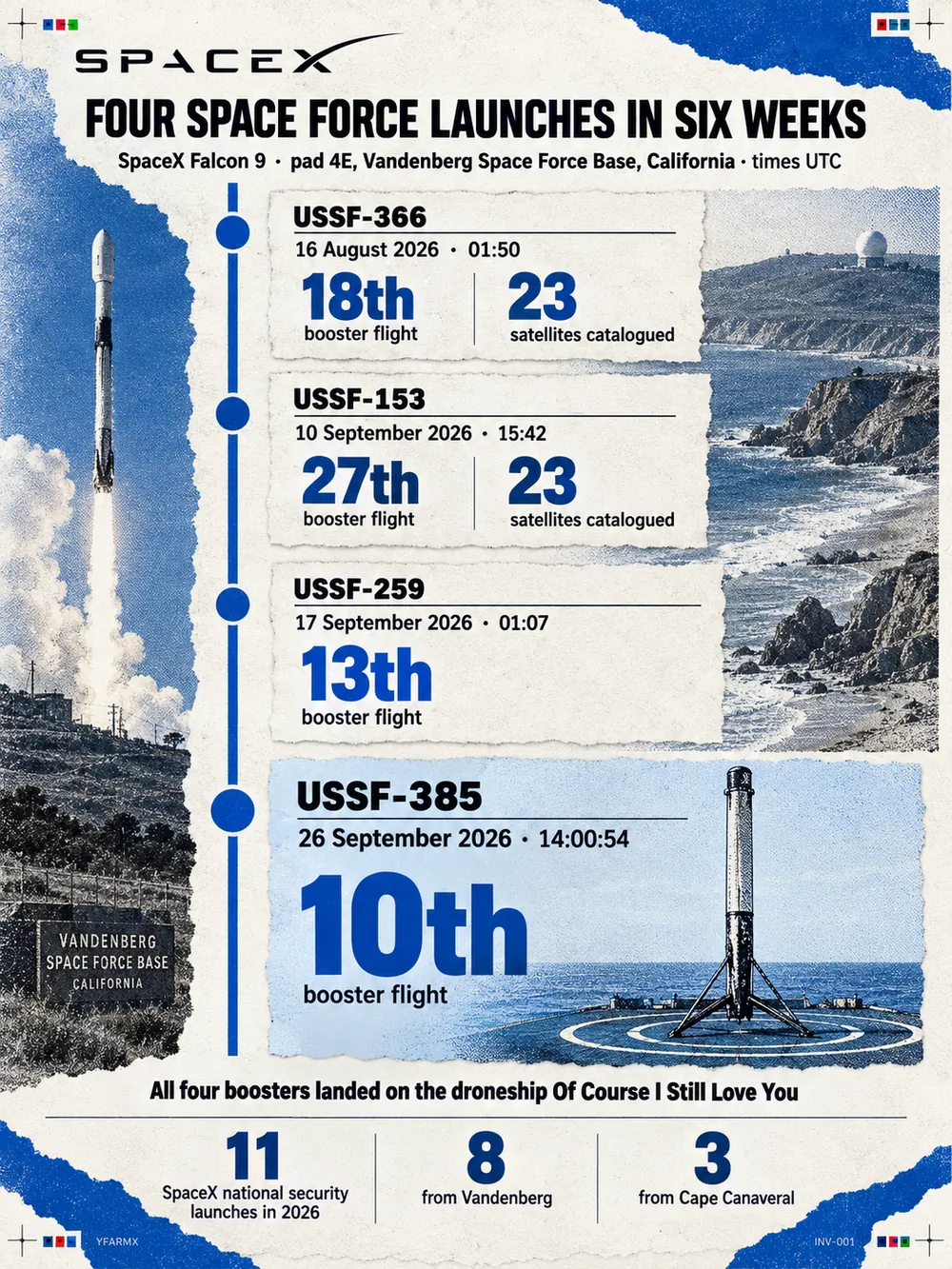
It was the fourth USSF mission to leave the same pad, Space Launch Complex 4E, in six weeks, starting with USSF-366 on 15 August. The first two in the run each put 23 satellites into orbit, according to the public satellite catalogue the Space Force maintains.
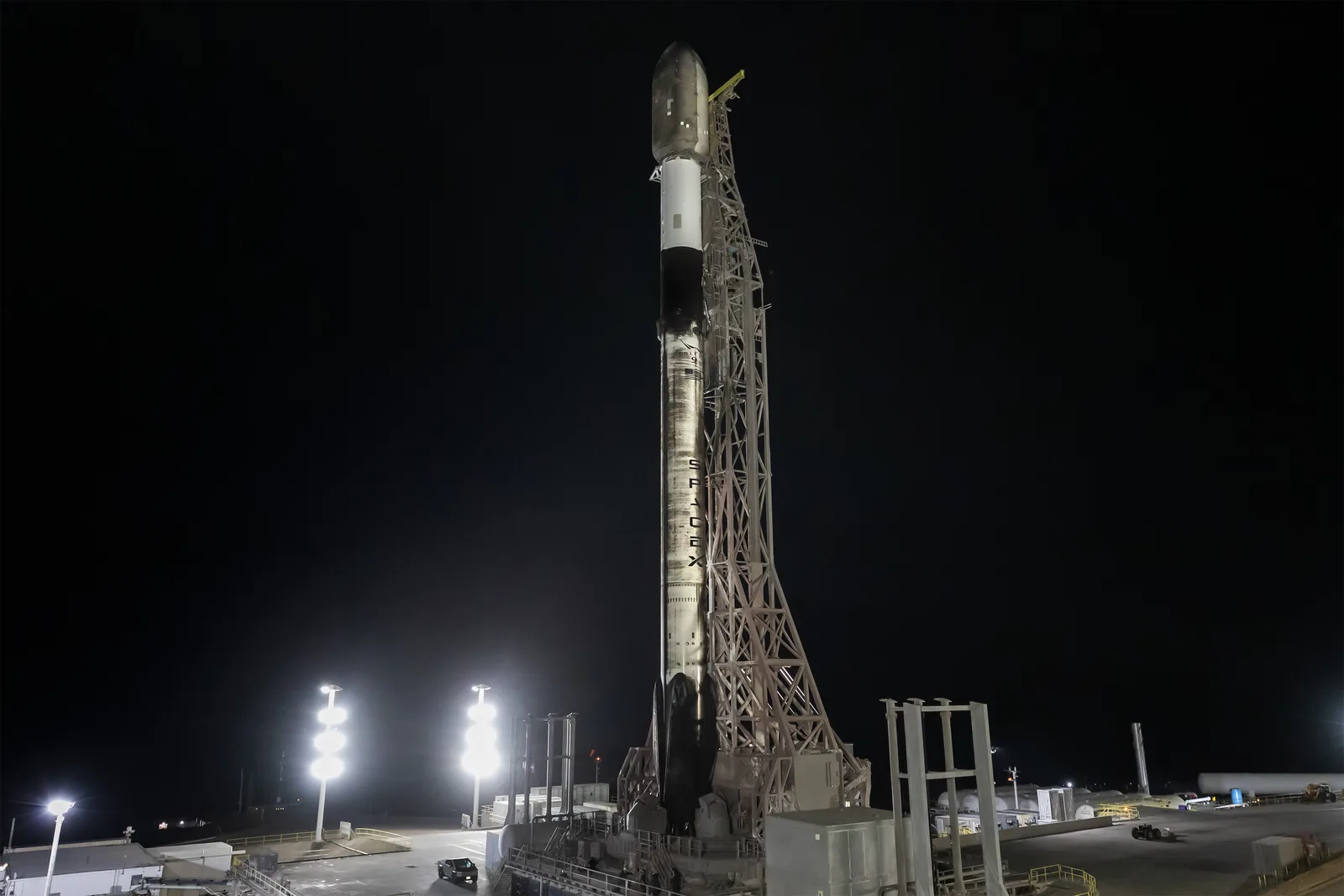
Falcon 9 lifted off 54 seconds into its window
Falcon 9 left the pad at 07:00:54 PDT on 26 September 2026, 54 seconds after its three-hour launch window opened at 07:00, according to the countdown clock on SpaceX’s USSF-385 mission page. SpaceX’s webcast shows the pad wrapped in thick fog at ignition, and the rocket climbing clear of it about ten seconds later.
SpaceX had warned residents of Santa Barbara, San Luis Obispo and Ventura counties that they might hear one or more sonic booms during the launch. SpaceX posted its liftoff video on X at 14:01:58 UTC.
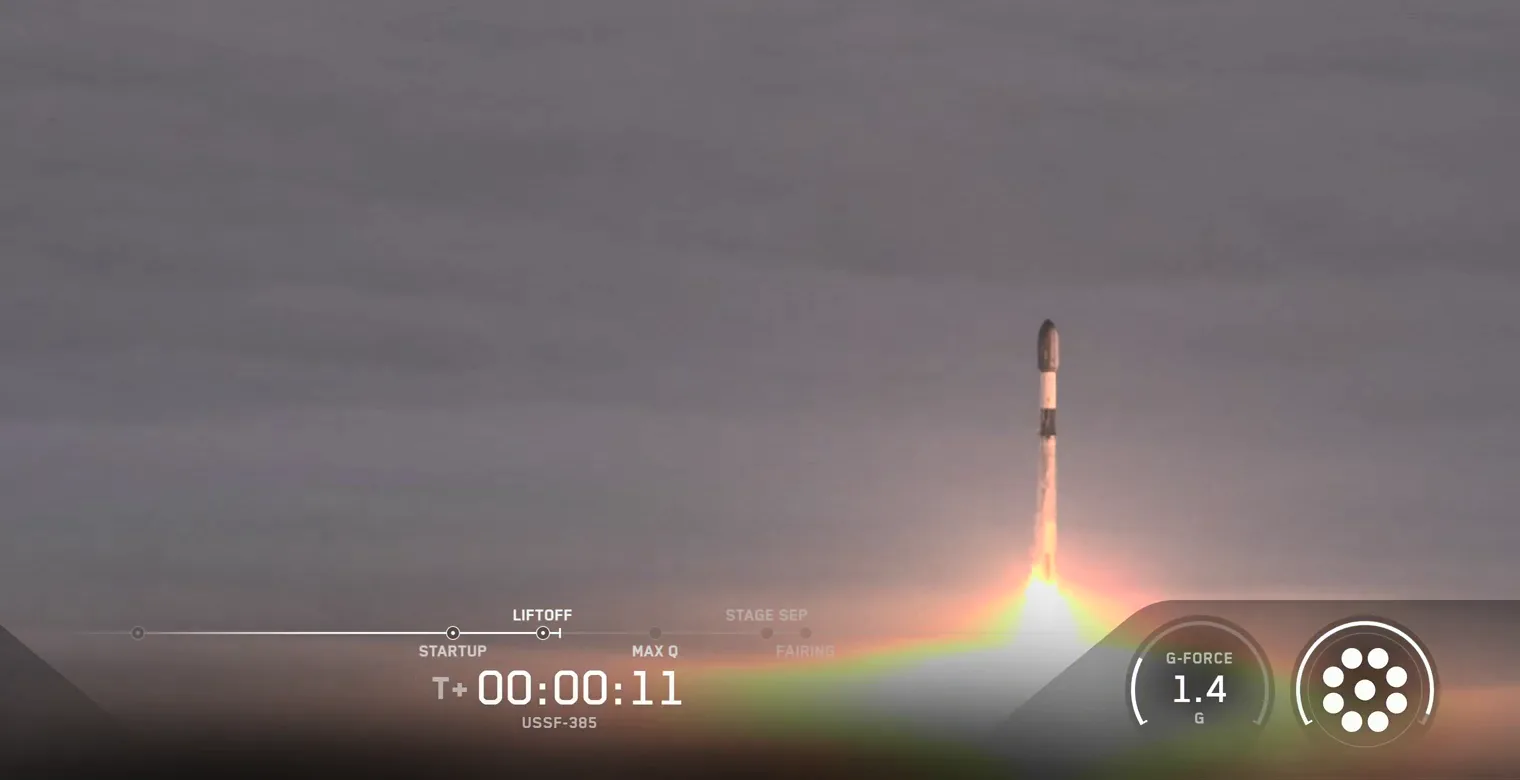
Eight and a half minutes from pad to droneship

SpaceX’s published flight plan put the first stage on the droneship 8 minutes 23 seconds after liftoff, at about 14:09:17 UTC. The plan, on the mission page, lists every time as approximate.
| Event | Time after liftoff | UTC, 26 September 2026 |
|---|---|---|
| Liftoff from pad 4E | T+00:00 | 14:00:54 |
| Max Q, peak mechanical stress | T+01:12 | 14:02:06 |
| First stage engine cutoff | T+02:26 | 14:03:20 |
| Stages separate | T+02:30 | 14:03:24 |
| Fairing separates | T+02:56 | 14:03:50 |
| Entry burn, 22 seconds | T+06:04 | 14:06:58 |
| Landing burn begins | T+08:01 | 14:08:55 |
| First stage lands | T+08:23 | 14:09:17 |
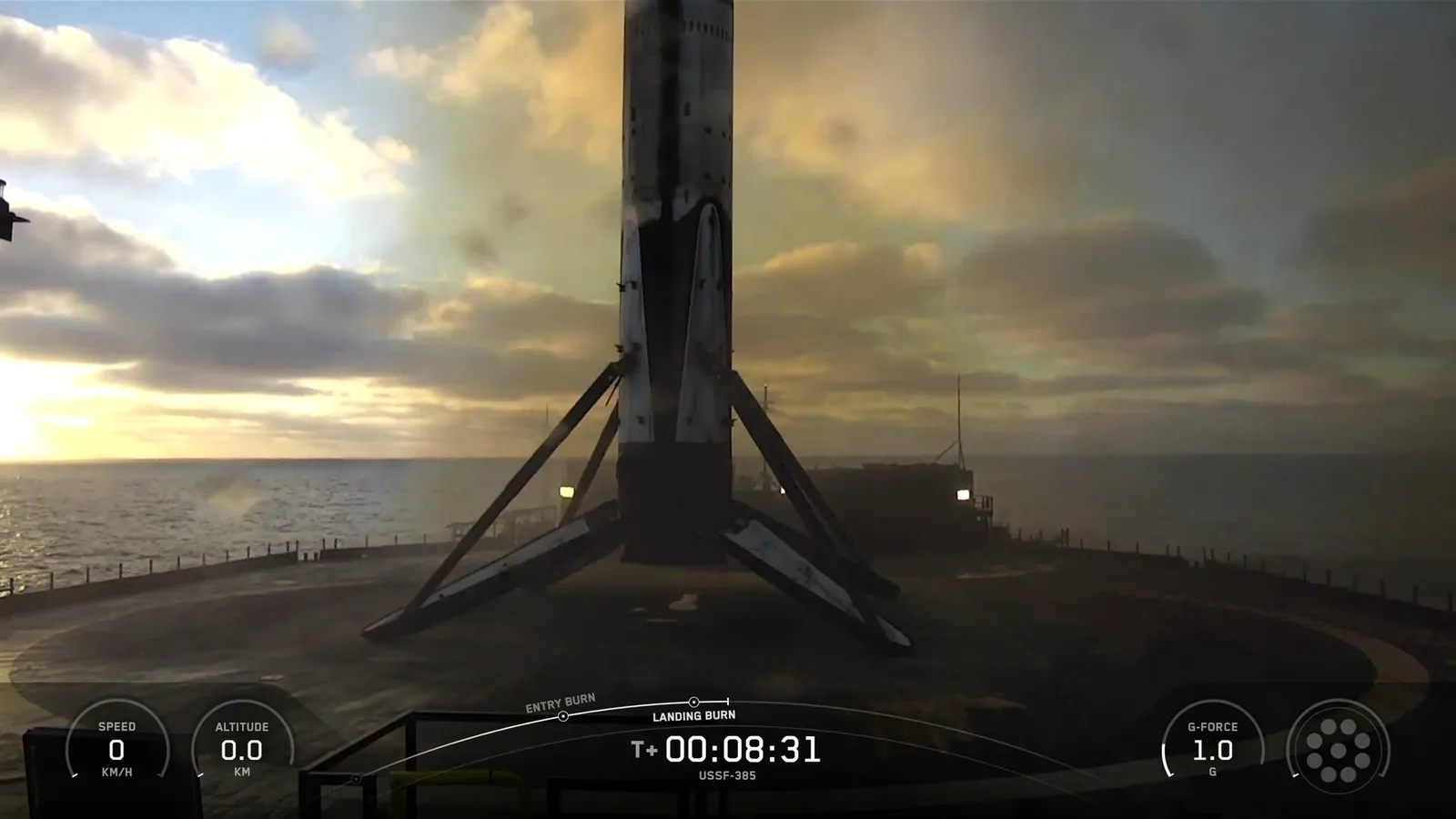
Where did the booster land?
The first stage landed on Of Course I Still Love You, SpaceX’s droneship stationed in the Pacific, and SpaceX confirmed the landing on X at 14:10:34 UTC. SpaceX’s webcast shows the booster standing on the deck with the speed readout at zero by T+08:31 on the webcast clock, a few seconds behind the published plan.
SpaceX says the booster was flying for the 10th time, after eight Starlink missions and one launch for the National Reconnaissance Office (NRO). The boosters on the three earlier flights in the series had more behind them: USSF-366 flew on its booster’s 18th flight, USSF-153 on its 27th and USSF-259 on its 13th. All four landed on the same droneship.
Four Space Force launches from one pad in six weeks
USSF-385 was the fourth USSF mission SpaceX has flown from pad 4E since 15 August 2026, after USSF-366, USSF-153 and USSF-259, according to SpaceX’s mission pages.
| Mission | Liftoff, California time | Liftoff, UTC | Booster flight |
|---|---|---|---|
| USSF-366 | 15 August, 18:50 PDT | 16 August, 01:50 | 18th |
| USSF-153 | 10 September, 08:42 PDT | 10 September, 15:42 | 27th |
| USSF-259 | 16 September, 18:07 PDT | 17 September, 01:07 | 13th |
| USSF-385 | 26 September, 07:00:54 PDT | 26 September, 14:00:54 | 10th |
Vandenberg has had a crowded year. The Space Force’s photo release for USSF-259 called that flight “the 63rd launch supported from Vandenberg in 2026”.
What did the first two flights put in orbit?
USSF-366 and USSF-153 put 23 satellites each into orbit, according to the public satellite catalogue the Space Force maintains. The CelesTrak record of that catalogue lists the USSF-366 satellites as USA 620 to USA 642, and the USSF-153 satellites as USA 644 to USA 666. All 46 orbit at an inclination of 70 degrees to the equator, between roughly 290 and 375 km up.
The National Reconnaissance Office has used the same inclination from Vandenberg this year: its three launches from the base, NROL-105, NROL-172 and NROL-179, put 40 satellites into 70-degree orbits, according to the same catalogue.
SpaceX’s mission page for USSF-385 covers the launch, the landing and the booster’s history. The Space Force’s captions to its photographs of the USSF-153 and USSF-259 launches call each a “national security mission”.
How many national security launches have SpaceX and ULA flown this year?
SpaceX’s mission pages and ULA’s mission list record 12 US national security launches between them in 2026, counting USSF-385, and SpaceX flew 11. USSF-87 flew on ULA’s Vulcan, and the other 11 on Falcon 9.
| Liftoff (UTC) | Mission | Customer | Launch site |
|---|---|---|---|
| 17 January, 04:39 | NROL-105 | NRO | Vandenberg |
| 28 January, 04:53 | GPS III-9 | Space Force | Cape Canaveral |
| 12 February, 09:22 | USSF-87 | Space Force | Cape Canaveral |
| 21 April, 06:53 | GPS III-8 | Space Force | Cape Canaveral |
| 12 May, 02:13 | NROL-172 | NRO | Vandenberg |
| 19 June, 08:50 | NROL-179 | NRO | Vandenberg |
| 16 July, 20:32 | Tranche 1, third launch | Space Development Agency | Vandenberg |
| 30 July, 07:10 | NROL-95 | NRO | Cape Canaveral |
| 16 August, 01:50 | USSF-366 | Space Force | Vandenberg |
| 10 September, 15:42 | USSF-153 | Space Force | Vandenberg |
| 17 September, 01:07 | USSF-259 | Space Force | Vandenberg |
| 26 September, 14:00 | USSF-385 | Space Force | Vandenberg |
ULA’s one national security launch of the year was USSF-87, on a Vulcan from Cape Canaveral on 12 February. ULA said its team “observed a significant performance anomaly on one of the four solid rocket motors” early in flight, and that Vulcan and its Centaur upper stage still delivered the spacecraft directly to geosynchronous orbit. The four ULA launches since then on its mission list are Atlas V flights for Amazon’s Leo broadband satellites.
Eight of SpaceX’s 11 left from California
Eight of SpaceX’s 11 national security launches in 2026 left from Vandenberg, and three from Cape Canaveral in Florida. The NRO’s missions split the same way: NROL-105, NROL-172 and NROL-179 from California, and NROL-95 from Florida.
Florida has the next one. SpaceX is targeting 11:53 p.m. EDT on Thursday 1 October (03:53 UTC on 2 October) for a Falcon Heavy launch of NROL-97 from Launch Complex 39A at NASA’s Kennedy Space Center, with both side boosters due to land back at Cape Canaveral.
Questions people ask
- What is USSF-385?
- USSF-385 is a national security mission for the US Space Force. SpaceX launched it on a Falcon 9 from Space Launch Complex 4E at Vandenberg Space Force Base, California, at 07:00:54 PDT (14:00:54 UTC) on 26 September 2026. It was the fourth USSF mission SpaceX had launched from that pad since 15 August 2026.
- Did the Falcon 9 booster land after the USSF-385 launch?
- Yes. The first stage landed on SpaceX's droneship Of Course I Still Love You in the Pacific Ocean about eight and a half minutes after liftoff on 26 September 2026. SpaceX says it was the booster's 10th flight, after eight Starlink missions and one launch for the National Reconnaissance Office.
- How many national security launches has SpaceX flown in 2026?
- SpaceX flew 11 US national security launches in 2026 up to and including USSF-385 on 26 September: four USSF missions for the Space Force, four for the National Reconnaissance Office, two GPS III satellites and one for the Space Development Agency. Eight left from Vandenberg in California and three from Cape Canaveral in Florida.
Sources
- SpaceX: USSF-385 mission page, 26 September 2026spacex.com
- SpaceX on X: pre-launch photograph of Falcon 9 on pad 4E, 26 September 2026x.com
- SpaceX on X: USSF-385 liftoff video, 26 September 2026x.com
- SpaceX on X: first stage lands on Of Course I Still Love You, 26 September 2026x.com
- SpaceX: USSF-366 mission page, 15 August 2026spacex.com
- SpaceX: USSF-153 mission page, 10 September 2026spacex.com
- SpaceX: USSF-259 mission page, 16 September 2026spacex.com
- SpaceX: NROL-105 mission page, 16 January 2026spacex.com
- SpaceX: GPS III-9 mission page, 27 January 2026spacex.com
- SpaceX: GPS III-8 mission page, 21 April 2026spacex.com
- SpaceX: NROL-172 mission page, 11 May 2026spacex.com
- SpaceX: NROL-179 mission page, 19 June 2026spacex.com
- SpaceX: Space Development Agency third Tranche 1 mission page, 16 July 2026spacex.com
- SpaceX: NROL-95 mission page, 30 July 2026spacex.com
- SpaceX: NROL-97 mission page, Falcon Heavy, targeted 1 October 2026spacex.com
- ULA: Vulcan launches USSF-87 for Space Systems Command, 12 February 2026ulalaunch.com
- ULA: mission listulalaunch.com
- US Space Force via DVIDS: Vandenberg supports USSF-259 launch, 17 September 2026dvidshub.net
- US Space Force via DVIDS: USSF-153 launch at Vandenberg, 10 September 2026dvidshub.net
- CelesTrak SATCAT: objects from launch 2026-186 (USSF-366)celestrak.org
- CelesTrak SATCAT: objects from launch 2026-206 (USSF-153)celestrak.org
- CelesTrak SATCAT: objects from launch 2026-011 (NROL-105)celestrak.org
- CelesTrak SATCAT: objects from launch 2026-103 (NROL-172)celestrak.org
- CelesTrak SATCAT: objects from launch 2026-141 (NROL-179)celestrak.org