SpaceX's Starship reaches orbit for the first time
SpaceX's Starship reached orbit for the first time on 28 September 2026 on Flight 14, after one of its engines shut down early on the climb. It deployed all 26 of its Starlink V3 satellites and splashed down in the Pacific 3 hours 8 minutes after liftoff.
Listen to this articleListen
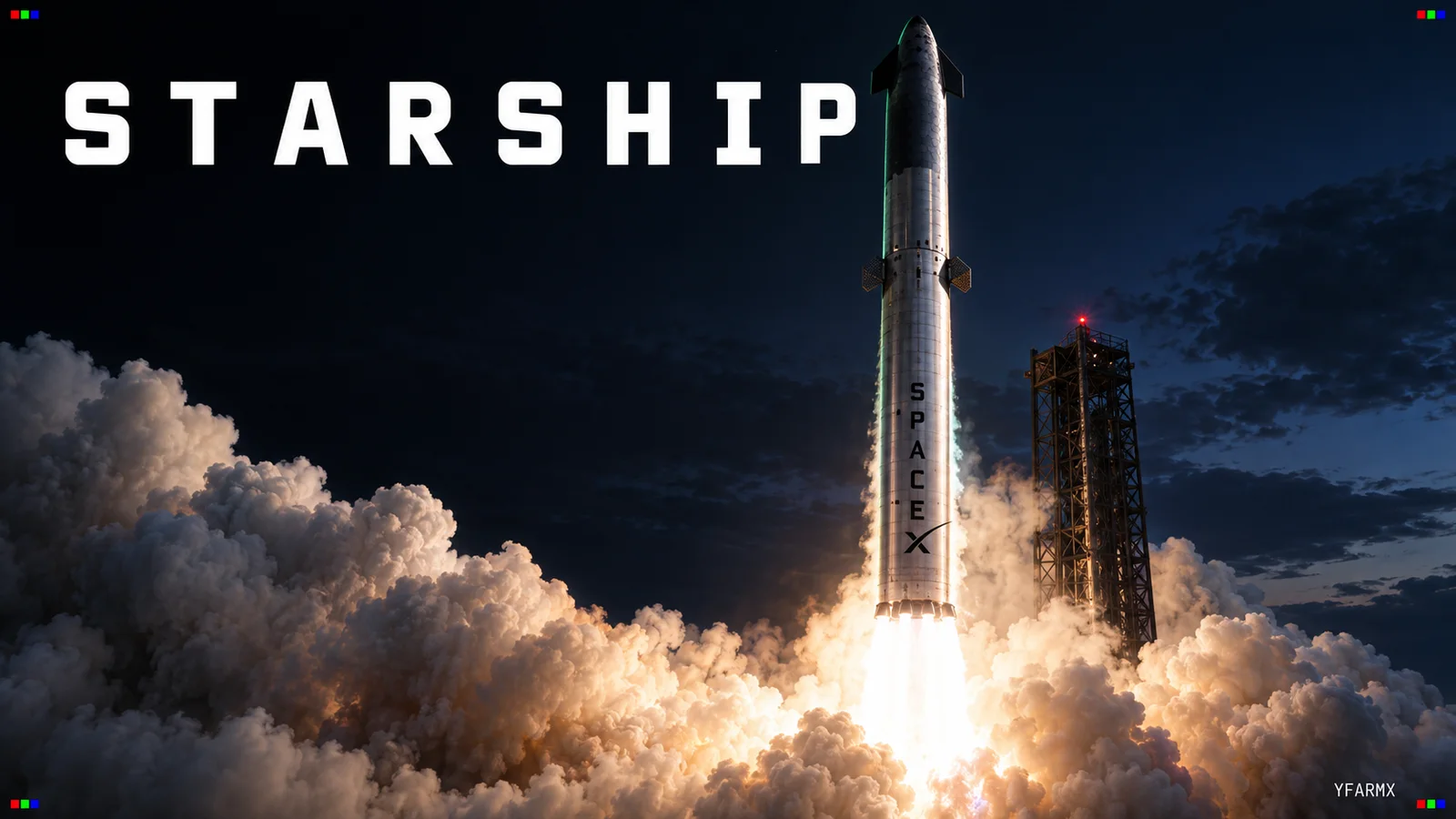
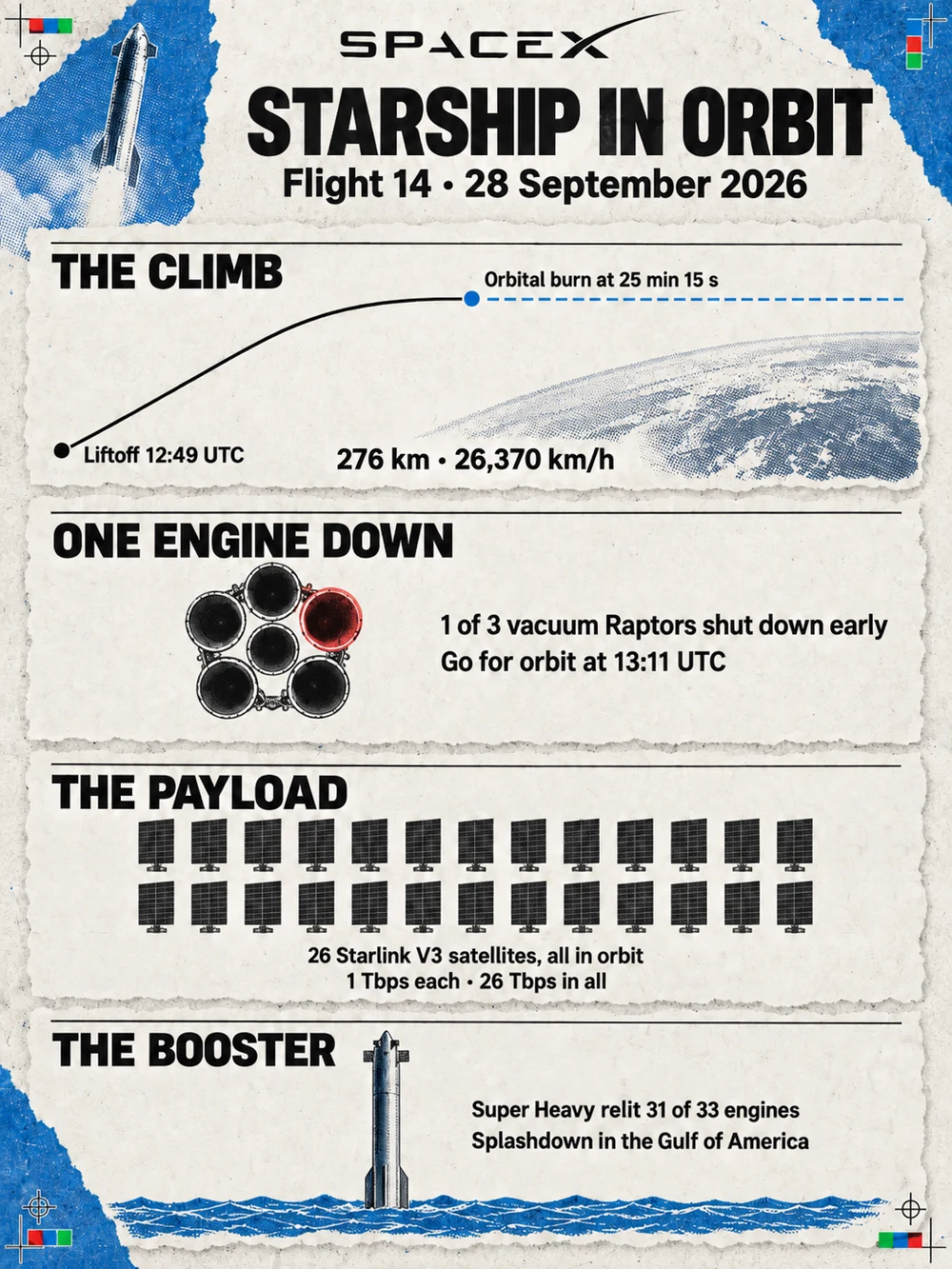
SpaceX’s Starship went into orbit for the first time on Monday 28 September 2026. It lifted off on its Super Heavy booster from Starbase, Texas, at 12:49 UTC, and a burn on a single Raptor engine, ending 25 minutes 34 seconds after liftoff, put the ship into an orbit about 275 km above Earth. “Starship performs its orbital insertion burn and enters orbit of Earth for the first time,” SpaceX posted at 13:15 UTC.
One of the ship’s engines shut down too soon on the way up, and flight controllers spent several tense minutes checking the ship before sending it on to orbit, the Associated Press reported. “Starship is orbital,” Mission Control announced to cheers. About 34 minutes after liftoff Starship began releasing its payload, 26 Starlink V3 satellites, and at 13:54 UTC SpaceX posted that all 26 were in orbit, the first satellites Starship has put into orbit. SpaceX then brought the ship home early, and it splashed down in the Pacific at about 15:58 UTC, 3 hours 8 minutes after liftoff.
How did Starship get to orbit?
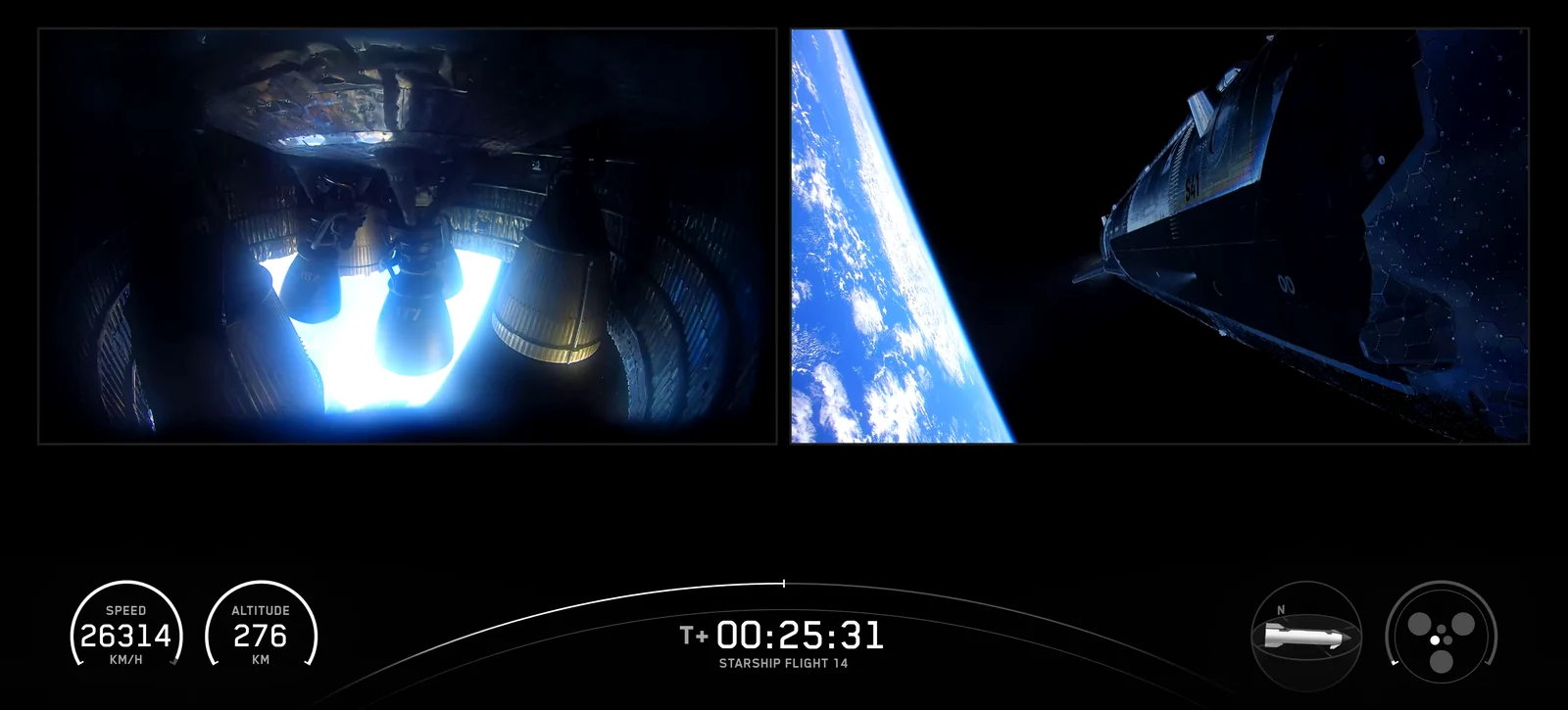
Starship reached orbit on 28 September 2026 with a burn of about 20 seconds that started 25 minutes 15 seconds after liftoff and added 329 km/h, taking the ship from 26,041 to 26,370 km/h at an altitude of 276 km.
| Moment | Time after liftoff | Altitude | Speed |
|---|---|---|---|
| Climbing towards hot staging | 2 min 10 s | 44.7 km | 5,570 km/h |
| Just after the ascent burn | 8 min 24 s | 164 km | 26,443 km/h |
| Coasting before the orbital burn | 21 min 38 s | 268 km | 26,073 km/h |
| Just before the orbital burn | 25 min 14 s | 276 km | 26,041 km/h |
| Orbital burn ends | 25 min 34 s | 276 km | 26,370 km/h |
| Satellite deployment starts | 34 min 07 s | 277 km | 26,368 km/h |
Source: the on-screen readings in SpaceX’s flight videos, posted on X during the flight.
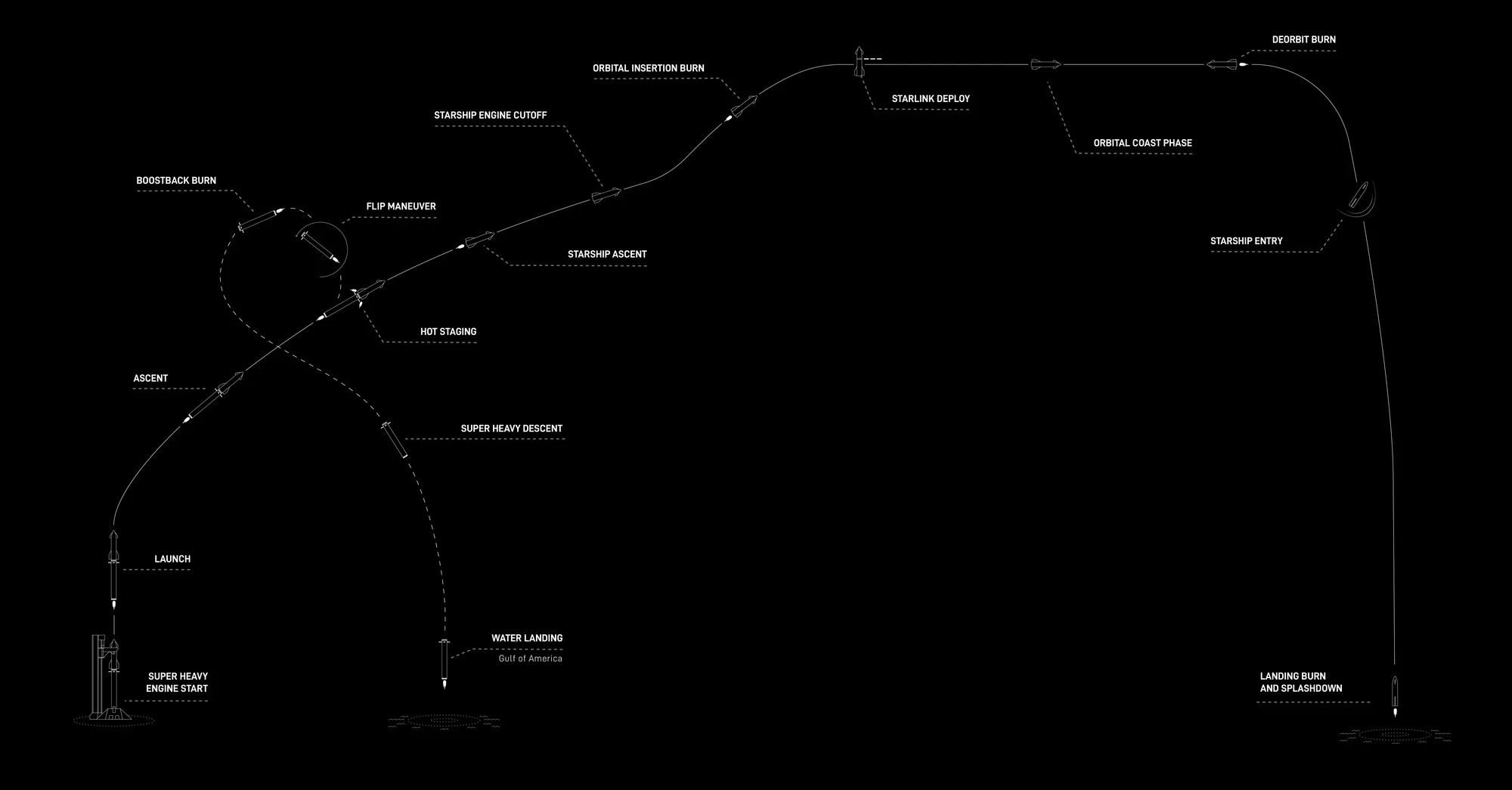
The ascent followed the sequence SpaceX published before launch. Super Heavy’s engines cut off and the ship lit its own Raptors to push away in a manoeuvre called hot staging, planned for 2 minutes 22 seconds in. The booster then turned back for the Gulf of America while the ship climbed on. After its engines cut off, the ship was on what SpaceX called “a passively safe suborbital trajectory as teams check systems to confirm we are good to proceed to orbit today”.
Why did SpaceX wait before the orbital burn?

SpaceX waited because its rule for Flight 14 was to enter orbit only once the flight team was sure the ship had enough working hardware for the deorbit burn at the end of the mission, and one of its six engines had shut down early. The ship carries three Raptors built to run in the atmosphere and three Raptor Vacuum engines built for space. One of the vacuum engines powered down before the end of the first burn, SpaceX spokesperson Dan Huot said on the company’s webcast, according to CNN’s live coverage. The three atmospheric engines were working well, he said.
The ship completed its ascent burn, and the flight team then checked it. SpaceX’s mission page set the condition in advance: the ship would make the burn into orbit only after the flight control team had made sure there was enough redundancy in the hardware needed for the deorbit burn at the end of the mission. SpaceX posted “Go for orbit!” at 13:11 UTC, and the insertion burn followed at about 13:15 UTC.
All 26 Starlink V3 satellites reached orbit
Starship began deploying 26 Starlink V3 satellites 34 minutes after liftoff on 28 September 2026, and at 13:54 UTC SpaceX posted that all 26 were in orbit. The satellites leave through a slot in the side of the ship, and “they popped out of the spacecraft one by one”, the AP reported. At 13:57 UTC SpaceX posted that the Starlink team had made contact with all 26.
SpaceX says each V3 satellite adds 1 Tbps of capacity to the Starlink network, 26 Tbps for this flight, about 10 times what one Falcon 9 launch of the older V2 mini satellites adds. “With these satellites, it’s approximately a 10-times improvement in downlink capacity and a 22-times increase in uplink capacity from the version 2 Starlink satellite,” Jake Berkowitz, a lead propulsion engineer, said on the webcast, according to CNN. Three of the 26 carry cameras to photograph Starship’s heat shield and send the pictures to the ground.
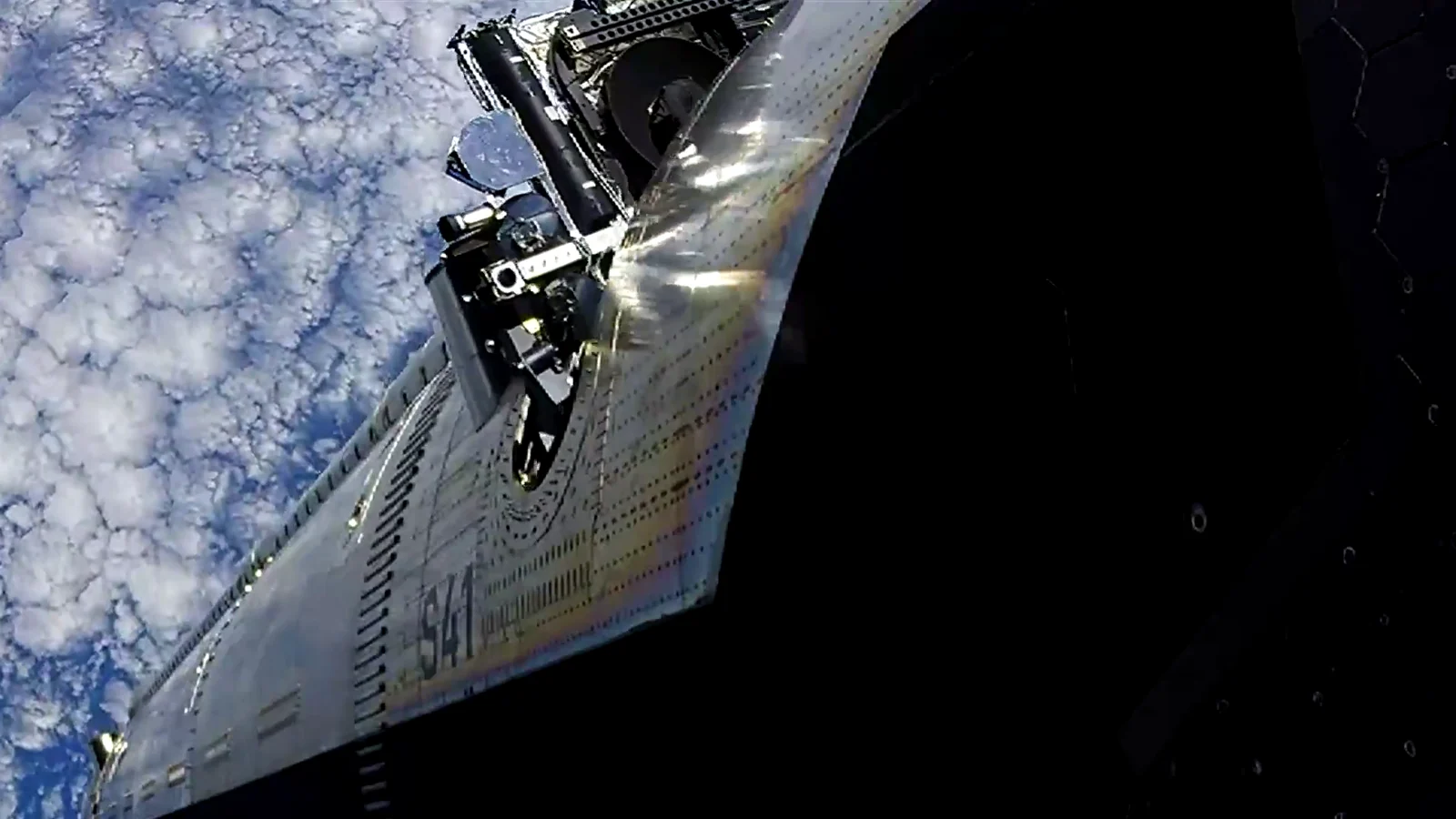
Starship’s previous flight, Flight 13 on 24 July 2026, released 20 Starlink V3 satellites on a suborbital path. SpaceX calls this flight the first time it plans to deploy V3 satellites “into the constellation”. After release they unfold their antennas and solar arrays, make contact with the ground and the rest of the constellation, and raise their orbits with their own thrusters, according to SpaceX, which says they should begin serving customers as soon as a few weeks after launch.
Super Heavy relit 31 of its 33 engines and splashed down
Super Heavy relit 31 of its 33 Raptor engines for its boostback burn on 28 September 2026, Dan Huot said on the webcast, according to CNN, and SpaceX confirmed at 12:56 UTC that the booster “has splashed down in the Gulf of America”. SpaceX’s video shows the booster’s landing burn firing into the sea about 6 minutes 56 seconds after liftoff. This booster was flying to an offshore landing point in the Gulf, the plan SpaceX set for it before launch.
The booster carried changes made after Flight 13. On that flight in July, the three centre engines showed signs of ice clogging late in the boostback burn, and 8 of the 13 engines planned for the landing burn relit before the booster hit the Gulf hard, according to SpaceX. This booster has improved filtering to the engines and software changes to make relights more reliable, SpaceX says.
Starship splashed down in the Pacific after 3 hours 8 minutes
Starship splashed down in the Pacific Ocean at about 15:58 UTC on 28 September 2026, 3 hours 8 minutes after liftoff, after SpaceX decided at its first checkpoint to bring it home early. “We are looking like we are going to take our first checkpoint and come back early,” SpaceX spokesperson Dan Huot said on the webcast, according to CNN. SpaceX posted at 15:04 UTC that the deorbit burn was complete, and at 15:58 UTC: “Splashdown confirmed. Congratulations to the entire SpaceX team on the first orbital flight of Starship!”
| Step | Time after liftoff | Around (UTC) |
|---|---|---|
| First checkpoint | 1 h 28 min | 14:17 |
| Deorbit burn | 2 h 12 min | 15:01 |
| Re-entry under way | 2 h 44 min | 15:33 |
| Landing burn and splashdown | 3 h 8 min 29 s | 15:58 |
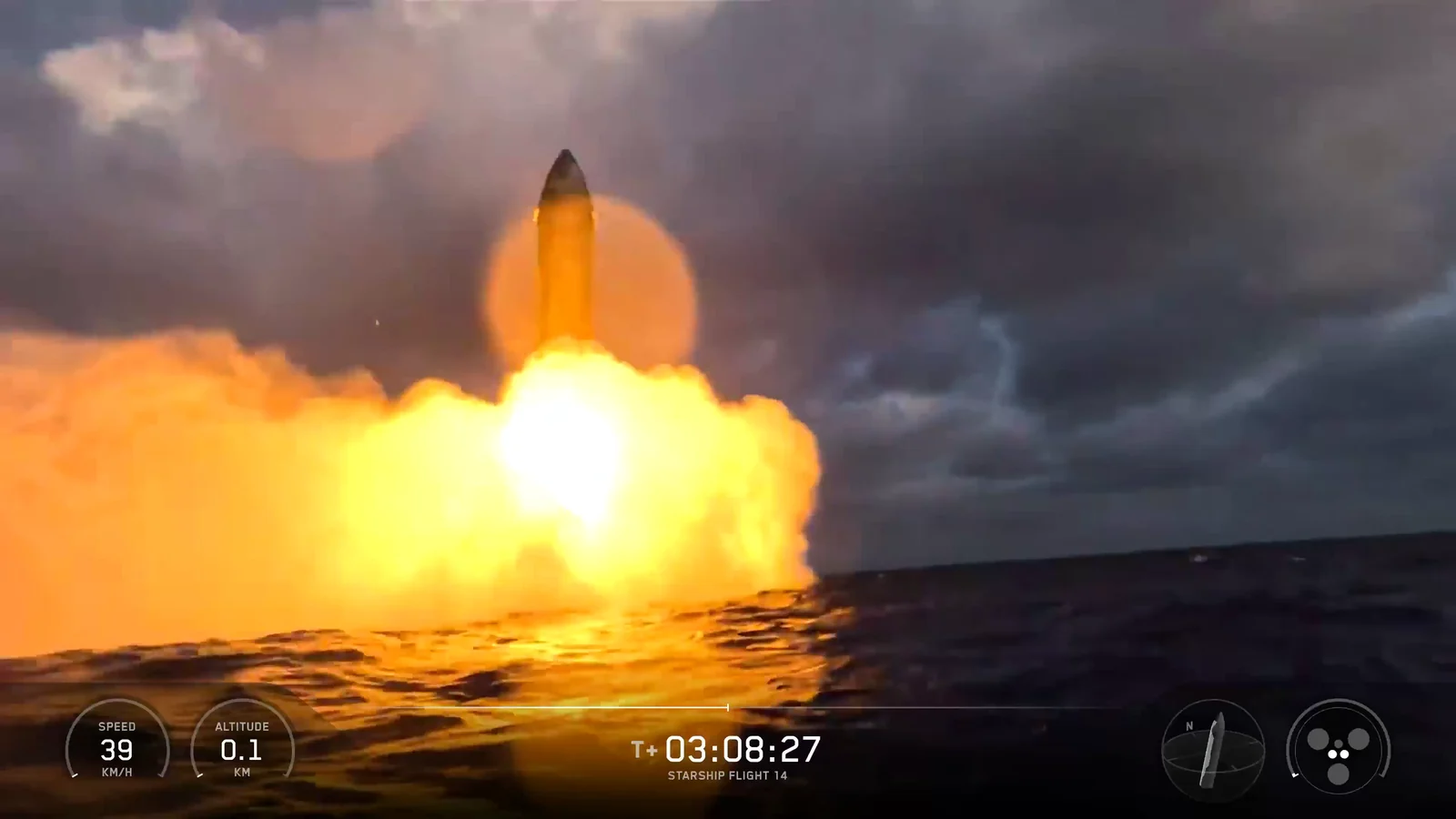
SpaceX set checkpoints before launch where the team could decide whether to bring the ship home early, CNN reported. Its published timeline had allowed for about six orbits and a splashdown west of Chile about 10 hours after liftoff.
The ship carried heat shield changes drawn from Ship 40, the Flight 13 ship SpaceX recovered from the Indian Ocean: extra fixings on tiles in the places most likely to lose them during the climb, fixes for gaps that let plasma reach behind the tiles, and several areas of curved tiles that reduce heating in the gaps between them. Two tiles taken from Ship 40 flew again on this ship, Ship 41, the first time Starship has reused a heat shield tile.
What this means for the next Starship
If the orbital debut went well, the next Starship would return to the launch tower at Starbase, where giant mechanical arms would catch it, the AP reported on 28 September 2026. Elon Musk puts the odds of that catch at even or slightly better, and if it works SpaceX would fly that ship again by the end of the year or early next year, according to the AP.
SpaceX is taking the return in steps because of the risk over land. Musk said at a business summit this month that if a ship broke apart and rained debris on people, “our popularity would diminish very rapidly”. He added: “That’s why we’re being extremely cautious here.” NASA plans to use Starship in Artemis III, due as soon as next summer, where it would dock with an Orion capsule in orbit around Earth, and a second Starship launch site is nearing completion at Kennedy Space Center in Florida, the AP reported.
Questions people ask
- Did Starship reach orbit on Flight 14?
- Yes. SpaceX's Starship entered orbit for the first time on 28 September 2026, on its 14th test flight. It lifted off from Starbase, Texas, at 12:49 UTC, and a burn on a single Raptor engine, ending 25 minutes 34 seconds after liftoff, put it into an orbit about 275 km above Earth. SpaceX posted at 13:15 UTC that Starship "enters orbit of Earth for the first time".
- Which engine shut down early on Starship Flight 14?
- One of the ship's three Raptor Vacuum engines shut down before the end of its first burn on 28 September 2026, SpaceX spokesperson Dan Huot said on the company's webcast, according to CNN. The ship finished the burn on its other engines. Flight controllers then checked it for several minutes, and SpaceX posted "Go for orbit!" at 13:11 UTC.
- How many Starlink satellites did Starship Flight 14 carry?
- Starship carried 26 Starlink V3 satellites and began deploying them 34 minutes after liftoff on 28 September 2026. At 13:54 UTC SpaceX posted that all 26 were in orbit. SpaceX says each V3 satellite adds 1 Tbps of capacity, 26 Tbps for the flight, about 10 times what a Falcon 9 launch of V2 mini satellites adds.
- When did Starship Flight 14 splash down?
- Starship splashed down in the Pacific Ocean at about 15:58 UTC on 28 September 2026, 3 hours 8 minutes after liftoff. SpaceX decided at its first checkpoint to bring the ship home early; the plan before launch was about six orbits and a splashdown about 10 hours after liftoff. SpaceX posted: "Splashdown confirmed. Congratulations to the entire SpaceX team on the first orbital flight of Starship!"
Sources
- SpaceX: Starship Flight 14 mission page and flight timelinespacex.com
- SpaceX on X: liftoff of Starship, 28 September 2026x.com
- SpaceX on X: hot staging and Super Heavy boostback, 28 September 2026x.com
- SpaceX on X: Super Heavy splashes down in the Gulf of America, 28 September 2026x.com
- SpaceX on X: Starship's ascent burn is complete, 28 September 2026x.com
- SpaceX on X: go for orbit, 28 September 2026x.com
- SpaceX on X: orbital insertion burn, Starship enters orbit, 28 September 2026x.com
- SpaceX on X: Starship begins deploying 26 Starlink V3 satellites, 28 September 2026x.com
- SpaceX on X: payload deploy complete, all 26 Starlink V3 satellites in orbit, 28 September 2026x.com
- SpaceX on X: the Starlink team has made contact with all 26 satellites, 28 September 2026x.com
- SpaceX on X: flight teams will deorbit Starship after 3 hours in orbit, 28 September 2026x.com
- SpaceX on X: deorbit burn complete, 28 September 2026x.com
- SpaceX on X: Starship is reentering the atmosphere, 28 September 2026x.com
- SpaceX on X: splashdown confirmed, 28 September 2026x.com
- Associated Press via WKMG: SpaceX's supersized Starship launches into orbit for the first time, 28 September 2026clickorlando.com
- CNN: live updates, SpaceX launches Starship Flight 14, 28 September 2026edition.cnn.com