Google's AI chips reach orbit to test computing in space
Google's first Project Suncatcher satellite, built with Planet and carrying four of its TPU AI chips, reached orbit on SpaceX's Transporter-18 rideshare on 1 October 2026. Google has confirmed contact, and two satellites linked by laser follow in 2027.
Listen to this articleListen
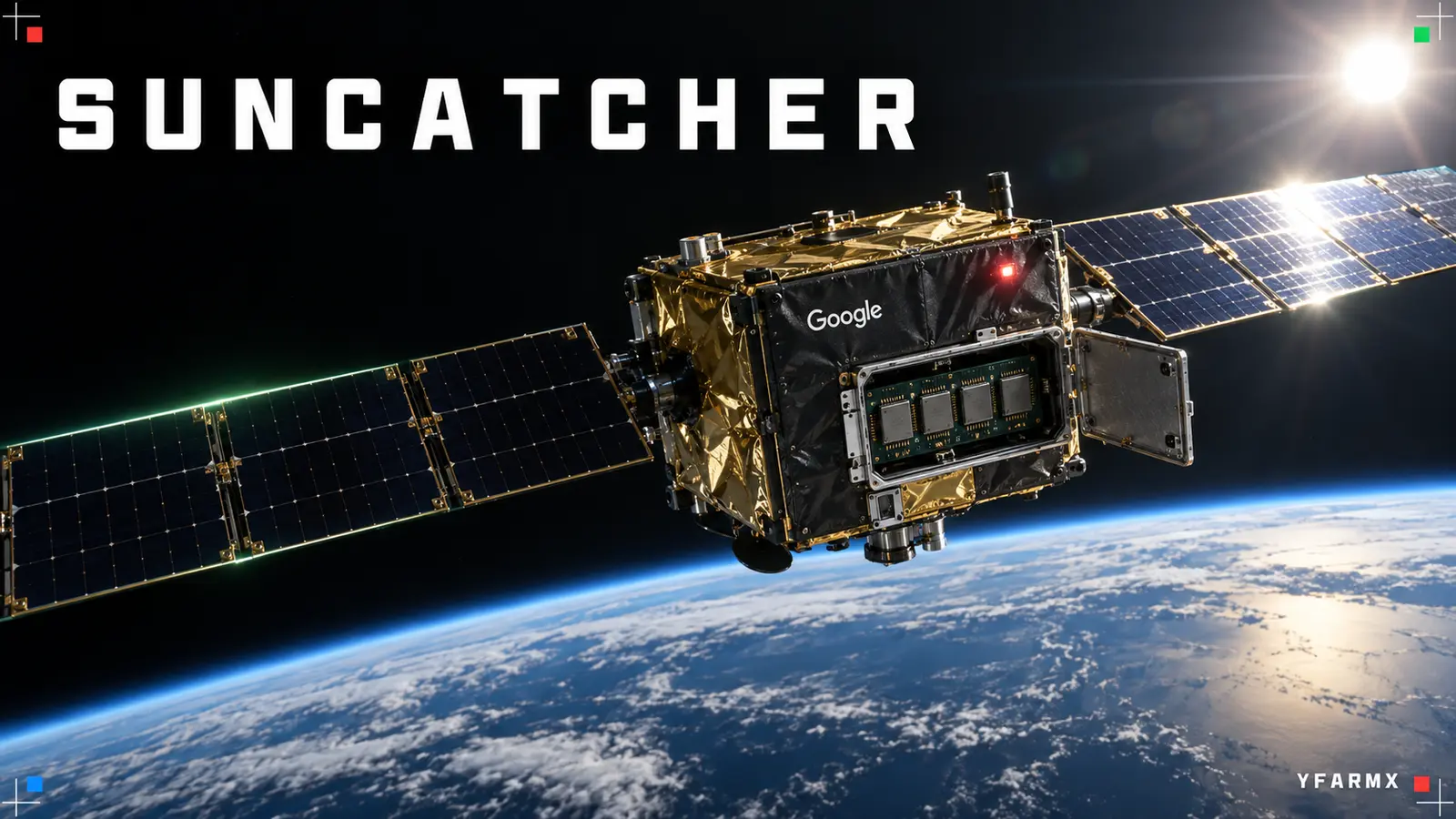
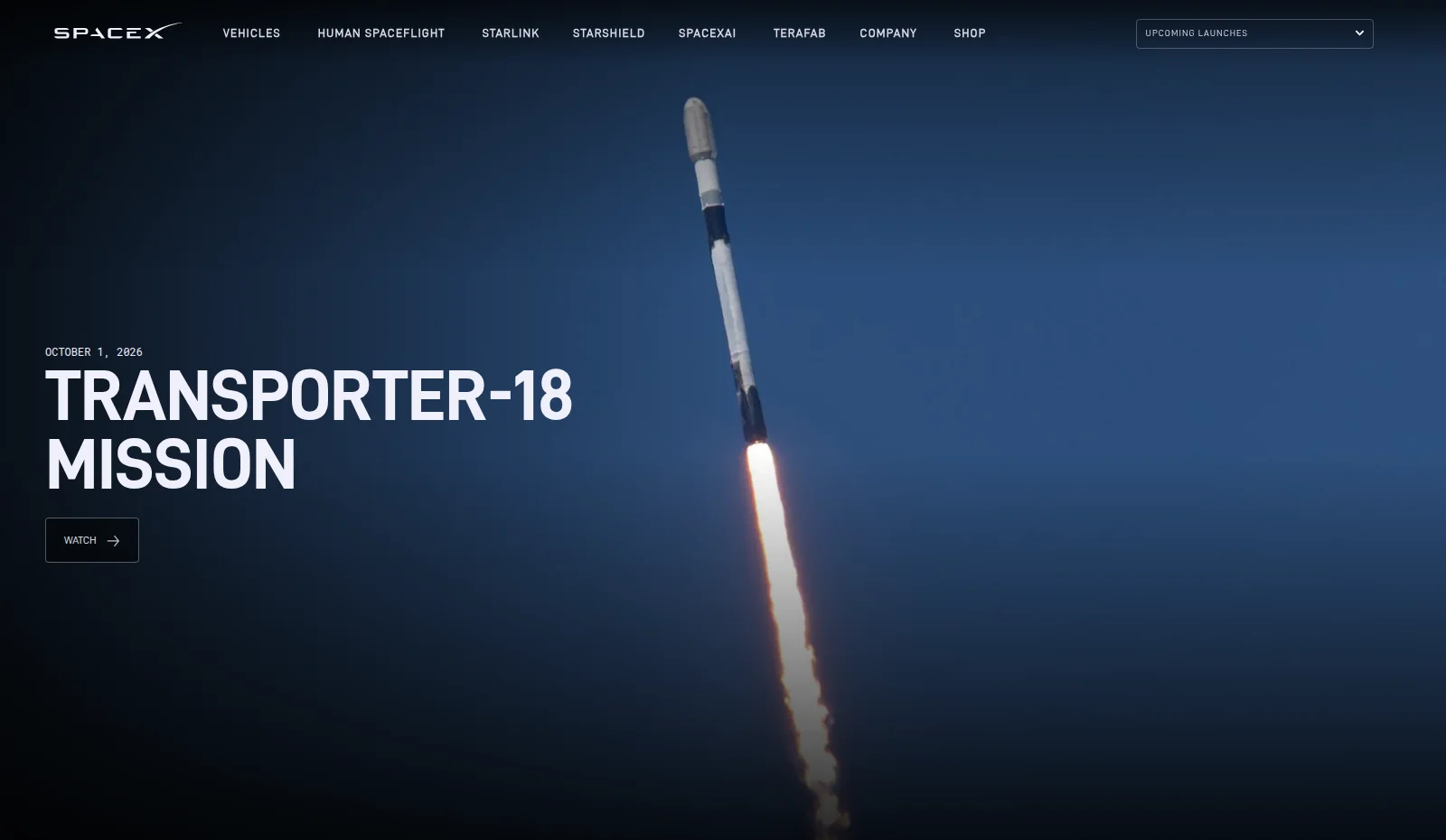
Google’s first Project Suncatcher satellite, built in partnership with Planet and carrying four of Google’s TPU AI chips, reached orbit on SpaceX’s Transporter-18 rideshare, which lifted off from Vandenberg Space Force Base in California at 11:32 a.m. Pacific time (18:32 UTC) on 1 October 2026. “Our team has confirmed contact with the satellite and it is operating as expected,” Travis Beals, a senior director at Google, wrote on Google’s blog later that day.
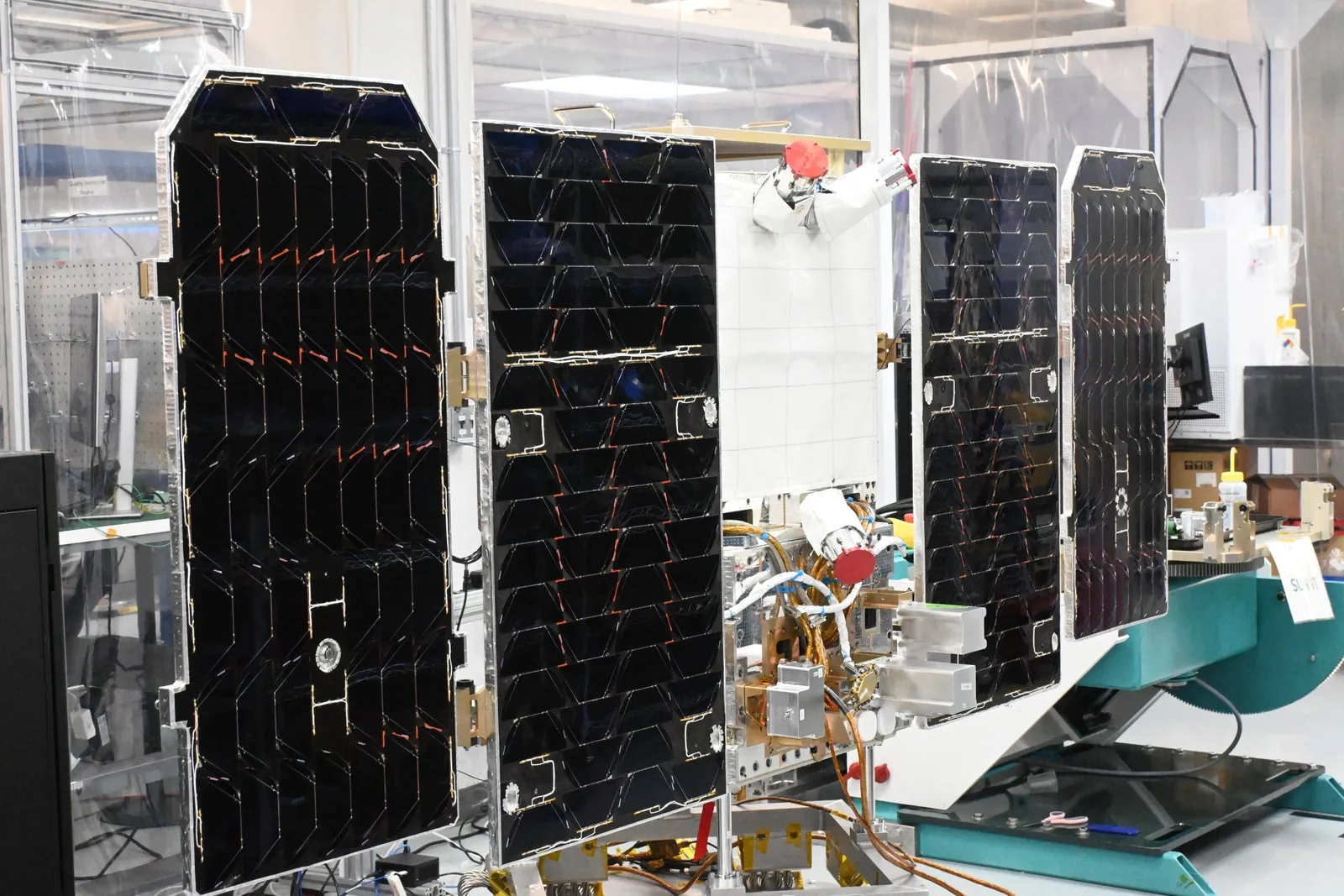
Suncatcher is Google’s long-term research project to find out whether satellites running on sunlight could one day host large machine learning systems. TPUs, short for Tensor Processing Units, are the chips Google designs for AI, and Google said on X that the prototype carries four of them. Over the coming weeks Google will gather in-orbit data on “how our TPUs handle the physical stress of spaceflight and the radiation and thermal extremes of space”, in Google’s words.
How did the satellite get to orbit?
A Falcon 9 carried the prototype to orbit on 1 October 2026 as one of 130 payloads on Transporter-18, a SpaceX rideshare for small satellites, and the rocket’s first stage landed back at Vandenberg. SpaceX’s mission page lists “Project Suncatcher M1”, manifested by Planet Labs, deploying 61 minutes after liftoff. Planet launched 20 satellites on the flight: the Suncatcher prototype, its Tanager-2 hyperspectral satellite and 18 SuperDoves for its near-daily imaging of Earth. Planet said later that day that it had made initial contact with the prototype and begun commissioning it, on what it calls “the first demo mission for Google’s Project Suncatcher”.
| Time (UTC), 1 October 2026 | What happened |
|---|---|
| 18:32 | Falcon 9 lifts off from Space Launch Complex 4E at Vandenberg |
| About 19:33 | The prototype deploys, on SpaceX’s timeline (times approximate) |
| 22:48 | Planet posts that its 20 satellites have launched |
| 23:30 | Google’s blog confirms contact with the satellite |
| 23:34 | Google posts that the satellite carries four TPUs |
What will the four chips be tested on?
Google will spend the weeks after the 1 October launch measuring how its TPUs cope with the stress of spaceflight, radiation and heat. “A rocket trip into low Earth orbit lasts about 10 minutes,” Google wrote on 24 September, with “sustained acceleration loads up to 10 times the force of gravity”, and parts such as the TPU chips can feel forces of 50 to 100 g. Before launch the team shook the satellite on all three axes to mimic the ride.
Cooling is what Google calls “a crucial research challenge”. In a vacuum, heat can leave only by radiating away, so Google is cooling the chips with a combination of heat pipes and radiators, which it tested in a thermal vacuum chamber, and the flight will show how that system works in space. NPR and Scientific American both reported that the chips will run an AI model for 15 minutes at a time before they shut down to cool. NPR reported that the mission is meant to last a year and that Beals counts the radiators among the heaviest parts on board. He called the flight “a very minimal test” to make sure the chips can run in space.
How much radiation can the chips take?
In ground tests published on 4 November 2025, Trillium, Google’s v6e Cloud TPU, kept running AI workloads correctly up to a radiation dose of 15 krad(Si), 20 times the 750 rad(Si) a shielded satellite would absorb over five years in Google’s target orbit. Rad(Si) measures the radiation energy absorbed by silicon. The team put the chip and its host server in a 67 MeV proton beam at UC Davis’s Crocker Nuclear Laboratory while it ran AI workloads. The design paper, revised in June 2026 after a re-run of the radiation test, assumes about 10 mm of aluminium-equivalent shielding.
The chip’s high-bandwidth memory was the part most sensitive to that build-up of dose, and it began to show irregularities from 2 krad(Si), almost three times the five-year dose. Single particles striking the chip’s logic and on-chip memory also caused silent errors in calculations, about one per 3 million inferences at one inference a second in orbit, by the paper’s estimate. The paper calls that rate “likely acceptable for inference”, while the effect on training needs more study.
| Dose, measured in silicon | What it means for the chip |
|---|---|
| About 150 rad(Si) | One year in Google’s target orbit |
| About 750 rad(Si) | Five years in that orbit, the dose the chips must survive |
| 2 krad(Si) | The memory starts to show irregularities, almost three times the five-year dose |
| 15 krad(Si) | The highest dose tested on one chip, with AI workloads still running correctly: 20 times the five-year dose |
Why would Google put data centres in space?
For the sunlight: in the right orbit a solar panel can be up to eight times more productive than on Earth and produce power nearly continuously, Google Research wrote on 4 November 2025. The Suncatcher design study, by nine Google researchers, was first posted on arXiv that month and is now published in Joule, a peer-reviewed journal. It puts the satellites in a dawn-dusk sun-synchronous orbit, where they would see near-constant sunlight.
The chips would have to share data at data-centre speeds, which Google puts at tens of terabits a second between satellites, so the satellites would fly close together. The study sketches an illustrative cluster of 81 satellites, 1 km in radius, at a mean altitude of 650 km, with neighbours 100 to 200 m apart. Laser links between satellites on the market today carry 1 to 100 Gbps, the paper says; a Google bench test with off-the-shelf parts sent 800 Gbps each way through a single pair of transceivers.

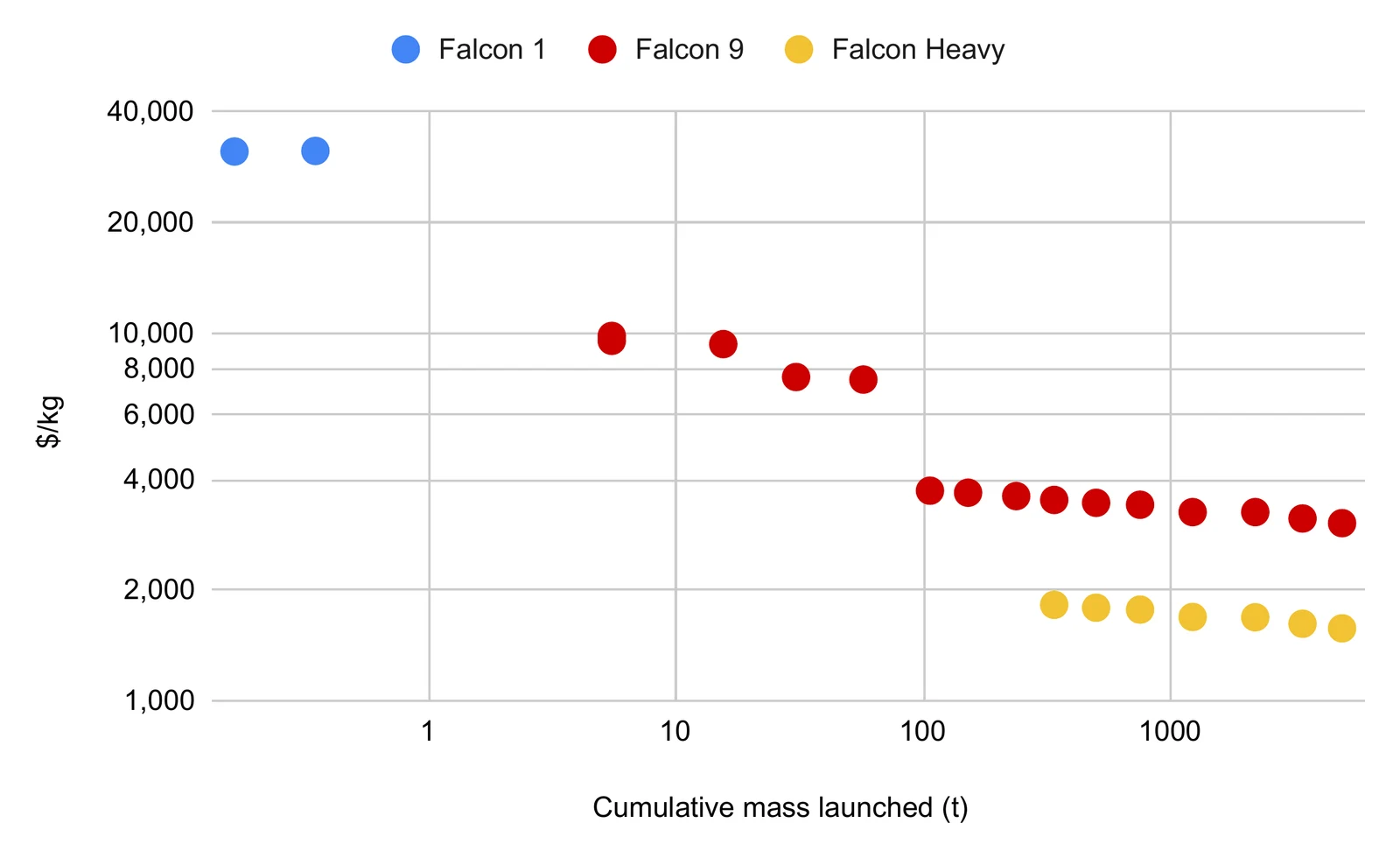
Launch is the cost that has to fall. SpaceX’s prices have dropped about 20 per cent for every doubling of the total mass it has launched, by the paper’s learning-curve fit, and if that rate holds, launch to low Earth orbit could cost under $200 a kilogram by about 2035. That would take about 180 Starship launches a year; Starship reached orbit for the first time on 28 September 2026. Beals expects computing in space to take more than five years to become the cheaper option. “I think it will take longer than that,” he told NPR.
| Launch and power costs, from the Suncatcher paper | Figure |
|---|---|
| Price today, on a reusable Falcon 9 | $3,600 a kg |
| Falcon Heavy at its introduction, the curve’s starting point | about $1,800 a kg |
| Projected by about 2035, if that 20 per cent decline holds | under $200 a kg |
| Launch cost per kW of power a year at $3,600 a kg, for a Starlink v2 mini satellite | about $14,700 |
| The same at $200 a kg | about $810 |
| What US data centres pay for power, per kW a year | about $570 to $3,000 |
Two satellites follow in 2027
Google plans to put two satellites in orbit in 2027 to test laser links between them, it said on 24 September 2026. Google and Planet first set out that mission in November 2025, when Planet described two prototypes flying “in tandem with high bandwidth cross link communications”, on the same satellite bus as its Owl mission. Later Suncatcher satellites “will each carry dozens of TPU chips while orbiting the Earth in clusters”, Google says, and holding their laser links on target is “similar to hitting a coin-size target from miles away while both points are in motion.”
SpaceX is working towards the same goal: it said on 4 August 2026 that its Starmind satellites will carry NVIDIA Rubin GPUs and Vera CPUs, and SpaceXAI, which runs the Colossus 2 supercomputer, said in May 2026 that Anthropic had expressed interest in partnering to develop multiple gigawatts of orbital AI compute capacity. Planet also uses NVIDIA hardware: NVIDIA named Planet Labs in March 2026 among six companies using its accelerated computing platforms for space missions.
Beals sees computing on the ground and in orbit running side by side for a long time. “In the really-long run, perhaps the set of things you do in space gets larger and larger until that’s where most of the compute is happening,” he told NPR.
Questions people ask
- What is Google's Project Suncatcher?
- Project Suncatcher is a Google research moonshot, announced on 4 November 2025, exploring whether satellites running on sunlight could one day host large machine learning systems. Google's design study pictures clusters of solar-powered satellites carrying its TPU AI chips, flying 100 to 200 metres apart and linked by lasers, in a dawn-dusk sun-synchronous orbit where they would see near-constant sunlight. The first prototype, built with Planet and carrying four TPUs, reached orbit on 1 October 2026.
- What will the Suncatcher prototype test in orbit?
- Over the weeks after its launch on 1 October 2026, Google will gather data on how its TPU chips handle the physical stress of spaceflight and the radiation and thermal extremes of space. NPR and Scientific American reported that the four chips will run an AI model for 15 minutes at a time before they shut down to cool, and NPR that the mission is meant to last a year. Travis Beals, who leads the project, called it "a very minimal test".
- When will Google launch more Suncatcher satellites?
- Google plans to put two satellites in orbit in 2027 to test laser links between them, it said on 24 September 2026. Planet, Google's partner on the satellites, described that mission in November 2025 as two prototypes flying in tandem with high-bandwidth cross-links, on the same satellite bus as Planet's Owl mission. Google says later designs will each carry dozens of TPU chips and orbit Earth in clusters.
Sources
- Google: Our Project Suncatcher prototype satellite is in orbit, 1 October 2026blog.google
- Google on X: a prototype satellite carrying four TPUs, 1 October 2026x.com
- SpaceX: Transporter-18 mission, 1 October 2026spacex.com
- Planet: Planet launches Suncatcher, Tanager-2 and 18 SuperDove satellites, 1 October 2026investors.planet.com
- Planet on X: 20 satellites, 1 launch, and we're officially in orbit, 1 October 2026x.com
- Google: Behind Project Suncatcher, our moonshot to put AI in space, 24 September 2026blog.google
- Google Research: Exploring a space-based, scalable AI infrastructure system design, 4 November 2025research.google
- Agüera y Arcas et al.: Towards a future space-based, highly scalable AI infrastructure system design, arXiv:2511.19468arxiv.org
- Agüera y Arcas et al.: arXiv:2511.19468 version 2, full text, 17 June 2026arxiv.org
- Joule: Toward a future space-based, highly scalable AI infrastructure system design, October 2026doi.org
- Planet: Planet to build and operate advanced space platform for Google's Project Suncatcher moonshot, 4 November 2025planet.com
- Planet on X: the Project Suncatcher prototype at Planet, 24 September 2026x.com
- NPR: Google launches Project Suncatcher, a step towards AI data centers in space, 1 October 2026npr.org
- Scientific American: Google tests its plan for AI data centers in space with Project Suncatcher, 1 October 2026scientificamerican.com
- SpaceX on X: Starmind satellites will include NVIDIA Rubin GPUs and Vera CPUs, 4 August 2026x.com
- SpaceXAI: New compute partnership with Anthropic, 6 May 2026x.ai
- NVIDIA Newsroom: NVIDIA launches space computing, rocketing AI into orbit, 16 March 2026nvidianews.nvidia.com