Google's AI satellite sends its first poem from orbit
Google's Suncatcher prototype ran Gemma 4 in orbit and returned a haiku, a step towards solar-powered AI computing in space.
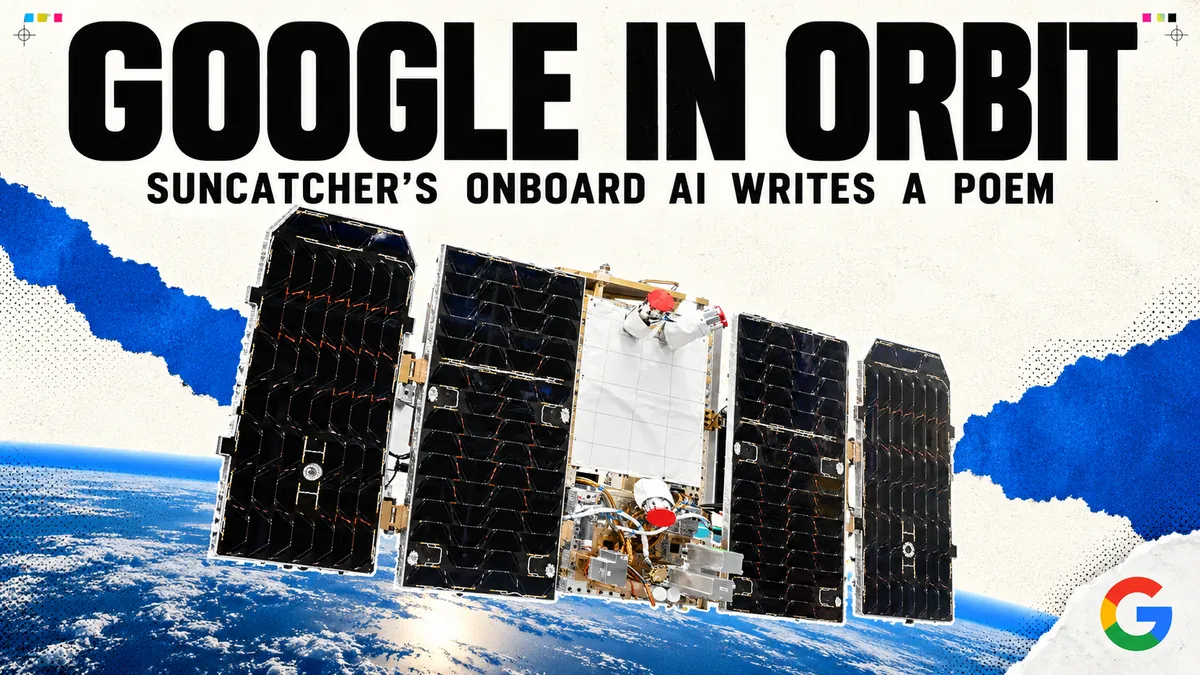
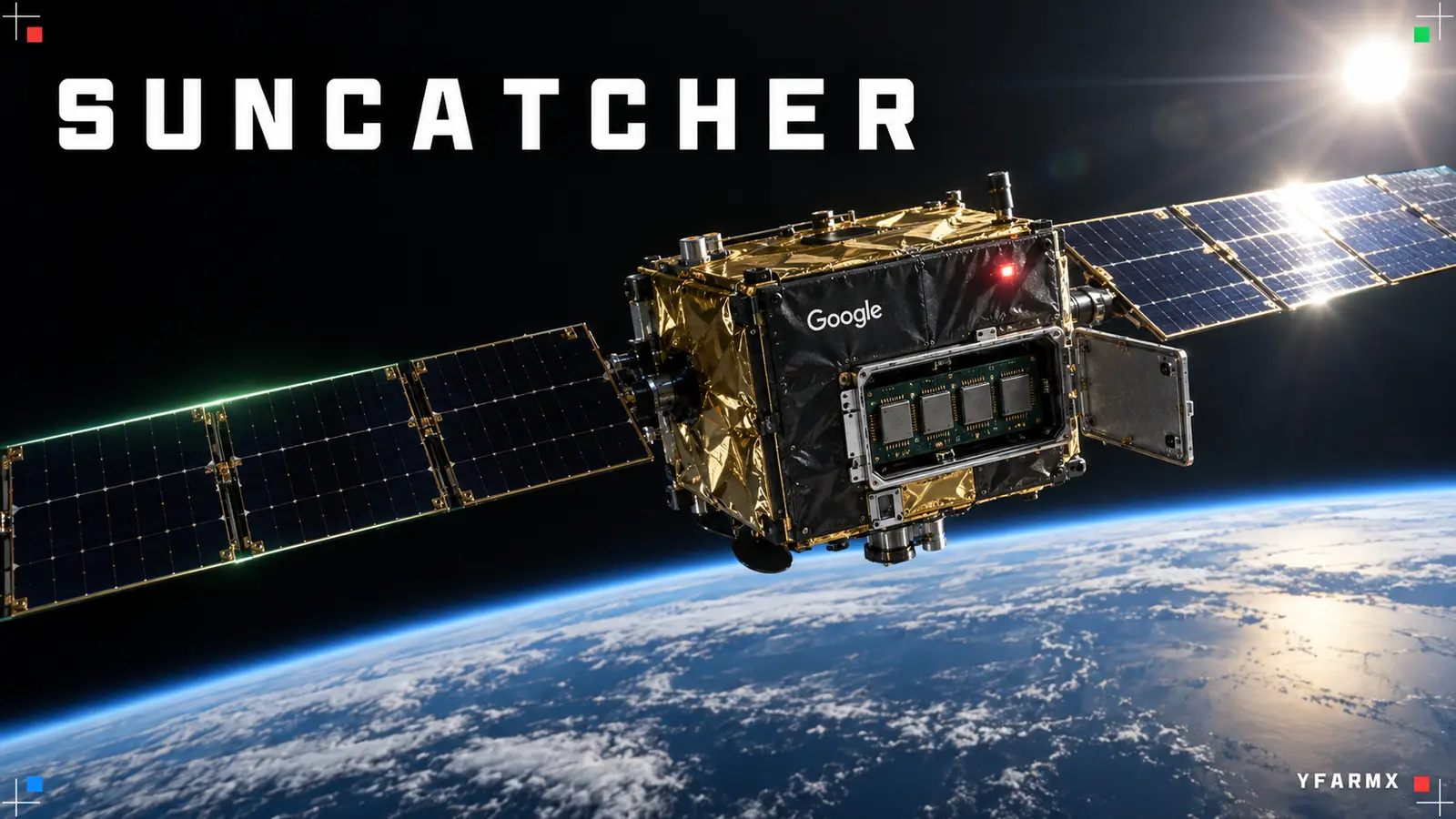
Google’s Suncatcher satellite has generated a poem using an AI model running aboard the spacecraft. Google reported the result on 30 October, describing its first response from a data-centre-class TPU in orbit.
A TPU, or Tensor Processing Unit, is Google’s specialist AI chip. Project Suncatcher explores whether satellites powered by sunlight could host large AI computing systems. The prototype was developed with satellite company Planet, which confirmed its launch aboard SpaceX’s Transporter-18 mission from California on 1 October 2026.
A prompt went up and a poem came back
The onboard Gemma 4 model answered a request for a haiku about space. Engineers sent the prompt during a ground-station pass and received this poem as the satellite passed Svalbard, Norway:
Blue marble below
Data streams in silent grace
Starlight feeds my core. ✨
Google then tested limericks and prompts about the payload’s technical status. The team had spent the preceding weeks switching on the host and TPU hardware and running initial machine-learning tests.
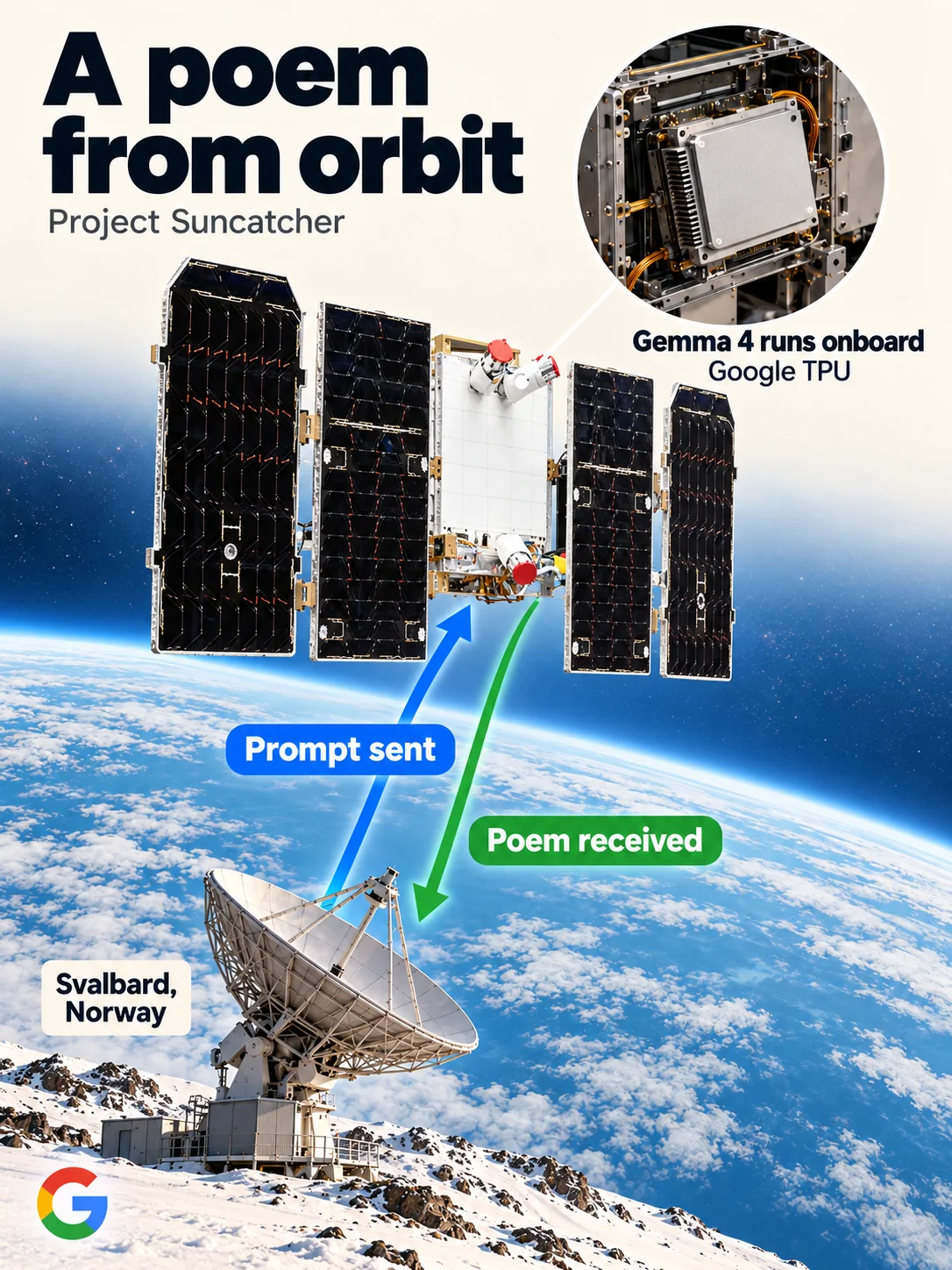
The satellite is testing the hardware for orbital data centres
Planet’s Suncatcher prototype carries Google’s AI hardware into the conditions where future orbital computers would operate. Planet describes the mission as a demonstration of running machine-learning computing systems in orbit. The spacecraft established initial contact after launch and began commissioning, the checks that prepare a satellite for its work.
The flight follows Suncatcher’s launch earlier this month. Google is using the mission to gather evidence about how its chips cope with spaceflight, radiation and temperature changes, feeding those measurements into later spacecraft designs.
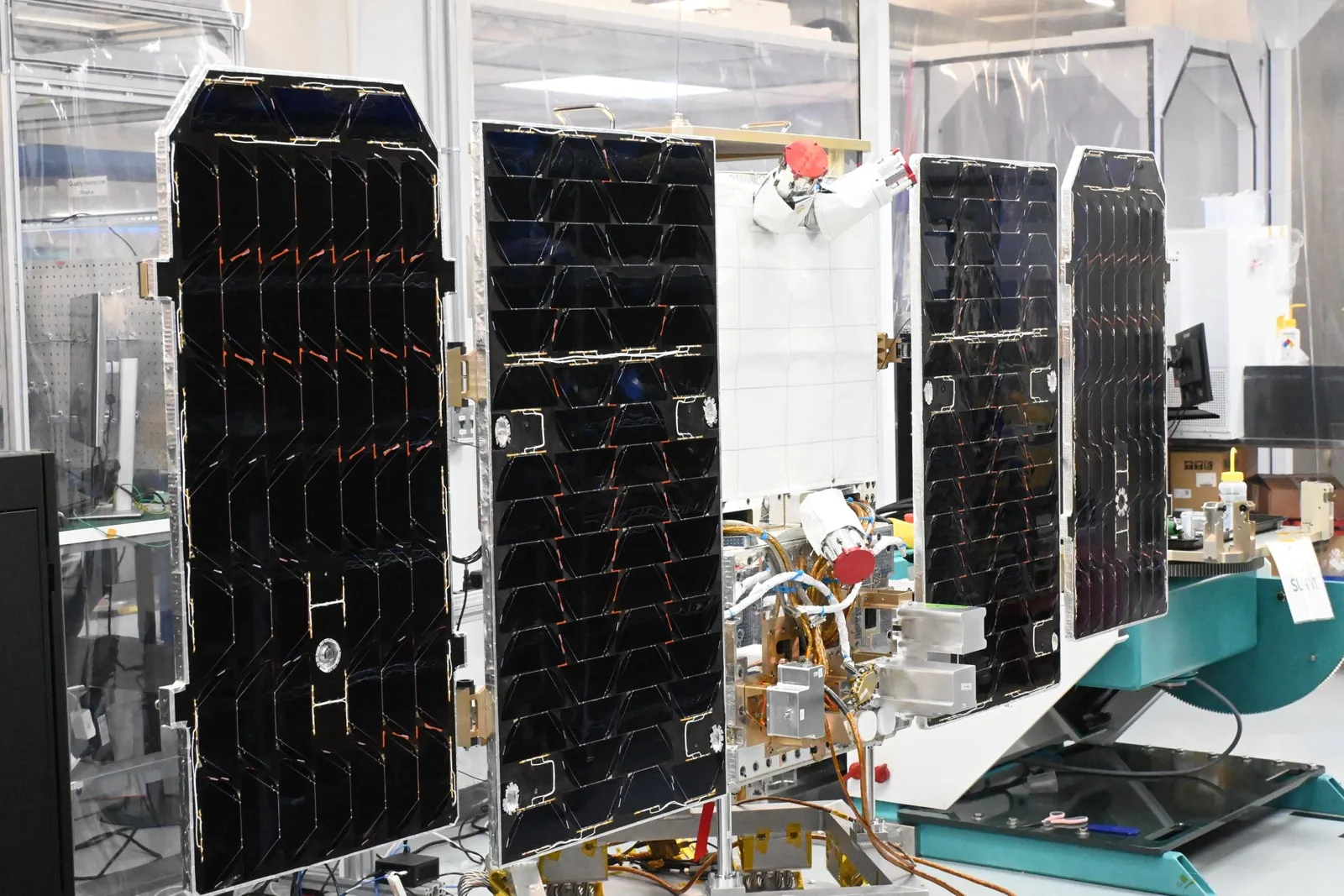
Heat and radiation are the next tests
Google’s next orbital tests will examine TPU performance under thermal stress and radiation exposure. Cooling is a central engineering challenge: chips concentrate heat in a small area, and spacecraft must move that heat to surfaces that radiate it away.
Google’s September engineering update describes a combination of heat pipes and radiators, already tested in a thermal vacuum chamber. The orbital mission lets the team evaluate that cooling system in flight. Earlier ground tests also exposed working TPUs to a proton beam to study radiation damage and calculation errors.
Two linked satellites are planned for 2027
Google plans to put two satellites in orbit in 2027 to test high-bandwidth laser links. Those connections would allow computing hardware on separate spacecraft to exchange data for larger AI workloads.
The longer-term design calls for clusters of satellites, each carrying dozens of TPUs. Keeping their laser links aligned as both spacecraft move is another part of the research. The single-satellite test is now producing results that can guide that next mission.
Sources
- Google: First response from the Project Suncatcher prototype, 30 October 2026blog.google
- Planet: Suncatcher prototype launches on Transporter-18, 1 October 2026investors.planet.com
- Google: Hardware, cooling and satellite links for Project Suncatcher, 24 September 2026blog.google
- Planet: Suncatcher prototype photograph, 24 September 2026x.com