SpaceX catches Starship for the first time after orbiting Earth
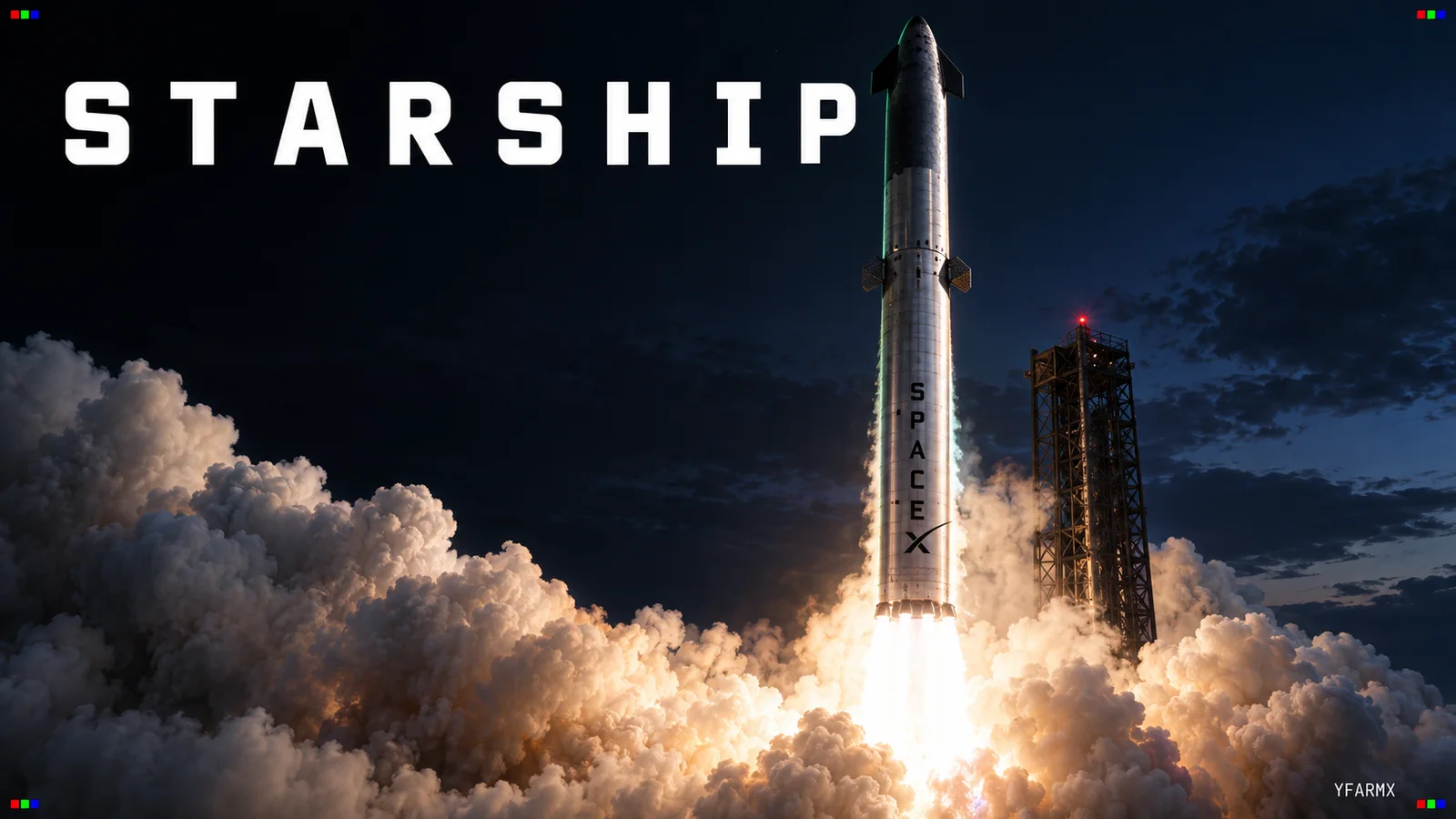
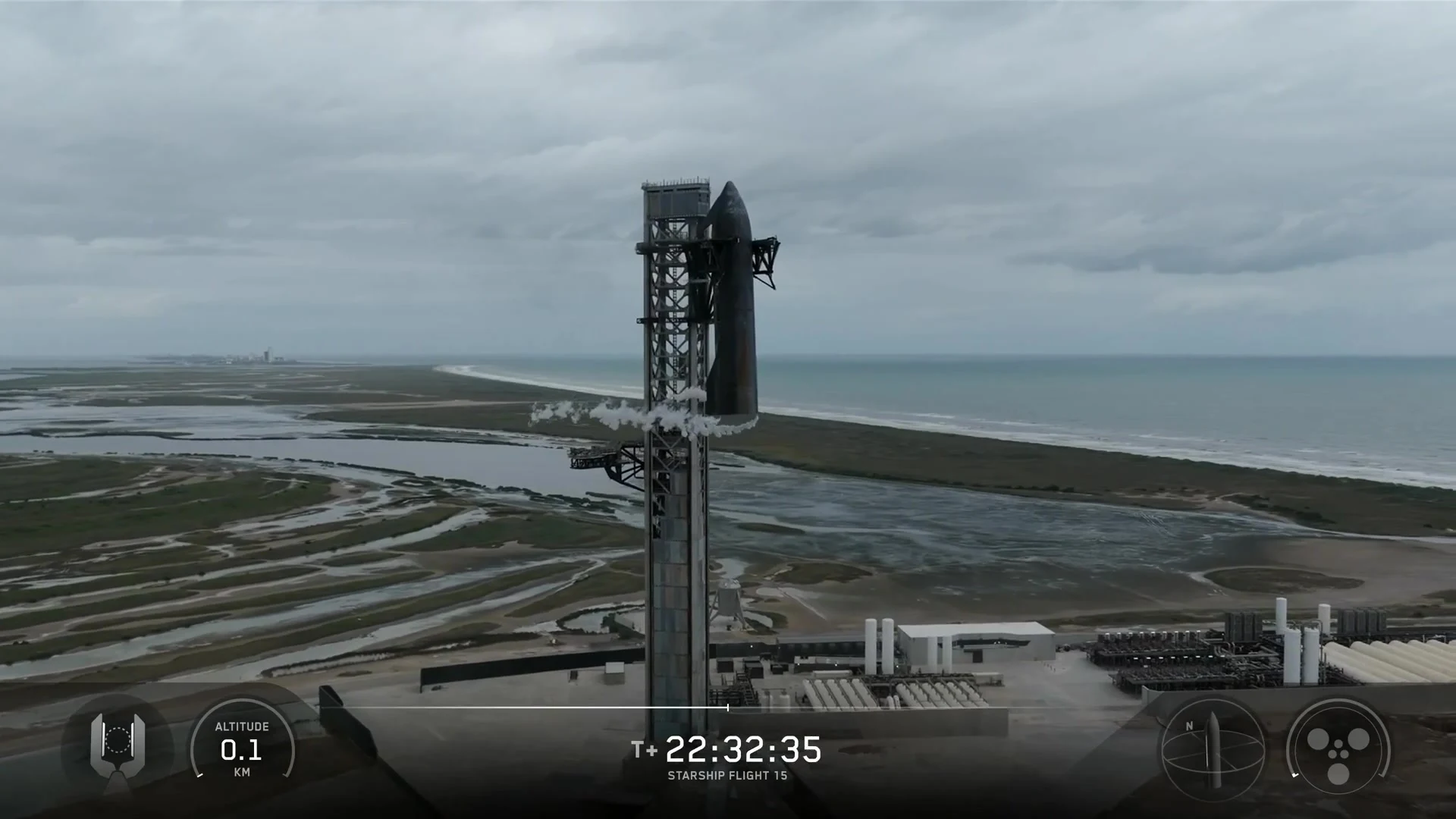
Starship returned to Starbase on 14 November 2026, about 22.5 hours after launch, and the tower’s arms caught it, a first for the upper stage. It had deployed 26 Starlink V3 satellites. The Super Heavy booster aborted its return and was lost over the Gulf.
Listen to this articleListen
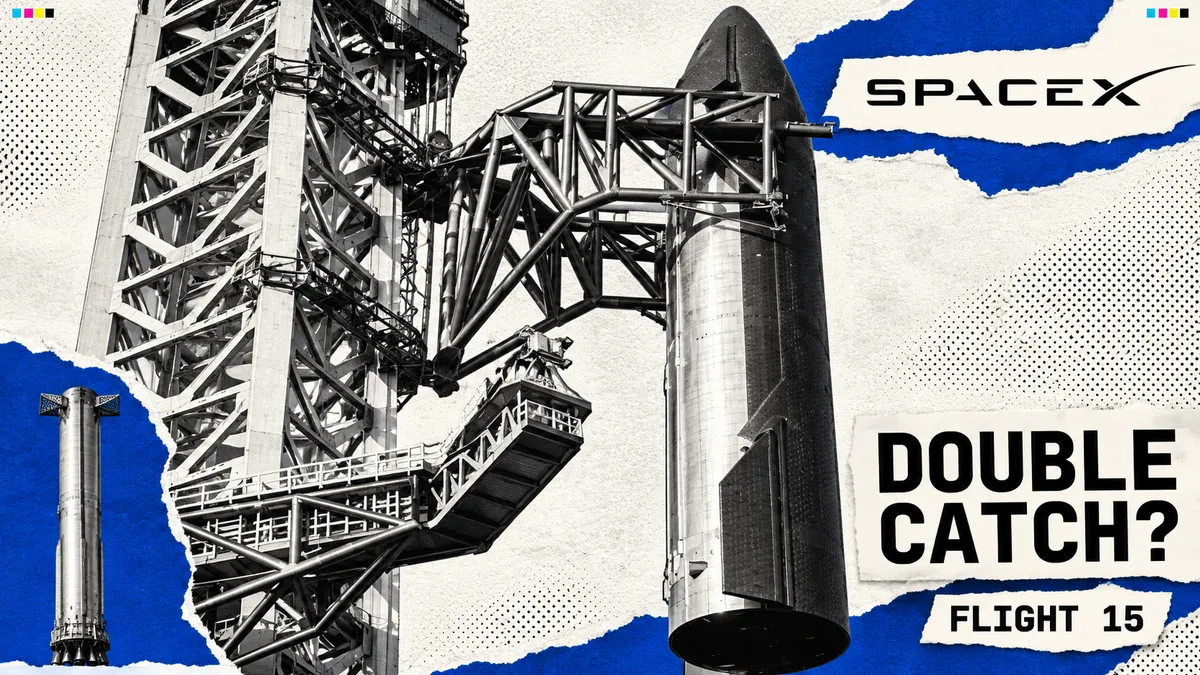
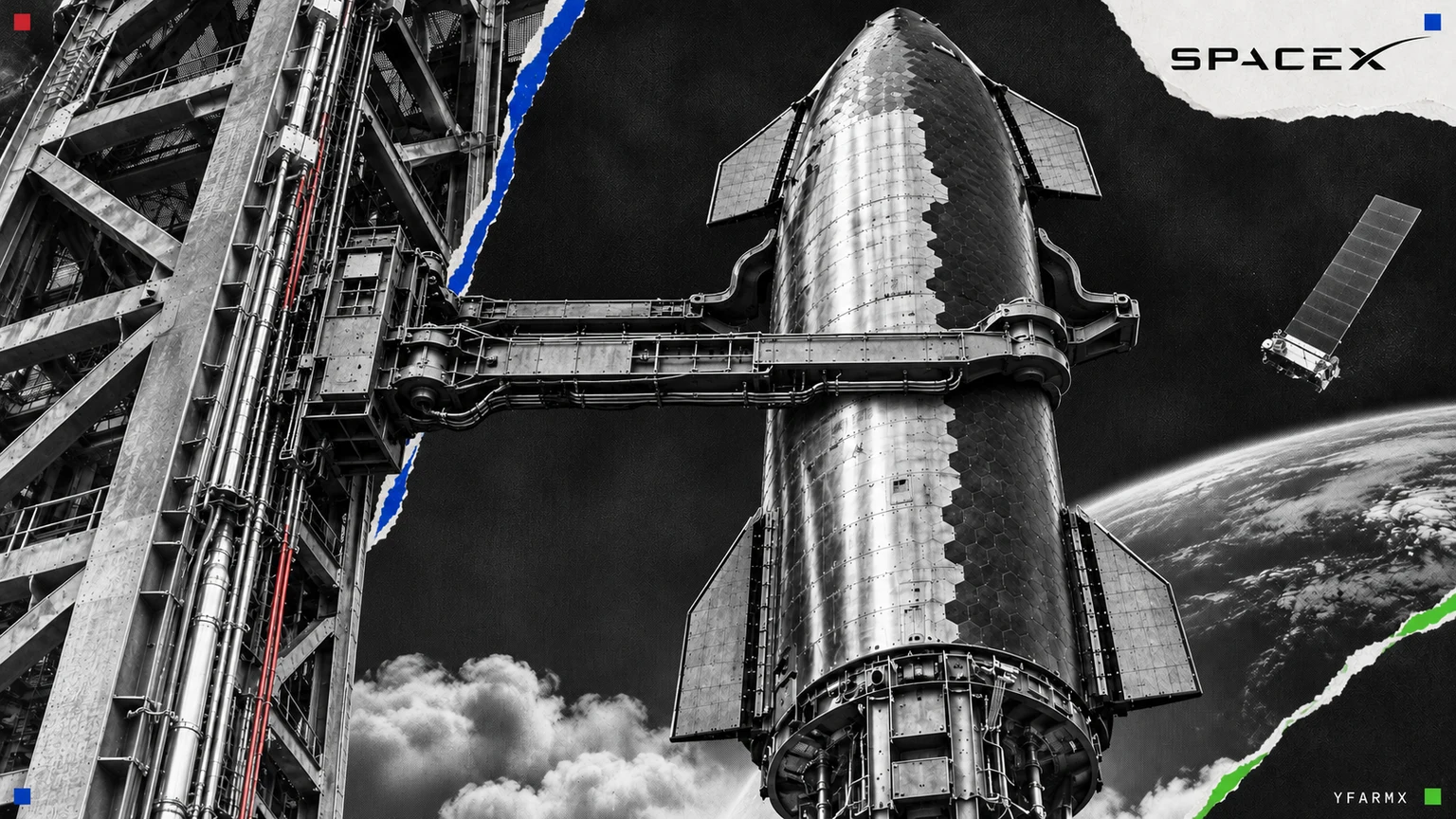
Starship’s upper stage flew home from orbit to Starbase, Texas, on Saturday and was caught by the launch tower’s arms, a first for SpaceX, about 22 and a half hours after it lifted off from the same site. Flight 15 had launched on Friday and deployed 26 Starlink satellites in orbit, and on its return the arms of the launch tower SpaceX calls Mechazilla “closed to catch Starship for the very first time.”
The Super Heavy booster was lost. Its burn back towards Starbase ended early on low fuel, its guidance aborted the return and steered it offshore, and its flight termination system was triggered as its engines shut down over the Gulf. SpaceX says the root cause is under investigation.
How did the ship get home?
Starship spent more than 20 hours in space before relighting one engine to leave orbit and fly back to the Texas coast. After a normal ascent on six Raptor engines, it relit a single engine to reach orbit and deployed 26 Starlink V3 satellites. SpaceX says contact was made with every satellite, and they are already beginning to raise their orbits to join the network. Before launch, SpaceX had planned an orbit about 275 kilometres up and roughly 14 trips around the planet.
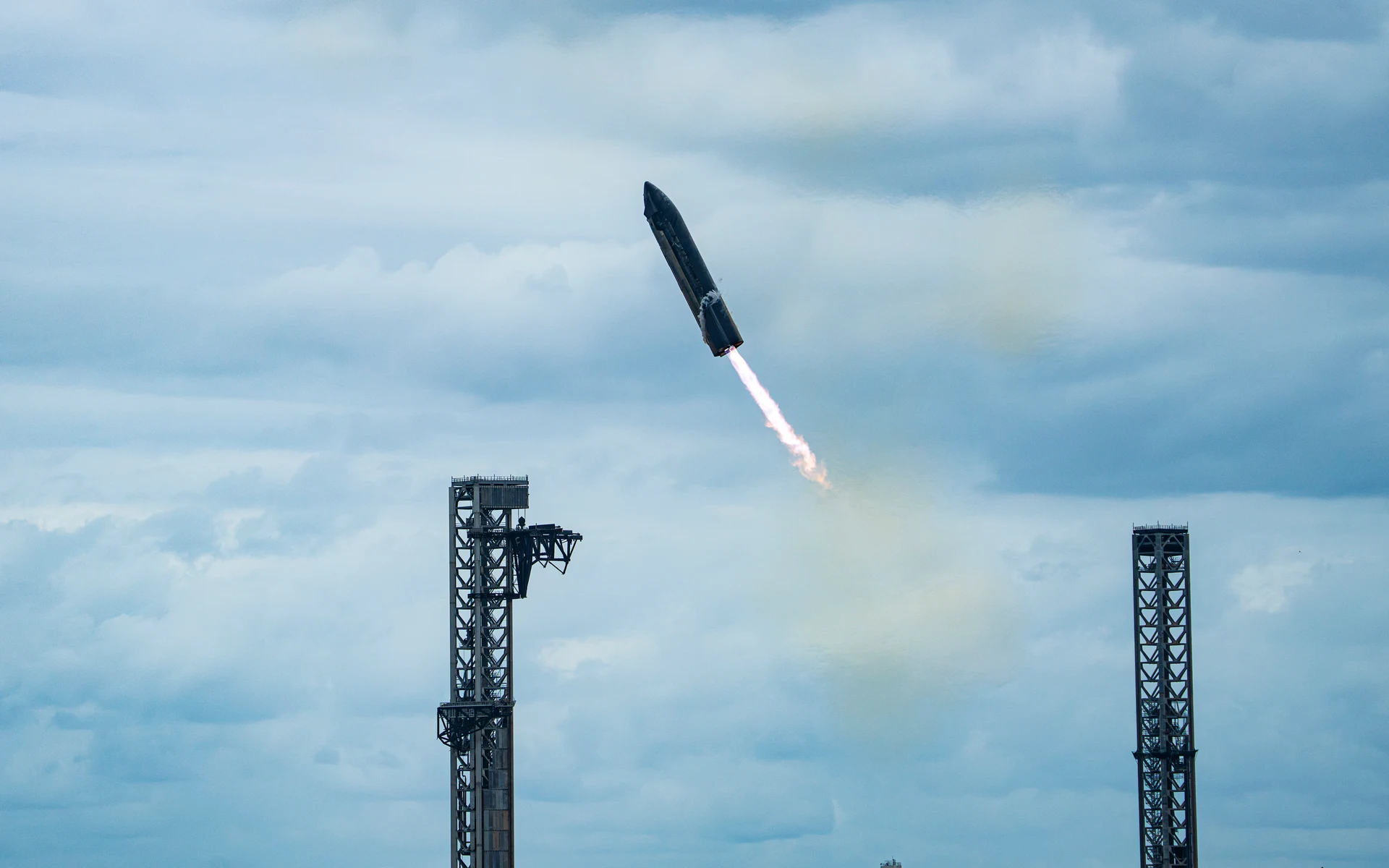
On Saturday, flight controllers polled go to return Starship to the launch site. The ship fired a single sea-level Raptor to leave orbit, flew back to the east coast of Texas and made a final swooping turn out over the Gulf. After breaking through the clouds, it lit three engines for its landing flip and descended slowly into the tower’s arms.
| Step | SpaceX’s preflight schedule: approximate time after liftoff |
|---|---|
| Hot staging | 2 min 21 s |
| Orbital insertion burn starts | 26 min 10 s |
| Starlink deployment | 35 min 1 s to 1 h 17 min 40 s |
| Deorbit burn starts | 21 h 35 min 57 s |
| Atmospheric entry | 22 h 10 min 46 s |
| Landing burn starts | 22 h 32 min 16 s |
| Landing burn shutdown and catch | 22 h 32 min 34 s |
Why was the booster lost?
SpaceX says Super Heavy’s boostback burn “ended early due to low fuel mass”, and the root cause is under investigation. The booster had flipped and relit 32 of its planned 33 Raptor engines to head back towards the tower. Its guidance then “triggered an automated abort during coast and diverted itself successfully to an offshore landing location.” It fired its landing burn while hovering over the Gulf, and its flight termination system was triggered when the engines shut down.
Elon Musk, SpaceX’s chief executive, gave his own explanation on X on Saturday: “Slight underperformance of engines on this flight is the reason.” He said the booster is meant to land with very little propellant left, so SpaceX will improve the engines’ performance and consistency with Raptor V3.2, and cut most of the booster’s engines about a second earlier to leave enough fuel for the return. He added that “initial conclusions are often wrong to some degree” until the full flight telemetry has been reviewed.

| SpaceX update on X | Posted (UTC) |
|---|---|
| Super Heavy has diverted to an offshore splashdown in the Gulf | 13 November 2026, 22:55 |
| Starship is deploying its 26 Starlink V3 satellites | 13 November 2026, 23:27 |
| Teams have polled go to return Starship to Starbase | 14 November 2026, 19:18 |
| Mechazilla catches Starship | 14 November 2026, 21:21 |
What did Flight 15 add after Flight 14?
Flight 14 was Starship’s first orbital flight, in September, and Flight 15 was the first to bring the ship back to its launch site. On Flight 14, which also carried 26 Starlink V3 satellites, a vacuum engine shut down early during the ascent. Controllers shortened its time in orbit and brought the ship down in the Pacific Ocean.
Flight 15 kept the ship up for most of a day, and SpaceX had described it before launch as Starship’s “initial return to launch site mission”. This time the ship flew back to Starbase and into the tower’s arms.
Musk says the next booster is almost ready
Musk said SpaceX has “the next booster almost ready for flight”, and that losing the tower or launch mount “would potentially cost us 2 to 3 months”. Musk also said these early ships and boosters are already outdated by improved designs in production, so “this booster loss does not change our timeline to reach high volume, fully reusable Starship flights.”
Sources
- SpaceX: Starship Flight 15spacex.com
- SpaceX: Flight 15 mission summary, public mission textcontent.spacex.com
- SpaceX: Flight 15 pre-flight mission text, archived 9 November 2026web.archive.org
- SpaceX on X: Mechazilla catches Starship, 14 November 2026x.com
- SpaceX on X: Super Heavy diverted to an offshore splashdown, 13 November 2026x.com
- SpaceX on X: deploying 26 Starlink V3 satellites, 13 November 2026x.com
- SpaceX on X: go to return Starship to the launch site, 14 November 2026x.com
- Elon Musk on X: the booster’s engines underperformed, 14 November 2026x.com
- Elon Musk on X: initial conclusions and the full telemetry review, 14 November 2026x.com
- Elon Musk on X: the next booster is almost ready, 14 November 2026x.com
- SpaceX: Starship Flight 14, the first orbital flightcontent.spacex.com