DeepMind talent exodus costs Alphabet its star researchers
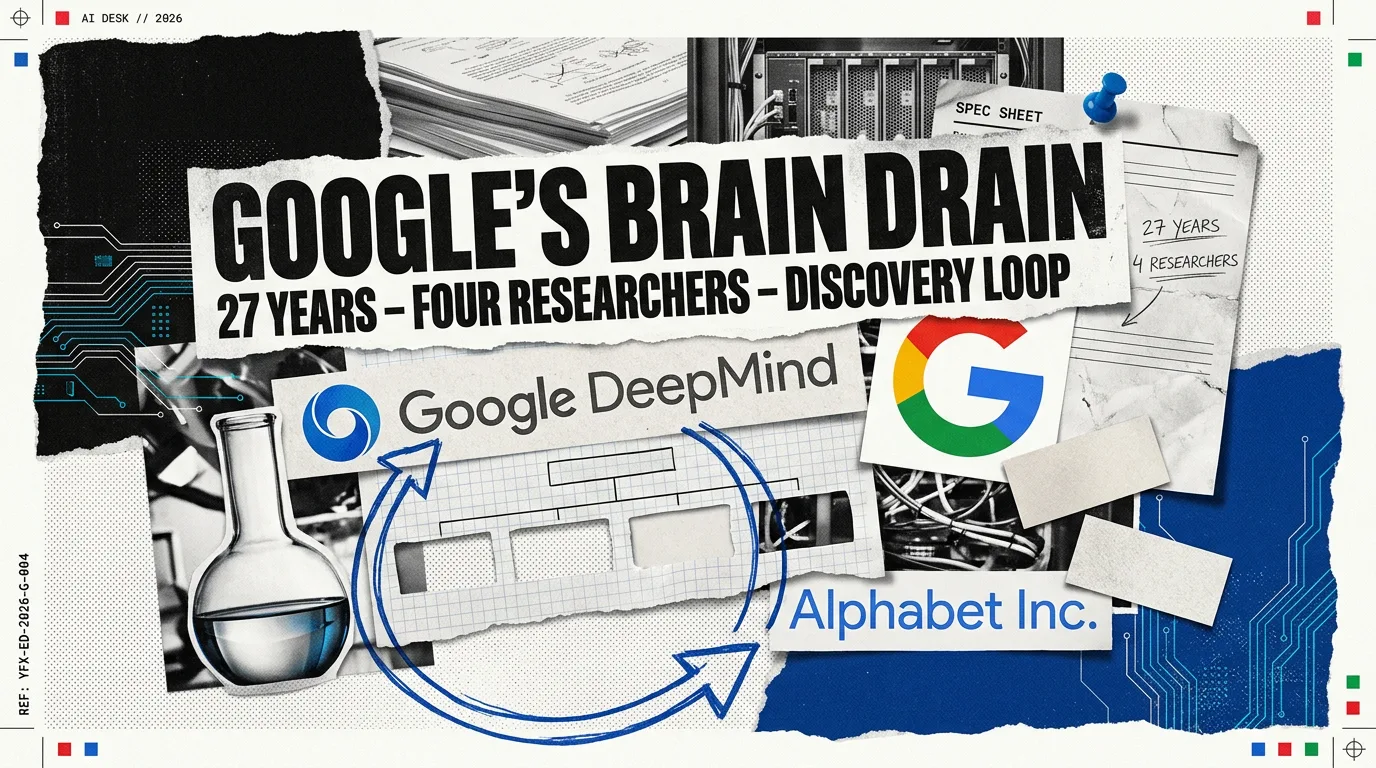
Four senior researchers left Google DeepMind inside a single week in June, and the DeepMind talent exodus has become the most closely watched personnel story in the sector. Noam Shazeer, co-inventor of the Transformer architecture and a Gemini co-lead, departed for OpenAI on 18 June.
Listen to this articleListen
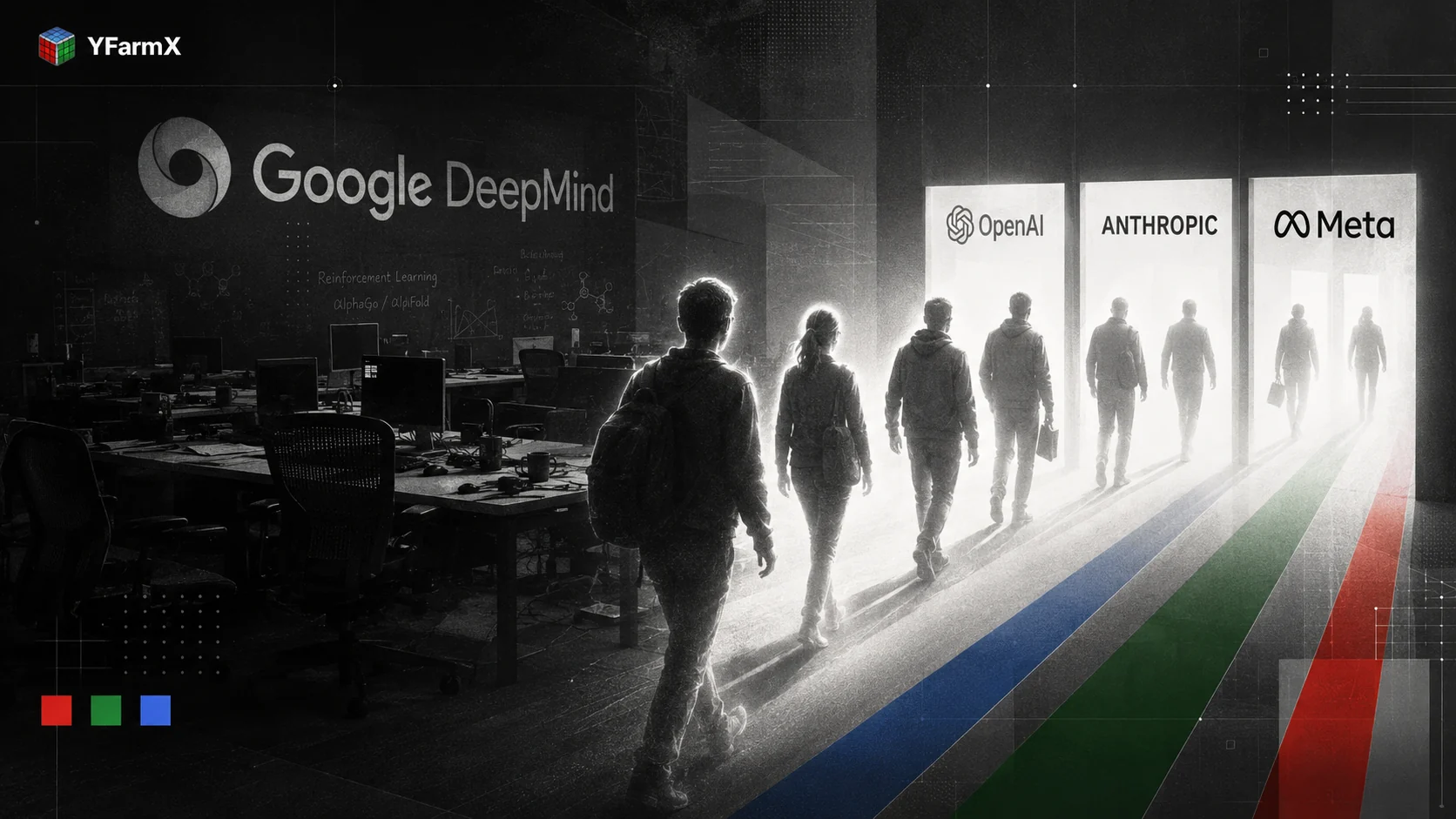
Four senior researchers left Google DeepMind inside a single week in June, and the DeepMind talent exodus has become the most closely watched personnel story in the sector. Noam Shazeer, co-inventor of the Transformer architecture and a Gemini co-lead, departed for OpenAI on 18 June. The following day John Jumper, who shared the 2024 Nobel Prize in Chemistry for AlphaFold, announced his move to Anthropic, joined by Jonas Adler and Alexander Pritzel.
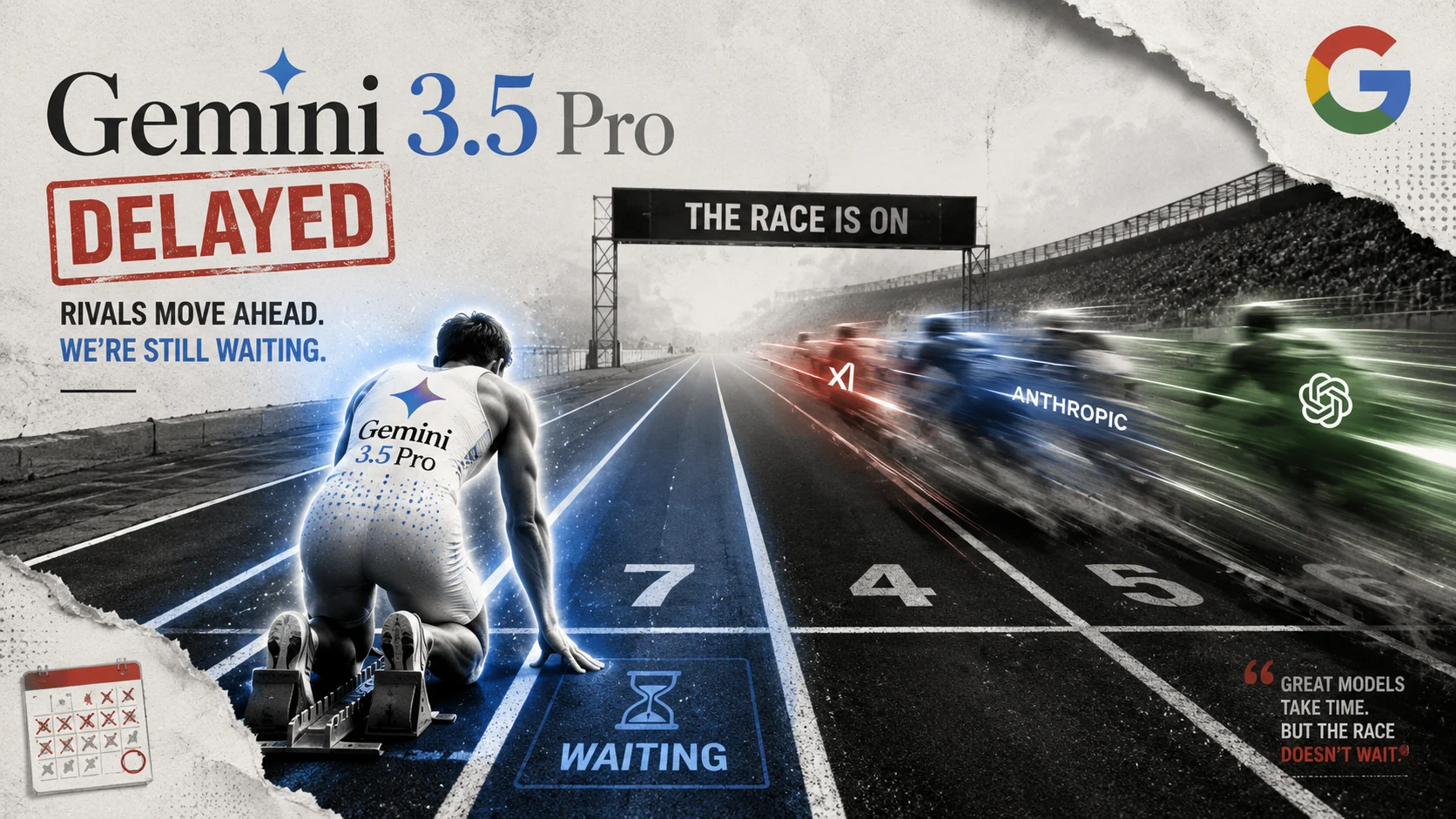
The market response was blunt. Alphabet shares fell roughly 5 per cent on 22 June, erasing something in the order of $225 billion of market value in a session. Reporting on the Gemini 3.5 Pro delay surfaced in the same window, which makes the two effects difficult to separate cleanly. What investors priced was the combination: a flagship model missing its publicly promised date while several of the people most associated with the company’s research reputation left for direct competitors.
The individual moves carry different meanings. Shazeer’s departure is the more symbolically loaded, since the 2017 Transformer paper he co-authored is the foundation of every model discussed in this publication, and he returned to Google in 2024 through the acquisition of Character.AI in a deal reported at around $2.7 billion. Jumper’s move is the more surprising commercially. AlphaFold is the clearest demonstration anyone has produced that machine learning can deliver a scientific result of the first rank, and it was built at DeepMind with DeepMind’s resources. His move to Anthropic signals that the frontier laboratories are now competing for scientific credibility as directly as they compete for engineers.
The structural explanation for the DeepMind talent exodus is compensation and autonomy in a market where a small number of people have demonstrably built things that work. Meta’s recruitment campaign from mid 2025 reset the price of senior AI researchers across the industry, culminating in a $14.3 billion transaction that gave Meta 49 per cent of Scale AI and installed Alexandr Wang as chief AI officer. Once packages at that level exist, every laboratory’s retention arithmetic changes, and a research organisation inside a public company faces constraints that a private laboratory raising at rising valuations does not.
Google’s position is stronger than the headlines suggest, and worth stating fairly. DeepMind retains extraordinary depth, and the company’s distribution advantages are unmatched: Gemini 3.5 Flash sits behind AI answers seen by billions of people in Search, it anchors high volume agent pipelines at $1.50 and $9.00 per million tokens, and Google ships across the full stack from TPUs to consumer devices. In the same period it released Gemma 4 12B, an encoder-free multimodal open model for 16 gigabyte local setups, NanoBanana 2 Lite for sub-four-second image generation from around three cents per thousand, OmniFlash for conversational video editing, and expanded Managed Agents in the Gemini API on the free tier.
What the DeepMind talent exodus removes is less measurable. Research organisations run on a small number of people who can identify which of a hundred plausible directions is worth a year of a large team’s time. Losing four of those in a week is a capability loss that does not appear in a quarterly report and shows up two years later in the models that were not built.
The receiving laboratories have their own calculation to make. Anthropic has taken on a Nobel laureate and two senior researchers while managing a compute constraint severe enough that it spent July negotiating publicly with subscribers over access to its own flagship model. Talent without compute produces papers. OpenAI has both, and now has the Transformer’s co-inventor as well.
For Alphabet the practical test arrives with Gemini 3.5 Pro. A strong release will make June look like a bad month in a long campaign. A further slip will make it look like a turning point.
Sources
- Google DeepMinddeepmind.google
- OpenAIopenai.com
- Anthropicanthropic.com