Oracle is installing Quantinuum's Helios quantum computer inside its AI cloud
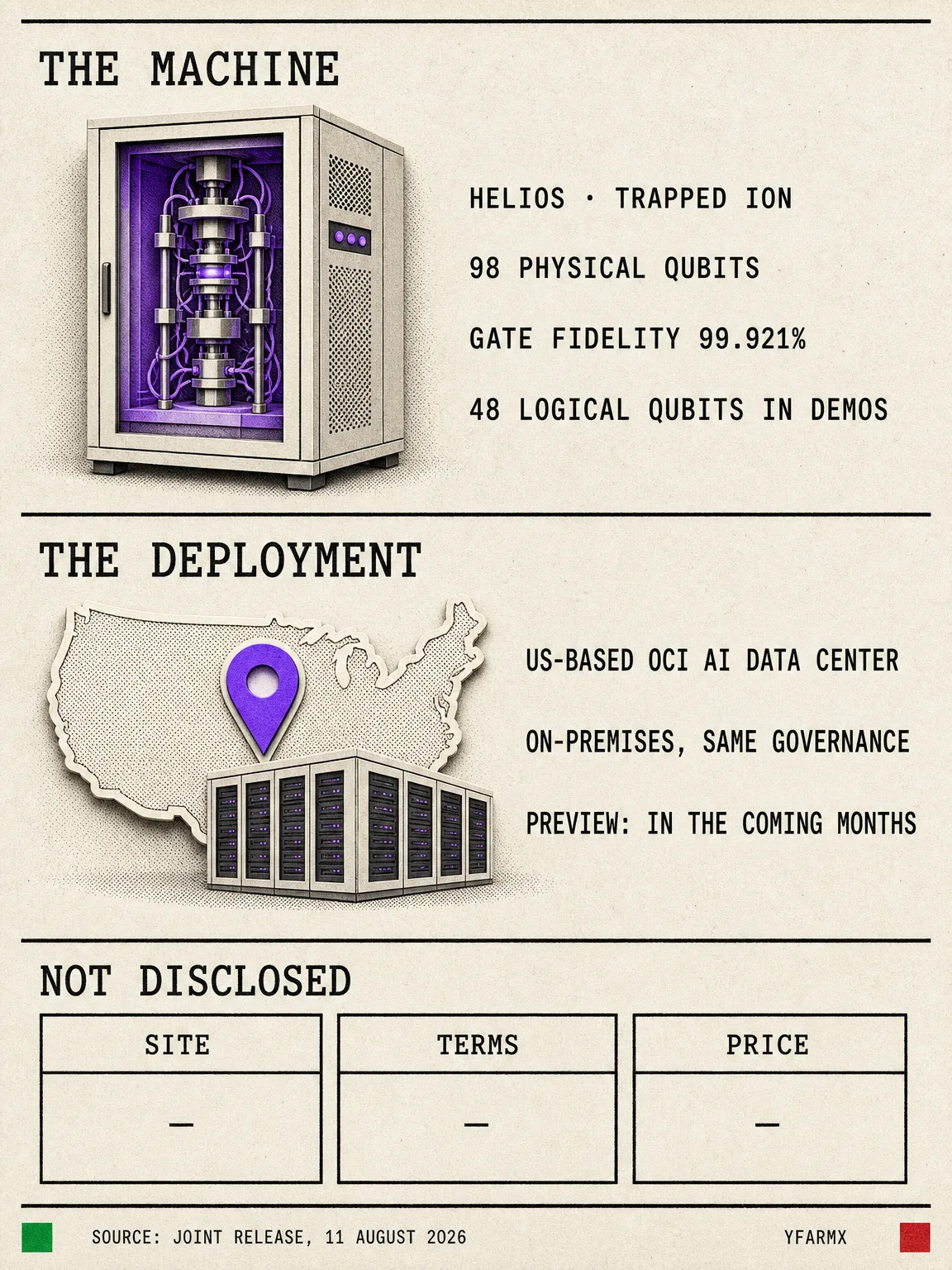
Oracle and Quantinuum announced a multi-year partnership on 11 August to deploy Helios, the 98-qubit trapped-ion system, inside a US Oracle Cloud AI data centre, with an OCI quantum service to preview in the coming months.
Listen to this podcastListen
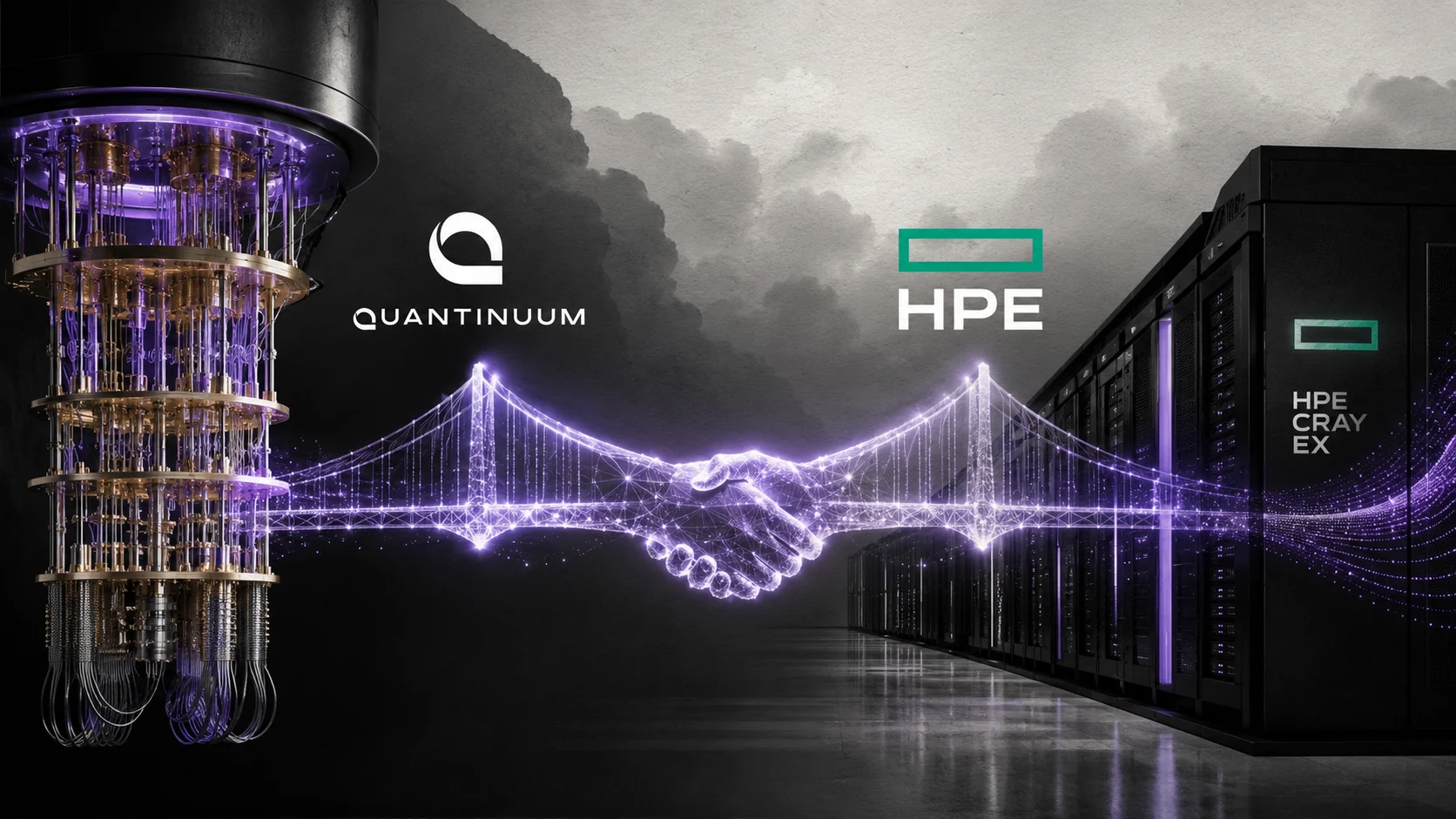
Oracle and Quantinuum announced a multi-year partnership on Tuesday to install Helios, Quantinuum’s third-generation trapped-ion quantum computer, inside a US Oracle Cloud Infrastructure AI data centre. The plan is for customers to reach a quantum processor the same way they reach a rented GPU: through the cloud account they already have.
The joint release, datelined Broomfield, Colorado and Austin, Texas, says Helios “will be deployed in a US-based OCI AI data center to enable hybrid quantum-AI workloads as an OCI service”. Oracle “plans to preview its OCI quantum service in the coming months”.
The machine that is moving in
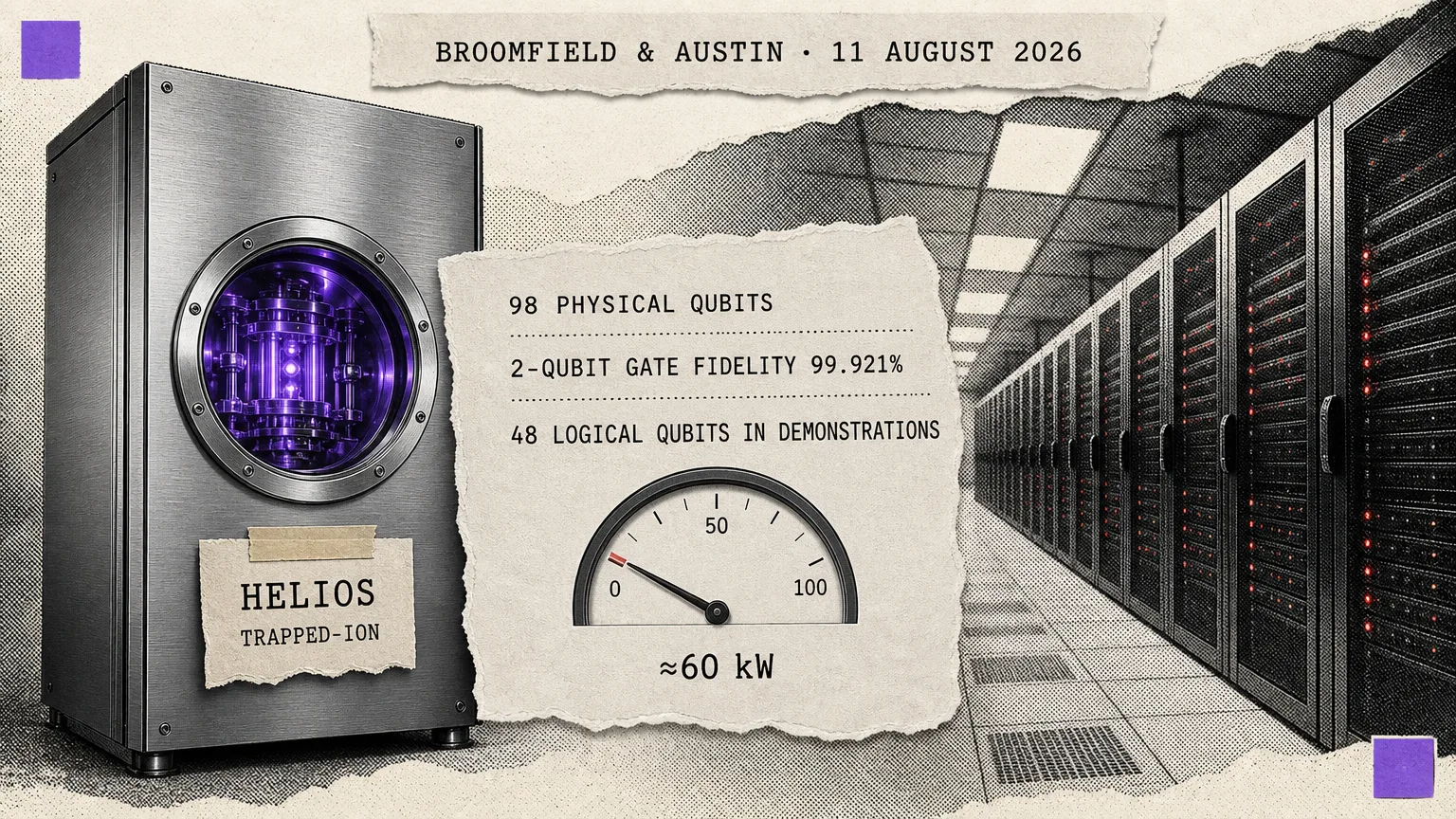
Helios launched commercially in November 2025. It is a 98-physical-qubit trapped-ion system, and the release repeats the numbers from that launch: an average two-qubit gate fidelity of 99.921 per cent, and use “in demonstrations involving 48 logical qubits”, the error-corrected kind that quantum algorithms will eventually be built on.
Two health warnings belong next to those figures, and one reassurance. The 48 logical qubits describe demonstrations from the November launch rather than a new capability of the Oracle deployment. The release’s claim that Helios is “the most accurate commercial quantum computer in the world” carries Quantinuum’s own footnote: it is based on two-qubit gate fidelity as of 31 December 2025, a metric and a date the company chose. The reassurance is that the headline fidelity is not marketing arithmetic: it is the same figure, expressed the other way round, as the independently evaluated gate error published in Nature in June after testing by Sandia National Laboratories.
“We believe the next phase of enterprise computing will be shaped by bringing quantum, AI, and high-performance computing together.”
Dr Rajeeb Hazra, President and CEO of Quantinuum, 11 August 2026
What is actually new here
Cloud access to quantum computers is not new. The geography is. IBM runs its machines in its own quantum data centres and rents time over IBM Cloud. IonQ’s systems sit in IonQ facilities and answer through Amazon Braket and its own cloud. Google’s Willow chip is not publicly available at all: researchers apply for time through an early-access programme.
Quantinuum’s wording is different: “by operating on-premises within OCI’s infrastructure, Helios is anticipated to be able to integrate seamlessly with existing OCI compute, networking, storage, identity, and data services under the same governance and access controls customers already use”. The quantum computer joins the AI estate as a peer, in the same building as the GPUs, behind the same log-in.
There is a practical argument for the arrangement beyond latency. A data centre operator measures everything in power, and the release leans on this: a single Helios draws roughly 60 kilowatts before cooling, against the 16 to 39 megawatts reported for leading supercomputers. By the standards of an AI hall, a quantum computer is a rounding error on the meter.
The undisclosed half is the commercial detail: no site beyond “US-based”, no contract value, revenue share or exclusivity terms, and a timetable that applies to a preview rather than general availability. The release also names no workload that Helios will run for a paying OCI customer on day one; the case studies are aspirations voiced by partners, including the Ellison Institute of Technology, whose head of scientific computing is quoted on plans to explore “classical-quantum hybrid computing to accelerate scientific discovery”.
The companies on each side
Quantinuum listed on Nasdaq in June under the ticker QNT, and Honeywell remains its anchor: the IPO prospectus puts the Honeywell entities at approximately 47.8 per cent of combined voting power after the offering. The company employs around 800 people across the US, UK, Germany, Japan, Qatar and Singapore.
For Oracle, the deal extends the same strategy that built its AI business: buy the scarce hardware, put it behind OCI, and sell the plumbing. Mahesh Thiagarajan, executive vice president of OCI, framed it as reach: “we want to give developers a practical and secure way to explore how quantum computing could complement their existing AI and HPC workloads on Oracle Cloud Infrastructure while improving compute efficiency and energy use”.
For where Helios sits in the wider race, see our Quantinuum reference page and the quantum hardware hub.
Sources
- Quantinuum, 'Quantinuum and Oracle Partner to Accelerate Hybrid Quantum Compute Adoption on Oracle Cloud Infrastructure' (11 August 2026)quantinuum.com
- Oracle newsroom, the same joint announcement (11 August 2026)oracle.com
- Quantinuum, 'Quantinuum Announces Commercial Launch of New Helios Quantum Computer' (5 November 2025)quantinuum.com
- Quantinuum Form 424B4 IPO prospectus, filed with the SEC (June 2026)sec.gov
- IBM, 'IBM Expands Quantum Data Center in Poughkeepsie, New York' (26 September 2024)newsroom.ibm.com
- IonQ, 'IonQ Announces Global Availability of Forte Enterprise Through Amazon Braket' (2025)investors.ionq.com
- Google Quantum AI, Willow Early Access Programquantumai.google