UK bans crypto exchanges from market making on own platforms
From 25 October 2027, a crypto exchange authorised in the UK may not trade its own money on the platform it runs, so it cannot act as a market maker there. Treasury regulations made on 18 November 2026 let outside firms fill that role without a dealing licence.
Listen to this articleListen
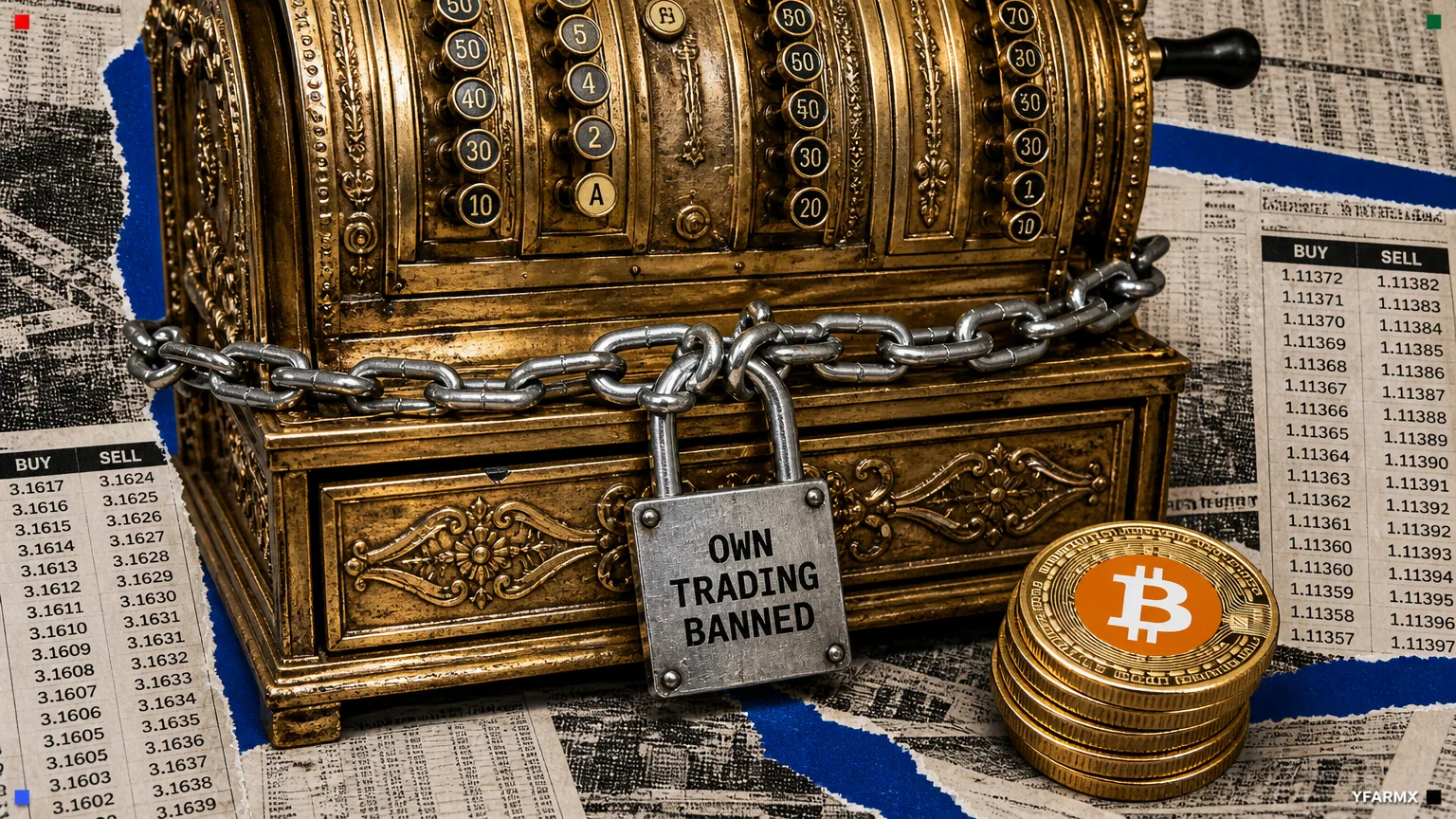
Crypto exchanges authorised in the UK will be banned from trading their own money on the platforms they run from 25 October 2027, which means none of them can act as a market maker on its own order book. The Financial Conduct Authority’s rule CRYPTO 6.6.1R says an exchange “must not execute any orders against its proprietary capital on a UK QCATP it operates”, a QCATP being a qualifying cryptoasset trading platform. The FCA’s guidance under it states the effect: “a firm cannot act as a market maker on a UK QCATP it operates.”
On 18 November 2026 the Treasury made the Financial Services and Markets Act 2000 (Cryptoassets) (Miscellaneous Amendments) Regulations 2026. They take market making on a qualifying crypto trading platform out of the activity that needs a licence to deal in crypto as principal, so outside firms can quote prices on UK exchanges once the exchanges themselves step back on 25 October 2027.
What exactly is banned?
From 25 October 2027, a UK-authorised crypto exchange may not fill any order on its own platform using its own capital, so it cannot be the firm quoting buy and sell prices there. The rule sits in FCA 2026/40, the Cryptoassets (Trading Platforms, Transparency and Records) Instrument 2026, which the FCA board made on 25 June 2026 and published with its final crypto rules on 30 June 2026. All eleven instruments in the series come into force on 25 October 2027.
| Activity | From 25 October 2027 | Rule |
|---|---|---|
| The exchange trading its own capital on its platform, including market making | Banned | CRYPTO 6.6.1R and 6.6.4G |
| Matched principal trading on its platform to execute client orders | Allowed, with the right permission | CRYPTO 6.6.2R |
| The exchange’s company offering clients credit | Banned | CRYPTO 6.6.5R |
| The exchange trading as principal away from its platform | Allowed, with permission and disclosure | CRYPTO 6.6.6R |
| Affiliates of the exchange trading on the platform | Allowed, with no preferential access | PS26/11 |
| Outside market makers quoting prices | Allowed, identified and monitored by the exchange | CRYPTO 6.4.1R |
Matched principal trading is the one way an exchange can still stand between two clients. The exchange buys from one and sells to the other at the same moment, so it never holds a position of its own. CRYPTO 6.6.2R allows it “for the purpose of executing client orders” on the platform, under the platform’s non-discretionary rules, and CRYPTO 6.6.3G adds that it “does not exclude the possibility of settlement risk”.

Who will provide prices on UK exchanges?
Outside market makers and the exchanges’ own affiliates can keep trading on UK platforms, and the Treasury regulations made on 18 November 2026 exempt market making there from the licence needed to deal in crypto as principal when the regime starts on 25 October 2027. The new Article 9UA of the Regulated Activities Order, headed “Article 9T exclusions: proprietary trading”, excludes activity carried on “as a market maker on a qualifying cryptoasset trading platform”. Article 9T is the activity of dealing in qualifying cryptoassets as principal.
The exchange still answers for who is making its market. Under CRYPTO 6.4.1R it must identify, document and monitor the users that run market-making strategies on its platform. Where it pays incentives or has any other arrangement with market makers, PS26/11 says the operator “must document and disclose such schemes and relationships, including their terms”.
Affiliates, the other companies in an exchange’s group, may trade on its platform. The FCA says its rules on non-discriminatory access and co-location “will ensure that preferential access is not given to any affiliate trading on the platform.”
Why did the FCA keep exchanges off their own order books?
The FCA wants crypto exchanges to be neutral venues that take no trading risk of their own. In PS26/11 the regulator says “QCATP operators should be risk-neutral venues” and that “exposure to credit risk within the same entity may undermine platform stability”, which is why the company running a platform may not offer its clients credit. For principal dealing and affiliates, the FCA chose conduct rules over forcing groups to split into separate companies, judging those rules “at least equally effective and more proportionate and targeted than requiring legal entity separation”.
The final rules are lighter than the FCA’s first plan. Its discussion paper DP25/1 proposed “prohibiting legal entities operating a UK CATP from trading (i) as principal on that CATP, (ii) as principal off-platform, and (iii) having group affiliates trade on the group’s CATP.” The December 2025 consultation, CP25/40, replaced that with proposals to “permit some principal dealing activities” and “allow group affiliates to trade on the CATP”. PS26/11 sums up the condition for a principal dealing desk inside the exchange’s company: it “must not access the QCATP in the same entity to execute trades”.

Of the 43 respondents to the FCA’s consultation question on the revised proposals, “80% of these respondents were generally supportive”. Four respondents opposed matched principal dealing because “They found our proposed mitigants insufficient to address conflicts that could arise”.
Does the EU already ban this?
Yes: the EU’s Markets in Crypto-Assets Regulation, known as MiCA, bars crypto platform operators from trading for their own account on their platforms, under rules that applied from 30 December 2024. Article 76 of MiCA says firms operating a crypto trading platform “shall not deal on own account” on it, and allows matched principal trading only under conditions, including the client’s consent. Firms already running before then could carry on under national transitional rules until 1 July 2026 at the latest. The UK rule bars the same thing from 25 October 2027 for platforms the FCA authorises, with its own conditions for matched principal trading.
When do UK crypto firms have to act?
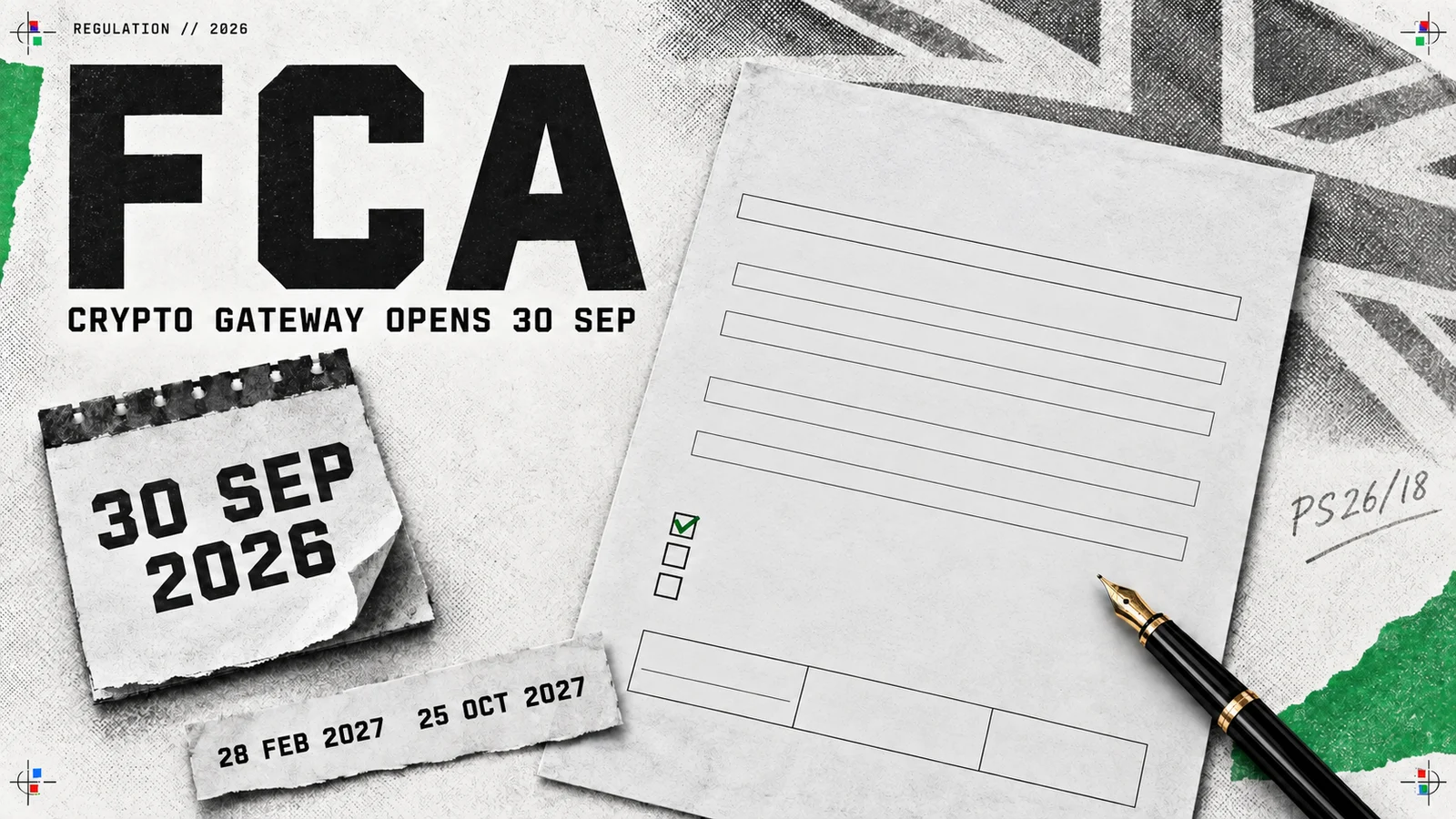
Firms that want to run a UK crypto trading platform can apply to the FCA between 30 September 2026 and 28 February 2027, to be ready when the regime starts on 25 October 2027. Until the regime starts, the FCA’s oversight of crypto firms “will continue to be limited to financial promotions and anti-money laundering controls”, its June 2026 announcement says.
| Date | What happens |
|---|---|
| 16 December 2025 | FCA consults on crypto trading rules in CP25/40 |
| 25 June 2026 | FCA board makes the trading platform instrument, FCA 2026/40 |
| 30 June 2026 | FCA publishes its final crypto rules |
| 30 September 2026 | Authorisation window opens |
| 18 November 2026 | Treasury makes the amending regulations, SI 2026/1219 |
| 28 February 2027 | Authorisation window closes |
| 25 October 2027 | The ban on exchanges trading their own capital takes effect |
“Getting ready for regulation starts with understanding how the regime applies to your business,” said David Geale, the FCA’s executive director of consumers, payments and competition, when the regulator issued guidance on the regime’s reach on 16 September 2026.

Sources
- FCA 2026/40: Cryptoassets (Trading Platforms, Transparency and Records) Instrument 2026api-handbook.fca.org.uk
- FCA PS26/11: Regulated cryptoasset activities, June 2026fca.org.uk
- The Financial Services and Markets Act 2000 (Cryptoassets) (Miscellaneous Amendments) Regulations 2026legislation.gov.uk
- FCA: FCA sets landmark crypto rules to cement the UK's place as a global hub, 30 June 2026fca.org.uk
- FCA: overview of the cryptoasset regime policy statementsfca.org.uk
- FCA CP25/40: Regulating cryptoasset activities, December 2025fca.org.uk
- FCA: crypto firms get guidance on how the new regime applies, 16 September 2026fca.org.uk
- ESMA interactive single rulebook: MiCA Article 76, operation of a trading platform for crypto-assetsesma.europa.eu
- ESMA interactive single rulebook: MiCA Article 149, entry into force and applicationesma.europa.eu
- ESMA interactive single rulebook: MiCA Article 143, transitional measuresesma.europa.eu