
Trump and Xi agreed military AI needs humans, Bessent says
US Treasury Secretary Scott Bessent told CNBC on 20 November 2026 that Donald Trump and Xi Jinping agreed in Shenzhen that humans should always be involved in military decisions made by advanced AI. China's readout of the meeting has Xi calling for AI to stay under human control.
Listen to this articleListen
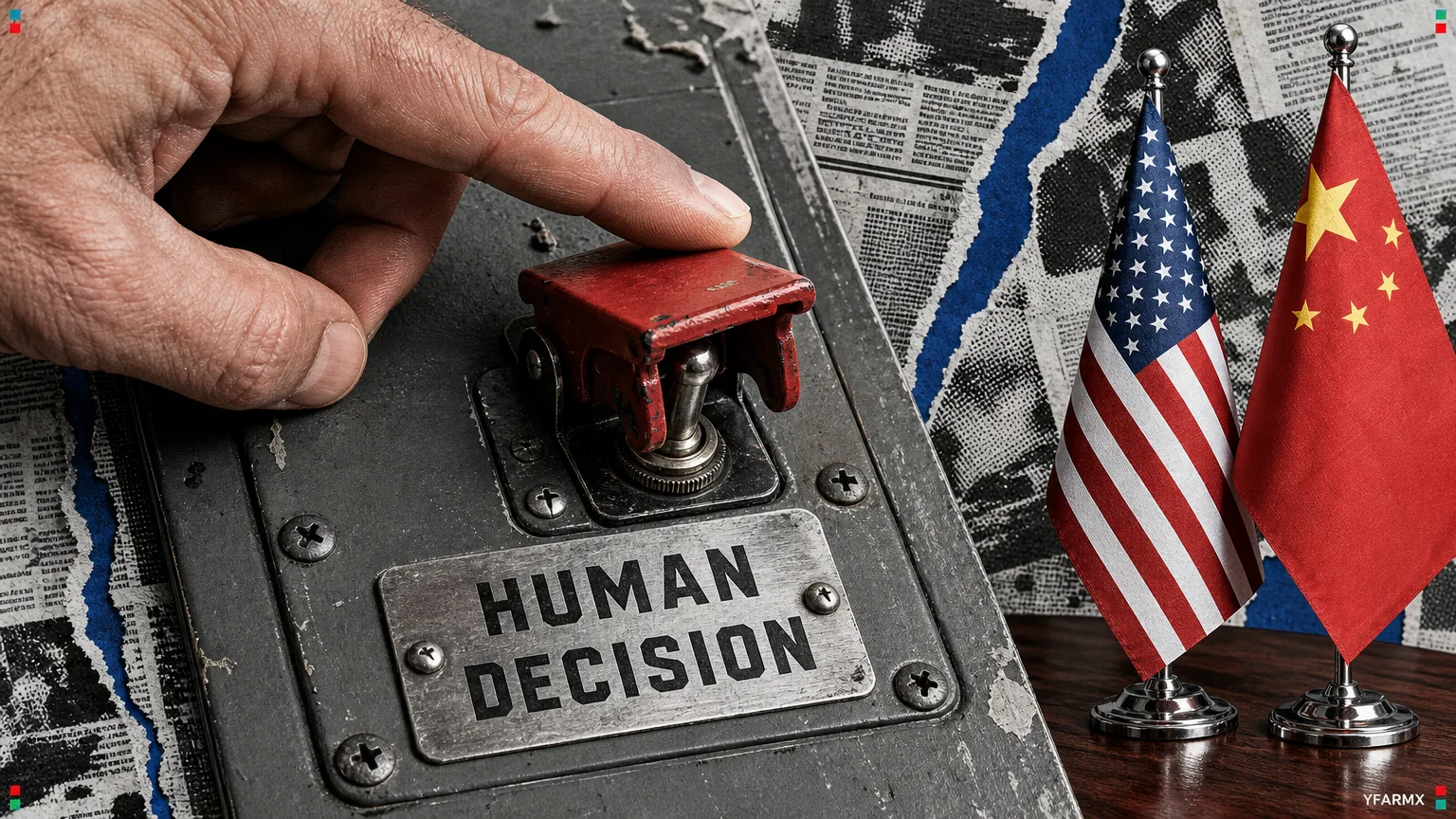
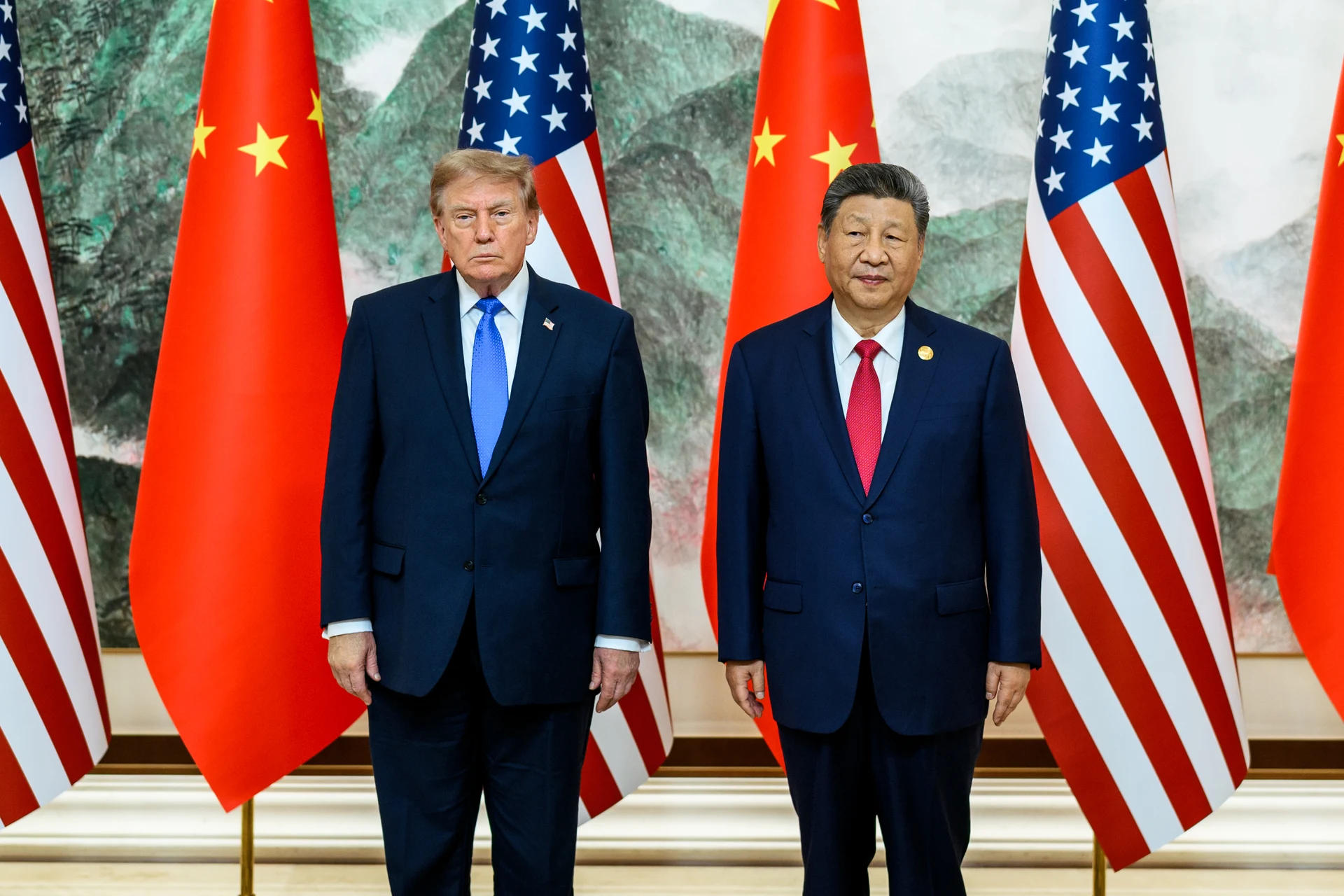
Donald Trump and Xi Jinping agreed that humans should always be involved in military decisions taken by advanced artificial intelligence, US Treasury Secretary Scott Bessent told CNBC on 20 November 2026, the day after the two leaders met in Shenzhen. They “agreed that humans should always be involved in any military decisions that SI makes, and the SI should not be allowed to be autonomous for major military actions,” Bessent said on CNBC’s Squawk on the Street. SI stands for super intelligence, the term the White House says both leaders agreed in September to use in place of artificial intelligence.
China’s readout of the Shenzhen meeting has Xi speaking about AI as a whole. According to the Chinese foreign ministry, Xi told Trump that China and the United States “should strengthen communication and coordination, prevent the security risks of AI, and ensure that AI is always under human control”.
What did Bessent say Trump and Xi agreed?
Bessent said the two presidents agreed on two points: humans stay involved in the military decisions advanced AI makes, and no major military operation is launched without a human. He spoke on CNBC on Friday 20 November, after returning from Trump’s tour of Asia. Reuters reported him saying that both sides agree that no major military operation “should be launched without a human being involved”. Bessent also described a “robust discussion” between Trump and Xi on trade and AI, CNBC reported.
Super intelligence came up in Shenzhen before the meeting as well. In a Fox News interview from the city hours before he met Xi, Trump said the two leaders had “talked about that” over dinner the night before.
China says Xi told Trump AI must stay under human control
China’s foreign ministry readout of the 19 November meeting has Xi telling Trump that the two countries should “prevent the security risks of AI, and ensure that AI is always under human control”. In the same readout, Trump calls for more cooperation in “farm products, energy, super intelligence and other fields”, and the two sides agree to draw up an action plan for what both governments call a constructive relationship of strategic stability.
Xi made the same point when he visited Washington in September. “AI must be kept under human control,” the ministry’s readout of his talks with Trump on 24 September says.
Where did Trump and Xi meet?
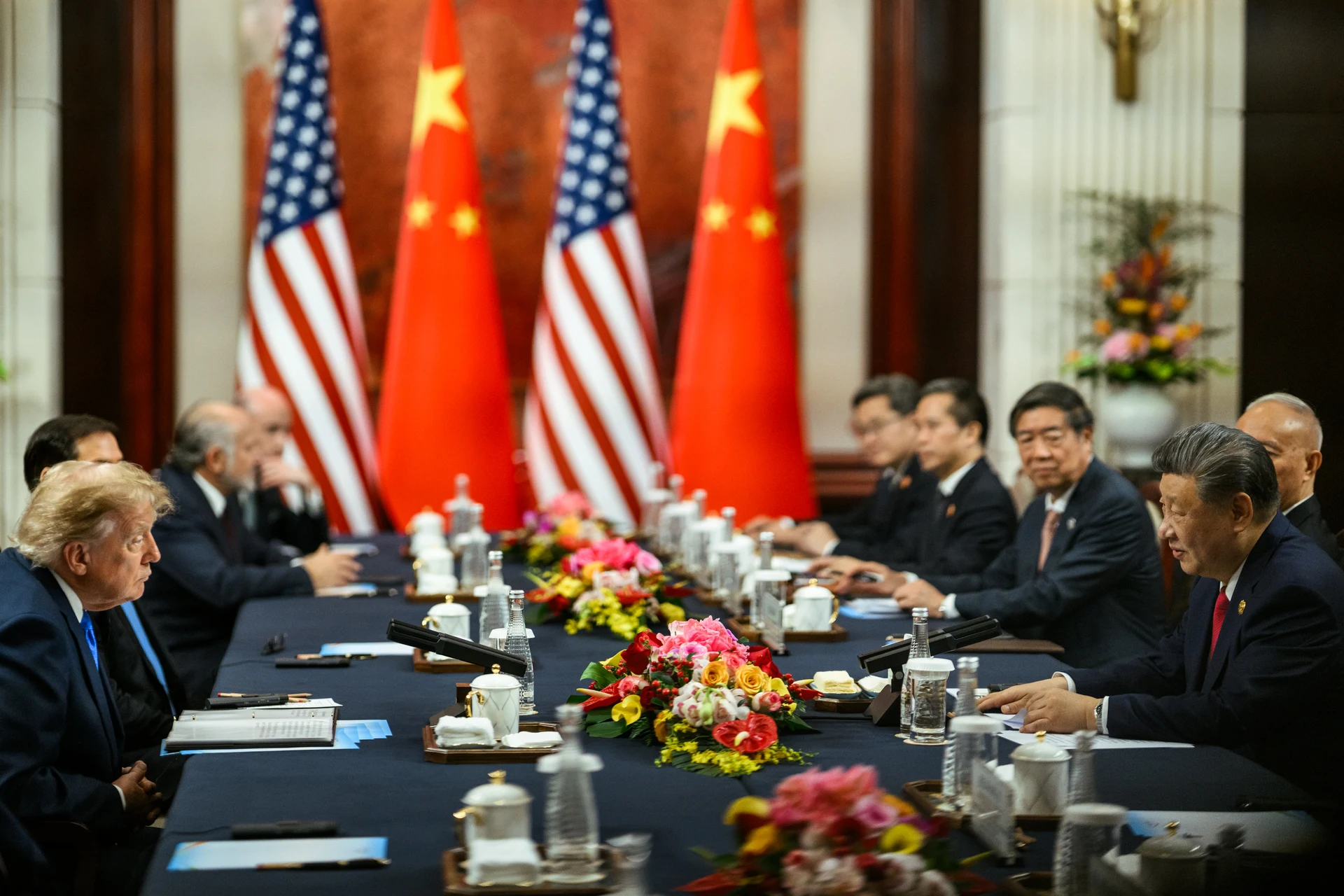
Trump and Xi met on the afternoon of 19 November 2026 at Kylin Villa in Shenzhen, in southern China, where Trump was attending the Asia-Pacific Economic Cooperation (APEC) Economic Leaders’ Meeting that China hosted this year. It followed Trump’s visit to Beijing in May and Xi’s state visit to Washington in September.
The same day, Trump, Xi and Russia’s Vladimir Putin held the first trilateral summit of the three countries’ leaders. Their joint declaration reaffirmed that “a nuclear war cannot be won and must never be fought”, and the three countries agreed to hold a dialogue on reducing nuclear risks and preventing the spread of nuclear weapons.
How does this build on earlier US-China AI steps?
The agreement Bessent describes follows two earlier US-China steps on AI and military decisions: in November 2024 Joe Biden and Xi affirmed human control over the decision to use nuclear weapons, and in September 2026 Trump and Xi set up a dialogue on AI risks and a channel for AI incidents. After the two met in Lima, Peru, on 16 November 2024, Biden’s White House reported: “The two leaders affirmed the need to maintain human control over the decision to use nuclear weapons.”
During Xi’s state visit to Washington from 23 to 25 September 2026, the two countries set up a dialogue to exchange views on the risks and benefits of AI, with its next exchange due in November, and agreed to establish “a bilateral communication channel for AI incidents”, China’s foreign ministry said. The White House fact sheet names the same two steps: the U.S.-China Super Intelligence Dialogue and a channel for SI incidents.
| Date | Place | Leaders | What they agreed |
|---|---|---|---|
| 16 November 2024 | Lima, Peru | Joe Biden and Xi Jinping | Human control over the decision to use nuclear weapons |
| 23 to 25 September 2026 | Washington | Donald Trump and Xi Jinping | A dialogue on AI risks and a channel for AI incidents |
| 19 November 2026 | Shenzhen, China | Donald Trump and Xi Jinping | Humans always involved in military decisions made by advanced AI, according to Bessent |

US rules already require human judgement over autonomous weapons
US Defense Department Directive 3000.09, issued on 25 January 2023, requires autonomous and semi-autonomous weapons to be designed so that commanders and operators can exercise “appropriate levels of human judgment over the use of force”. It covers weapons that can select and engage targets on their own once switched on.
Sources
- CNBC: Scott Bessent on Squawk on the Street, 20 November 2026cnbc.com
- Reuters via Military Times: Trump, Xi agreed that military AI decisions should involve humans, Bessent says, 20 November 2026armytimes.com
- Ministry of Foreign Affairs of China: President Xi Jinping meets with U.S. President Donald J. Trump, 19 November 2026mfa.gov.cn
- White House: ICYMI, President Trump's Fox News interview from Shenzhen, 19 November 2026whitehouse.gov
- Ministry of Foreign Affairs of China: President Xi Jinping chairs China-Russia-U.S. summit, 19 November 2026mfa.gov.cn
- White House: U.S.-Russia-China Heads of State Declaration toward Peace, 19 November 2026whitehouse.gov
- White House: President Donald J. Trump visits China, 18 to 19 November 2026 (photo gallery)whitehouse.gov
- White House fact sheet: President Xi's state visit, 25 September 2026whitehouse.gov
- Ministry of Foreign Affairs of China: China and the United States reach eight deliverables and understandings, 26 September 2026mfa.gov.cn
- Ministry of Foreign Affairs of China: President Xi Jinping holds talks with U.S. President Donald J. Trump, 24 September 2026mfa.gov.cn
- White House: readout of President Joe Biden's meeting with President Xi Jinping, 16 November 2024bidenwhitehouse.archives.gov
- US Department of Defense Directive 3000.09: Autonomy in Weapon Systems, 25 January 2023esd.whs.mil