Anthropic runs AI across 15 TV boxes, tests replication
Anthropic ran a model across 15 cheap TV boxes and separately tested replication in a simplified lab network. Its end-2026 forecast concerns future small-model capability.
Listen to this articleListen
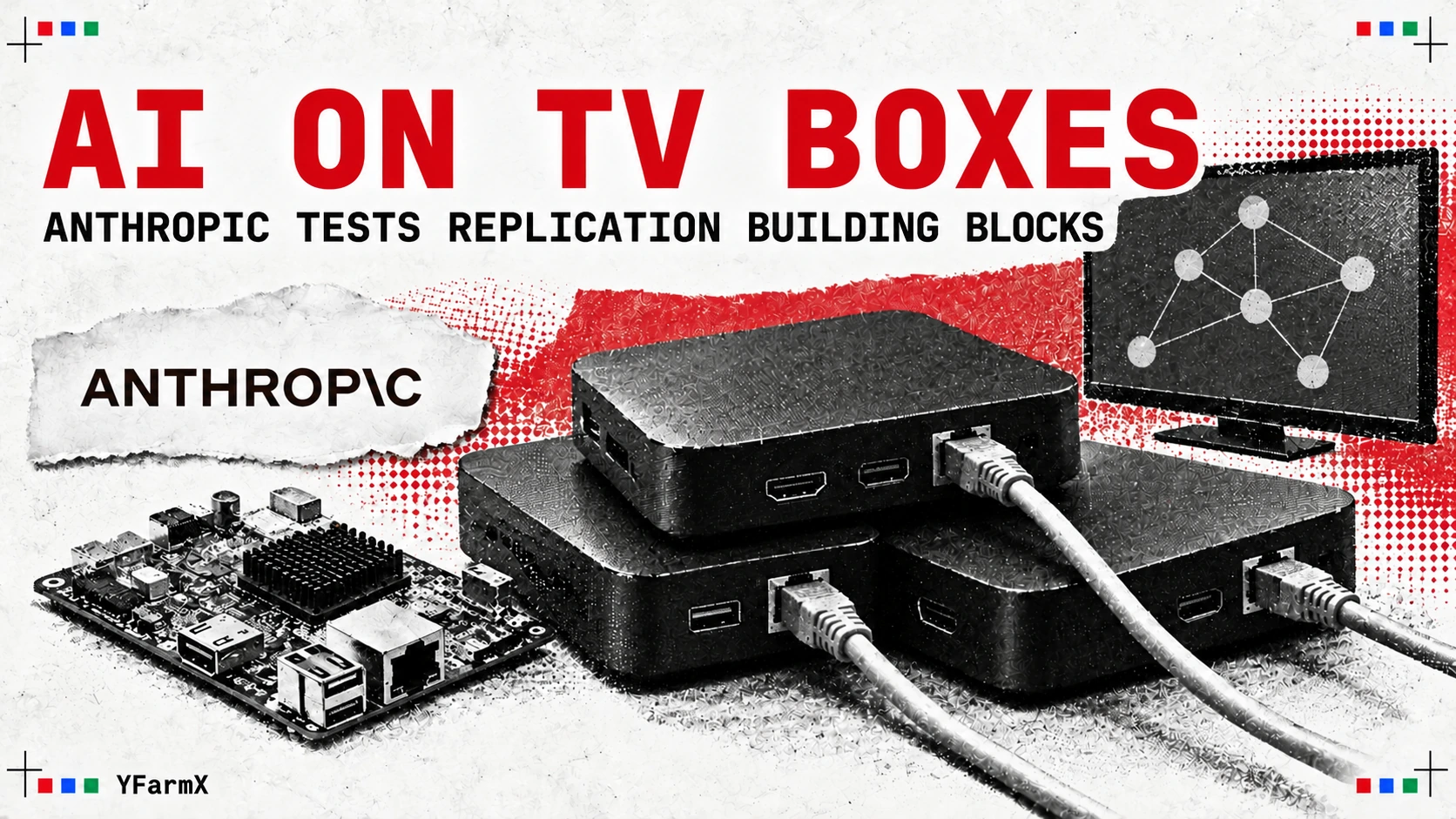
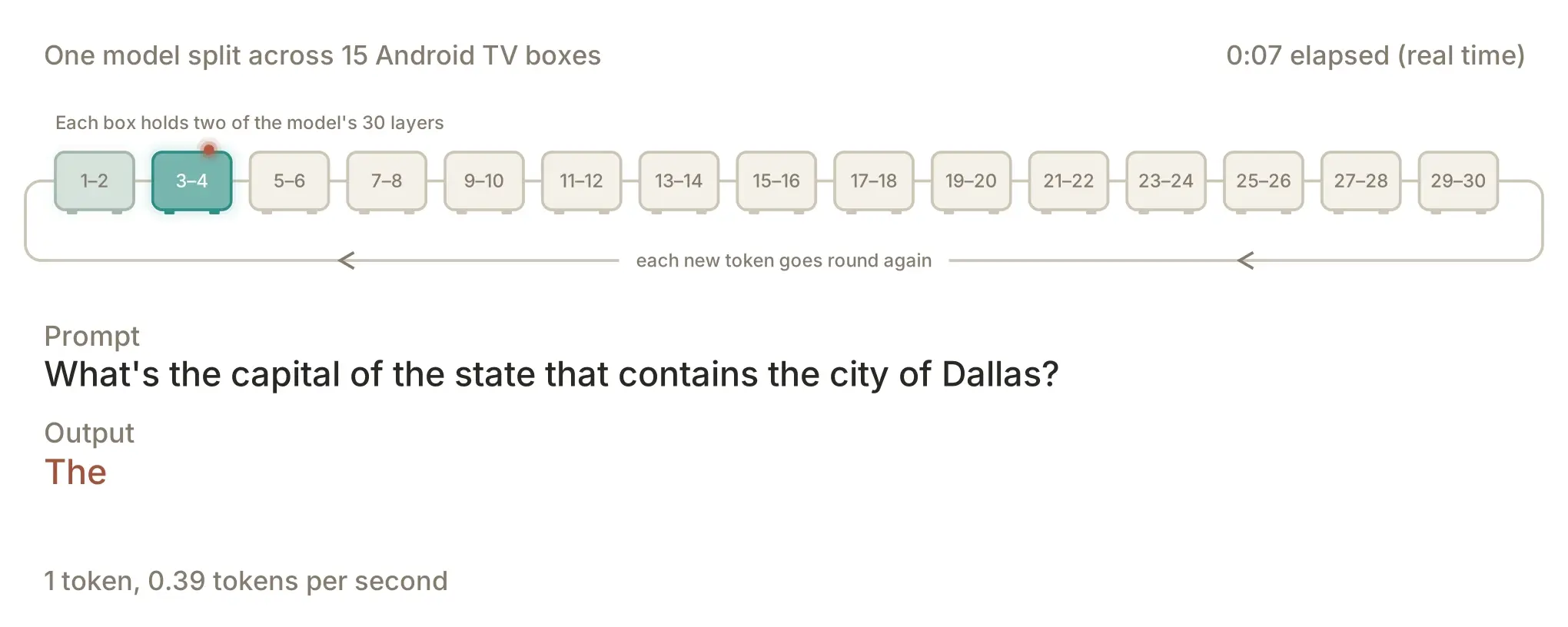
Anthropic has demonstrated an AI model running across 15 inexpensive Android TV boxes, alongside separate experiments on autonomous replication. Its 12 October research separates a physical hardware demonstration, simplified network tests and a forecast about future small models.
Fifteen TV boxes shared one model
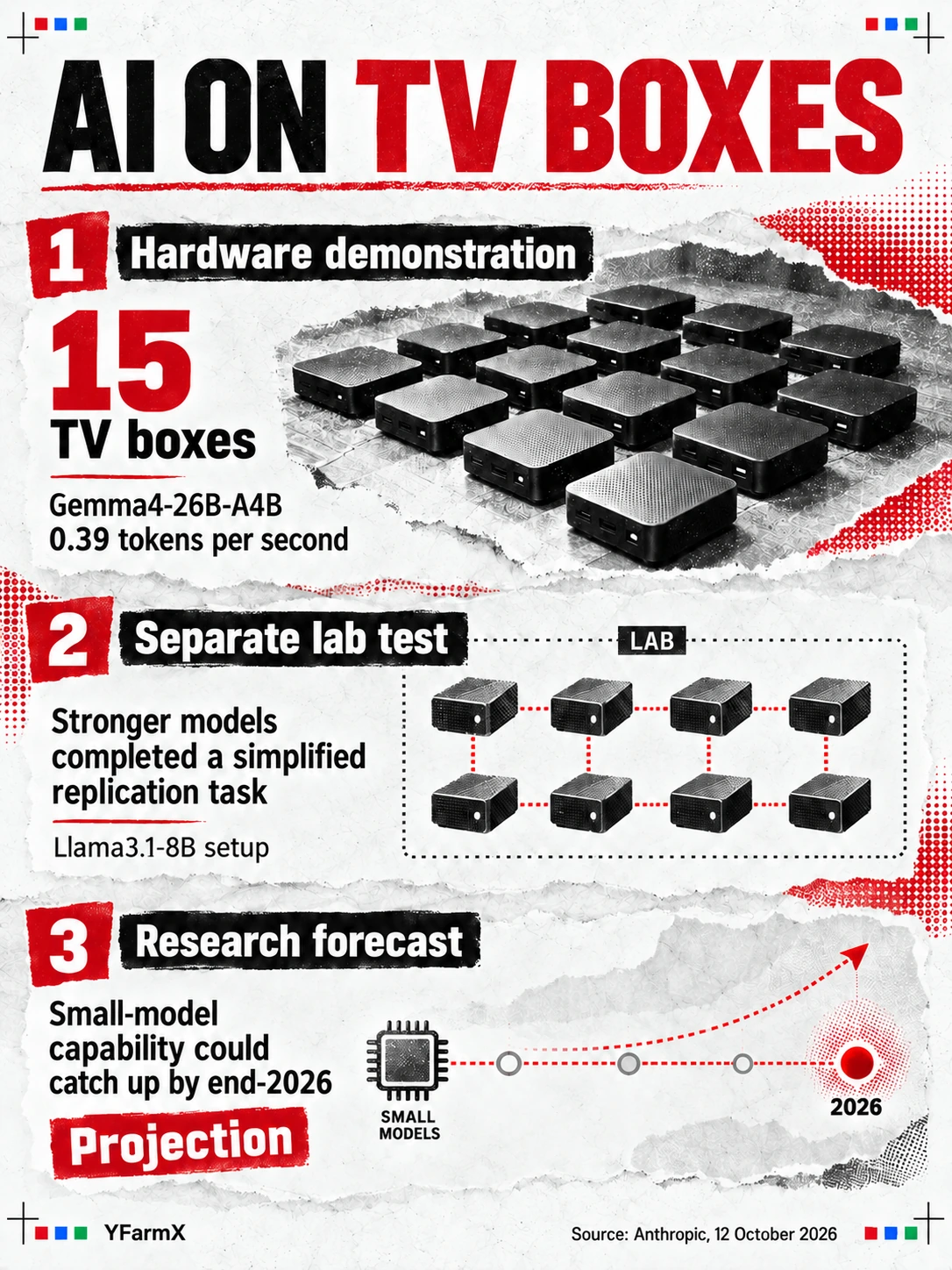
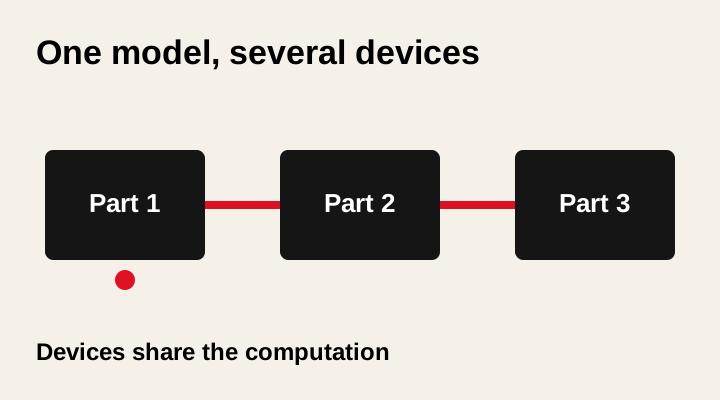
Gemma4-26B-A4B ran at 0.39 tokens per second across the connected boxes. Each held part of the model, allowing the group to pool its limited memory and computing power.
The result establishes that cheap consumer hardware can collectively run a capable model. Anthropic’s separate replication experiments examined whether agents could prepare new machines to run AI software.
The replication experiment used a simplified lab network
The lab tests gave agents easy access to targets and asked them to establish Llama3.1-8B inference. Larger agents ran through a separate inference server; successful setup triggered another agent instance. GLM-5.2 performed the full simplified task reliably.
This measures the competence a future, sufficiently small model would need. Anthropic projects that small-model capability could reach that level by the end of 2026, using a general benchmark trend as a rough proxy.
Earlier research demonstrated replication on GPU servers
Palisade Research reported autonomous replication across vulnerable servers in a May 2026 preprint. Its agents exploited test applications, transferred model weights and supporting software, and started working copies on the target machines. Successful replicas could continue the process across further targets.
The researchers tested several open-weight models and also used larger hosted models to install an open-weight model as the payload. An open-weight model makes its numerical parameters available to download, allowing compatible hardware to run it locally.
Consumer devices face the same practical requirements. Copying a model’s files is one step. Running those files requires enough memory, compatible software and sufficient computing power. An agent also needs the ability to complete each task and recover from errors.
Replication research therefore tests two connected constraints: the software’s ability to establish another working instance, and the hardware’s ability to run it. As those constraints ease, defenders face the practical task of finding and disabling every active copy across a network.