
China targets 2030 for its national blockchain network
China's national informatisation plan sets a 2030 target for a largely completed national blockchain network. The 23 October announcement places the network alongside communications, computing and digital public infrastructure.

Listen to this articleListen
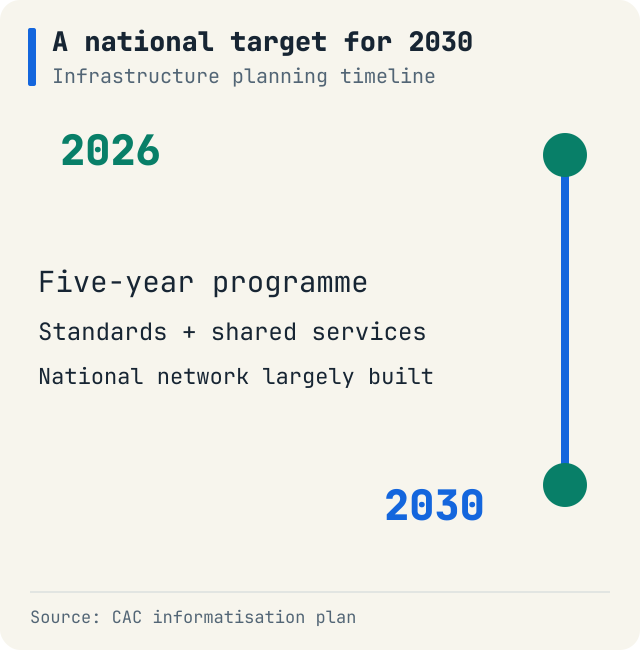
China has set 2030 as the target for largely completing a national blockchain network. The objective appears in the national informatisation plan announced on 23 October by the office of the Central Cyberspace Affairs Commission.
The network forms part of a broader programme covering communications, computing, digital industry and public services. The new target adds a date to the national blockchain infrastructure policy that China outlined earlier in October.
The target is part of the five-year plan
The 2026–2030 plan says the national blockchain network should be largely completed by 2030. Its infrastructure objectives also include next-generation communications networks, development of an intelligent internet and the timely start of commercial 6G services.
Those are planning objectives. They describe the position the authorities want to reach over the five-year period, with implementation monitored through coordination between central departments and regional governments.
Shared records support industry and public services
A national blockchain network provides infrastructure for organisations to maintain and verify shared records. China’s policy connects digital infrastructure with the physical economy, public administration and services used by people and businesses.
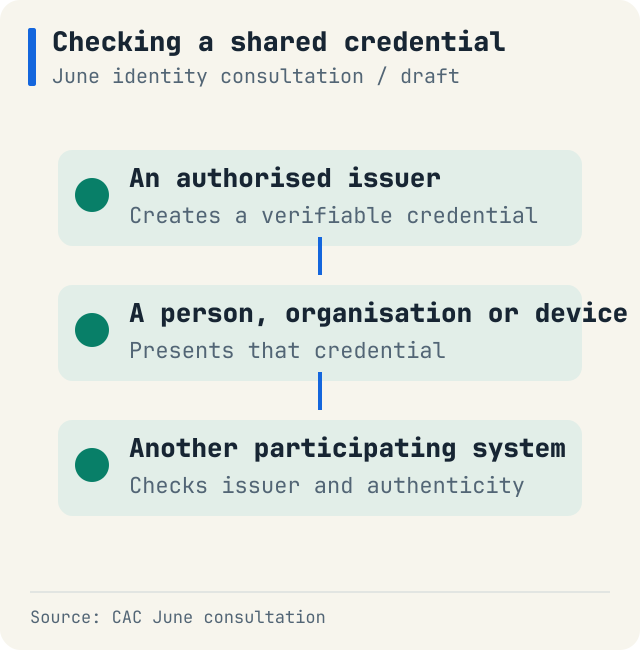
One concrete example appears in the regulator’s June consultation on distributed digital identity. The draft describes a nationally coordinated blockchain network using common technical standards and access requirements. Its identity services cover registering identities, checking them and issuing and authorising verifiable credentials.
The consultation applies that identity concept to people, organisations, industrial equipment and objects. It describes a way for credentials to work across systems, with participants able to check a claim against an authorised issuer. The June text remains a consultation document .
Separately, the National Data Administration described Shanghai’s national-network hub in January. Its account places blockchain within trusted data-sharing services, giving an existing implementation context for the national infrastructure programme.
Central coordination will track implementation
The October announcement assigns coordination to the Central Cyberspace Affairs Commission and its office. It calls for cooperation between departments and levels of government, guidance suited to different categories of work, and monitoring of how the plan is implemented.
The published plan groups its tasks around infrastructure, technological innovation, industry, governance, public services, regional development and the supporting security and standards frameworks.

Sources
- Cyberspace Administration of China: plan announcement, 23 October 2026cac.gov.cn
- Cyberspace Administration of China: national informatisation plancac.gov.cn
- Cyberspace Administration of China: distributed digital identity consultation, 18 June 2026cac.gov.cn
- National Data Administration: Shanghai blockchain hub and trusted data spacenda.gov.cn