Google offers $150,000 for smaller, verified quantum circuits
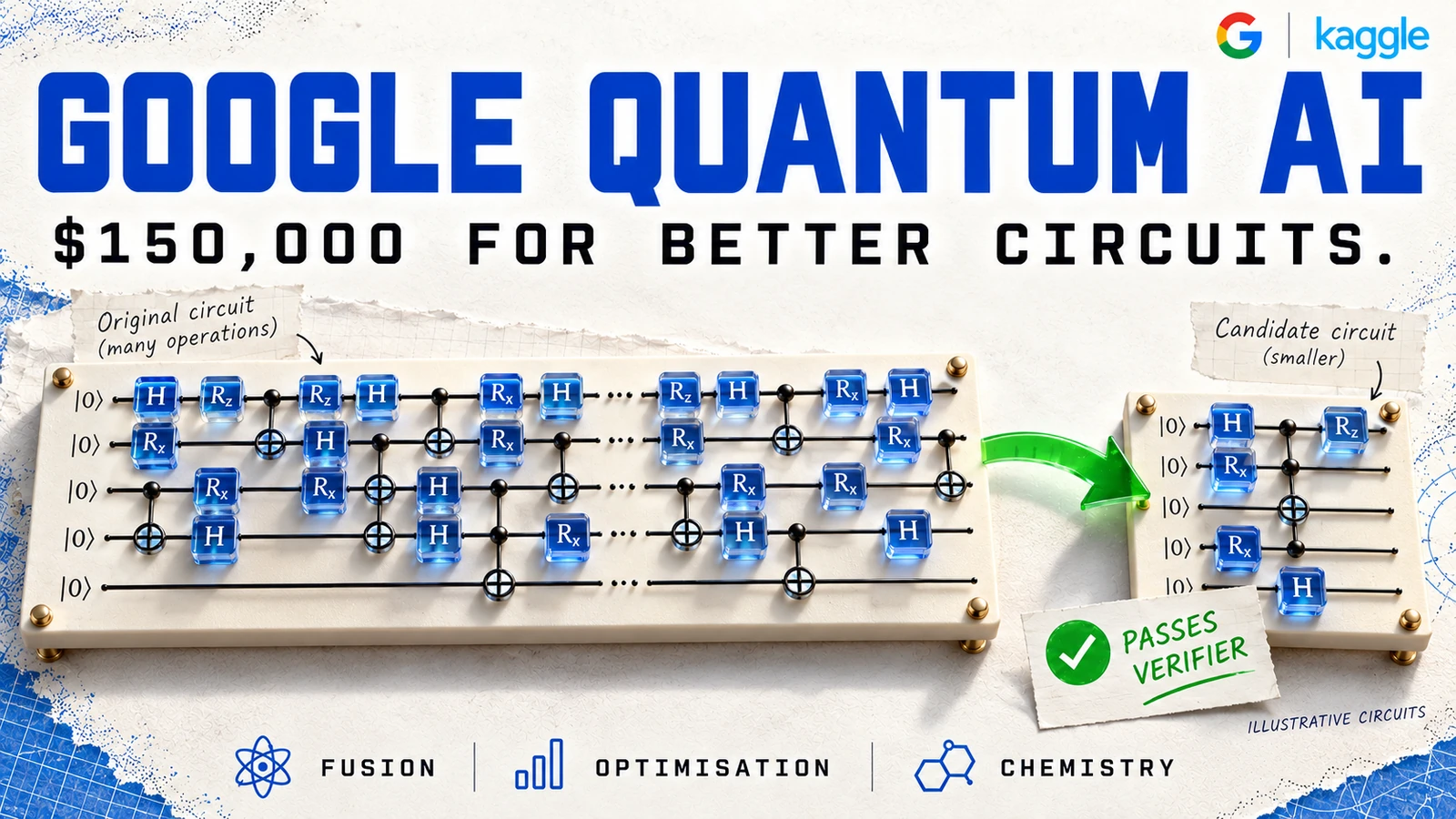
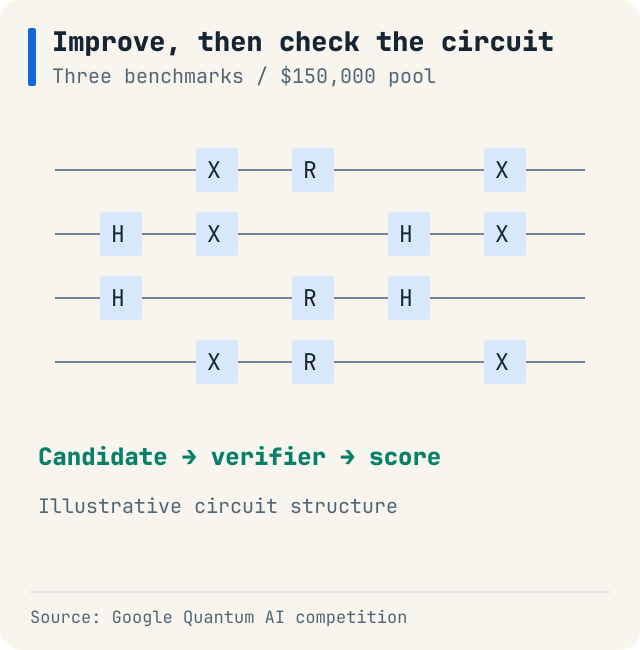
Google Quantum AI has opened a $150,000 Kaggle competition to reduce the resources needed by three quantum-circuit benchmarks. Reference circuits and verifiers let entrants test AI-generated candidates against explicit correctness and cost requirements.
Listen to this articleListen
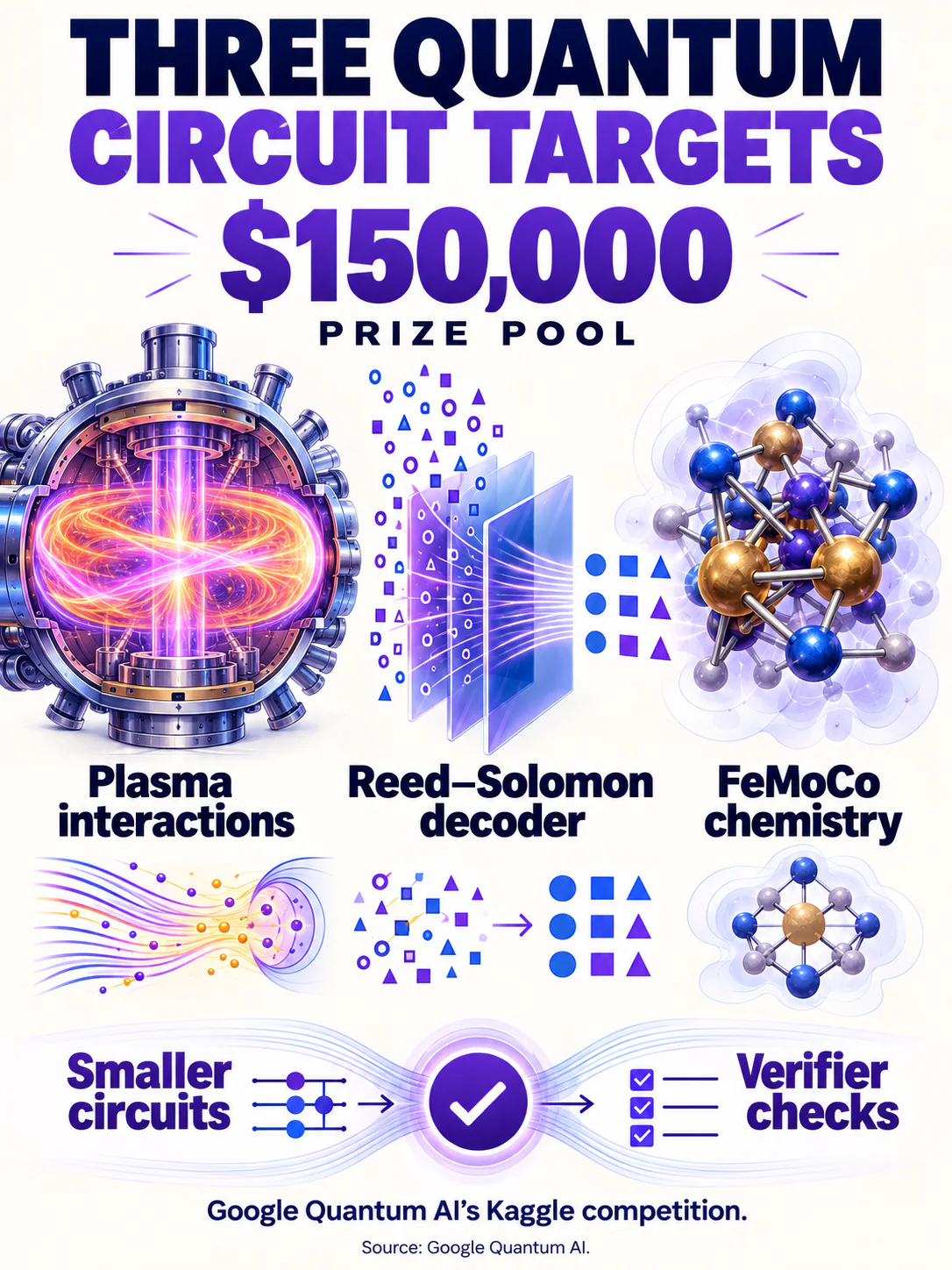
Google Quantum AI is offering a $150,000 prize pool for making quantum circuits use fewer resources. Its Kaggle competition provides three reference tasks and a verifier for each, giving entrants a way to check candidate improvements.
The 21 October announcement connects the contest with AI coding agents. An agent can propose a change, run the verifier and use the result to guide another attempt. The candidate still has to satisfy the benchmark’s correctness conditions.
Three scientific tasks provide the targets
The fusion-related task concerns the inverse-distance calculation used when simulating how charged particles interact in hot plasma. The optimisation task asks for a decoder for a Reed–Solomon error-correcting code within a quantum algorithm.
The chemistry task concerns FeMoCo, the iron–molybdenum cluster in the nitrogenase enzyme. Entrants work on the mathematical factorisation used by the simulation and the circuits that load its parameters.
Google supplies the reference circuits and standalone verifiers under Apache 2.0. Their scores account for the logical qubits and operations required, giving entrants a defined resource target to improve.
The earlier 86.1% result uses a combined score
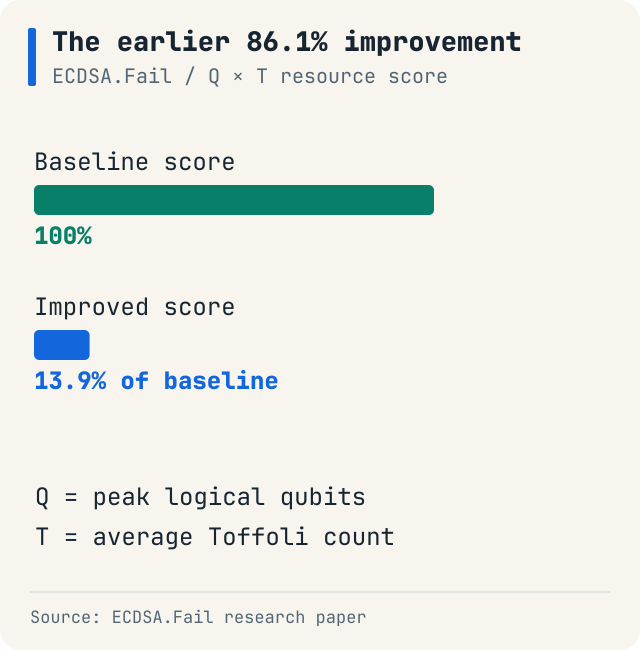
The separate ECDSA.Fail research reports an 86.1% improvement in a score for elliptic-curve point addition used in Shor’s algorithm. Its score multiplies peak logical-qubit use by average executed Toffoli count.
That combined score lets contributors trade memory against operations.
The verifier makes structured circuits practical to test
Google’s companion paper describes a restricted circuit family called kickmix. Its structure allows efficient classical testing of sampled inputs, supporting approximate correctness with high confidence under the stated conditions.
This gives an AI search process feedback on both correctness and resource use. Logical qubits and gate counts are useful resource measures; a physical machine also has the overheads of error correction, connectivity and scheduling.
Google says internal Gemini runs have already improved on the public baselines. The researchers published hashes of those circuit files and plan to reveal them after the competition, so the later files can be checked against the commitments made now.