Quantum Art proposes a new way to simulate waves
Quantum Art researchers have proposed a quantum algorithm for wave propagation that prepares states directly on a resonant surface.
Listen to this articleListen
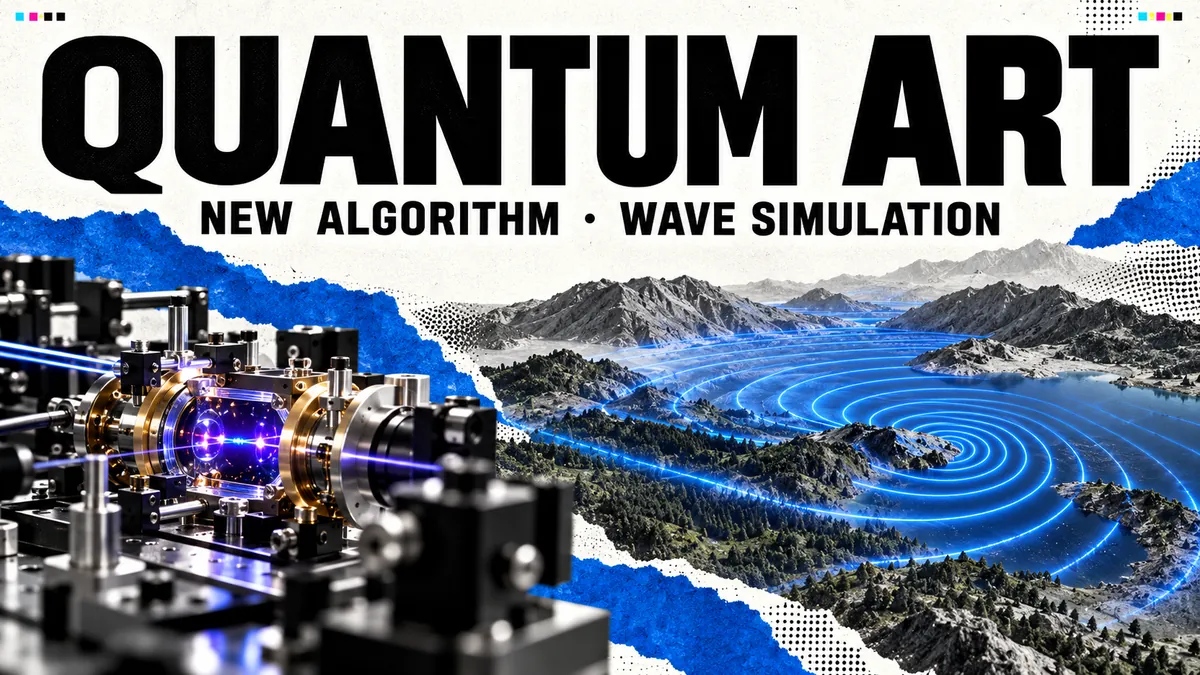
Quantum Art researchers have proposed a quantum algorithm for simulating how waves travel, using the geometry of the wave equation to prepare the relevant quantum states directly. The approach could apply to problems involving sound, radio signals and other waves, according to the company’s 26 October announcement.
The team’s research paper, submitted in September, describes a theoretical method for a frequency-domain wave equation. Its performance and large-scale hardware requirements are projections to be tested as quantum computers develop.
Why wave simulation is hard
Engineers use wave simulations to study how sound moves through a room, how radar signals scatter, or how vibrations travel through materials. A computer divides the space into points and calculates how the wave behaves across them. More detail or a larger area can mean many more points to compute.
The Quantum Art paper focuses on the Helmholtz equation, which describes wave behaviour at a chosen frequency. The researchers examine difficulties that arise when a quantum linear-system method encounters a badly conditioned operator: small changes in a calculation can be amplified, making the computation more demanding.
Prepare the useful states directly
In one approach, a quantum algorithm prepares a broad set of possible states and then keeps the part corresponding to the wave solution. The Quantum Art researchers say that selecting the useful part can become extremely unlikely as the model grows, requiring many repetitions.
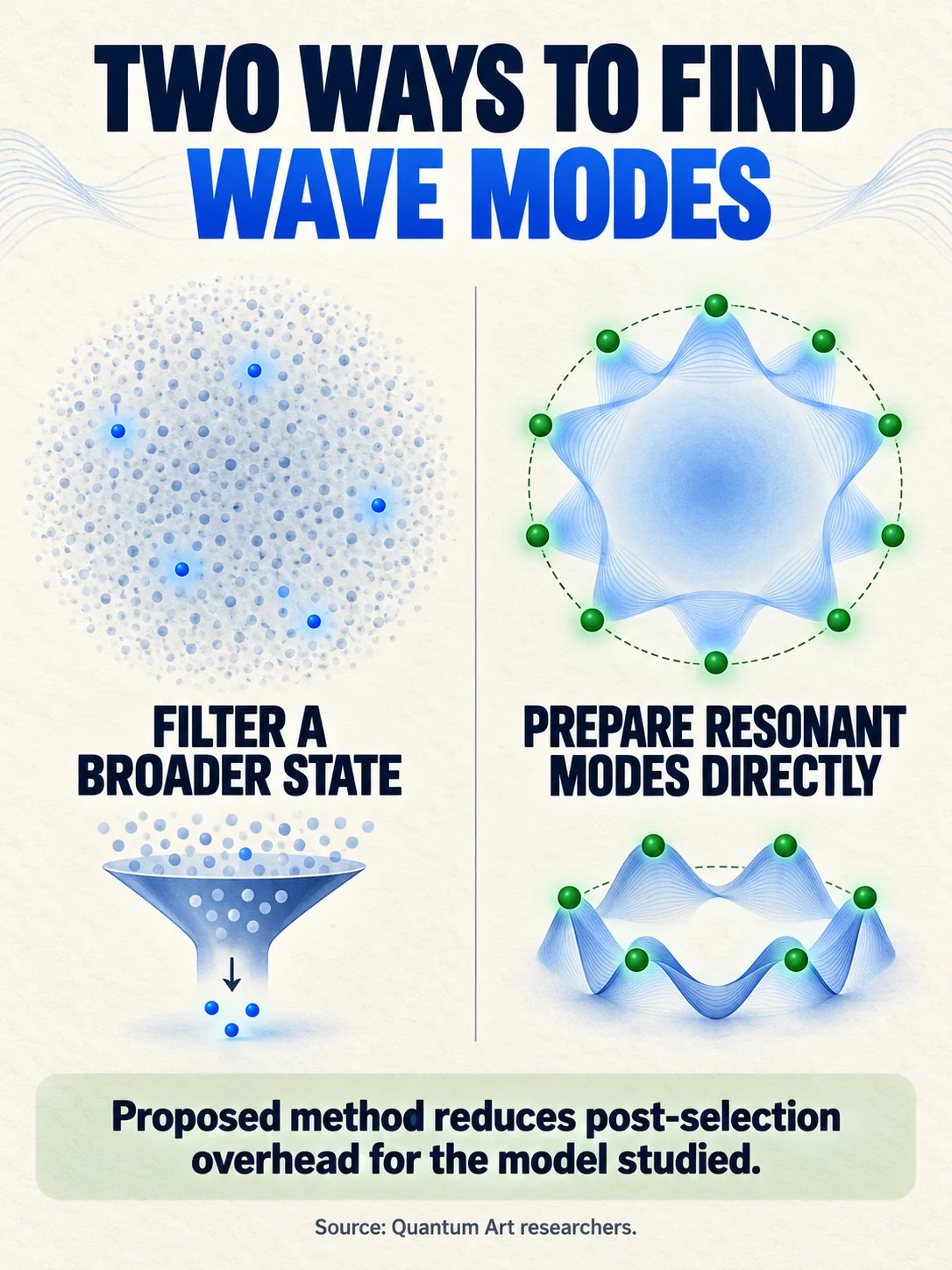
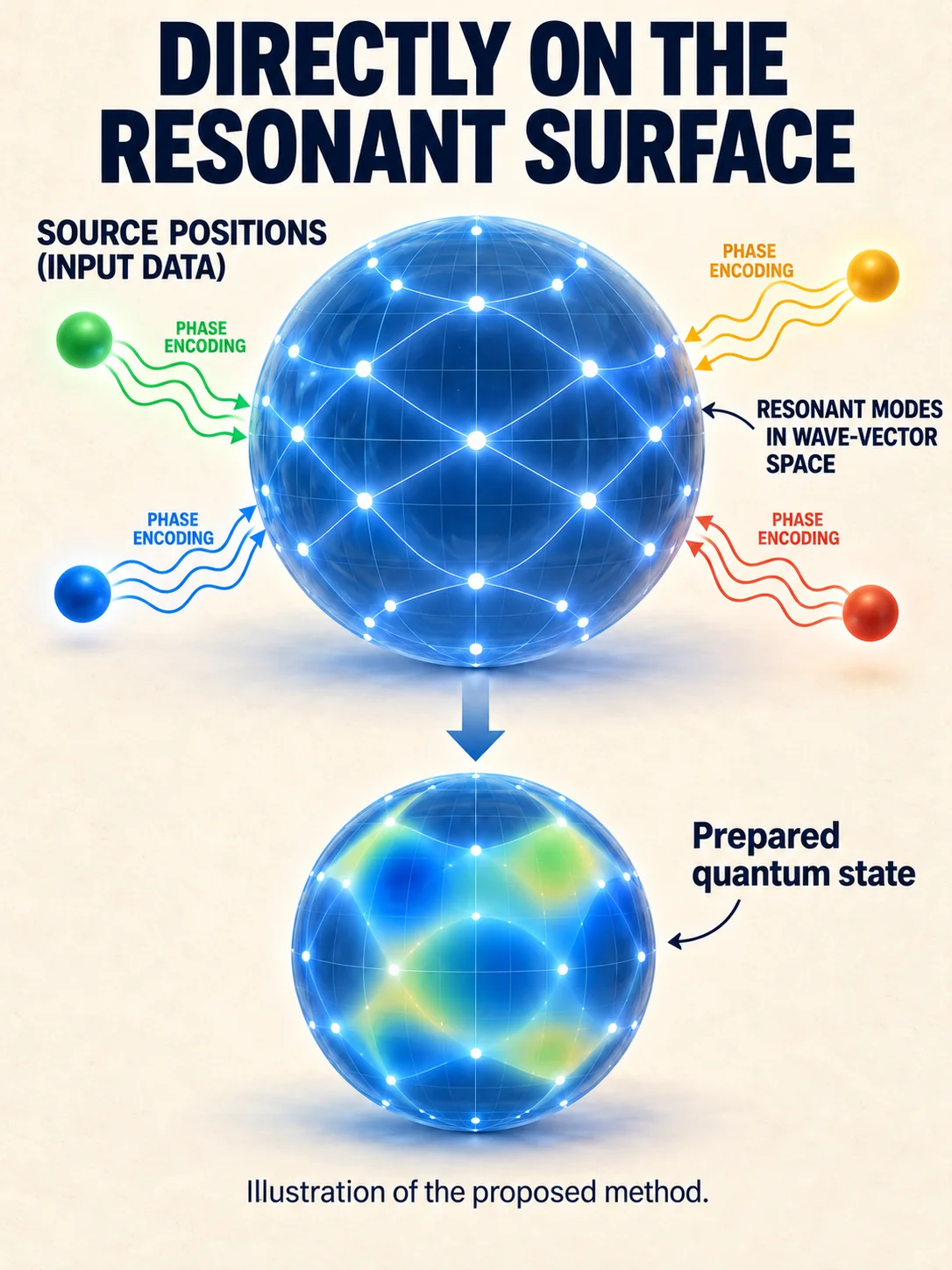
Their proposed method instead prepares states on the equation’s resonant surface, the set of wave patterns matching the relationship between frequency and propagation speed. The paper says the resulting success probability depends on the number of sources and is independent of the size of the computational domain in the model it studies.
From an algorithm to a working simulation
Quantum Art develops trapped-ion quantum computers, in which controlled ions act as qubits. The new paper is an algorithm proposal; implementing large calculations would depend on suitable hardware, the cost of preparing inputs and the information that can be extracted from the final quantum state.
Researchers have studied quantum wave simulation for years. A 2019 paper listed by NIST used different quantum techniques to simulate the wave equation. Quantum Art’s contribution is the proposed geometric state-preparation method for the frequency-domain problem described in its paper.