Moth Quantum encodes a pixel-art cat across 120 IBM qubits
Moth Quantum wrote 1,568 numbers, a 28×28 colour pixel-art cat, across all 120 qubits of an IBM Nighthawk r2 processor and read them back, the most values recovered this way by its count. A 784-letter DNA sequence came back 92% correct.
Listen to this articleListen
Moth Quantum has written a small colour picture into every qubit of an IBM quantum processor and read it back, recovering 1,568 numbers. The company announced the result on Monday and calls it a new record for encoding data on a quantum computer and reading it back. The method, called Tessa, is set out in a paper by Moth researcher Daniel Bultrini, posted to arXiv on Friday and not yet peer reviewed.
Loading data is a practical problem for quantum computers. “Every quantum computer has to get data in before it can do anything useful with it, and that step has been a bottleneck for fields like quantum machine learning,” Bultrini said. His test image was a 28 by 28 pixel-art cat he drew himself, which Moth calls QCAT.
What did Moth put on the chip?
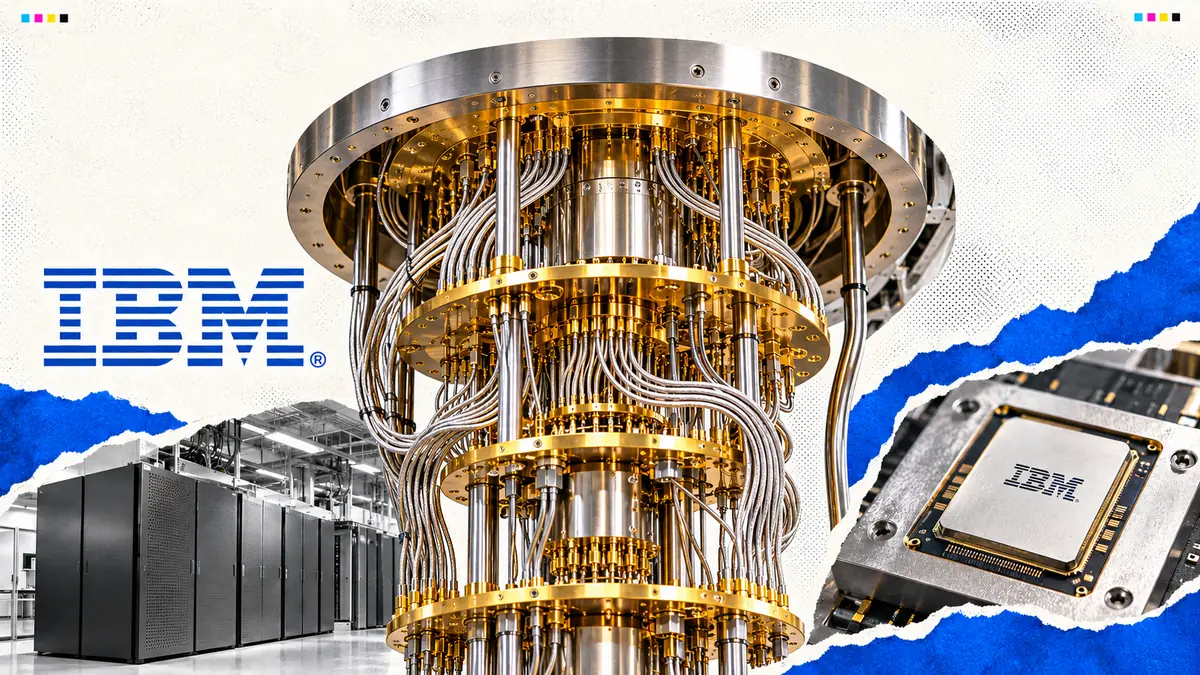
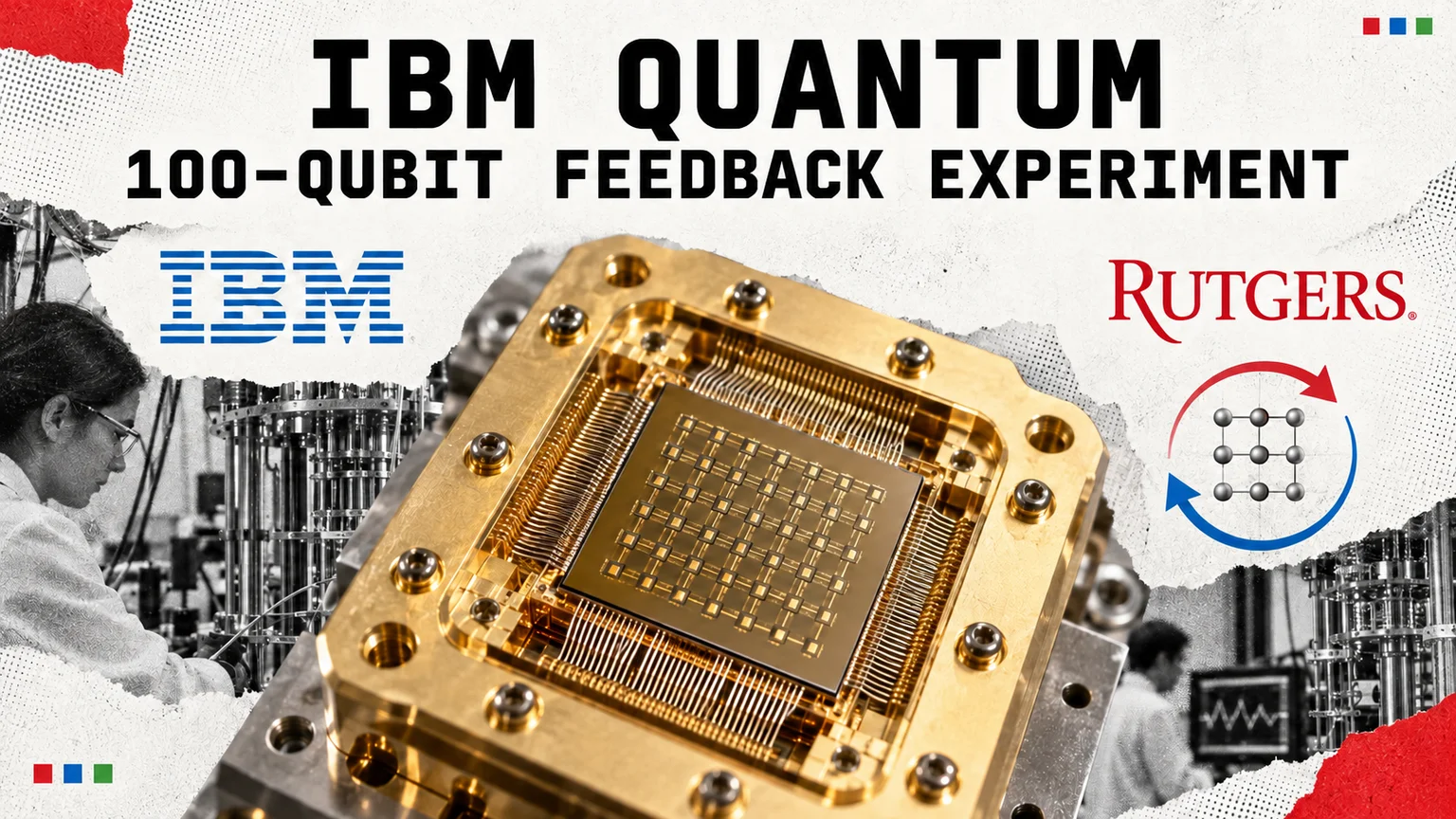
Moth encoded two numbers for each of the cat’s 784 pixels, its brightness and its colour, spread across all 120 qubits of IBM’s Phoenix processor. Phoenix is an IBM Nighthawk r2 chip, whose 120 qubits sit in a square grid joined by 218 tunable couplers. A greyscale version of the same cat used one number per pixel, 784 in all. Moth repeated both runs on Fez, a 156-qubit IBM Heron r2 chip, with a smaller 21 by 21 image.
IBM announced a larger Nighthawk design last week, and Nighthawk r2 is the version clients use today. Moth ran its experiments on IBM Quantum credits from IBM’s start-up programme, and the paper says the views expressed are those of its authors.

How does Tessa fit so much onto the chip?
Tessa splits the grid like a chessboard into data qubits and address qubits, so every link on the chip joins one of each. Because the pattern follows the chip’s own wiring, the circuit needs no extra steps to shuffle qubits around. Each data qubit holds one value for every on-off combination of the address qubits next to it: 16 for a qubit in the middle of the grid, which has four neighbours, eight on an edge and four in a corner.

On Phoenix’s grid that adds up to 792 slots, so the 784 pixels fill all but eight, and adding colour doubles the count to 1,568 values. The cost comes at the reading stage. Each value is estimated from a share of the measurements that shrinks as a qubit gains neighbours, so the number of runs needed grows exponentially with how connected each qubit is. The paper says that cost “can be kept small, as we did here.” For the pictures, Moth measured each circuit 8,192 times in each measurement setting.
How good was the picture that came back?
The greyscale cat came back close to the original, and the colour version came back noisy. For the 784-value run on Phoenix, the recovered brightness matched the input with a correlation of 0.96, and the average error of 0.13 fell to 0.075 after Moth’s correction step. Adding colour cut the brightness correlation to 0.69, and the correction no longer improved the brightness error. Moth used no error mitigation, because, the paper says, “our aim is to test the encoding itself.”
| Run | Values | Brightness error, then after correction | Brightness correlation with input |
|---|---|---|---|
| Phoenix, greyscale, 28 × 28 | 784 | 0.130, then 0.075 | 0.96 |
| Phoenix, colour, 28 × 28 | 1,568 | 0.152, then 0.154 | 0.69 |
| Fez, greyscale, 21 × 21 | 441 | 0.131, then 0.078 | 0.95 |
| Fez, colour, 21 × 21 | 882 | 0.144, then 0.134 | 0.73 |
For the colour runs, the brightness error on real hardware was two to three times the error in Moth’s own simulation of each chip’s noise. The paper concludes that its experiments “returned recognisable images from every qubit of two chips.”
How does Moth count this as a record?
Moth compares Tessa only with experiments that wrote a list of arbitrary numbers into a real quantum processor and read the whole list back. On that count, the paper lists the previous best as QCrank, which recovered 128 values from 12 qubits of a trapped-ion machine. A study this year recovered 1,024 pixels from 13 qubits of IBM’s Fez, and the paper leaves it out of its count because it encodes “a unitary tensor-network approximation of the data, not an arbitrary list of reals”.
Other ways of encoding data can store far more values in theory, the paper notes, but on real chips the extra steps needed to route signals between qubits limit how much can be loaded and read back.
A DNA sequence came back 92.1% correct
Moth also wrote biological sequences onto Phoenix, and with the better of its two methods, a 784-letter stretch of human mitochondrial DNA came back with 92.1% of its letters right. A messenger RNA sequence of 1,582 letters scored 83.8%. Proteins came back between 21.0% and 73.4% correct: Sonic hedgehog scored best, and p53, which Moth’s release calls the “guardian of the genome”, came back 70.5% correct.
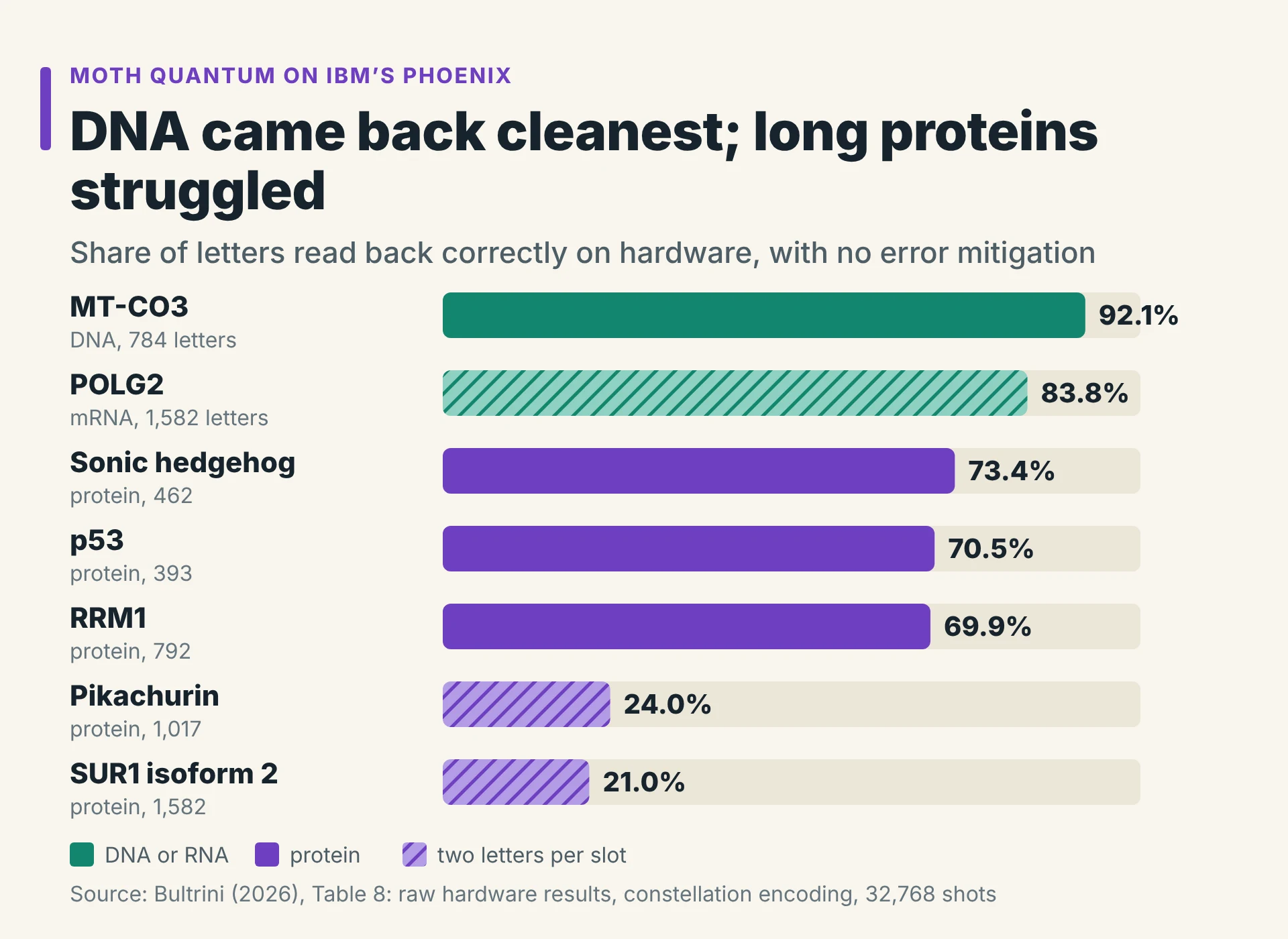
The longest sequences were packed two letters to a slot, and the two longest proteins scored lowest. The paper counts exact letters only, because “in biology even a single wrong nucleotide or amino acid can have deadly consequences.”
Moth has put Tessa online to try
Moth has made Tessa’s image mode available to experiment with on its Atlas platform, and the paper’s code and data are on GitHub. Harry Kumar, Moth’s co-founder and CCO, said: “The quantum applications that will have the greatest impact, including those that work closely with AI, will depend on breakthroughs such as Tessa in order to meet the expectations that have been set.”
Sources
- arXiv: Bultrini, Tessa, encoding classical data across an entire quantum processor, 13 November 2026arxiv.org
- arXiv: the Tessa paper in full, version 1arxiv.org
- Moth: new record for encoding and reading back data on a quantum computer, 16 November 2026prnewswire.co.uk
- IBM: Nighthawk r2, 120 programmable qubits and 218 couplersibm.com
- arXiv: Balewski et al., Quantum-parallel vectorized data encodings and computations on trapped-ions and transmons QPUs (QCrank)arxiv.org
- Moth: companymothquantum.com
- GitHub: moth-quantum/Tessa, the paper’s code and datagithub.com