IBM and Rutgers control quantum chaos across 100 qubits
A Nature Physics study used repeated measurements, resets and feedback on up to 100 qubits of an IBM Heron processor. The experiment probes control of quantum chaos.
Listen to this articleListen
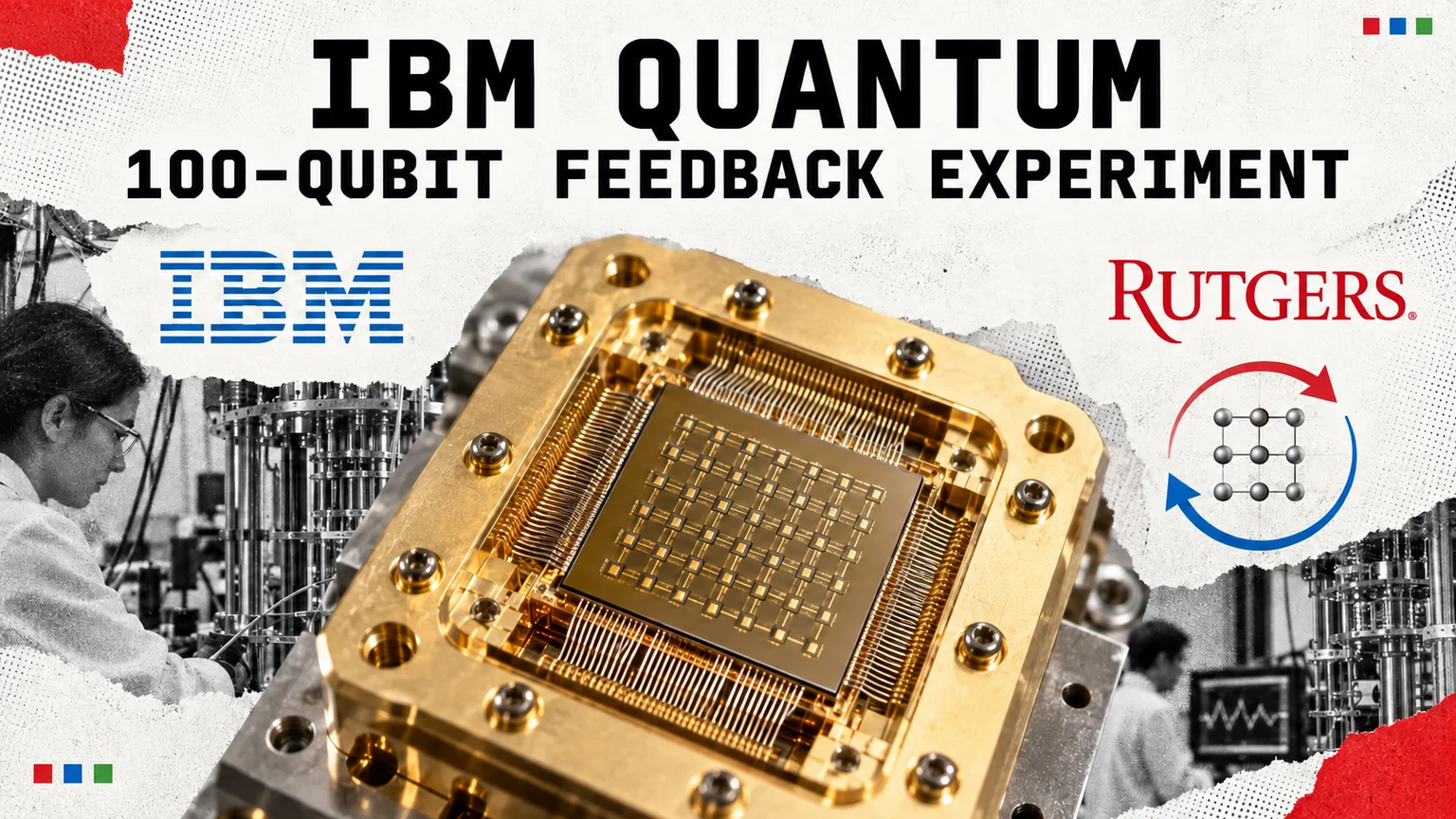
Researchers have demonstrated repeated measurements, resets and feedback across up to 100 qubits on an IBM quantum processor. The Nature Physics study, published on 9 October 2026, examines how these operations can control quantum chaos.
The experiment used IBM Quantum Heron, a superconducting processor with 156 qubits, according to Rutgers’ account. The results demonstrate repeated control operations that future quantum error-correction systems will need.
The researchers ran thousands of gates and checks
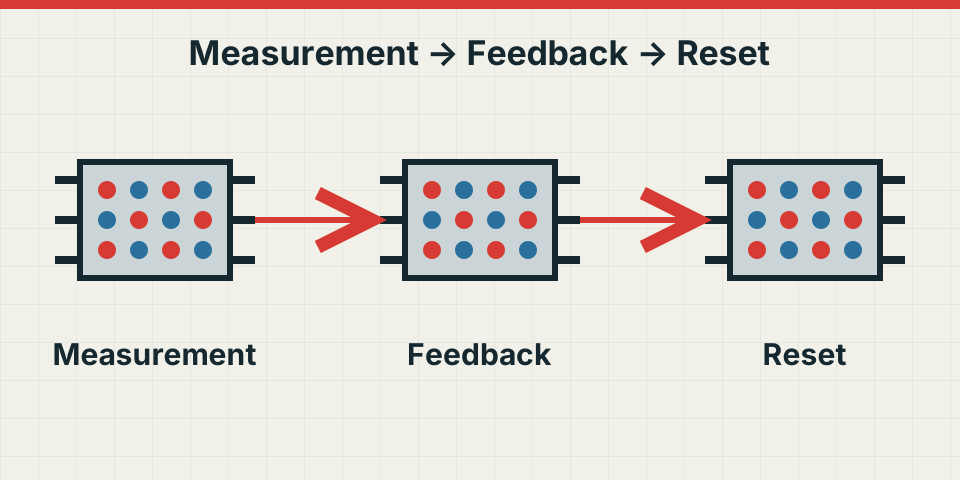
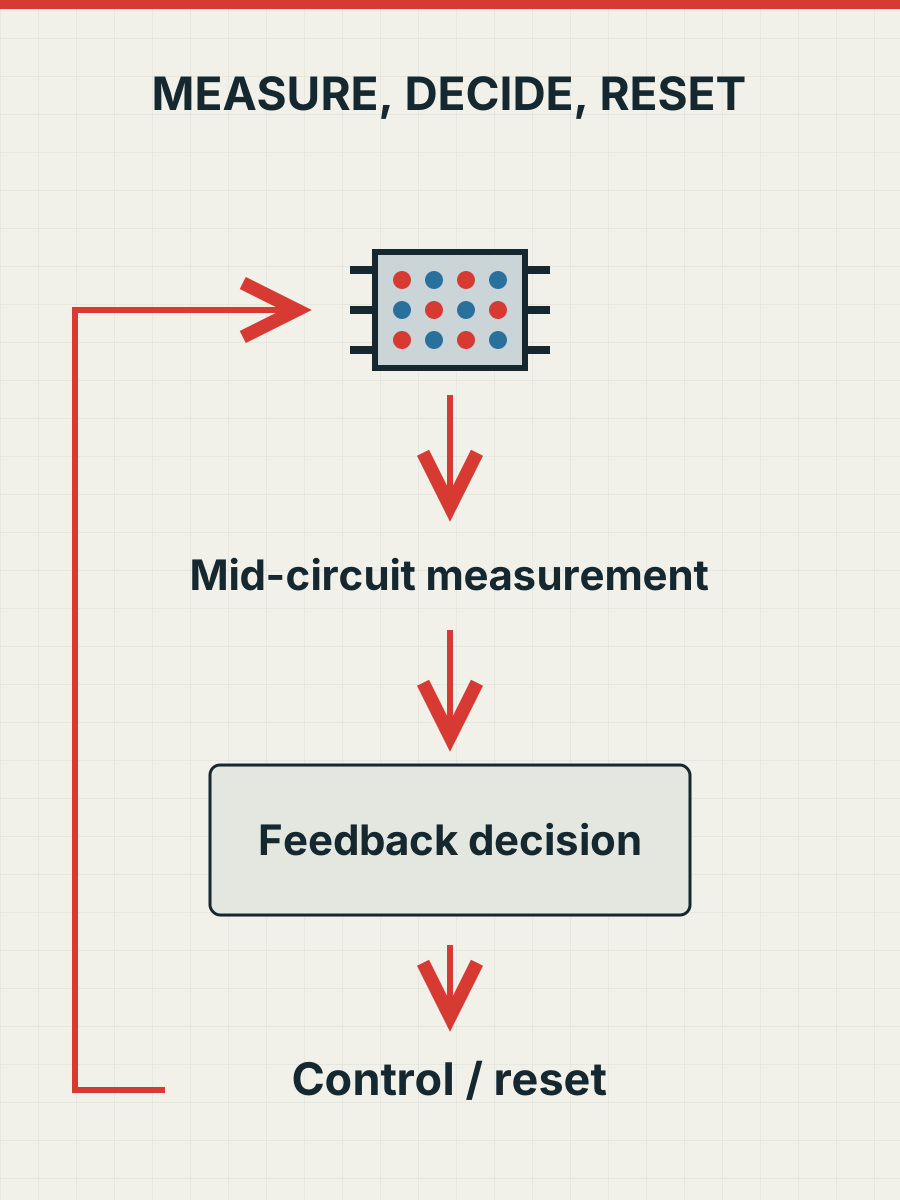
The study implemented nearly 5,000 entangling gates and nearly 5,000 mid-circuit operations on systems of up to 100 qubits. An entangling gate connects quantum states; mid-circuit measurement and reset let the processor inspect and change part of a running computation.
The Nature Physics abstract describes adaptive circuits in which measurement outcomes feed into later actions. The researchers compared the hardware’s behaviour with theoretical models and simulations.

Scrambling and feedback pulled the system in different directions
The experiment made information-scrambling operations compete with measurements and feedback that steered the system towards a target state. The paper calls this a quantum version of the Bernoulli map, a mathematical model of chaotic dynamics.
Rutgers describes repeated choices between scrambling the quantum state and applying a control step. Changing the balance between those choices produced a transition in the system’s behaviour.
The Nature Physics study reports a dynamical phase transition and estimates its critical properties. That gives researchers a way to test theories about monitored quantum systems on a substantial physical device.
Repeated feedback supports the path towards error correction
Quantum error correction depends on repeated checks and corrective actions while information remains encoded in the system. Rutgers presents the experiment as progress in the hardware and control methods needed for that work.
The demonstrated result is control of quantum dynamics using adaptive circuits. Building a fault-tolerant computer additionally requires an error-correcting code, reliable logical operations and sustained protection of encoded information.