IBM to build India quantum computer in Amaravati by September
IBM will commission one of India's first physical quantum computers in Amaravati by September 2026, installing an IBM Quantum System Two with a 156 qubit Heron processor.

Listen to this articleListen
IBM will commission one of India’s first physical quantum computers in Amaravati by September 2026, installing an IBM Quantum System Two with a 156 qubit Heron processor. The India quantum computer places the country among a small group with domestically sited quantum hardware, and moves Indian researchers from cloud access on foreign machines to a system on their own soil.
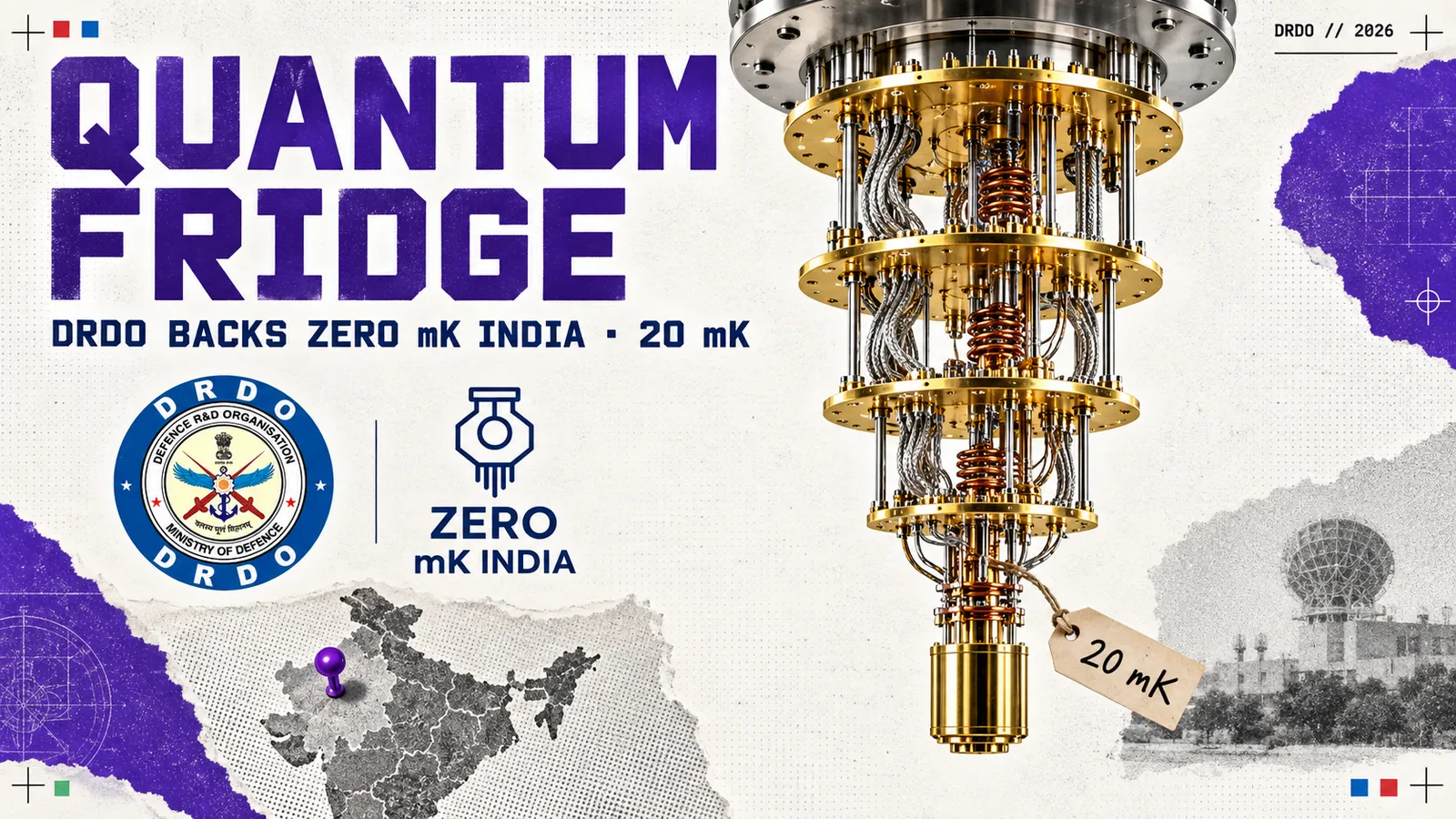
The distinction between cloud access and a physically sited India quantum computer is not merely symbolic. Indian researchers have had access to IBM’s fleet through the cloud for years, and for many workloads that is sufficient. Physical siting changes three things: latency for hybrid workflows in which classical and quantum components exchange data repeatedly, data residency for work subject to national restrictions, and the accumulation of operational expertise. Running a dilution refrigerator, maintaining calibration and diagnosing hardware faults are skills that develop through possession of a machine.
Amaravati as the location reflects Andhra Pradesh’s positioning of the city as a technology hub, and the deployment sits within India’s National Quantum Mission, which has committed substantial public funding to quantum computing, communication, sensing and materials over an eight year period. The mission’s design has emphasised building domestic capability across the stack, with the purchase of finished systems a lower priority, and a foreign built machine on Indian soil is a reasonable intermediate step: it gives researchers something to work on while indigenous hardware programmes mature.
The 156 qubit Heron processor is a generation behind IBM’s current Nighthawk, which carries 120 qubits with 218 tunable couplers and supports circuits of up to 5,000 two qubit gates. Heron remains a capable machine for algorithm development, error mitigation research and hybrid workflow construction, and it is the system IBM has deployed most widely through its Quantum System Two enclosures. For a first national installation, a proven platform is the sensible choice.
The commercial pattern is becoming clear across the sector. IQM is delivering a 150 qubit system to Finland’s LUMI AI Factory by 2027, funded by the EuroHPC Joint Undertaking with Finland, Czechia, Norway and Poland. Rigetti has contracted to supply a 108 qubit system to India’s Centre for Development of Advanced Computing. IBM is working with the US government on what would be America’s first purpose built quantum foundry, supported by a proposed $1 billion award. Governments are buying quantum hardware for reasons that combine research capacity, industrial policy and national security, and vendors with modest commercial revenue are finding their most reliable customers in public procurement.
That has implications for how the sector should be assessed. Quantum computing companies are frequently valued as technology businesses awaiting a commercial inflection. A substantial share of near term revenue is in fact government infrastructure spending, which follows different rules: slower, more political, less sensitive to the demonstration of immediate return, and more durable through market downturns. IonQ’s first quarter revenue growth of 755 per cent to $64.7 million rests significantly on US government programmes.
For India the strategic logic is consistent with its wider technology posture. The country is Anthropic’s second largest market for Claude, hosts substantial engineering capacity for every major technology firm, and has attracted large data centre commitments including $100 billion pledged by the Adani Group through 2035 for renewable powered AI infrastructure. An India quantum computer in Amaravati is a modest capital commitment beside those figures and a meaningful signal about where the country intends to be positioned when the technology becomes commercially consequential.
Delivery by September 2026 is a tight schedule for a system requiring cryogenic infrastructure, power provisioning and trained operators. IBM has installed Quantum System Two units in several countries and the process is well rehearsed, which improves the odds.