Rigetti
vertically integrated and thinly capitalised
Key facts
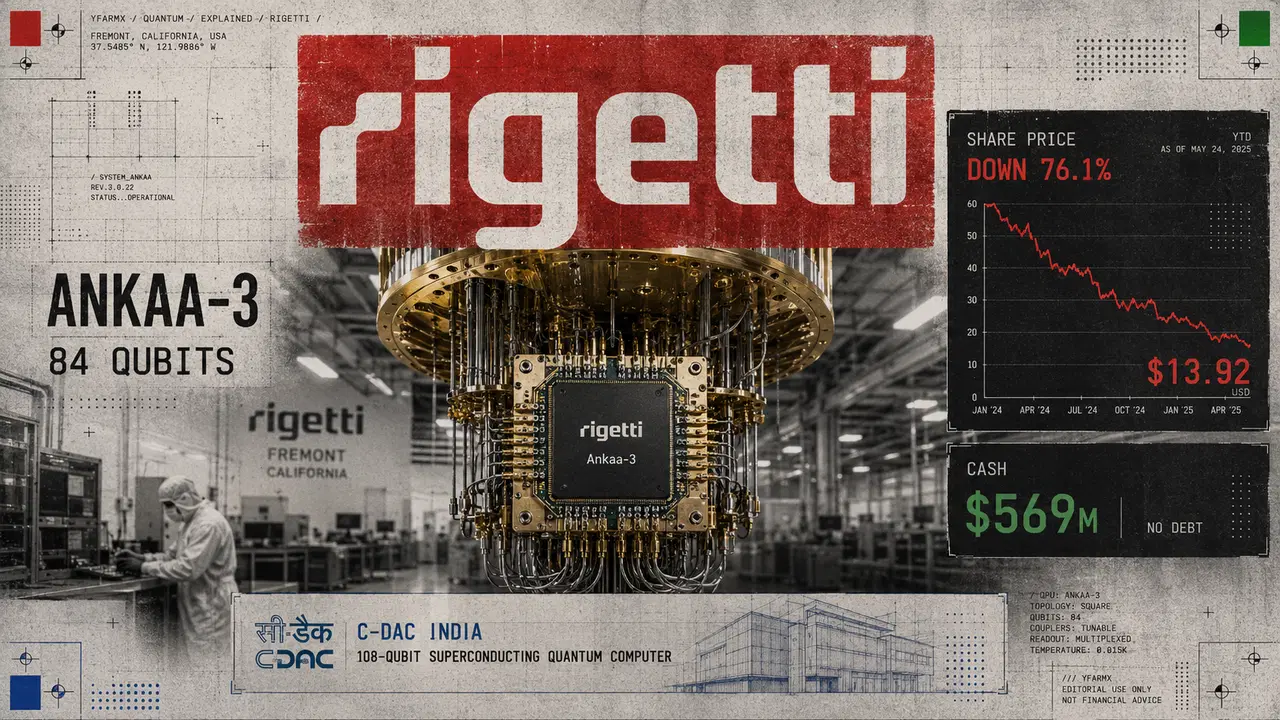
- 108Cepheus-1-108Q
- Qubits
- 99.8%Cepheus chiplet median
- 2Q fidelity
- $5.1mreported 6 Aug 2026
- Q2 revenue
- $541.3m30 Jun 2026
- Cash
- $13.25close, 12 Oct 2026
- Share price
- 108qubit system, C-DAC
- India deal
The small superconducting lab that makes its own chips in its own fab, iterating faster than companies fifty times its size. Its new 108-qubit machine is stitched together from little nine-qubit tiles, a bet that modular beats monolithic.
The vertically integrated maker
Rigetti occupies an unusual position among quantum hardware companies: it makes its own chips. The firm designs and fabricates its superconducting processors at its own facility in Fremont, California, under chief executive Subodh Kulkarni, which makes it one of the few vertically integrated players in the sector. That integration is central to how the rigetti stock is understood, because owning the fabrication line means the company controls its own design cycle rather than queuing for a shared foundry, while also carrying the cost of that line on a slender revenue base.
Why in-house fabrication counts
Superconducting processors, the approach Rigetti and several larger rivals share, use tiny circuits cooled to near absolute zero so that current flows without resistance and quantum states can be maintained. Building them well is as much a manufacturing challenge as a physics one, which is why in-house fabrication carries weight: every improvement in yield or fidelity feeds straight back into the next design. Most quantum firms outsource chip-making to shared foundries, trading control for lower fixed costs; Rigetti has taken the opposite path, absorbing the expense of running its own line in exchange for tighter iteration. When a design change can be tested in its own cleanroom within weeks rather than waiting in a queue, the feedback loop that drives hardware progress runs faster. Rigetti’s largest system is now Cepheus-1-108Q, 108 qubits assembled from twelve interconnected 9-qubit chiplets and generally available across Rigetti’s cloud, Amazon Braket, Azure Quantum and qBraid; the company reports median two-qubit gate fidelity of 99.8% on the chiplet building block, with the previous flagship Ankaa-3 at 84 qubits and around 99%. Fidelity is the share of operations that complete without error, and two-qubit gates, which entangle pairs of qubits, are the hardest to get right, so a figure near 99% is a meaningful marker, if still short of the levels the trapped-ion leaders report.
The financial frame
The financial frame is the reason the rigetti stock trades the way it does. Second-quarter 2026 revenue, reported on 6 August, was just $5.1m, a small number for a company building its own hardware, and the quarter carried a GAAP net loss of $52.6m, or $16.0m on the company’s non-GAAP measure. Against that sits $541.3m of cash and available-for-sale investments at 30 June 2026, a reserve large enough to fund years of development. The plain reading, and one the company does not dispute, is that the cash pile buys time while the revenue does not yet buy a business. That combination, deep funding and thin sales, is exactly what the tagline of being vertically integrated and thinly capitalised captures.
Commercial traction and the share price
There is genuine commercial traction to point to. Rigetti has been contracted to supply a 108-qubit system to India’s Centre for Development of Advanced Computing, the sort of national-programme deal that both books revenue and places its hardware inside a sovereign computing effort. Orders of that kind are the clearest near-term evidence that a quantum maker can sell complete systems rather than cloud access alone, and they are the deals prospective holders of the rigetti stock watch most closely. The company reorganised around exactly that job on 19 August 2026, creating a dedicated systems delivery organisation to scale customer deployments and advance its processor roadmap: David Rivas was appointed to the newly created role of chief operating officer, and Andrew Bestwick, PhD, became chief technology officer.
Rigetti shares closed at $13.25 on 12 October 2026, down 5.56% for the session, according to Nasdaq’s historical prices. This is a dated market observation; the company’s cash, orders and delivered systems need to be assessed separately.
What to watch
What to watch is whether Rigetti can turn its manufacturing advantage into a rising revenue line before the cash reserve starts to look finite. The India contract is a template; several more like it, delivered on time, would begin to answer the question the rigetti stock poses. So would a fresh processor that lifts qubit count and fidelity together, since vertical integration only pays off if the chips it produces keep improving. Alongside the 6 August results the company announced a letter of intent with the US Department of Commerce and a hybrid supercomputing collaboration with HPE and the Pittsburgh Supercomputing Center, each a further test of that template. The letter of intent became a definitive $100m agreement on 8 September 2026, under the CHIPS Research and Development Office’s broad agency announcement: it funds integrated readout electronics, a new cryostat architecture to expand cryogenic capacity, and fabrication for high-connectivity chips, and the Department of Commerce receives a minority, non-controlling equity stake in Rigetti as a condition of the funds. For now Rigetti is a well-funded engineering company with a small order book, and the equity is priced for that uncertainty. Those wanting the wider picture can start with our quantum hub.
More Quantum
All Quantum →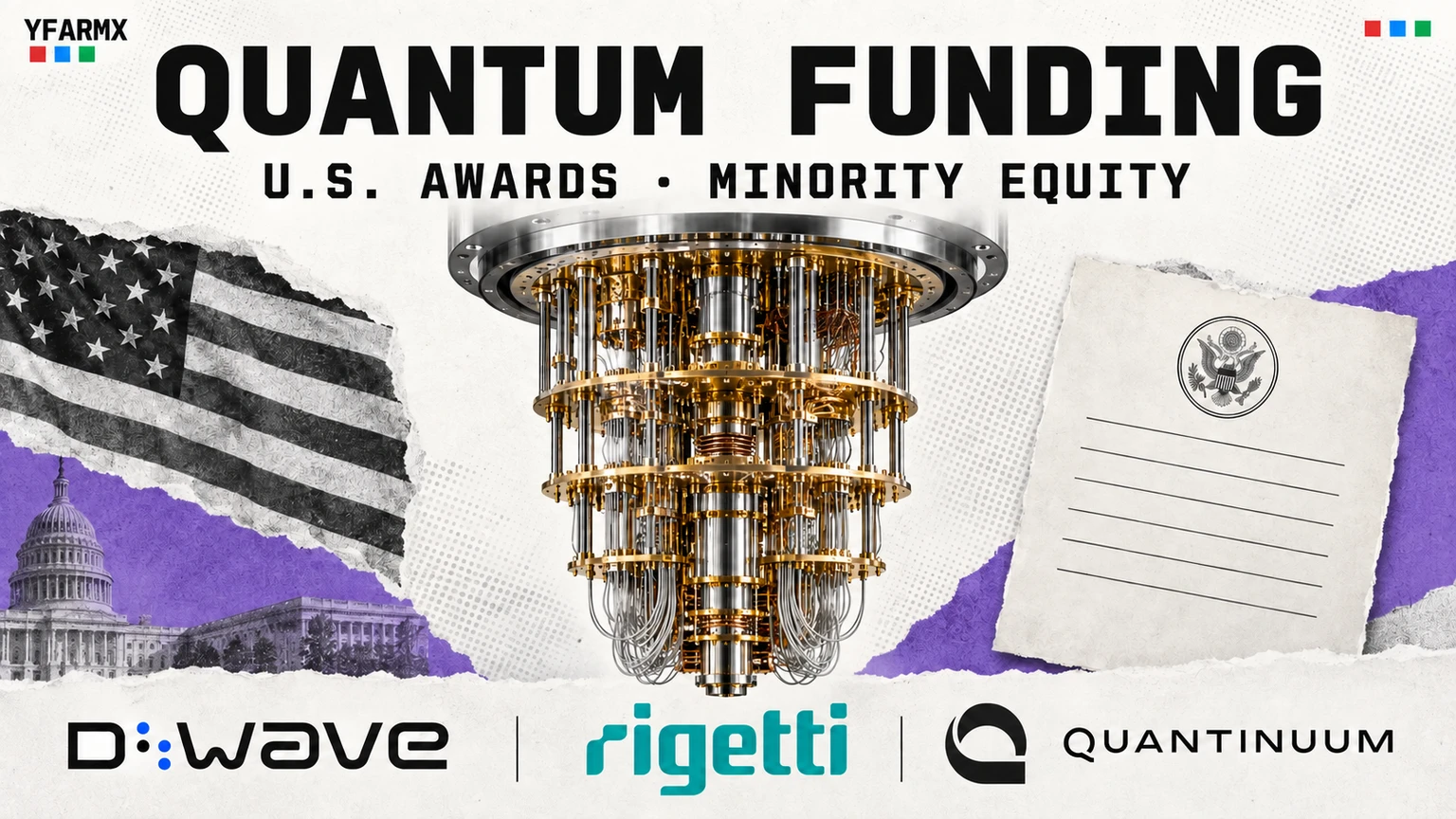
U.S. quantum awards pair funding for D-Wave, Rigetti and Quantinuum with equity stakes
D-Wave, Rigetti and Quantinuum have finalised CHIPS awards totalling up to $300 million under a programme requiring minority government equity stakes.
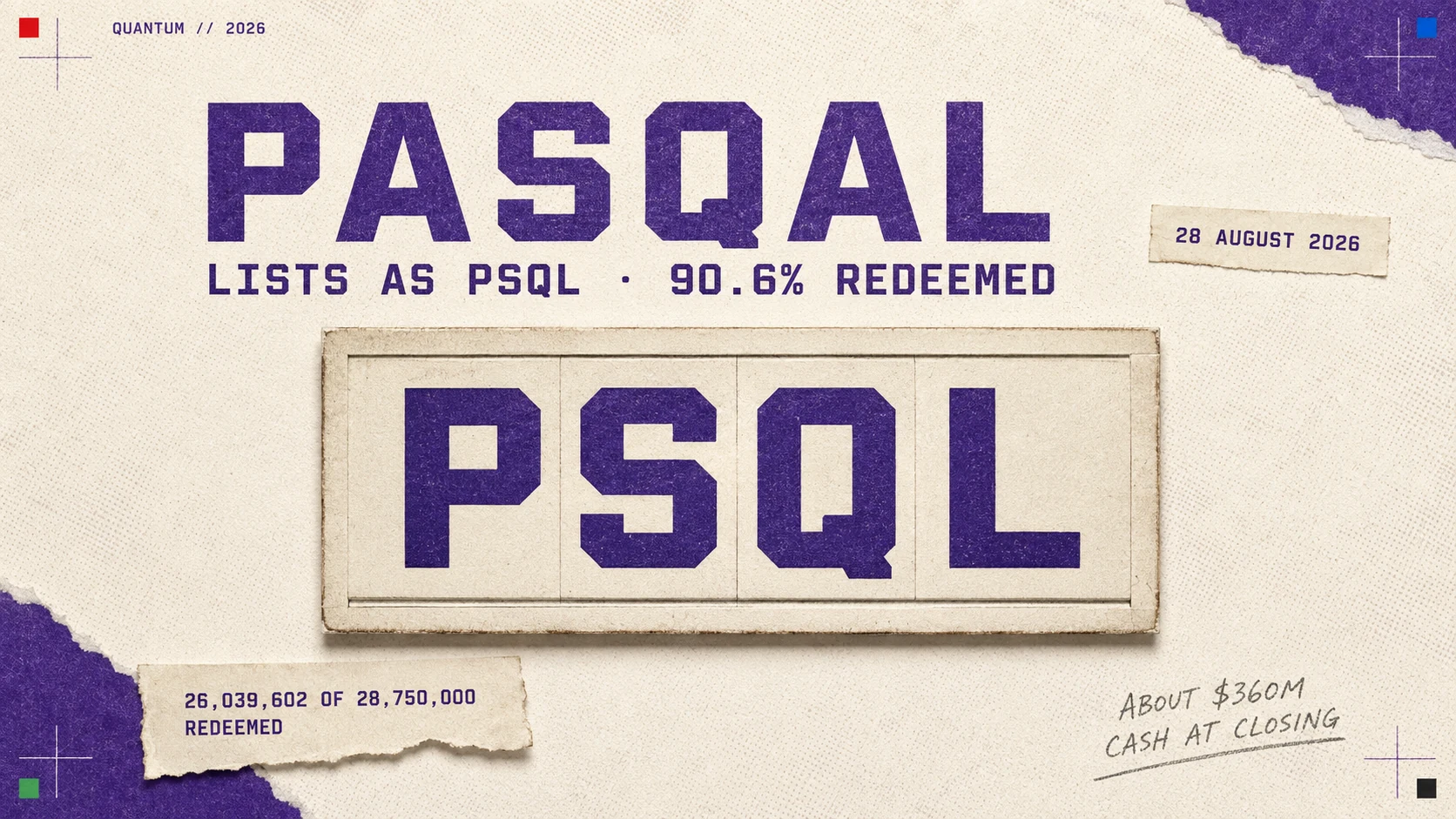
Pasqal listed with $360m and 90.57% of the SPAC's public shareholders took their money out
Pasqal began trading as PSQL on 28 August and closed its first session at $19.11. Shareholders redeemed 26,039,602 of 28,750,000 SPAC shares, and $250m of the cash at closing came from convertible bonds sold at a 20% discount.
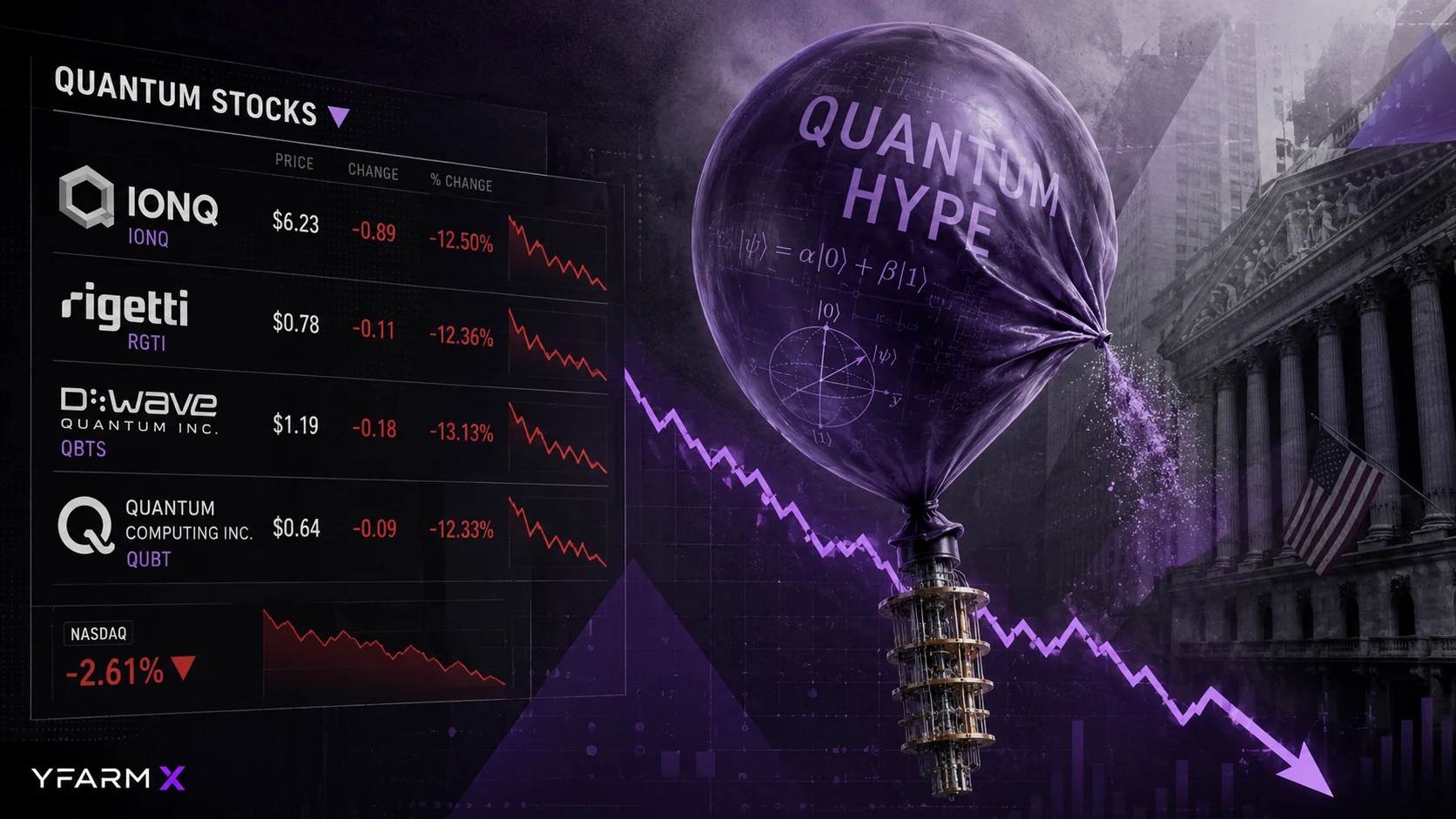
Quantum computing stocks fall as the narrative trade unwinds
Quantum computing stocks completed a punishing week on 17 July, with IonQ, Rigetti and D-Wave trading between 60 and 76 per cent below their 52 week highs after shedding a further 17 to 20 per cent in five sessions.